What is the Bone Marrow Aspiration and Bone Marrow Biopsy Procedure?
Bone marrow aspiration and bone marrow biopsy are medical procedures used to take samples of the bone marrow, the soft, spongy tissue inside certain bones where blood cells are made. These procedures help the doctors to diagnose and monitor various blood disorders, infections, cancers, and other bone marrow conditions.
Bone marrow aspiration and Bone marrow biopsy are procedures used to collect samples from inside your bones to help diagnose different health conditions. They are often done together, but are a bit different. An aspiration takes the liquid part of bone marrow, whilea biopsy takes a small solid piece of bone marrow tissue. These tests help doctors understand blood disorders, infections, cancers, and more.
What Is Bone Marrow Aspiration?
Bone marrow aspiration involves using a thin hollow needle to withdraw a small amount of the liquid part of the bone marrow. This fluid contains blood-forming cells that can be examined for abnormalities. The procedure may cause a sharp pain or stinging when the sample is taken.
What Is a Bone Marrow Biopsy?
Bone marrow biopsy uses a larger needle to remove a small piece of solid bone marrow tissue. This tissue is examined under a microscope to provide detailed information about the marrow structure and function. The biopsy may cause brief pressure or pain as the sample is collected.
20 to 30 minutes
Surgery Duration
Local anesthesia
Anesthesia Used
Same day discharge
Hospital Stay
1-2 days
Full Recovery Timeline

Why Is a Bone Marrow Biopsy and Aspiration Done?
Bone Marrow Aspiration and Biopsy are performed for many key Indications, including:
- To find out what's going on inside your bone marrow: These tests help doctors check if your bone marrow is healthy and making the right amount of blood cells. Since bone marrow is where new blood cells are made, it's a key place to look when something feels off in your blood.
- To diagnose blood and bone marrow diseases: If you have unexplained symptoms like low red blood cells (anemia), too few platelets (which help your blood clot), or an abnormal number of white blood cells (that fight infections), this test can find the cause. It can detect diseases like leukemia, lymphoma, multiple myeloma, or other blood cancers.
- To check for infections or unusual illnesses: Sometimes, infections or rare conditions can affect your bone marrow. This test helps find fungal, bacterial, or parasitic infections that might be causing ongoing fever or other symptoms.
- To monitor treatment progress, doctors use bone marrow biopsy and aspiration to assess how well the treatment is working and whether the disease is improving, remaining stable, or worsening.
- To help diagnose unexplained symptoms: Sometimes, if you have a fever with no clear cause or other unclear blood problems, this test helps give more answers.
- To prepare for certain procedures, it's also done when collecting bone marrow for stem cell transplants or special genetic tests.
Difference between Bone Marrow Aspiration & Bone Marrow Biopsy
Bone Marrow Aspiration: Removes liquid marrow using a syringe. Helps assess the number, shape, and maturity of blood cells.
Bone Marrow Biopsy: Involves removing a small solid piece of marrow tissue. Provides structural information and helps detect cancerous or fibrotic changes in the marrow.
How to Prepare for Bone Marrow Aspiration and Biopsy?
Before undergoing a Bone Marrow Aspiration and Biopsy, some steps are essential to ensure the procedure goes smoothly:
- Understand the procedure: You might wonder, "What exactly will happen?" This test takes a small sample of bone marrow to check your blood health. It usually takes about 10 to 20 minutes and is often done on an outpatient basis, meaning you can go home the same day.
- Follow fasting instructions if needed: If you're going to get sedation, your doctor may ask you to stop eating and drinking from midnight before your procedure. This helps prevent complications during sedation. Always follow your doctor's specific instructions carefully.
- Tell your doctor about all medications: Are you taking blood thinners like aspirin, warfarin, or other medicines that affect clotting? Your doctor needs to know because some medicines might increase bleeding risk after the biopsy. Don't stop any medicine without your doctor's advice.
- Discuss your feelings and worries: Feeling nervous is completely normal. Let your healthcare team know so they can offer you support or medication to ease your anxiety. You might receive a local numbing injection plus a sedative to help you relax or feel less pain during the procedure.
- Plan for a ride home: If you have sedation, arrange for someone to drive you home afterwards. You'll need to rest for the rest of the day, so avoid driving or making big decisions until the next day.
- What to wear and bring: Pick comfortable clothing for the day of the procedure. Bring any documents your doctor gave you for the hospital, including the biopsy request form. This helps the medical team stay organised and speeds up your care.
- Prepare emotionally and practically: The procedure involves lying on your stomach or side while the doctor collects bone marrow from your hip bone. You might feel some brief discomfort or pressure during the needle insertion, but it's usually quick. Knowing what to expect can help reduce fear.
- Aftercare to keep in mind: A bandage will cover the needle site. Keep it dry for 24 hours, and avoid bathing or swimming. Slight soreness or tenderness afterwards is normal. If you notice heavy bleeding, unusual pain, swelling, or fever, contact your doctor promptly.
How is Bone Marrow Aspiration and Biopsy Done?
During bone marrow aspiration and biopsy surgery, several steps are taken to collect samples of bone marrow for examination. Here is a general overview of what happens during the Surgery:
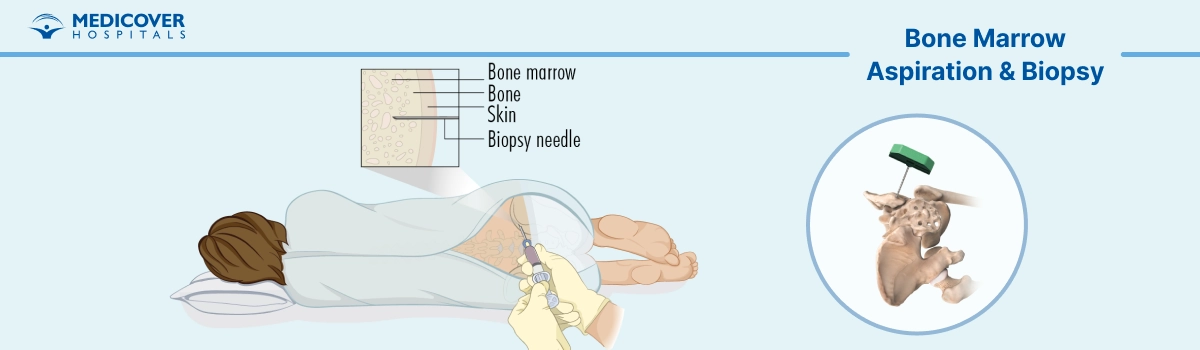
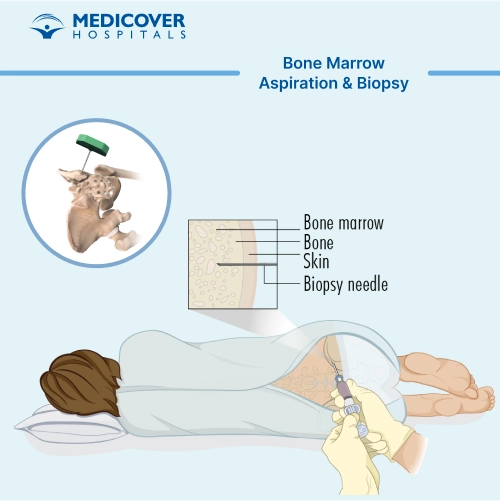
- Patient Positioning: The healthcare team will position you to expose the area where the bone marrow will be aspirated or biopsied. Common sites include the posterior iliac crest or the sternum.
- Anesthesia: A local anaesthetic will be injected into the skin and tissues at the procedure site. This numbs the area and helps reduce discomfort during the procedure.
Bone Marrow Aspiration (Taking a Liquid Sample)
- First, your healthcare provider will clean the skin over the chosen spot, usually at the back of your hip bone.
- You will get a numbing medicine (local anesthesia) to make the area feel little or no pain.
- A very small cut might be made on your skin to help the needle go in smoothly.
- Then, a hollow needle is carefully inserted through the skin and into the bone marrow inside the bone.
- Using a syringe attached to the needle, a small amount of liquid bone marrow is gently sucked out.
- You may feel a quick, sharp pinch or sting during this.
- Several samples might be taken if needed.
- After that, the needle is removed.
Bone Marrow Biopsy (Taking a Solid Tissue Sample)
- After aspiration, a larger needle is used to take a small solid piece of bone marrow.
- The same spot is usually used, but the angle of the needle might be slightly changed.
- The biopsy needle goes into the bone and is carefully rotated back and forth to cut out a small core (cylindrical piece) of bone marrow tissue.
- This sample gives doctors a better look at the structure inside your bone marrow.
- Then, the needle is pulled out with the sample inside it.
After the Procedure
- Pressure is applied to the area where the needle was inserted to stop any bleeding.
- A bandage is placed over the tiny wound.
- If you had local anesthesia, you may be asked to rest for 10 to 15 minutes.
- If you received sedation, you might stay a little longer for observation before you go home.
- Some soreness or tenderness in the area for a few days is normal.
- You will be advised to keep the bandage dry for 24 hours and avoid heavy activities to help with healing.
- Contact your doctor if you notice bleeding that won't stop, increasing redness, swelling, or fever.
Who Will Do Your Bone Marrow Aspiration & Biopsy?
- Usually, a doctor who specialises in blood diseases (called a hematologist) or a cancer specialist (oncologist) will perform these procedures.
- In some cases, specially trained nurses, nurse practitioners, or physician assistants may also carry out the bone marrow tests under the doctor's supervision.
- These experts have special skills to safely collect bone marrow samples, usually from the back of your hip bone.
- The procedure is often done in a hospital, clinic, or doctor's office, where they can ensure your comfort and safety.
Remember, these specialists are highly trained to make the process as quick and gentle as possible while collecting the important sample needed for diagnosis.
Recovery after Bone Marrow Aspiration And Biopsy Procedures
Recovery after Bone Marrow Aspiration and Biopsy is generally quick, but patients should follow these guidelines:
- You might feel some soreness or tenderness at the biopsy site for a few days. This is completely normal. It may even feel a bit bruised or tender when touched.
- To ease any discomfort, try applying ice packs on the site for about 15 to 20 minutes at a time, several times on the day of the procedure and the day after.
- Pain medicine like acetaminophen (Tylenol) can help reduce pain. It's a good idea to take it as needed, following the dosage instructions.
- Keep the bandage on and dry for at least 24 hours after the procedure. Avoid showering, bathing, swimming, or using hot tubs during this time to prevent infection.
- After 24 hours, you can gently shower and let the water run over the area, but avoid soaking or scrubbing the site.
- Watch the biopsy site closely for any signs of problems. If you notice bleeding that won't stop, increasing redness, swelling, warmth, pus or drainage, or if the site gets more painful instead of better, contact your doctor right away.
- It's a good idea to avoid strenuous activities, heavy lifting, or rigorous exercise for at least a day or two after the biopsy to allow proper healing.
- Most people can get back to work or their normal daily activities the day after the biopsy, unless they had sedation during the procedure, in which case rest for 24 hours is recommended.
- If you received sedation, be sure to have someone drive you home and stay with you for the rest of the day. Avoid driving, operating machinery, or making important decisions until the sedation wears off fully.
- The biopsy wound itself is usually very small and heals quickly, often without stitches. You may remove the bandage after a day or two and cover the site with a simple adhesive bandage if needed to protect it from rubbing or irritation from clothes.
- Healing at the biopsy site may take one to two weeks to fully complete, and discomfort should gradually lessen during this time.
- Remember to keep in touch with your healthcare team. If you have any concerns during your recovery, don't hesitate to reach out. They are there to support and guide you through this.
Benefits of Bone Marrow Aspiration and Biopsy
Have you ever wondered why doctors recommend a bone marrow test? Bone marrow aspiration and Bone marrow biopsy are valuable tools that help doctors learn a lot about your health in a simple and quick way.
- Check Blood Cell Production: They help find out if your bone marrow is making enough of the different blood cells you need. This includes red blood cells that carry oxygen, white blood cells that fight infections, and platelets that help your blood clot.
- Diagnose Medical Conditions: These tests can diagnose a wide range of health problems, from blood disorders and infections to different types of cancer, like leukemia or lymphoma.
- Detect Cancer Spread: If cancer from another part of your body has moved to your bone marrow, these procedures can help identify that.
- Understand Disease Severity: They give your doctor an idea of how serious a disease is and how far it has progressed, which is important for choosing the right treatment.
- Monitor Treatment Effectiveness: After treatment begins, bone marrow tests can show if the treatment is working or if changes are needed.
- Quick and Reliable Results: These tests can be done relatively quickly and often without a hospital stay, meaning you can get answers and start treatment sooner.
- Less Invasive Than Other Methods: Compared to other procedures that might be more complicated or painful, bone marrow aspiration and biopsy are straightforward and safe, with minimal risks.
- Helpful for Molecular Studies: The liquid sample from aspiration can be used for advanced tests to understand genetic changes in blood diseases, which is crucial for modern diagnosis and treatment plans.
Bone Marrow Aspiration & Biopsy Side Effects
When you undergo a bone marrow aspiration and biopsy, the doctors do everything to ensure your safety. Still, like any medical procedure, some side effects or risks may happen. Let's go over them so you know what to expect and when to reach out for help.
Common Side Effects You May Notice
- Pain or Discomfort: It's normal to feel some soreness or a dull ache at the biopsy site, usually around the hip bone. This pain is usually short-lived and can be eased with over-the-counter pain relief. If the pain lasts longer or is severe, let your doctor know.
- Bruising: You might see some bruising around where the needle went in. This usually fades within a few days.
- Tenderness and Swelling: Mild tenderness or slight swelling is common. If you notice increased redness or swelling, that's a signal to check with your healthcare provider.
What Are the Less Common but Important Risks?
- Bleeding: You may have a small amount of bleeding or spotting after the procedure. Serious bleeding is rare, but if you see blood soaking more than a small bandage or persistent bleeding, contact your doctor immediately. Also, tell your doctor beforehand if you take blood-thinning medicines, as this can increase bleeding risk.
- Infection: While very rare thanks to sterile techniques, an infection can occur at the biopsy site. Signs include warmth, redness, swelling, discharge, persistent pain, or a fever above 38°C (100.4°F). If you experience these, seek medical attention quickly.
- Allergic Reaction to Anesthesia: Local anesthesia is used to numb the area. In very rare cases, some people may have an allergic reaction. Inform your doctor if you have known allergies to medications.
Rare Complications That Doctors Watch For:
- Persistent Pain: Sometimes pain lasts longer or feels intense after the biopsy. This is uncommon but should be reported.
- Serious Bleeding or Hemorrhage: Very rare cases of heavy bleeding may require medical treatment or blood transfusions.
- Bone or Tissue Injury: Rarely, damage to nearby tissues or bone can happen.
- Very Rare Infections: There have been extremely rare reports of infections spreading deeper into the bone joints around the biopsy site. This is exceptional and treated promptly if it occurs.
Bone Marrow Aspiration & Biopsy Cost
The cost of Bone Marrow Aspiration typically ranges from approximately Rs. 3,000 to Rs. 15,000 in Indian cities. Prices vary based on the city, hospital, and complexity of the procedure.
The overall cost can be affected by additional factors like:
- Preparation and reporting fees
- Additional tests or consultations required
- Type of anesthesia used, if needed
- The complexity or duration of the procedure
If you have concerns about the cost or the procedure itself, our medical team is there to guide and support you through every step, to ensure that follow-up consultations or additional lab tests are included in the quoted price.
 040 68334455
 WhatsApp
 Patient Portal
 Home Care