What is Congenital Hand Malformations Surgery?
Congenital hand malformations, often referred to as congenital hand anomalies, are developmental abnormalities that affect the formation and structure of the hand during fetal development. These conditions may involve missing, fused, extra, or underdeveloped fingers and can range from mild cosmetic differences to severe functional impairments.
The primary goals of surgery are to:
- Restore hand function so the child can grasp, hold, and perform daily activities.
- Improve the appearance of the hand to support social and emotional well-being.
- Promote normal growth and development, since untreated deformities can worsen with age or affect bone growth.
These surgeries are often necessary when malformations interfere with mobility, grip strength, fine motor skills, or daily activities such as writing, self-feeding, and play. In some cases, early surgical correction also prevents long-term joint stiffness or deformity progression.
Types of Malformations and Surgeries
Congenital hand deformities are diverse, and treatment is individualised based on the type, severity, and functional needs of the child. Below are the common conditions and their surgical approaches:
Syndactyly Surgery (Webbed Fingers)
Condition: Fingers are fused together by skin or, in more severe cases, by bone.
Surgical Approach:
- The fingers are carefully separated to allow independent movement.
- Skin grafts, usually taken from the groin or inner arm, are used to cover the gaps created after separation.
- Special care is taken to stagger incisions to reduce the risk of web creep (skin pulling back between fingers).
Goal: Improve hand dexterity, fine motor function, and appearance.
Polydactyly Surgery (Extra Fingers)
Condition: Presence of an additional finger or part of a finger, which may be small and underdeveloped or fully formed.
Surgical Approach:
- The extra digit is removed.
- The surrounding tendons, ligaments, and skin are reconstructed to create a natural contour of the hand.
- In more complex cases, bone reshaping or joint reconstruction may be required.
Goal: Enhance grip strength, hand symmetry, and cosmetic appearance.
Cleft Hand Surgery
Condition: A deep V-shaped gap in the centre of the hand, sometimes with missing fingers.
Surgical Approach:
- Tissues, bones, and skin are rearranged to close the gap.
- Missing structures may be reconstructed if possible.
- Tendon balancing is done to improve finger alignment and function.
Goal: Create a more functional hand with improved strength and grasp ability.
Hypoplastic Thumb Surgery
Condition: The thumb is underdeveloped or unstable, ranging from slightly small to nearly absent.
Surgical Approach:
- Stabilisation procedures strengthen weak thumb joints.
- In severe cases, tendon transfer (borrowing a tendon from another finger or wrist muscle) improves thumb movement.
- If the thumb is completely absent, pollicisation (surgically transforming the index finger into a thumb) may be performed.
Goal: Enable proper pinch and grasp, which are critical for hand function.
Amniotic Band Release
Condition: Tight bands of tissue form around the fingers or hand in the womb, restricting growth and sometimes causing deformity.
Surgical Approach:
- Constriction bands are carefully released to restore blood flow and growth potential.
- Additional reconstructive procedures may be performed if fingers are shortened or deformed.
Goal: Prevent further damage, restore circulation, and improve hand function.
1-4 Hours
Surgery Duration
General Anesthesia
Anesthesia Used
3-6 Months
Full Recovery Timeline

When is Congenital Hand Malformations Surgery Recommended?
Congenital hand surgery is usually advised when a hand abnormality begins to limit a child's movement, strength, or growth, or when it is expected to cause problems in the future. The timing of surgery depends on the type of deformity, the child's age, and the severity of the condition.
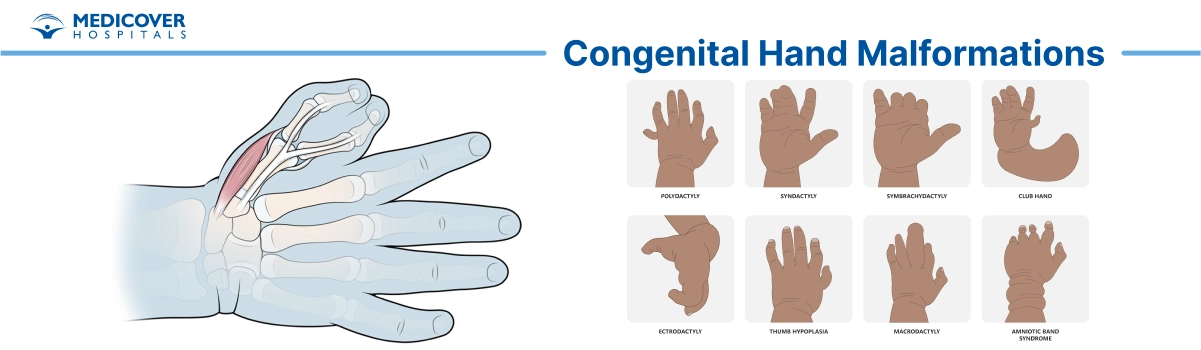
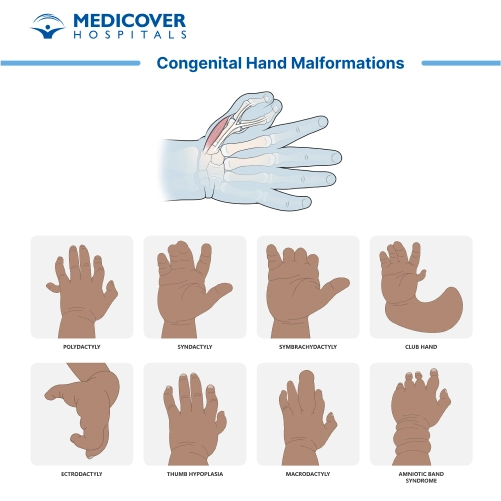
Doctors may recommend surgery in the following cases:
- Webbed or fused fingers (Syndactyly): When two or more fingers are fused together by skin or bone, it restricts their independent movement. This can limit a child's ability to grasp, hold objects, and develop fine motor skills.
- Extra fingers (Polydactyly): The presence of additional digits may interfere with the normal structure and function of the hand. In some cases, the extra finger may be small and nonfunctional, while in others, it can affect the alignment of the entire hand.
- Missing or underdeveloped thumbs: The thumb is the most critical finger for gripping, pinching, and performing fine tasks. If a child is born without a thumb or with a poorly developed one, surgery is often recommended.
- Hand gaps (Cleft hand): A cleft hand deformity creates a deep gap in the center of the palm, which can weaken grip and make holding objects difficult. Surgery helps by rearranging bones, muscles, and tissues to close the gap and improve both the strength and functionality of the hand.
- Restricted finger growth from amniotic bands: In some babies, tight fibrous bands from the amniotic sac wrap around fingers or the hand during pregnancy. These bands can cut off circulation, restrict growth, or even cause tissue damage.
In some cases, surgery is also done for psychosocial reasons, to help a child feel more confident and reduce social stigma as they grow.
How to Prepare for Congenital Hand Surgery?
Good preparation helps ensure that the child undergoes surgery safely and recovers smoothly. Parents and caregivers play a crucial role in this stage.
Medical Evaluation & Tests
- Complete physical examination to assess overall health.
- Blood tests to rule out anemia or infection.
- X-rays and hand imaging to study bone alignment, joint development, and tissue structures.
- In complex cases, MRI or CT scans may be used to map out nerves, tendons, and blood vessels before surgery.
Lifestyle Adjustments Before Surgery
- The child should be free from colds, fevers, or infections before surgery. If sick, the operation may be delayed.
- Parents should ensure good nutrition, hydration, and adequate sleep in the days leading up to the procedure.
- Certain medications, especially blood thinners or supplements, may need to be stopped as per the doctor's advice.
Home Preparation
- Arrange for caregiving support at home, as the child will need help with bathing, dressing, and eating after surgery.
- Prepare a safe, comfortable resting area with pillows, blankets, and limited need for movement.
- Stock up on soft or easy-to-eat foods, since pain medications may cause drowsiness or mild nausea.
Day Before & Day of Surgery
- Follow hospital instructions for fasting (usually no food or drink 6-8 hours before anesthesia).
- Bathe the child the night before to reduce infection risk.
- Dress the child in loose, front-button clothes to make post-surgery dressing easier.
- Avoid lotions, creams, nail polish, or jewelry, as they can interfere with monitoring equipment.
What Happens During Congenital Hand Malformations Surgery?
The surgical technique varies with each malformation, but the process usually follows these steps:
Preparation & Anesthesia
- The child is placed under general anesthesia, meaning they will be asleep and pain-free throughout.
- An IV line is inserted to give medications and fluids.
- The surgical site is cleaned and sterilized.
Incision / Access Point
- Surgeons make carefully planned incisions, often along natural skin creases to minimize visible scars.
- The type and size of incision depends on whether the surgery involves skin, bone, tendons, or joints.
Main Procedure
- Syndactyly: Fingers are separated, and skin grafts may be applied to cover gaps.
- Polydactyly: Extra digits are removed, and surrounding tissues are reshaped for a natural appearance.
- Cleft Hand: Bones and soft tissues are rearranged to close the gap and improve grip strength.
- Hypoplastic Thumb: Tendon transfers or bone stabilization may be performed.
- Amniotic Band Release: Tight bands are cut to restore circulation and allow normal growth.
Closure
- Surgeons carefully suture wounds, sometimes using skin grafts or local flaps for proper coverage.
- Small dressings or splints may be applied to protect the repair.
Recovery Room
- After surgery, the child is moved to the recovery area.
- Doctors monitor breathing, heart rate, and pain levels closely.
- Parents are usually allowed to be present as the child wakes up.
What to Expect After Congenital Hand Surgery
The recovery journey after congenital hand surgery is a gradual process that involves healing, regaining movement, and supporting a child's normal development. Every child's recovery may differ depending on the type of surgery performed, age, and overall health, but parents can usually expect steady improvements over time.
Immediately After Surgery (First Few Days)
- Hospital Stay: Most children remain in the hospital for 1-3 days so doctors can monitor pain, swelling, and circulation.
- Bandages and Splints: The operated hand is usually wrapped in a bulky dressing or placed in a splint/cast to protect the surgical site.
- Pain and Swelling: Mild to moderate discomfort is common and managed with prescribed pain relief medication. Keeping the hand elevated helps reduce swelling.
- Parental Role: Parents are taught how to care for dressings, watch for warning signs of infection, and support their child's comfort.
Weeks 2-4: Early Healing and Gentle Use
- Dressing Changes: Stitches or bandages are changed regularly, either at home or during hopital visits. Some cases may require new casts or splints.
- Wound Healing: The surgical site gradually heals, and skin grafts (if used) begin to settle in place.
- Light Activities: Children may slowly resume light daily tasks, but rough play and heavy use of the hands are avoided.
- Mobility Exercises: In certain surgeries, gentle stretching or hand movements are introduced early to prevent stiffness.
Weeks 5-6: Functional Recovery Phase
- Adaptation: Children begin adjusting to the new shape and function of their hand.
- Physiotherapy/Occupational Therapy: A therapist may guide the child through structured exercises to improve flexibility, strength, and coordination.
- Parental Support: Encouraging practice at home is vital, as children often regain function faster with regular exercise.
3-6 Months: Long-Term Healing and Skill Building
- Improved Hand Function: By this stage, most swelling has reduced, scars begin to mature, and the child can use the hand more naturally.
- Full Results: The final functional and cosmetic results become more visible. Children often gain improved grip, dexterity, and independence in activities like dressing, eating, or playing.
- Follow-Up Visits: Regular checkups ensure the hand is healing well and that therapy is progressing. Additional corrective procedures may be considered if necessary.
Benefits of Congenital Hand Malformation Surgery?
Surgery for congenital hand deformities offers life-changing improvements, both functionally and emotionally. The main benefits include:
Restores hand function and grip strength:
- By correcting structural abnormalities such as fused fingers, missing digits, or extra fingers, surgery allows the hand to move more naturally.
- This restoration of strength and dexterity is crucial for tasks like holding objects, writing, buttoning clothes, or playing with toys.
Improves daily activities and independence:
- Children can gain greater independence in self-care, schooling, and play, while adults benefit from enhanced ability to perform work-related tasks.
- Early surgical intervention also helps children keep pace with their peers in motor development.
Enhances cosmetic appearance of the hand:
- Many congenital hand conditions affect the shape or symmetry of the hand.
- Reconstructive surgery helps create a more natural look, reducing visible differences and making the hand more proportionate.
Supports psychological confidence and social interaction:
- Children with visible hand deformities may feel self-conscious or face social stigma.
- Corrective surgery can significantly improve confidence, social participation, and emotional well-being by reducing feelings of isolation.
Encourages proper growth and development:
- When deformities are corrected early, the hand is more likely to grow in a balanced way.
- This prevents secondary problems such as abnormal joint movement or muscle imbalance later in life.
Risks of Congenital Hand Malformations Surgery?
Although modern surgical techniques make these procedures generally safe, some risks may still occur:
Infection:
- As with any surgery, there is a small risk of infection at the surgical site.
- This is usually managed effectively with antibiotics and proper wound care.
Scarring:
- Surgical incisions may leave visible scars.
- Surgeons often use techniques to minimise scarring, and in children, scars may fade with growth.
Stiffness in joints or reduced range of motion:
- Post-operative stiffness can develop if rehabilitation exercises are not followed.
- Occupational or physical therapy is often prescribed to maintain flexibility.
Recurrence or incomplete correction of deformity:
- In rare cases, deformities may recur as the child grows, or the correction may not fully achieve the desired outcome. Follow-up procedures may sometimes be required.
Anesthesia-related risks:
- Since most procedures are performed under general anesthesia, there is a very small risk of anesthesia-related complications. These are closely monitored by pediatric anesthesiologists.
Altered sensation or nerve damage (rare):
- Occasionally, nerves may be affected during surgery, leading to numbness or altered feeling in the hand. In most cases, this improves with time.
What is the Cost of Congenital Hand Malformations Surgery in India?
The cost of congenital hand deformities surgery depends on the type of malformation, surgical complexity, and hospital facilities. On average, it may range between Rs. 60,000 to Rs. 2,50,000. To know the exact cost for your case, please contact our customer support team for detailed guidance.
 040 68334455
 WhatsApp
 Patient Portal
 Home Care