What Is Carpal Tunnel Release?
Carpal Tunnel Release is a surgical procedure performed to relieve pressure on the median nerve within the wrist. This nerve compression causes symptoms like pain, tingling, numbness, and weakness in the hand. The surgery works by cutting the transverse carpal ligament, which eases pressure and restores normal nerve function.
People usually consider Carpal Tunnel Release when non-surgical treatments such as splints, medications, or therapy fail to provide lasting relief. It is commonly recommended for those with severe or persistent symptoms that interfere with daily activities.
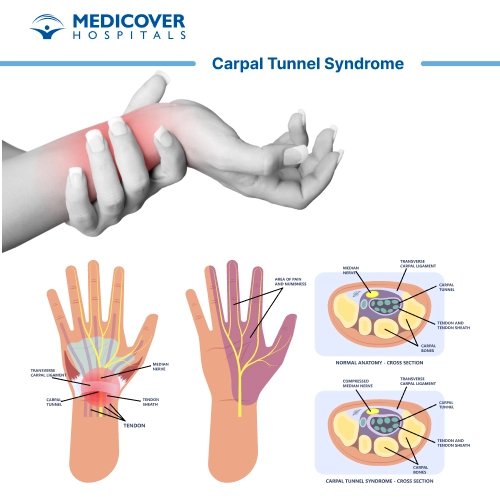
What is Carpal Tunnel Syndrome?
The carpal tunnel is a narrow passage in the wrist through which the median nerve and several tendons pass. When pressure increases within this tunnel due to factors such as repetitive hand movements, injury or some medical conditions, it can lead to Carpal Tunnel Syndrome. Common symptoms include pain, numbness, and a tingling sensation in the thumb, index, middle, and part of the ring fingers.
Types of Carpal Tunnel Release
- Open Carpal Tunnel Release: A small incision is made in the palm to cut the ligament and relieve pressure on the nerve.
- Endoscopic Carpal Tunnel Release: Uses a tiny camera and small incisions for a minimally invasive approach with quicker recovery.
15 to 30 minutes
Surgery Duration
Local Anesthesia
Anesthesia Used
Same-day discharge
Hospital Stay
6 to 12 weeks
Full Recovery Timeline

When is Carpal Tunnel Release Recommended?
Carpal Tunnel Release can be an effective procedure when persistent wrist and hand symptoms impact comfort and daily activities. Based on medical guidance, here are the main reasons why patients may consider it:

- Chronic Pain, Numbness, or Tingling: When symptoms caused by median nerve compression do not improve with splints, rest, or medications.
- Weakness in Hand or Grip Strength: Difficulty holding objects or performing fine hand movements due to nerve damage.
- Sleep Disturbance from Night Pain: Frequent waking at night because of hand or wrist discomfort that affects rest and recovery.
- Failure of Non-Surgical Treatments: If conservative care such as physiotherapy, steroid injections, or braces fail to provide long-term relief.
- Progressive Nerve Damage Signs: Advanced cases where untreated compression risks permanent weakness or loss of sensation.
How to Prepare for Carpal Tunnel Release Surgery?
Getting ready for your Carpal Tunnel Release procedure helps ensure a safe procedure and smoother recovery.
Medical Evaluation & Pre-Op Visit
- Share your medical history, ongoing medications, and any existing health issues.
- Your doctor may order tests such as blood work or an ECG to confirm surgical readiness.
- Make sure all reports are available before the scheduled procedure.
Health Habits & Lifestyle Adjustments
- Stop smoking a few weeks before surgery, as it delays healing.
- Avoid alcohol and certain medicines that increase bleeding, such as aspirin or NSAIDs, at least 1-2 weeks before surgery.
- Maintain a balanced diet with good protein and vitamins to support healing.
Prepare Your Home and Support System
- Arrange for someone to accompany you to the hospital and drive you back after the surgery.
- Keep essentials like water, prescribed medicines, pillows, and easy-to-wear clothes within reach.
- Prepare light meals in advance to avoid strain during the first days of recovery.
The Day Before & Day of Surgery
- Follow fasting guidelines given by your surgeon, usually no food or drink after midnight.
- Bathe as instructed, using antiseptic soap if advised, and avoid creams, lotions, or nail polish.
- Wear loose, comfortable clothing and remove jewellery or accessories before arriving for surgery.
What Happens During Carpal Tunnel Release Surgery?
- Preparation & Anesthesia: On the day of surgery, the surgical team reviews your details before the procedure. Local or regional anesthesia is usually given to numb the hand and wrist so you remain comfortable.
- Incision: A small incision is made either in the palm (open surgery) or a tiny cut for inserting a camera (endoscopic surgery).
- Ligament Release: The surgeon carefully cuts the transverse carpal ligament to relieve pressure on the median nerve. This helps improve blood flow and reduce nerve compression.
- Nerve Decompression: Once the ligament is divided, space inside the carpal tunnel increases, allowing the nerve to function more freely and easing symptoms like pain or tingling.
- Closing the Incision: The incision is closed with sutures or adhesive strips. A light bandage is applied to protect the area and support early healing.
- After Surgery: Patients are usually observed for a short time before going home the same day. Movement of the fingers is encouraged soon after surgery to prevent stiffness and support recovery.
Recovery After Carpal Tunnel Release Surgery
Recovering from Carpal Tunnel Release is a gradual process, and proper care helps restore hand strength and comfort.
First Few Days After Surgery
Expect mild swelling, soreness, and stiffness around the wrist and palm. Keeping your hand elevated reduces swelling, and gentle finger movement helps maintain flexibility. Avoid heavy gripping or pressure on the hand during this stage.
Doctor's Tip: "Keep your hand raised on a pillow when resting, and move your fingers often to prevent stiffness."
Weeks 2 to 4
By this time, stitches (if any) are usually removed, and discomfort begins to improve. Light activities such as writing, typing, or gentle household work can be resumed with your surgeon's approval.
Doctor's Tip: "Avoid lifting heavy objects-let the ligament and nerve heal fully before adding strain."
Weeks 5 to 6
Grip strength gradually returns, and most daily activities feel easier. Physical therapy or hand exercises may be recommended to improve flexibility and rebuild strength.
Doctor's Tip: "Even if your pain is gone, continue exercises to avoid stiffness and regain full hand movement."
3 to 6 Months Post-Surgery
Most patients achieve full recovery within this period. Tingling, numbness, and night pain usually resolve, and hand function continues to improve. Final strength and mobility may take several months to return completely.
Benefits of Carpal Tunnel Release Surgery
Relieves pain and discomfort
The procedure reduces pressure on the median nerve, easing pain, tingling, and numbness in the hand.
Restores hand function
Improves grip strength and allows easier performance of daily tasks like writing, typing, or holding objects.
Better sleep quality
By reducing night-time hand pain and tingling, patients often experience uninterrupted, restful sleep.
Prevents further nerve damage
Timely surgery stops ongoing nerve compression, reducing the risk of permanent weakness or loss of sensation.
Quick recovery and lasting results
Most patients notice improvement within weeks, with results that can last long-term when proper care is followed.
Risks of Carpal Tunnel Release Surgery
While generally safe, the procedure does carry some risks, including:
- Infection
- Stiffness or soreness in the hand/wrist
- Scarring at the incision site
- Temporary numbness or weakness
- Incomplete symptom relief in rare cases
- Nerve or vessel injury (very uncommon)
- Risks linked to anesthesia
- Carpal tunnel release complications
- Carpal tunnel release surgery complications
How much does it cost to have a carpal tunnel release?
Carpal Tunnel Release surgery cost at Medicover Hospital in India may vary based on the severity of the condition. On average, the cost ranges from Rs. 30,000 to Rs. 90,000. Medicover Hospitals are known for high-quality care, experienced specialists, and modern facilities. For an accurate estimate, please call the provided contact number or visit the hospital directly.
 040 68334455
 WhatsApp
 Patient Portal
 Home Care