What is cardiac catheterization?
Cardiac catheterization' also called cardiac cath or heart catheterization' is a medical procedure used to diagnose and treat various heart conditions.
During the cardiac catheterization procedure' a thin' flexible tube known as a catheter is inserted into a blood vessel typically in the groin or arm and guided through the blood vessels to the heart.
This cardiac catheterization test allows doctors to:
- Visualize the heart's anatomy
- Assess blood flow in the coronary arteries.
- Measure pressures inside the heart chambers
- Evaluate valve function
- Perform treatments such as angioplasty or stent placement when required.
By combining diagnosis and treatment' the procedure provides both clarity about heart function and immediate therapeutic benefits.
Types of Cardiac Catheterization
The cardiac catheterization procedure can be performed in different ways depending on the purpose. Each type helps doctors assess or treat specific heart conditions:
- Right Heart Catheterization
- Measures pressure and blood flow in the right chambers of the heart and the pulmonary arteries.
- Often used to evaluate conditions like pulmonary hypertension.
- Left Heart Catheterization
- Focuses on the left heart chambers' coronary arteries and valves.
- Helps detect blockages' valve problems or heart muscle function issues.
- Coronary Angiography
- A special type of cardiac catheterization test that uses contrast dye and X-rays to detect narrowing or blockages in the coronary arteries.
- Electrophysiology Study (EPS)
- Examines the electrical activity of the heart.
- Helps diagnose and guide treatment for arrhythmias (irregular heart rhythms).
- Balloon Angioplasty
- A therapeutic form of heart catheterization where a small balloon is inflated to open narrowed or blocked arteries.
- Often followed by placing a stent to keep the artery open.
- Valve Assessment
- Evaluates the function of heart valves.
- Helps determine whether valve repair or replacement is needed.
- Cardiac Biopsy
- Involves taking a small tissue sample from the heart muscle.
- Used to diagnose conditions like myocarditis or cardiomyopathy.
30 min - 1 hour
Surgery Duration
Local anesthesia + Sedation
Anesthesia Used
Same Day Discharge
Hospital Stay
1- 2 days (avoid strain 1-7 days)
Full Recovery Timeline

Indications of Cardiac Catheterization
Cardiac catheterization is recommended when doctors need detailed information about the heart's structure' blood flow and overall function. The procedure helps in both diagnosis and treatment planning.
Common cardiac catheterization indications include:
- Coronary Artery Disease (CAD): To detect narrowing or blockages in the coronary arteries.
- Angina or Chest Pain: To evaluate causes of chest discomfort and check blood supply to the heart.
- Heart Attack (Myocardial Infarction): To quickly locate and treat blocked arteries during an emergency.
- Valvular Heart Disease: To assess how well heart valves are working and decide on repair or replacement.
- Heart Failure: To measure pressures inside the heart and identify contributing factors.
- Congenital Heart Defects: To diagnose structural abnormalities present from birth.
- Arrhythmias: To help map abnormal electrical pathways for treatment.
- Unexplained Symptoms: Such as shortness of breath' dizziness or palpitations when other tests are inconclusive.
- Monitoring Progress: To check the condition of stents' bypass grafts or previous heart treatments.
- Guidance for Surgery: To provide crucial details for planning cardiac surgery or other interventions.
Preparing for Cardiac Catheterization Procedure
How should I prepare before the procedure?
- Consultation: Meet with your doctor to discuss the cardiac catheterization procedure' its purpose and what to expect. Don't hesitate to ask questions.
- Medical History: Share your complete medical history' including past surgeries' chronic conditions and allergies (especially to contrast dye or medications).
- Lifestyle Adjustments: Avoid alcohol for 24 hours before the test and try to reduce smoking' as it may interfere with recovery.
- Personal Arrangements: Arrange for someone to drive you home' since you may feel drowsy afterwards. Wear comfortable' easy-to-remove clothing and leave valuables or jewelry at home.
- Consent & Hygiene: You'll be asked to sign consent forms. Take a shower before the procedure to minimise the risk of infection.
What tests are done before surgery?
Before the cardiac catheterization test' your doctor may order:
- Blood tests to check kidney function' blood count and clotting ability.
- ECG (Electrocardiogram) to record the heart rhythm.
- An echocardiogram or stress test is performed if more details are needed before catheterization.
- In some cases' a chest X-ray is used to evaluate lung and heart size.
These ensure your body is ready and safe for the procedure.
Should I stop eating' drinking or taking medicines?
- Fasting: You'll usually be asked to refrain from eating or drinking for 6-8 hours before the procedure.
- Medications: Please bring a list of all your medications. Your doctor may adjust blood thinners' diabetes medications or other drugs before the test. Always follow their instructions carefully.
- Special Cases: If you're on insulin or heart medications' ask your doctor whether you should continue taking them on the day of the procedure.
Steps Involved In Cardiac Catheterization
Cardiac catheterization' also known as coronary angiography or heart catheterization' is a diagnostic procedure used to visualize and assess the heart's blood vessels and chambers.
It involves the insertion of a catheter into the blood vessels and heart to obtain detailed information about blood flow' pressure and anatomy.
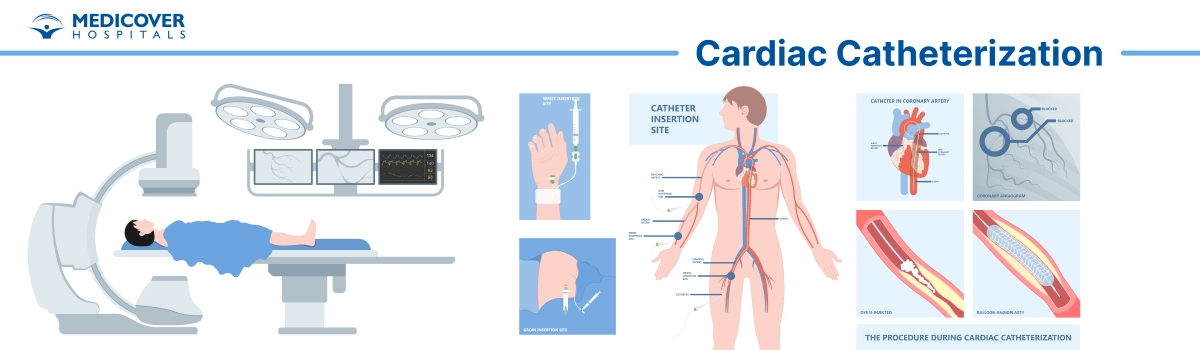
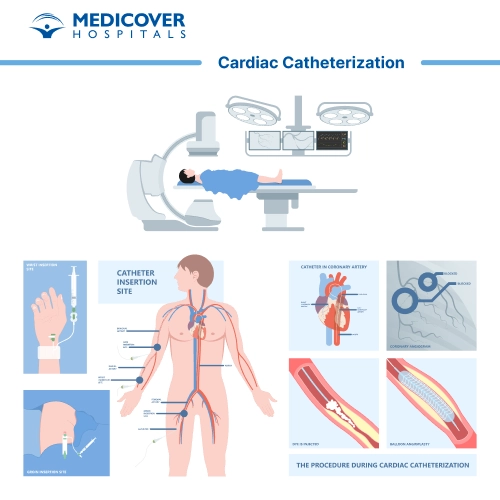
Here are the general steps involved in a cardiac catheterization procedure:
- Preparation: Medical evaluation' medication review and fasting (starting at midnight) before the procedure.
- Consent and Anesthesia: Discussion of risks' benefits and anaesthesia (local or sedation) for comfort.
- Insertion Site Preparation: Cleansing the insertion site (groin' wrist or arm) to prevent infection.
- Catheter Insertion: A thin catheter is inserted through a small incision and guided with X-ray imaging.
- Imaging and Diagnosis: Contrast dye is injected for clear X-ray images (angiograms) to identify blockages or abnormalities.
- Additional Procedures: Angioplasty or stent placement may be done if needed.
- Catheter Removal & Site Closure: The catheter is removed and the site is closed securely.
- Recovery: Monitored in recovery; most patients go home the same day.
- Postoperative Care: Follow-up instructions for wound care' activity and further treatments if needed.
What type of anaesthesia is used?
The cardiac catheterization procedure is usually done under local anesthesia at the insertion site' combined with mild sedation to keep the patient relaxed. General anesthesia is rarely needed.
How long does it take?
The procedure typically lasts between 30 minutes to 1 hour' depending on its complexity. If angioplasty or stent placement is performed' it may take longer.
Who performs the procedure?
A cardiologist specializing in interventional cardiology (called an interventional cardiologist) usually performs the procedure' supported by a team of nurses and technicians in a specialized catheterization lab (cath lab).
Recovery After Cardiac Catheterization
How long does recovery take?
Recovery after a cardiac catheterization procedure is usually quick and smooth. Most people who undergo a diagnostic test can return home the same day. Depending on your condition' you may resume normal activities within 1-2 days. If angioplasty or stent placement is performed' recovery may take a little longer.
What should I expect immediately after the procedure?
After the cardiac catheterization' you'll be taken to a recovery area where:
- Rest & Monitoring: You will be closely monitored for your vital signs and catheter insertion site. You may need to lie flat for several hours.
- Hydration: Drinking plenty of fluids helps flush out the contrast dye.
- Gradual Movement: Once your doctor approves' you can slowly begin sitting up and moving.
- Wound Care: Keep the insertion site clean and follow care instructions to prevent infection or bleeding.
- Medication: Take prescribed medications exactly as instructed.
- Report Concerns: Call your doctor right away if you notice pain' swelling' bleeding or unusual symptoms.
When can I return to normal activities?
- Short-term: Most patients should avoid driving' lifting heavy objects or strenuous activity for 24-48 hours.
- Work: Many can return to work in 1-2 days' depending on the type of procedure and overall health.
- Exercise: Light activity can be resumed gradually' but heavy exercise should only restart after your doctor's approval.
Are lifestyle changes required after recovery?
Yes. To maintain heart health and the benefits of the procedure' doctors often recommend long-term lifestyle adjustments:
- Eat a Balanced Diet: Include fruits' vegetables' whole grains' lean proteins and healthy fats.
- Choose Healthy Cooking: Prefer baking' steaming or grilling instead of frying.
- Stay Active: Aim for at least 150 minutes of moderate exercise per week' as recommended by your doctor.
- Maintain a Healthy Weight: Achieve and sustain a weight that supports heart health.
- Quit Smoking: Essential for heart and lung health.
- Limit Alcohol: Drink moderately' if at all.
- Limit Caffeine: Reduce your intake of coffee' tea or energy drinks if advised to do so by your doctor.
- Stay Hydrated: Drink enough water daily to support overall heart and kidney health.
- Manage Stress: Use relaxation techniques such as deep breathing' meditation or yoga.
- Take Medications: Follow your doctor's prescription plan carefully.
- Monitor BP' Cholesterol & Diabetes: Keep blood pressure' cholesterol and blood sugar under control.
- Attend Follow-Ups: Regular doctor visits are vital to track recovery and progress.
- Seek Support: Stay motivated with the help of family' friends or support groups.
- Stay Informed: Educate yourself about heart health and keep up with your doctor's advice.
What are the benefits of this cardiac cath?
Cardiac catheterization offers several important advantages:
- Accurate Diagnosis: Detects blockages' valve problems and structural abnormalities in the heart.
- Guided Treatment: Enables angioplasty' stent placement or other corrective procedures during the same session.
- Minimally Invasive: Less recovery time and shorter hospital stay compared to open-heart surgery.
- Real-Time Imaging: Provides high-quality visuals of the heart and blood vessels for precise interventions.
- Emergency Use: Essential in heart attack cases to quickly restore blood flow and save heart muscle.
- Monitoring Progress: Helps evaluate the success of prior treatments (stents' bypass surgery) and guide further care.
- Safe and Effective: When performed by experienced specialists' it carries minimal risk and high success rates.
What are the risks and complications of cardiac cath?
While generally safe' cardiac catheterization has some risks' though they are uncommon:
- Bleeding or bruising at the catheter insertion site.
- Infection at the puncture site (rare).
- Allergic reaction to contrast dye.
- Kidney damage from the dye (especially in patients with kidney problems).
- Blood clots or stroke (very rare).
- Heart attack or irregular heart rhythm (extremely rare).
- Damage to blood vessels from catheter movement.
What are the side effects of a cardiac cath?
Mild and temporary side effects may occur after the procedure' including:
- Soreness or tenderness at the insertion site.
- Minor swelling or bruising in the groin' wrist or arm.
- Tiredness or weakness for a day or two.
- Mild allergic reaction (itching' rash) to the contrast dye.
Most side effects resolve within a short time and can be managed with simple care.
What is the cost of cardiac catheterization in India?
The cost of cardiac catheterization in India can range from Rs. 16,000 to Rs. 2,00,000 or more depending on various factors. These factors include the specific procedure (diagnostic or therapeutic)' the hospital' the city and the doctor's fees.
 040 68334455
 WhatsApp
 Patient Portal
 Home Care