What is ACL Reconstruction Surgery?
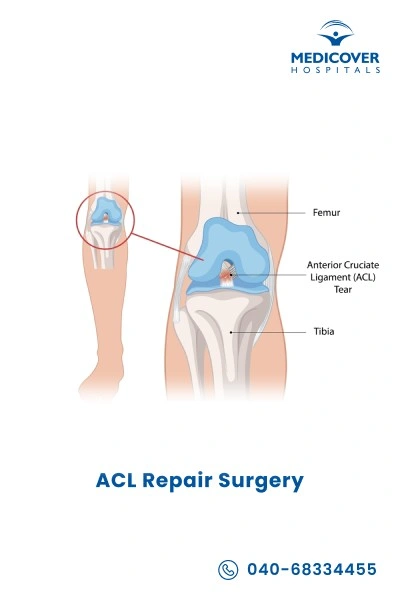
ACL (Anterior Cruciate Ligament) reconstruction is a surgical procedure to replace a torn ACL, a key ligament that stabilizes the knee joint. The damaged ligament is removed and replaced with a graft, either from your own body (autograft) or a donor (allograft). This helps restore knee stability, prevent further injury, and allow you to return to sports and daily activities.
Types of ACL Reconstruction
ACL reconstruction surgery can be performed using different types of grafts (tissue used to replace the torn ligament). The choice of graft depends on factors like age, activity level, previous injuries, and surgeon preference. The main types include:
- Autograft ACL Reconstruction: The surgeon uses your own tendon (from the hamstring, patellar, or quadriceps) to replace the torn ACL. This method is strong and safe since it's your own tissue, so there's no risk of disease from a donor.
- Allograft ACL Reconstruction: A tendon from a donor is used instead of your own. This is helpful if you want to avoid extra cuts for taking tissue or if your own tendons aren't suitable. Recovery may be a bit slower.
- Revision ACL Reconstruction: This surgery is done if a previous ACL operation didn't work or the ligament was injured again. The doctor uses different grafts and techniques to fix the problem.
- Pediatric ACL Reconstruction: A special method for children and teens that repairs the ligament without damaging growth plates, keeping the knee stable as they grow.
- Synthetic ACL Reconstruction: Uses artificial materials (like polyester or Gore-Tex) to replace the ligament. Rarely used today because natural tissue tends to last longer.
- Double-Bundle ACL Reconstruction: Repairs both bundles of the ACL (anteromedial and posterolateral) to mimic the natural ligament's anatomy for better stability, especially in athletes.
1 to 2 Hours
Surgery Duration
General Anesthesia
Anesthesia Used
6-9 Months
Full Recovery Timeline
When is ACL Reconstruction Recommended?
ACL reconstruction surgery is usually advised when the knee is unstable or the ligament is badly torn. Common reasons include:
- Complete ACL tear that cannot heal by itself.
- Knee keeps giving way or feels unstable during daily activities or sports.
- Active lifestyle or sports that require running, jumping, or quick direction changes.
- Other injuries in the knee such as meniscus or cartilage damage along with the ACL tear.
- Non-surgical treatments didn't work and problems like pain or swelling continue.
- Young and active individuals who want to return to sports or physically demanding work.
- Jobs with heavy activity like construction, military, or police work.
- Repeated swelling or pain that affects normal movement and quality of life.
ACL Reconstruction Surgical Approaches
ACL reconstruction can be done using different surgical methods. The choice depends on the surgeon's expertise, the patient's needs, and the type of graft used.
Arthroscopic ACL Reconstruction
- Procedure: Minimally invasive surgery using a small camera (arthroscope) and tiny instruments.
- Incisions: Small cuts around the knee.
- Advantages: Less pain, smaller scars, faster recovery, and lower risk of infection.
- Common Use: Most ACL reconstructions today use this approach.
Open ACL Reconstruction
- Procedure: Traditional surgery with a larger incision to access the knee.
- When Used: Rarely, mainly for complex cases or when other knee injuries need repair.
- Advantages: Direct visualization of structures; sometimes preferred in revision surgeries.
- Drawbacks: Longer recovery, more pain, and larger scar compared to arthroscopy.
Single-Bundle vs. Double-Bundle Technique
- Single-Bundle: Reconstructs the main ACL bundle; most common.
- Double-Bundle: Reconstructs both ACL bundles for more rotational stability; less common, used selectively.
Graft Choices in Surgery
While not exactly an "approach," the type of graft used affects the technique:
- Autograft: Uses your own tissue (e.g., hamstring tendon or patellar tendon).
- Allograft: Uses donor tissue from a cadaver.
- Hybrid: Combination of autograft and allograft in specific cases.
Preparation for ACL Reconstruction Surgery
Preparing for ACL reconstruction surgery is an important step to ensure a smooth procedure and faster recovery.
- Meet Your Surgeon: Discuss the procedure, possible risks, and recovery steps. Ask any questions you have.
- Medical Tests: Get X-rays, MRI scans, or other required tests to check the injury.
- Pre-Surgery Exercises: Do leg-strengthening exercises recommended by your physiotherapist to help with faster recovery.
- Medications: Inform your doctor about all medicines you take. Some may need to be stopped or adjusted before surgery.
- Avoid Smoking & Alcohol: These can slow down healing and increase the risk of complications.
- Fasting: Do not eat or drink for 6-8 hours before surgery, as instructed by your doctor.
- Home Setup: Prepare a comfortable recovery space and arrange mobility aids like crutches.
- Plan for Help: Arrange for someone to drive you to and from the hospital and assist you during the first few days after surgery.
- Stay Mentally Prepared: Learn about the procedure and recovery so you feel confident and ready.
ACL Reconstruction Surgical Procedure Steps
ACL reconstruction surgery is a carefully planned procedure designed to restore knee stability and function, using advanced surgical techniques to replace the torn ligament safely and effectively.
- Anesthesia: You will receive either general anesthesia (to sleep through the surgery) or regional anesthesia (to numb the lower body) so you don't feel pain.
- Arthroscopic Check: A small camera is inserted through tiny cuts to see inside the knee and check the injury.
- Removing the Torn ACL: The damaged ligament is carefully removed.
- Graft Preparation: A tendon graft (usually from your hamstring or patellar tendon) is taken from your body or a donor to replace the torn ACL.
- Graft Placement: The graft is positioned in place through small holes drilled into the thigh bone (femur) and shinbone (tibia).
- Fixing the Graft: Screws or other devices are used to hold the graft securely while it heals.
- Closing the Incisions: The cuts are stitched or stapled, and a sterile dressing is applied.
- Knee Support: A brace or bandage is placed to protect the knee.
- Recovery Room: You'll be monitored for a short time before going home with care instructions.
ACL Surgery Recovery Time
ACL reconstruction surgery recovery time can vary from person to person, depending on age, overall health, the severity of the injury, and how closely you follow your rehabilitation plan.
Immediate Post-Surgery Phase (First 1-2 Weeks)
- Hospital Stay: Usually 1-2 days depending on the procedure and your health.
- Pain & Swelling: Common; managed with medications and ice packs.
- Mobility: Crutches are used; weight-bearing may be limited initially.
- Wound Care: Keep the incision clean and dry to prevent infection.
Early Rehabilitation (Weeks 2-6)
- Physiotherapy: Begins soon after surgery to restore knee movement.
- Range of Motion Exercises: Gentle bending and straightening of the knee.
- Strengthening Exercises: Focus on quadriceps and hamstrings to support the knee.
- Mobility: Gradually increase weight-bearing as advised by your doctor.
Intermediate Phase (Weeks 6-12)
- Muscle Strengthening: More intense exercises to rebuild leg strength and knee stability.
- Balance & Coordination: Exercises to improve proprioception (awareness of knee position).
- Activity Level: Low-impact activities may begin, like cycling or swimming.
Advanced Rehabilitation (3-6 Months)
- Sports-Specific Training: For athletes, exercises mimic the movements of your sport.
- Running & Jumping: Introduced gradually under supervision.
- Functional Recovery: Focus on regaining full knee stability and confidence.
Full Recovery (6-12 Months)
- Return to Sports: Most patients can safely return to competitive sports around 9-12 months.
- Long-Term Strength: Continued physiotherapy ensures knee strength and reduces risk of re-injury.
Benefits of ACL Surgery
ACL reconstruction can significantly improve knee strength, stability, and overall mobility, helping patients return to daily activities and sports with confidence.
- Restores Knee Stability: ACL surgery reconstructs the torn ligament, which helps stabilize the knee during activities such as running, jumping, or pivoting. This reduces the risk of the knee "giving way" or buckling.
- Improves Mobility: Post-surgery and rehabilitation, patients usually regain a near-normal range of motion, allowing them to perform daily activities and sports more effectively.
- Prevents Further Knee Damage: A torn ACL can lead to secondary injuries, including meniscus tears and cartilage damage. Surgery helps protect other structures in the knee, reducing the risk of long-term joint problems.
- Reduces Pain: ACL injuries often cause swelling and discomfort. Surgical repair, combined with physiotherapy, can reduce chronic pain associated with instability.
- Enhances Quality of Life: By restoring knee function and stability, patients can return to normal life, including work, sports, and recreational activities, with improved confidence and mobility.
- Supports Athletic Performance: For athletes or active individuals, ACL reconstruction increases the chances of returning to sports safely and confidently.
- Lowers Risk of Osteoarthritis: Early reconstruction and proper rehabilitation may reduce the likelihood of developing knee osteoarthritis in the long term compared to untreated ACL tears.
Risks and Complications of ACL Surgery
Like any surgery, ACL reconstruction carries some potential risks, but our expert team takes every precaution to minimize complications and ensure a safe recovery.
- Infection: Although rare, there is a risk of infection at the surgical site, which may require antibiotics or additional procedures.
- Blood Clots: Formation of blood clots in the leg (deep vein thrombosis) can occur after surgery, especially if mobility is limited.
- Knee Stiffness or Loss of Motion: Some patients may experience reduced range of motion or stiffness in the knee, which may require physiotherapy or additional procedures.
- Graft Failure: The reconstructed ligament (graft) may fail, either due to improper healing, injury, or overloading of the knee during recovery.
- Persistent Pain: Some patients may continue to experience pain in the knee even after surgery, due to scar tissue, inflammation, or other underlying issues.
- Nerve or Blood Vessel Injury: Although uncommon, surgery may damage nearby nerves or blood vessels, causing numbness, tingling, or circulation problems.
- Recurrent Instability: In some cases, the knee may still feel unstable after surgery, particularly if rehabilitation is incomplete or the graft fails.
- Complications from Anesthesia: As with any surgery, there is a small risk of reactions to anesthesia, including nausea, allergic reactions, or other complications.
Cost of ACL Reconstruction Surgery in India
The cost of ACL reconstruction surgery varies depending on the hospital, surgeon expertise, type of graft used, and location. On average, it ranges from Rs. 1,50,000 to Rs. 3,50,000 in India. Costs typically include pre-surgery tests, surgeon fees, anesthesia, hospital stay, and post-operative care. Choosing an experienced surgical team and proper rehabilitation ensures the best outcomes and long-term knee stability.
 040 68334455
 WhatsApp
 Patient Portal
 Home Care