 Call
Call Patient Reports
- Cardiology 84
- Dermatology 45
- Endocrinology 33
- ENT 16
- Fertility 190
- Gastroenterology 78
- General-Medicine 81
- Gynecology 80
- Hematology 19
- Infectious-Diseases 33
- Neurology 52
- Oncology 34
- Ophthalmology 23
- Orthopedics 69
- Pediatrics 31
- Procedure 23
- Public-Health 144
- Pulmonology 59
- Radiology 8
- Urology 68
- Wellness 161
- Woman-and-child 77
- 3850
- 3.3 Minute
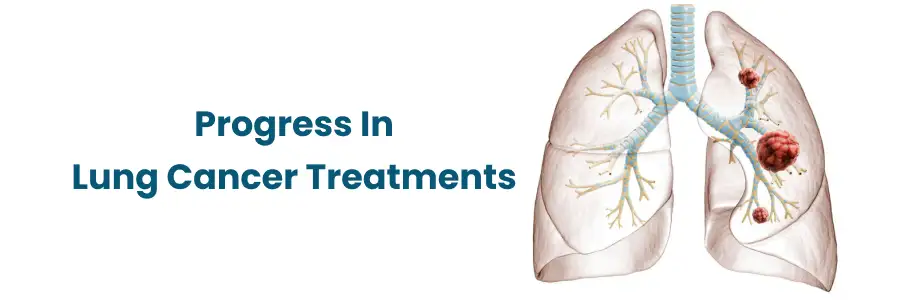
Progress in Lung Cancer Treatments
Lung cancer remains a leading cause of cancer-related deaths worldwide. Yet, the landscape of lung cancer treatments is rapidly evolving. Significant strides have been made in the field in recent years. New therapies and treatment options are emerging, offering hope to patients and their families.
This article aims to provide an overview of the latest advancements in lung cancer treatments. From targeted therapies to immunotherapies, we delve into the progress made in battling this disease.
We also explore promising developments in treating small cell lung cancer, which, although less common, often presents unique challenges. Stay with us as we navigate the recent progress in lung cancer treatments. This journey will enlighten healthcare professionals, patients, and anyone interested in the latest medical advancements.
Get a second opinion from trusted experts and makeconfident, informed decisions.
Get Second OpinionNot sure where to start?
Talk to a patient care advisor — free, confidential, 24/7. We'll match you to the right specialist and book your appointment in minutes.
Understanding Lung Cancer
Lung cancer is a complex disease with various types and subtypes. It begins when cells in the lungs start to grow out of control, forming tumours. Understanding the different types of lung cancer is crucial, as it can significantly influence a person's treatment options.
Types of Lung Cancer
There are two main types of lung cancer: Non-Small Cell Lung Cancer (NSCLC) and Small Cell Lung Cancer (SCLC). These types are named based on the appearance of the cancer cells under a microscope.
Non-Small Cell Lung Cancer (NSCLC)
NSCLC is the most common type of lung cancer, accounting for about 85% of all cases. It usually grows and spreads more slowly than SCLC.
Small Cell Lung Cancer (SCLC)
SCLC is less common, making up about 10-15% of all lung cancer cases. It tends to grow more quickly and spread to other parts of the body earlier than NSCLC.
Traditional Lung Cancer Treatments
Traditional treatments for lung cancer have primarily included surgery, chemotherapy, and radiation therapy. These methods have been the cornerstone of lung cancer treatment for many years.
However, the effectiveness of these treatments can vary greatly depending on the type and stage of lung cancer. They also come with potential side effects that can impact a patient's quality of life.
Surgery, Chemotherapy, and Radiation Therapy
Surgery is often used to remove the tumour and surrounding tissue. It's most effective for early-stage lung cancers. Chemotherapy uses drugs to kill cancer cells, while radiation therapy uses high-energy rays to destroy them. These treatments can be used alone or in combination, depending on the patient's condition.
Recent Advances in Lung Cancer Treatments
The landscape of lung cancer treatments has changed significantly in recent years. Advances in medical research have led to the development of new therapies that offer hope for improved outcomes.
These new treatments are often more targeted and personalized, focusing on the unique characteristics of each patient's cancer. They represent a shift from the one-size-fits-all approach of traditional therapies.
Targeted Therapies
Targeted therapies have revolutionized the treatment of non-small cell lung cancer (NSCLC). These drugs work by targeting specific genetic mutations found in cancer cells. Targeted therapies can effectively halt the growth and spread of cancer cells by focusing on these mutations. They offer a more precise treatment approach, often with fewer side effects than traditional chemotherapy.
Immunotherapies
Immunotherapy is another promising area of lung cancer treatment. It works by harnessing the body's immune system to fight cancer cells. Immunotherapies have shown significant success in treating certain types of lung cancer. They offer a new way to combat the disease, particularly for patients who have not responded to other treatments.
New Treatments for Small Cell Lung Cancer
Small cell lung cancer (SCLC) has traditionally been more challenging to treat. However, recent advances have led to the development of new therapies for this aggressive form of lung cancer.
These new treatments include novel chemotherapy agents and combinations of immunotherapy. They offer hope for improved survival rates and better quality of life for patients with SCLC.
Your health is everything - prioritize your well-being today.
Schedule Your AppointmentThe Role of Personalized Medicine
Personalized medicine is a crucial driver of recent progress in lung cancer treatments. It involves tailoring therapy to the individual characteristics of each patient's cancer.
Advances in genetic testing and molecular profiling have made this approach possible. These technologies allow doctors to identify specific mutations in cancer cells and select the most effective treatments.
Biomarker Testing and Molecular Profiling
Biomarker testing is a technique for identifying specific genetic mutations in cancer cells. It can guide treatment decisions and predict how a patient will respond to particular therapies.
Molecular profiling, on the other hand, involves analyzing a tumour's genetic makeup. This can help identify potential targets for treatment and inform the development of new therapies. Both techniques are critical tools in the era of personalized medicine.
The Importance of Clinical Trials
Clinical trials are crucial in developing new lung cancer treatments. They provide the scientific evidence needed to determine whether a new treatment is safe and effective.
Patients who participate in clinical trials have the opportunity to access modern treatments before they are widely available. These trials also contribute to our understanding of lung cancer and help improve future treatment options.
Future of Lung Cancer Treatments
The future of lung cancer treatments is promising, with many new therapies in the pipeline. Personalized medicine, immunotherapy, and novel drug development are areas of intense research focus. The goal is to develop more effective treatments with fewer side effects. This will improve patients' quality of life and increase survival rates.
Emerging Therapies and Research Directions
Emerging therapies for lung cancer include cancer vaccines and next-generation inhibitors. These treatments aim to harness the body's immune system to fight cancer cells and overcome resistance to targeted therapies. Research is also exploring the role of artificial intelligence in improving lung cancer diagnosis and treatment planning. This could lead to more accurate diagnoses and personalized treatment plans.
Conclusion
In conclusion, the progress in lung cancer treatments is encouraging. With the advent of personalized medicine, targeted therapies, and immunotherapies, patients have more options than ever. The future holds promise for even more effective treatments, improving survival rates and quality of life for those affected by lung cancer.
Frequently Asked Questions
Vizag has seen advancements in immunotherapy, targeted therapies, and minimally invasive surgical techniques for treating lung cancer.
Yes, several medicover hospital in Vizag are involved in hospital Knowinginnovative lung cancer treatments.
The use of precision medicine, advanced imaging, and robotic-assisted surgery has significantly improved treatment outcomes in Vizag.
Immunotherapy has become a crucial treatment option, helping the immune system target and destroy lung cancer cells effectively.
Consult with oncologists at leading medicover hospital in Vizag, and stay updated with medical journals and patient advocacy groups.
- Cardiology
- Case Studies
- Dermatology
- Endocrinology
- ENT
- Fertility
- Gastroenterology
- General
- General-Medicine
- Gynecology
- Hematology
- Infectious-Diseases
- Medical News
- Neurology
- Oncology
- Ophthalmology
- Orthopedics
- Pediatrics
- Procedure
- Public-Health
- Pulmonology
- Radiology
- Second Opinion
- Urology
- Wellness
- Woman-and-child
Related Blogs
Still have questions? Speak with our experts now!
040-68334455


