What Is Shoulder Arthroscopy?
Shoulder arthroscopy is a minimally invasive surgical procedure used to diagnose and treat a variety of shoulder joint problems. During the procedure, a small camera called an arthroscope is inserted through tiny incisions in the shoulder.
This allows the surgeon to see the inside of the joint on a monitor and repair or remove damaged tissue using specialized instruments. Because the procedure is minimally invasive, recovery times are usually shorter compared to traditional open shoulder surgery.
What Types Of Shoulder Arthroscopy Procedures Are There?
There are several types of shoulder arthroscopy procedures, depending on the condition being treated:
- Rotator Cuff Repair: Repairs torn rotator cuff tendons to relieve pain and restore shoulder function.
- Labral Repair: Fixes labral tears, such as SLAP or Bankart lesions, to improve stability and movement.
- Shoulder Impingement Relief: Removes inflamed tissue or bone spurs that cause pain and restrict motion.
- Frozen Shoulder Release: Releases scarred tissues in cases of adhesive capsulitis to restore mobility.
- Shoulder Stabilization: Treats recurrent dislocations or instability by tightening and repairing the joint.
- Biceps Tendon Surgery: Repairs or removes damaged biceps tendons affecting shoulder function.
- Bone Spur Removal: Eliminates osteophytes to reduce pain and improve movement.
- Arthritis Management: Smoothens joint surfaces and removes debris in mild arthritis cases for pain relief.
- AC Joint Repairs: Treats arthritis or injuries in the acromioclavicular (AC) joint.
What Are Shoulder Arthroscopy Portals?
- Portals are small entry points (usually 0.5-1 cm) made in the skin around the shoulder.
- The arthroscope is inserted through one portal to provide a live view of the joint on a monitor.
- Surgical instruments are inserted through additional portals to perform repairs, remove damaged tissue, or smooth bone surfaces.
- The number and location of portals depend on the type of repair or procedure being done (e.g., rotator cuff repair, labral repair, or bone spur removal).
Are Implants Used In Shoulder Arthroscopy?
Yes, implants may be used in certain procedures:
- Suture anchors: Small anchors are used to reattach torn tendons or labral tissue to bone.
- Metal or bioabsorbable screws/pins: Used to secure tissue or repair fractures.
- Other devices: Occasionally, specialized implants are used for joint stabilization or cartilage repair.
1-2 Hours
Surgery Duration
General/Local Anesthesia
Anesthesia Used
2 to 6 Months
Full Recovery Timeline

What Are The Indications For Shoulder Arthroscopy?
Shoulder arthroscopy is recommended when non-surgical treatments such as medications, physical therapy, or injections have not effectively relieved shoulder pain or improved function. It is also used when a detailed view of the internal shoulder structures is needed for diagnosis or treatment.
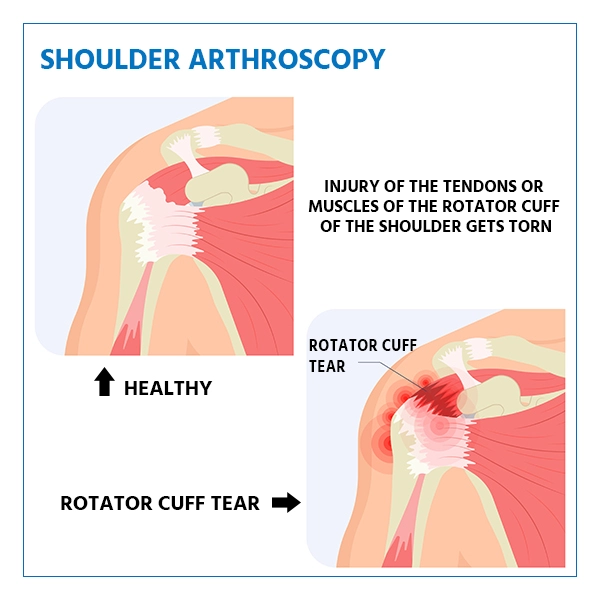
What Conditions Does Shoulder Arthroscopy Treat?
Shoulder arthroscopy can address a wide range of conditions, including:
- Rotator Cuff Tears: Repair tears in the shoulder tendons that cause pain and weakness.
- Shoulder Impingement: Relieves pain from inflamed tendons or bursa.
- Labral Tears: Fix tears in cartilage affecting stability and movement.
- Shoulder Instability: Treats recurring dislocations and stabilizes the joint.
- Frozen Shoulder: Releases tight tissues to improve mobility.
- Biceps Tendon Disorders: Addresses tendonitis or tears causing pain.
- Bone Spurs: Removes spurs causing pain and restricted movement.
- Arthritis: Eases symptoms of joint damage.
- AC Joint Disorders: Treats arthritis or separations in the acromioclavicular joint.
- Loose Bodies: Removes bone or cartilage fragments hindering movement.
- Nerve Compression: Relieves nerve pain, restoring function.
- Biopsy: A procedure that takes tissue samples for diagnosis.
When Would A Doctor Recommend Shoulder Arthroscopy?
A doctor may recommend shoulder arthroscopy if:
- You continue to experience pain, stiffness, or weakness despite conservative treatments.
- Imaging studies show tears, impingement, or other internal joint issues that may require repair.
- A precise diagnosis is needed for unexplained shoulder problems.
How Should I Prepare Before Shoulder Arthroscopy?
Preparing for shoulder arthroscopy helps ensure a safe procedure and smooth recovery. Key steps include:
- Consultation: Meet your orthopaedic surgeon to discuss your condition, treatment options, and medical history.
- Support system: Arrange for someone to accompany you to the hospital and drive you home after surgery.
- Clothing and personal items: Wear loose, comfortable clothes and bring identification, insurance information, and a list of current medications.
- Mental preparation: Relaxation techniques can help manage anxiety before surgery.
What Tests Are Done Before Surgery?
Before the procedure, your doctor may order:
- Imaging tests: X-rays, MRI, or CT scans to evaluate your shoulder.
- Preoperative evaluation: Blood tests and an ECG to ensure you are healthy and fit for anesthesia.
Should I Stop Eating, Drinking, Or Taking Medicines?
- Fasting: Follow your surgeon's instructions, typically avoiding food and drink for several hours before surgery to ensure safe anesthesia.
- Medications: Inform your doctor about all medications, vitamins, or supplements. Some may need to be adjusted or temporarily stopped before surgery.
What Happens Before Shoulder Arthroscopy?
Before surgery:
- Your surgical team will review your medical history and the planned procedure.
- You may be asked to clean the surgical area as instructed.
- Your surgeon will provide preoperative instructions, including activity restrictions, fasting, and medication adjustments.
- Emotional support from a friend or family member can help you feel more comfortable and prepared for the procedure.
Procedures Involved in Shoulder Arthroscopy
Shoulder arthroscopy is a minimally invasive surgical procedure that allows orthopaedic surgeons to diagnose and treat various shoulder conditions using specialized instruments and a tiny camera called an arthroscope. Here's an overview of what happens during a shoulder arthroscopy procedure:
- Anesthesia: The patient is given anesthesia (general or regional) to ensure comfort during the procedure.
- Incision & Arthroscope Insertion: Small incisions are made, and an arthroscope (camera) is inserted to visualize the joint structures.
- Diagnosis: The surgeon examines the shoulder structures on a monitor to diagnose the issue.
- Surgical Instruments: Additional small incisions may be made to insert instruments for repairs or tissue removal.
- Treatment: The surgeon performs the necessary repairs, such as reattaching tendons or removing damaged tissue.
- Fluid Irrigation: Sterile saline is used to clear the joint and improve visibility.
- Closure & Dressing: The incisions are closed with sutures, and a sterile dressing is applied.
- Recovery and Observation: After the procedure, the patient is monitored as the anesthesia wears off.
- Discharge & Follow-up: The patient is discharged with post-op instructions, and follow-up appointments are scheduled.
- Rehabilitation: A rehab program may be recommended to restore strength and flexibility.
Who Performs Shoulder Arthroscopy?
Shoulder arthroscopy is performed by an orthopedic surgeon who specializes in shoulder and upper extremity conditions. These surgeons are trained in minimally invasive techniques and use an arthroscope (a small camera) along with specialized instruments to diagnose and treat shoulder problems.
In some cases, the surgical team may also include anesthesiologists, surgical nurses, and physical therapists to ensure a safe procedure and support recovery.
Recovery after Shoulder Arthroscopy Procedure
Recovery after a "Shoulder Arthroscopy" is a gradual process that involves rest, rehabilitation, and following your surgeon's guidelines to ensure proper healing and regain full shoulder function. Here's what you can generally expect during the recovery period:
Immediate Postoperative Period
- Recovery Room: Vital signs are taken, and the patient is watched as the anesthesia wears off.
- Pain Management: Take prescribed pain medications as needed.
- Immobilization: Use a sling to support the shoulder and protect the surgical site.
- Discharge: Postoperative instructions provided, and you'll be discharged once stable.
Early Recovery (1-2 Weeks)
- Rest & Elevation: Keep the arm elevated to reduce swelling and promote healing.
- Ice Therapy: Apply ice as directed to manage pain and swelling.
- Medications: Follow prescribed medication schedule.
- Wound Care: Keep the incision clean and dry to avoid infection.
Intermediate Recovery (2-6 Weeks)
- Physical Therapy: Start treatment to restore function, strength, and range of motion.
- Sling Use: Use the sling as directed and reduce use gradually.
- Light Activities: Get back to your light activities, but stay away from severe or heavy lifting.
- Follow-up Appointments: Attend follow-ups to track recovery and adjust care as needed.
Late Recovery (6 Weeks and Beyond)
- Physical Therapy: Continue therapy to regain full shoulder strength and mobility.
- Return to Activities: Gradually resume strenuous activities with your surgeon's approval.
- Pain Management: Stop pain medications as advised by your physician.
- Follow-up Visits: To track recovery, attend planned follow-ups.
Lifestyle Changes after Shoulder Arthroscopy Procedure
Lifestyle changes after shoulder arthroscopy are essential to support your recovery, prevent further shoulder issues, and maintain the long-term health of your shoulder joint. Here are some lifestyle adjustments to consider:
- Follow Guidelines: Stick to your surgeon's instructions for rest, activity, medications, and wound care.
- Physical Therapy: Participate actively in therapy to regain strength and mobility.
- Gradual Return: Return to workouts and activities gradually as advised.
- Shoulder Exercises: To avoid further injuries, continue with your strengthening exercises.
- Balanced Diet & Hydration: Eat healthily and stay hydrated to support healing.
- Posture & Ergonomics: Maintain proper posture and avoid strain.
- Rest & Sleep: Prioritize good sleep for recovery.
- Avoid Overexertion: Don't push yourself too hard too soon.
- No Smoking/Excessive Alcohol: Limit these to promote healing.
- Follow-ups: Attend check-ups to track your progress.
- Be Patient: Full recovery takes time, so avoid rushing.
Benefits of Shoulder Arthroscopy
- Minimally Invasive: Minor cuts result in reduced discomfort and fewer scars.
- Faster Recovery: Recovery time is shorter than with open surgery.
- Accurate Diagnosis: Provides a clear visualisation of joint issues.
- Pain Relief: Decreases persistent shoulder pain brought on by impingement or rotator cuff injuries.
- Improved Mobility: Increases shoulder range of motion and strength.
- Lower Risk of Complications: Reduced risk of infection and blood loss.
- Quick Procedure: Often performed as an outpatient surgery.
Complications of Arthroscopy
Arthroscopy is generally a safe, minimally invasive surgical procedure used to diagnose and treat joint problems. However, like any surgery, it carries potential risks and complications. These are typically rare and mild, but awareness is important.
- Swelling and Stiffness: Temporary joint swelling or limited range of motion may occur post-surgery.
- Pain: Mild to moderate pain is common but usually manageable with medication.
- Infection: Although rare, infections can occur at the incision sites or within the joint.
- Bleeding: Minor bleeding around the surgical area may happen, especially if blood vessels are affected.
- Blood Clots (Deep Vein Thrombosis): There's a small risk of clots forming in the legs, especially after lower limb procedures.
- Nerve or Blood Vessel Injury: Damage to surrounding nerves or blood vessels can occur during the procedure.
- Joint Stiffness or Loss of Motion: Some patients may experience ongoing stiffness or reduced joint mobility.
- Instrument Breakage: Surgical instruments may occasionally break during the procedure, requiring further intervention.
- Allergic Reaction: Reactions to anesthesia or medications used during or after the procedure.
What is the cost of Shoulder Arthroscopy in India?
The cost of shoulder arthroscopy in India generally ranges from Rs. 80,000 to Rs. 2,50,000, depending on factors such as the hospital's location, the surgeon's expertise, the complexity of the procedure, and the patient's overall health. Comprehensive care packages, including physiotherapy and post-operative care, can also influence the final price.
Key Factors Influencing shoulder arthroscopy cost:
- Hospital Type and Location: Private hospitals in metropolitan cities usually charge more than public or government hospitals.
- Surgeon's Expertise: Highly experienced and qualified orthopedic surgeons often have higher fees.
- Procedure Complexity: Simple arthroscopy procedures cost less, while complex surgeries involving additional tissue repair increase expenses.
- Comprehensive Packages: Some hospitals offer packages covering hospitalization, surgeon's fees, anesthesia, medication, and post-operative physiotherapy.
- Patient's Health: Pre-existing conditions or overall health can affect the total treatment cost.
 040 68334455
 WhatsApp
 Patient Portal
 Home Care