What Is a Kidney Biopsy?
A kidney biopsy, also known as a renal biopsy, is a diagnostic procedure where a small sample of kidney tissue is taken to examine under a microscope. It helps doctors identify kidney diseases, assess damage, and decide on the right treatment plan.
Kidney biopsies provide valuable insights into the structure and function of the kidneys and aid in the formulation of appropriate medical interventions.
Types of Kidney Biopsy
There are several types of kidney biopsy, each suited to specific patient needs and medical conditions.
- Percutaneous Kidney Biopsy (Needle Biopsy): A thin needle is inserted through the skin into the kidney, guided by ultrasound or CT scan; it's the most common method.
- Open Kidney Biopsy (Surgical Biopsy): A small incision is made to access the kidney directly, typically under general anesthesia when needle biopsy isn't safe.
- Transjugular Kidney Biopsy: A catheter is inserted through a neck vein and guided to the kidney via blood vessels, used for patients at high bleeding risk.
30-60 Minutes
Surgery Duration
Local anesthesia with sedation
Anesthesia Used
1-2 Weeks
Full Recovery Timeline

Why is Kidney Biopsy Done?
A kidney biopsy test is recommended when kidney problems cannot be explained by blood tests, urine tests, or imaging alone. The indications of a kidney biopsy usually include:
- Unexplained Kidney Dysfunction: When there is a decline in kidney function, evidenced by rising serum creatinine levels or decreasing glomerular filtration rate (GFR), and the cause is not apparent from other clinical assessments, a kidney biopsy can help identify the underlying problem.
- Glomerular Disease: Kidney biopsies are frequently performed to diagnose and differentiate glomerular diseases, which affect the filtration units of the kidneys called glomeruli. Conditions like focal segmental glomerulosclerosis (FSGS), membranous nephropathy, and IgA nephropathy fall under this category.
- Proteinuria and Hematuria: When a patient presents with persistent proteinuria (abnormal levels of protein in urine) or hematuria (blood in urine), a kidney biopsy can help determine the cause, including whether it's due to glomerular diseases, infections, or other issues.
- Nephrotic Syndrome: Nephrotic syndrome is characterized by a combination of symptoms, including heavy proteinuria, edema (swelling), hypoalbuminemia (low blood albumin levels), and hyperlipidemia (high blood lipid levels). A kidney biopsy can provide insights into the specific condition causing these symptoms.
- Rapidly Progressive Glomerulonephritis (RPGN): RPGN is a severe form of glomerulonephritis characterized by rapid kidney function deterioration. A kidney biopsy helps identify the type of glomerulonephritis and guide appropriate treatment.
- Kidney Transplant Evaluation: In cases of kidney transplant recipients, a biopsy can assess the health of the transplanted kidney and identify any signs of rejection or other complications.
- Systemic Diseases: Affecting the Kidneys Certain systemic diseases, like lupus nephritis (a kidney complication of systemic lupus erythematosus) and vasculitis, can involve the kidneys. A kidney biopsy helps in diagnosing and staging these conditions.
- Unexplained Renal Mass or Tumor: In cases of suspected renal tumors or masses, a kidney biopsy can provide information about the nature of the lesion, helping determine whether it is benign or malignant.
Preparing for the Biopsy procedure
Preparing for a kidney biopsy procedure involves several steps to ensure that you are physically and mentally ready for the procedure and its potential outcomes. Here's a general outline of how to prepare:
- Medical History & Medications: You'll want to list out your allergies, medications (prescription, over-the-counter, and supplements), and health past medical conditions. Tell your doctor if you have bleeding disorders or have had other surgeries.
- Imaging & Blood Tests: You may need an ultrasound or CT scan to examine your kidneys. Blood tests will evaluate kidney function and clotting ability
- Fasting & Medications: You may be told not to eat beforehand. Continue to take your medications as directed.
- Allergies: Inform your physician of any allergies, particularly to medication or contrast agents used in imaging.
- Preoperative instructions: You must adhere to your doctor's orders to the letter, including fasting, hygiene and medication changes.
- Report Changes: Tell your doctor if you don't feel well before the procedure.
Steps involved in the Kidney Biopsy procedure
A kidney biopsy is a medical test in which a small piece of kidney tissue is removed and examined under a microscope. This helps doctors understand the cause of kidney problems and decide the right treatment.
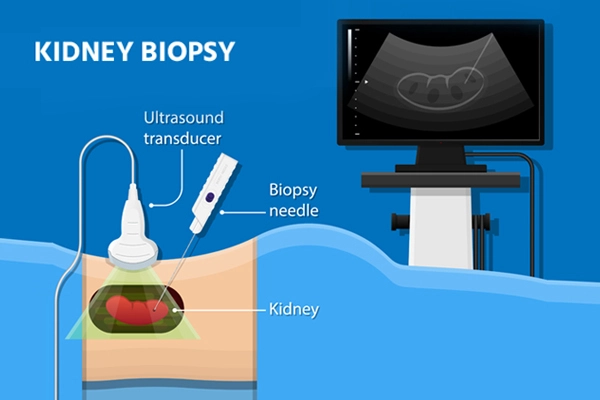
Preparation
- The patient lies on their stomach (for native kidney biopsy) or on their back (for transplanted kidney biopsy).
- Blood pressure and vital signs are checked.
- The skin over the biopsy site is cleaned and sterilized.
- Local anesthesia is given to numb the area; sometimes mild sedation is provided.
Locating the Kidney
- An ultrasound or CT scan is used to precisely locate the kidney and guide the biopsy needle.
Needle Insertion
- A special biopsy needle is inserted through the skin into the kidney.
- The patient may be asked to hold their breath for a few seconds while the sample is taken to minimize movement.
Tissue Sample Collection
- Small pieces of kidney tissue are collected, usually 2-3 samples.
- A clicking sound may be heard when the sample is taken.
Who Will Perform the Kidney Biopsy Procedure?
A nephrologist (a kidney specialist) usually recommends and coordinates the kidney biopsy test. The actual procedure is typically performed by a radiologist using imaging guidance (like ultrasound or CT scan). In some cases, a urologist or interventional radiologist may also be involved, especially if a surgical biopsy is needed.
Post-Procedure Care
Rest in a recovery area for a few hours while the healthcare team monitors your condition.
You may be instructed to lie on your back or side to apply pressure to the biopsy site.
- Discharge and Recovery at Home: Once your healthcare provider is satisfied with your recovery, you'll be discharged with instructions for post-procedure care and activities to avoid.
- Follow-Up: Your healthcare provider will schedule a follow-up appointment to discuss the biopsy results, review your condition, and plan further treatment if necessary.
Kidney Biopsy Results
After the biopsy, the kidney tissue sample is examined under a microscope by a pathologist. The results usually take a few days to a week. The findings help doctors determine the type and severity of kidney disease.
What Doctors Look For in the Biopsy Sample?
- Glomeruli: Checking for scarring, inflammation, or deposits that may indicate glomerular disease.
- Tubules and Interstitium: Examining for infection, damage, or inflammation in the supporting structures of the kidney.
- Blood Vessels: Assessing for thickening, narrowing, or inflammation, which may suggest vascular disease or hypertension-related damage.
Why Kidney Biopsy Results Matter?
- They help identify the exact cause of kidney disease.
- Guide the treatment plan (medications, immunosuppressants, dialysis preparation, or surgery if needed).
- Provide prognostic information about disease progression.
Recovery After Kidney Biopsy Procedure
Recovery after a kidney biopsy requires careful monitoring and rest to ensure proper healing and prevent complications such as bleeding or infection.
Immediate Monitoring
- Patients are kept under observation for several hours.
- Vital signs (blood pressure, pulse, and urine output) are closely monitored.
- A urine test may be done to check for blood.
Bed Rest
- Strict bed rest for 6-8 hours is usually recommended after the biopsy to minimize bleeding risk.
- In some cases, an overnight hospital stay may be advised.
Pain and Discomfort
- Mild back or biopsy site pain is common and usually managed with pain relievers prescribed by the doctor.
Activity Restrictions
- Heavy lifting, strenuous exercise, or activities that may strain the back should be avoided for 1-2 weeks.
- Normal daily activities can usually be resumed within a few days.
Follow-Up
- A follow-up appointment is scheduled to review biopsy results.
- Patients should report symptoms such as persistent pain, heavy blood in urine, fever, or dizziness immediately.
Hydration
- Drinking adequate fluids is encouraged unless otherwise restricted by the doctor.
Benefits of Kidney Biopsy
A kidney biopsy provides valuable information that other tests like blood, urine, or imaging cannot always reveal. It helps doctors understand the exact cause and extent of kidney disease, which is essential for proper treatment.
- Accurate Diagnosis:Identifies specific kidney conditions such as glomerulonephritis, nephrotic syndrome, lupus nephritis, or rejection in kidney transplants.
- Guides Treatment Plans; Helps doctors choose the most effective treatment (medications, lifestyle changes, or surgery).
- Assesses Severity of Disease: Determines how much damage has occurred in the kidney tissues.
- Monitors Progress: Useful in tracking the effectiveness of ongoing treatments. Helps in early detection of complications after a kidney transplant.
- Improves Prognosis: Early and precise diagnosis enables timely intervention, reducing the risk of kidney failure.
Risks and Complications of Kidney Biopsy
While a kidney biopsy is generally safe and provides valuable diagnostic information, like any medical procedure, it carries some potential risks and side effects.
- Bleeding: Minor bleeding is common, but in rare cases, severe bleeding may occur and require further treatment.
- Infection: There's a slight risk of infection at the biopsy site or internally, which may need antibiotics.
- Pain or Discomfort: Some patients may experience back or flank pain after the procedure.
- Blood in Urine: Hematuria (blood in the urine) can happen but usually clears up within a few days.
- Injury to Kidney or Nearby Organs: Rarely, the needle may cause damage to the kidney or surrounding structures.
- Need for Additional Procedures: In uncommon cases, complications may lead to additional imaging or surgical intervention.
These risks are generally low and are minimized by performing the procedure under ultrasound or CT guidance with expert care.
Kidney Biopsy Test Cost in India
The cost of a Kidney Biopsy test in India usually ranges from Rs. 5,000 to Rs. 15,000, depending on the city, hospital, and whether it is done as an inpatient or outpatient procedure. Factors like doctor's expertise, type of biopsy (needle or surgical), use of ultrasound/CT guidance, and hospital facilities can also affect the price. Patients should confirm the package details, as charges may include consultation, procedure, and pathology tests.
 040 68334455
 WhatsApp
 Patient Portal
 Home Care