What is the Excision of the Parotid Gland?
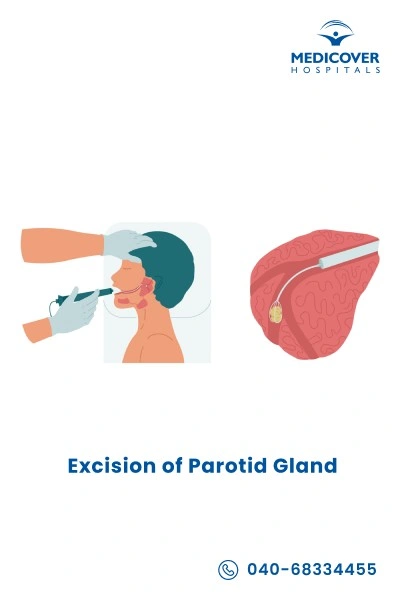
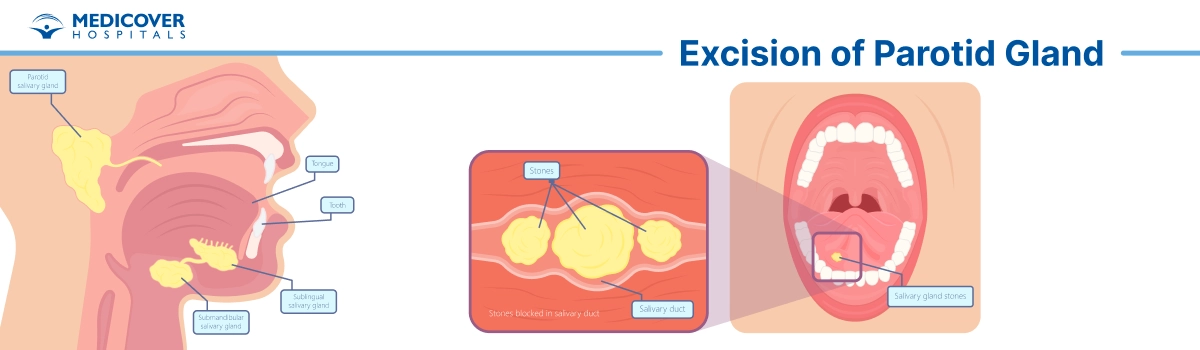
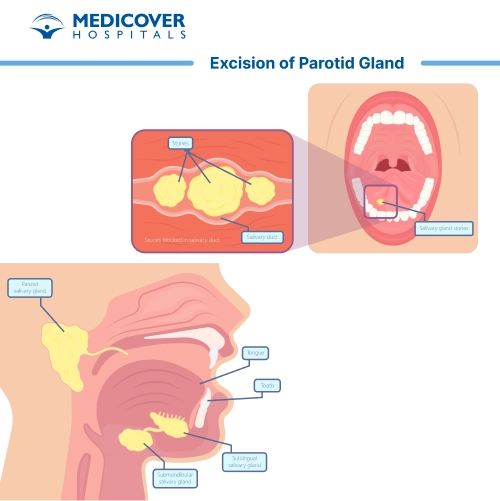
Excision of the parotid gland, medically known as parotidectomy, is a surgical procedure where part or all of the parotid gland (the largest salivary gland located in front of and just below the ear) is removed.
This procedure is most often carried out to treat parotid gland tumors, which can be benign (non-cancerous) or malignant (cancerous). It may also be done in rare cases of chronic infection, inflammatory disease, or obstruction of the salivary duct.
The goals of surgery are to:
- Remove tumors or diseased tissue before they spread or cause complications.
- Preserve important facial structures, especially the facial nerve that controls movement of the face.
- Restore comfort and oral function, improving chewing, speaking, and saliva flow.
- Prevent recurrence or long-term damage caused by untreated conditions.
Types of Parotid Gland Excision
The choice of procedure depends on the tumor's location, size, growth pattern, and whether it is benign or malignant. The surgeon also considers how close the tumor lies to the facial nerve.
Superficial Parotidectomy
- Removes only the superficial lobe of the parotid gland.
- Most common surgery because around 80% of parotid tumors occur here.
- Typically used for benign growths such as pleomorphic adenoma or Warthin's tumor.
- The facial nerve is carefully preserved.
Total Parotidectomy
- Removes both superficial and deep lobes of the parotid gland.
- The tumor is larger or deeper in location.
- There is suspicion of malignancy.
- Requires more complex dissection around the facial nerve.
Radical Parotidectomy
- Rare and reserved for aggressive or invasive cancers.
- Involves removing the entire parotid gland, and sometimes nearby structures such as:
- Segments of the facial nerve (if invaded by cancer).
- Adjacent muscles, skin, or lymph nodes.
- Often followed by reconstructive surgery and sometimes radiation therapy.
2-4 Hours
Surgery Duration
General Anesthesia
Anesthesia Used
6-8 Weeks
Full Recovery Timeline
When is Excision of the Parotid Gland Recommended?
Excision of the parotid gland, also called parotidectomy, is advised when the gland shows signs of disease, tumor growth, or complications affecting nearby structures. The main goal of surgery is to remove abnormal tissue, prevent further damage, and protect facial nerve function.
Common Indications
Persistent Lump or Swelling
- A firm lump near the jawline, ear, or cheek that does not resolve over time is one of the most common reasons for surgery.
- Even if painless, such swellings require evaluation as they may represent benign or malignant tumors.
Pain or Discomfort in the Parotid Region
- Ongoing pain, tenderness, or a feeling of pressure in the gland can indicate infection, chronic inflammation, or a tumor pressing on surrounding tissues.
Rapidly Growing Mass
- A lump that increases in size over weeks or months raises concern for malignancy.
- Surgical removal is recommended to prevent spread and allow accurate diagnosis.
Facial Weakness, Tingling, or Numbness
- The facial nerve runs through the parotid gland. If a tumor compresses or invades the nerve, patients may notice weakness, twitching, or loss of sensation on one side of the face. These are warning signs that surgery is urgently required.
Confirmed Malignant Tumor
- If a biopsy confirms cancer in the parotid gland, excision becomes the standard treatment.
- Removing the gland helps prevent local invasion, spread to lymph nodes, or distant metastasis.
Other Situations Where Surgery May Be Considered
- Recurrent or chronic parotid infections (sialadenitis) not responding to medical treatment.
- Obstructive stones or cysts within the gland that cause repeated swelling.
- Cosmetic or functional concerns if a large benign tumor affects appearance or interferes with chewing and speaking.
How to Prepare for Parotid Gland Surgery?
Proper preparation is key to a safe surgery, smooth recovery, and lower risk of complications. Both medical and personal readiness play an important role.
Medical Evaluation and Tests
Before surgery, your doctor will order several tests to understand the size, type, and exact location of the growth in the parotid gland. These may include:
- Imaging Tests: MRI, CT scans, and ultrasound help map the tumor and check if it has spread to nearby structures.
- Biopsy: A fine needle aspiration (FNA) or core biopsy may be done to confirm whether the tumor is benign or malignant.
- Blood Tests: Routine tests check your overall health and ability to tolerate anesthesia.
- These results guide the surgeon in planning the safest and most effective approach.
Lifestyle Adjustments
Making healthy changes in the weeks before surgery helps your body heal faster:
- Quit Smoking: Smoking reduces oxygen flow and delays wound healing. Stopping at least 2-3 weeks before surgery is highly recommended.
- Avoid Alcohol: Alcohol can interfere with anesthesia and increase bleeding risks.
- Pause Certain Medications: Blood-thinning drugs (like aspirin, warfarin, or some herbal supplements) should be stopped as advised by your doctor to lower the risk of excessive bleeding.
Home Preparation
Since recovery requires rest and limited movement of the face and neck, it helps to prepare your home in advance:
- Arrange Support: Ask a family member or friend to stay with you for the first few days after surgery.
- Meal Planning: Keep soft, easy-to-chew foods ready (soups, smoothies, mashed vegetables, yogurt). Chewing may be slightly uncomfortable at first.
- Comfort Setup: Prepare a resting space with extra pillows to keep your head elevated, which helps reduce swelling.
The Day Before and Day of Surgery
Following hospital instructions carefully ensures surgery goes smoothly:
- Fasting: You will be asked not to eat or drink anything for at least 6-8 hours before surgery to prevent anesthesia complications.
- Showering: Take a regular shower the night before or morning of surgery, avoiding lotions, creams, or makeup near the surgical area.
- Clothing: Wear loose, comfortable clothes with buttons or zippers in the front, as pulling garments over the head may be difficult after surgery.
- Relaxation: Try to stay calm and get a good night's sleep. Stress management (deep breathing, meditation) can ease anxiety.
What Happens During Excision of Parotid Gland Surgery?
Excision of the parotid gland (parotidectomy) is a surgical procedure performed to remove part or all of the parotid gland, usually due to tumors, cysts, or chronic infections. The surgery is carried out under general anesthesia, which means you will be asleep and pain-free throughout the operation.
Preparation & Anesthesia
- Before surgery, your vital signs are checked and an intravenous (IV) line is started.
- General anesthesia is given, ensuring you are unconscious and comfortable during the procedure.
Incision / Access Point
- The surgeon makes a small, curved incision just in front of the ear, often extending slightly downward along the natural skin crease in the neck.
- This placement is chosen carefully so that the scar blends with normal facial lines and is less noticeable after healing.
Main Procedure
- The parotid gland lies close to the facial nerve, which controls movement of the face.
- The surgeon uses delicate instruments to separate and protect the facial nerve while removing the diseased part of the gland.
- Depending on the condition, either a superficial parotidectomy (removing only the outer portion) or a total parotidectomy (removing the entire gland) may be performed.
Closure
- Once the gland or affected portion is removed, the incision is closed using fine stitches to reduce scarring.
- Sometimes, a small drainage tube may be placed temporarily to prevent fluid collection.
Recovery Room
- After surgery, you are taken to the recovery area where nurses and doctors closely monitor your breathing, blood pressure, and comfort.
- Once stable, you will be shifted to a regular hospital ward.
What to Expect After Parotid Gland Tumor Removal?
Recovery from a parotidectomy is a gradual process, and each stage comes with its own milestones. Proper post-surgical care ensures faster healing, lowers the risk of complications, and helps restore normal function.
First Few Days After Surgery
- Hospital Stay: Most patients remain in the hospital for 1-3 days for observation. A small drainage tube may be placed near the incision to prevent fluid build-up.
- Common Symptoms: Swelling, bruising, and mild discomfort around the ear, cheek, or jawline. Pain medication and cold compresses help reduce these symptoms.
- Care Tips: Keep the surgical area clean and dry, avoid touching the incision unnecessarily, and follow the surgeon's instructions for wound dressing.
Weeks 2-4
- Healing Progress: Stitches are usually removed within 7-10 days. Swelling and bruising gradually subside.
- Activity Level: Patients can resume light activities such as walking or working at a desk. Strenuous exercise and heavy lifting should still be avoided.
- Jaw Function: Some patients notice stiffness while chewing or yawning. Gentle jaw-opening exercises, if recommended, can improve mobility.
Weeks 5-6
- Appearance: Swelling continues to reduce, and scars begin to fade.
- Function: Improved jaw movement and easier chewing. Most patients return to normal daily routines by this time.
- Possible Sensations: Some people experience tingling, numbness, or mild weakness in parts of the face due to nerve irritation. These often improve with time.
3-6 Months
- Complete Healing: By this stage, oral and facial functions are usually fully restored.
- Long-Term Changes: In some cases, patients may develop Frey's syndrome (sweating near the cheek while eating), which can be managed with medication or minor procedures if bothersome.
- Scar Care: Silicone gels or creams and sun protection help scars heal smoothly.
Doctor's Tip
"Avoid chewing hard or crunchy foods immediately after surgery. Opt for soft, nutrient-rich meals such as soups, smoothies, and cooked vegetables to speed up recovery and reduce strain on the jaw."
Benefits of Excision of the Parotid Gland
Surgical removal of a parotid gland tumor offers both medical and quality-of-life benefits.
- Elimination of Tumor Growth: Surgery removes both benign (non-cancerous) and malignant (cancerous) tumours, reducing the chance of recurrence or future complications.
- Prevention of Cancer Spread: In cases where the tumor is malignant, early removal lowers the risk of cancer spreading to nearby tissues, lymph nodes, or distant organs.
- Relief from Symptoms: Patients often experience pain, swelling, or discomfort near the ear, cheek, or jaw. Surgery relieves pressure in this area, improving comfort.
- Improved Oral and Facial Function: Tumors can interfere with chewing, speaking, or mouth movements. Excision restores normal jaw and oral function, making daily activities easier.
- Enhanced Facial Appearance: Visible swelling or lumps on the side of the face may cause self-consciousness. Removing the tumor helps restore a more natural appearance.
Risks of Excision of the Parotid Gland
Like any surgery, excision of the parotid gland carries some risks. Most of these are temporary and improve as the body heals. Still, it is important for patients to understand the possible outcomes before the procedure.
Temporary Facial Weakness or Numbness
- The facial nerve passes through the parotid gland. During surgery, this nerve can get stretched or irritated.
- This may cause temporary weakness, tingling, or numbness on one side of the face. In most cases, these symptoms fade within a few weeks to months as the nerve recovers.
Scarring
- A scar may remain near the ear or along the jawline after the surgery. However, surgeons usually make careful incisions in natural skin folds.
- This helps the scar blend in and makes it less noticeable over time. Proper wound care can also support smoother healing.
Infection or Bleeding
- Although uncommon, there is a small risk of infection or bleeding after the operation. These issues are usually mild and can be treated with antibiotics or simple medical care.
- Patients are advised to follow post-surgery instructions closely to lower this risk.
Rare Risk of Permanent Facial Nerve Damage
- In rare situations, the facial nerve may be injured, leading to lasting weakness in facial muscles.
- This can affect expressions such as smiling or closing the eyes. Fortunately, this risk is very low when the surgery is performed by an experienced head and neck surgeon.
What is the Cost of Excision of Parotid Gland in India?
The cost of excision of parotid gland varies with the tumor's size, type of surgery, and hospital facilities. On average, it ranges from Rs. 1,20,000 to Rs. 2,50,000. To know the exact cost for your case, please contact our customer support team for detailed guidance.
 040 68334455
 WhatsApp
 Patient Portal
 Home Care