What is ACDF Surgery?
ACDF surgery, also known as anterior cervical discectomy and fusion or anterior cervical spine surgery, is a cervical surgery performed to treat problems in the neck that affect the spinal cord or nerve roots.
This cervical operation is commonly indicated for conditions such as herniated discs, degenerative disc disease, cervical spondylosis, or other disorders that cause compression of the spinal nerves.
The main goal of ACDF spine surgery is to relieve symptoms like neck pain, numbness, tingling, or weakness in the arms and hands that result from nerve compression.
By removing the damaged disc and fusing the adjacent vertebrae, this anterior cervical discectomy restores spinal stability and alignment while reducing pressure on the spinal cord.
Types of ACDF Surgery
Anterior cervical discectomy and fusion (ACDF surgery) can be classified based on the surgical approach, implants used, and fixation methods. Understanding these types helps patients and surgeons select the most suitable cervical surgery for individual needs.
By Surgical Approach
- Standard Anterior Approach: This is the most commonly used method for ACDF surgery. The surgeon accesses the cervical spine from the front of the neck to remove the damaged disc and decompress the spinal nerves. This approach allows for clear visualization and precise removal of disc material.
- Minimally Invasive Anterior Approach: Uses smaller incisions and specialized instruments to minimize tissue disruption, reduce blood loss, and shorten recovery time. This is often recommended for patients concerned about scarring or longer hospital stays.
- Hybrid or Multi-Level Approach: In cases where multiple vertebral levels are affected, the surgeon may combine standard anterior exposure with smaller additional incisions to safely address all affected segments.
By Fusion Technique
- Autograft Fusion: Uses bone harvested from the patient's own body, usually from the hip, to promote natural fusion between vertebrae. This method has a high success rate for bone healing but may cause additional postoperative discomfort at the donor site.
- Allograft Fusion: Uses donor bone tissue to fill the disc space and encourage fusion, avoiding the need for harvesting the patient's bone.
- Synthetic Bone Substitutes: Modern materials such as hydroxyapatite or polyetheretherketone (PEEK) cages are used to maintain disc height and facilitate fusion while eliminating the need for autograft harvesting.
Implants Used in ACDF Surgery
- Interbody Cages: Placed between the vertebrae to maintain proper disc height and alignment while fusion occurs.
- Bone Graft Spacers: Provide structural support in the disc space and enhance fusion.
- PEEK or Titanium Cages: Durable and radiolucent implants that allow clear imaging during follow-up and provide long-term structural support for cervical fusion.
Fixation Methods
- Plate and Screw Fixation: Metal plates and screws stabilize the vertebrae while fusion occurs, reducing the risk of problems after ACDF surgery such as instability or nonunion.
- Stand-Alone Cages: Some modern cages have integrated screws or devices to provide stability without additional plates, reducing operative time and tissue disruption.
- Minimally Invasive Fixation: Advanced fixation techniques with smaller implants reduce surgical trauma, promote faster recovery, and support early neck mobility.
Note: The choice of surgical approach, fusion technique, implant, and fixation method depends on factors such as the number of affected vertebral levels, severity of cervical spine disease, patient anatomy, and surgeon preference. Proper planning helps reduce problems after ACDF surgery and optimizes recovery.
1 to 3 Hours
Surgery Duration
General Anesthesia
Anesthesia Used
3-6 Months
Full Recovery Timeline

Indications of ACDF Surgery
ACDF surgery is typically recommended for individuals who are experiencing symptoms due to cervical spine issues that have not responded well to conservative treatments.
Common indications for ACDF surgery include
- Herniated Disc: If the disc in the cervical spine becomes herniated, it can cause pressure on the spinal nerves or cord, which can result in neurological symptoms such as pain, numbness, and weakness.
- Degenerative Disc Disease: Over time, the discs between the vertebrae can degenerate, causing pain and reduced mobility. ACDF may be performed to alleviate these symptoms and stabilize the spine.
- Spinal Stenosis: Narrowing of the spinal canal can lead to compression of the spinal cord or nerve roots, resulting in pain and other symptoms. ACDF surgery can help relieve this pressure.
- Cervical Radiculopathy: This condition occurs when a nerve in the cervical spine becomes pinched or irritated, causing pain, tingling, and weakness that radiates into the arm.
- Cervical Myelopathy: When the spinal cord is compressed due to degenerative changes, it can lead to problems with balance, coordination, and fine motor skills. ACDF surgery may be performed to address this issue.
- Cervical Instability: In cases where there is excessive movement between vertebrae, ACDF surgery can help stabilize the spine and prevent further damage.
Who is ACDF Surgery For?
ACDF surgery is for adults with confirmed cervical spine pathology causing persistent pain, nerve-related symptoms, or functional limitations that have not responded to conservative management.
Why is ACDF Surgery Done?
The procedure is performed to:
- Relieve neck and arm pain from nerve compression
- Stabilize the cervical spine
- Prevent worsening of neurological symptoms
- Improve overall quality of life
When Would a Doctor Recommend ACDF Surgery?
A spine specialist may recommend ACDF surgery when:
- Symptoms persist despite medications, physical therapy, or injections
- Imaging shows disc herniation, spinal stenosis, or cervical instability
- There is evidence of nerve or spinal cord compression
- Neurological deficits are worsening
Preparing for ACDF Surgery
Proper preparation for ACDF surgery (anterior cervical discectomy and fusion) is essential to ensure a safe procedure, minimize complications, and promote faster recovery. Here's what patients need to know before their cervical spine surgery.
How Should I Prepare Before the ACDF Procedure?
- Consult Your Surgeon: Schedule a detailed consultation with your spine surgeon or neurosurgeon to discuss your symptoms, medical history, medications, allergies, and expectations.
- Lifestyle Adjustments: Quit smoking and reduce alcohol intake as advised to improve healing and reduce surgical risks.
- Home Preparation: Arrange a comfortable recovery area at home, with easy access to essentials, pillows for neck support, and mobility aids if needed.
- Caregiver Support: Arrange for someone to help you during the first few days after ACDF spine surgery, including transportation, meal preparation, and medication management.
- Education: Understand the procedure, potential risks, and post-surgery care instructions to reduce anxiety and improve outcomes.
What Tests Are Done Before ACDF Surgery?
Before anterior cervical discectomy and fusion, your surgeon may request several diagnostic tests to evaluate your cervical spine:
- X-Rays: To check alignment and bone structure in your neck.
- MRI (Magnetic Resonance Imaging): To assess soft tissue, spinal cord, and nerve compression.
- CT Scan: Provides detailed images of the bones and discs.
- Blood Tests: To ensure overall health and suitability for anesthesia.
- Electrocardiogram (ECG) and Chest X-Ray: Sometimes needed to evaluate heart and lung function before surgery.
Should I Stop Eating, Drinking, or Taking Medicines?
- Fasting: Typically, you will be instructed to avoid food and drinks for several hours before surgery to prevent complications under anesthesia.
- Medications: Discuss all current medications with your doctor. Blood thinners or certain supplements may need to be stopped or adjusted prior to anterior cervical spine surgery.
- Hydration: Follow your surgeon's instructions regarding water intake before the procedure.
What Happens Before ACDF Surgery?
Before your ACDF surgery, the following steps usually take place:
- Preoperative Assessment: Nurses and anesthesiologists review your medical history, vital signs, and test results.
- Consent: You will sign consent forms confirming that you understand the procedure, benefits, and potential risks.
- Marking the Surgical Site: The surgeon may mark your neck to ensure accurate surgical targeting.
- Anesthesia Preparation: You will meet the anesthesiologist to discuss anesthesia options, and IV lines will be placed for medication administration.
- Final Checks: The surgical team ensures all equipment is ready, and you are safely transported to the operating room.
Steps During the ACDF Surgery Procedure
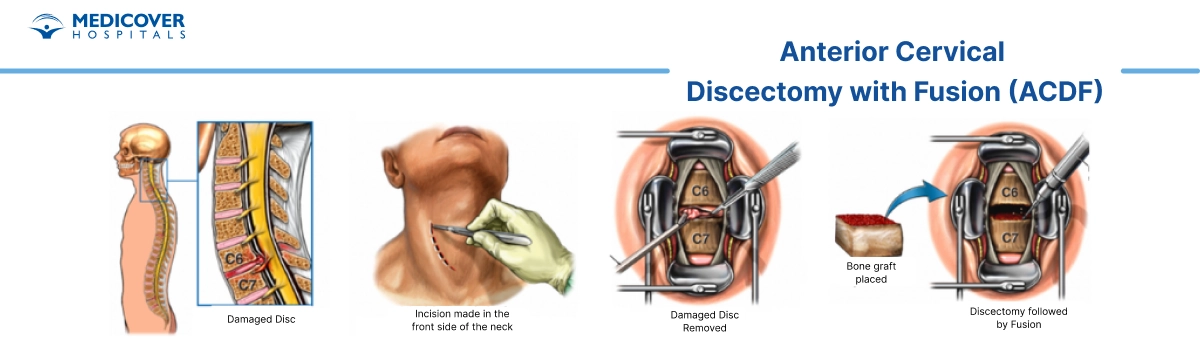
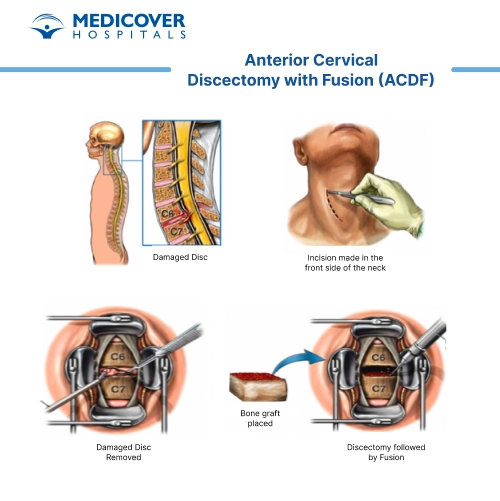
Here are the steps involved in the ACDF (Anterior Cervical Discectomy and Fusion) surgery:
- Anesthesia: The patient is given general anesthesia to ensure they are asleep and pain-free during the surgery.
- Incision: To access the spine, a small incision is made on the front of the neck, typically just above the collarbone.
- Discectomy: The damaged or herniated disc between the cervical vertebrae is removed to relieve pressure on the spinal cord or nerves.
- Bone Graft Placement: A bone graft (either from the patient's own body or a donor) is inserted into the space left by the removed disc. This helps the vertebrae fuse together.
- Instrumentation: In some cases, a metal plate and screws may be used to hold the vertebrae in place while they fuse.
- Closing the Incision: The incision is closed with sutures, and a dressing is applied.
- Postoperative Care: The patient is monitored as they wake up from anesthesia and is given pain management medications. The recovery process involves rest, avoiding certain movements, and physical therapy to regain mobility.
Each of these steps helps ensure the proper healing of the spine and relief from symptoms associated with cervical disc problems.
Who will do ACDF Surgery?
ACDF (Anterior Cervical Discectomy and Fusion) surgery is typically performed by specialized surgeons. It's crucial to consult the right expert for successful outcomes.
Benefits of ACDF Surgery
Anterior Cervical Discectomy and Fusion (ACDF surgery) is a highly effective procedure for treating cervical spine conditions. The main benefits include:
- Pain Relief: ACDF spine surgery alleviates chronic neck pain, arm pain, and nerve-related discomfort caused by herniated discs or spinal compression.
- Improved Mobility: Patients often regain the ability to perform daily activities with reduced stiffness and improved neck movement.
- Nerve Decompression: By removing the affected disc and relieving pressure on spinal nerves, ACDF surgery helps reduce symptoms like numbness, tingling, and weakness in the arms and hands.
- Spinal Stability: The fusion process strengthens the cervical spine, providing long-term stability and preventing abnormal vertebral movement.
- Enhanced Recovery: Proper surgical technique promotes healing and can shorten recovery time, allowing a safer return to normal life.
- Prevention of Further Problems: By addressing disc degeneration, cervical radiculopathy, or cervical myelopathy, ACDF surgery helps prevent worsening of spinal issues and neurological deficits.
Risks of ACDF Surgery
While ACDF spine surgery is generally safe, patients should be aware of possible ACDF surgery risks, which include:
- Infection: Postoperative infections at the incision site or deeper in the cervical region.
- Bleeding: Excessive bleeding during or after surgery, although uncommon.
- Nerve Damage: Rare injury to the spinal cord or nerve roots, potentially causing numbness, weakness, or other neurological deficits.
- Swallowing Difficulties (Dysphagia): Temporary or occasionally prolonged issues swallowing after anterior cervical spine surgery.
- Voice Changes (Hoarseness): Potential temporary or persistent changes in voice due to nerve irritation.
- Failed Fusion (Nonunion): The vertebrae may not fuse properly, requiring additional intervention.
- Implant-Related Problems: Loosening or malfunction of plates or screws used to stabilize the spine.
- Adjacent Segment Disease: Increased stress on neighboring vertebrae over time, which may cause degeneration in adjacent segments.
Side Effects After ACDF Surgery
Common problems after ACDF surgery or post-operative side effects include:
- Mild to moderate neck pain or stiffness, which usually improves with time and physical therapy.
- Temporary soreness or tenderness at the incision site.
- Occasional numbness or tingling in the arms or hands during the early recovery period.
- Mild difficulty swallowing or throat discomfort, usually resolving within a few weeks.
By understanding the benefits, risks, and side effects of ACDF surgery, patients can make informed decisions and follow post-operative care instructions to ensure optimal recovery.
Recovery After ACDF Surgery
Anterior Cervical Discectomy and Fusion (ACDF surgery) recovery is a gradual process that requires patience, careful monitoring, and adherence to post-operative instructions. Recovery outcomes depend on the extent of the cervical spine surgery, the patient's overall health, and adherence to guidelines provided by the surgeon.
What to Expect Immediately After the Procedure?
- Hospital Monitoring: After ACDF spine surgery, you will be monitored in the recovery room. Vital signs, neurological status, and wound condition are closely observed.
- Pain Management: Mild to moderate pain is common. Your doctor will prescribe medications to manage discomfort effectively.
- Neck Support: A neck brace or collar may be applied to stabilize the cervical spine and protect the surgical site.
- Limited Mobility: Movement will be restricted initially, and you may be assisted when getting out of bed for safety.
- Dietary Instructions: Soft foods may be recommended temporarily if swallowing is uncomfortable.
Gradual Recovery and Rehabilitation
- Physical Therapy and Neck Exercises After ACDF Surgery: Your surgeon may recommend gentle neck exercises and physical therapy to improve flexibility, strengthen neck muscles, and reduce stiffness.
- Follow-Up Appointments: Regular visits are scheduled to monitor healing, fusion progress, and spinal alignment.
- Pain and Symptom Monitoring: Watch for persistent pain, numbness, or other neurological symptoms, and report them promptly.
Returning to Normal Activities
- Light Activities: Most patients can resume light daily activities within 2-4 weeks, depending on their individual healing progress.
- Gradual Increase in Activity: Avoid heavy lifting, sudden neck movements, or high-impact activities for at least 6-12 weeks.
- Driving: Typically, patients can resume driving after a few weeks if they are off narcotic pain medications and have adequate neck mobility.
Lifestyle Changes After ACDF Spine Surgery
Adopting lifestyle changes after anterior cervical discectomy and fusion helps ensure long-term spinal health:
- Posture: Maintain good posture to reduce stress on the cervical spine. Use ergonomic chairs and adjust your workstation to support proper neck alignment.
- Physical Activity: Gradually increase activity levels. Focus on low-impact exercises such as walking or gentle stretching, and avoid activities that strain the neck.
- Balanced Diet: Proper nutrition supports healing, reduces inflammation, and helps maintain a healthy weight, minimizing stress on the spine.
- Rest and Sleep: Prioritize adequate sleep and rest periods to allow the spine to recover. Consider using a supportive pillow that maintains cervical alignment.
- Avoid Smoking: Smoking can delay bone healing and fusion after ACDF surgery and increases the risk of complications.
- Ergonomics at Home and Work: Adjust sleeping positions, chairs, and screens to maintain cervical alignment and reduce strain during recovery.
Following these recommendations can significantly enhance recovery, improve outcomes, and reduce the risk of problems after ACDF surgery. Always consult your surgeon before resuming strenuous activities or exercises.
What is the cost of ACDF surgery?
The ACDF (Anterior Cervical Discectomy and Fusion) surgery cost in India is approximately Rs. 1,00,000 to Rs. 6,80,000, depending on factors like the number of vertebrae involved, type of implant, hospital location, and surgeon's expertise.
- Single-level fusion is on the lower end, while multi-level or advanced minimally invasive procedures cost more.
- Metro cities like Mumbai, Delhi, Bangalore, Chennai, and Hyderabad may have higher prices due to hospital facilities and surgeon experience.
- The overall cost also includes hospital stay, anesthesia, implants, and post-operative care.
Insurance may cover part of the cost, so it's recommended to check with your provider.
 040 68334455
 WhatsApp
 Patient Portal
 Home Care