 Call
Call Patient Reports
Understanding Pancreatic Cancer and Its Effects on Health
Written by Medicover Team and Medically Reviewed by Dr Kovvuru Bhaskar Reddy , Oncologists
Table of Contents
Pancreatic cancer occurs when abnormal cancer cells develop and multiply within the tissues of the pancreas. It can be difficult to diagnose at an early stage because it may cause few or nonspecific symptoms. As a result, many cases are diagnosed at an advanced stage, when treatment options may be more limited.
The pancreas is part of the digestive system and is located in the abdomen. It performs two important functions:
- Exocrine function that facilitates digestion
- Endocrine function that helps control blood sugar levels
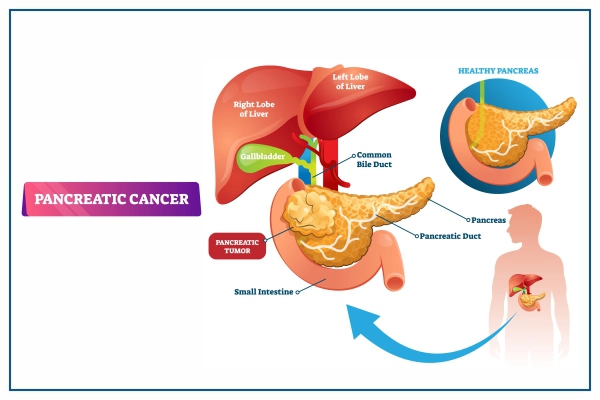
What are the Types of Pancreatic Cancer?
Pancreatic cancer is broadly classified according to the type of pancreatic cell from which it develops. The two main categories are exocrine tumors and neuroendocrine tumors.
Exocrine tumors are the most common type, while pancreatic neuroendocrine tumors develop from hormone-producing cells and can behave differently from exocrine cancers.
- Exocrine tumors: These tumors develop from the exocrine cells or ducts of the pancreas. Pancreatic ductal adenocarcinoma is the most common type of pancreatic cancer.
- Neuroendocrine tumors: These tumors arise from hormone-producing neuroendocrine cells in the pancreas. They may be functioning or nonfunctioning and can be benign or malignant depending on their characteristics.
What are the Symptoms of Pancreatic Cancer?
Pancreatic cancer may not cause noticeable symptoms during its early stages. Symptoms often become more apparent as the tumor grows or affects nearby organs, bile ducts, or other structures.
The symptoms can vary depending on the location and stage of the cancer. Common pancreatic cancer symptoms include:
- Backache caused by abdominal discomfort or tumor-related pressure
- Loss of appetite
- Unexplained weight loss
- Stools that are light-colored or greasy
- Itching sensation on the skin
- Dark urine
- Yellow pigmentation of the skin and the whites of the eyes (jaundice)
- New or difficult-to-control diabetes
- Blood clots
- Weakness
What are the Causes of Pancreatic Cancer?
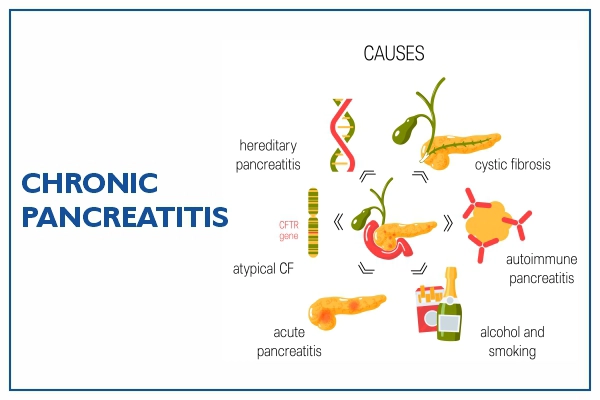
The exact cause of pancreatic cancer is not always known. It develops when genetic changes in pancreatic cells cause them to grow and divide uncontrollably, eventually forming a tumor.
Some genetic changes develop during a person's lifetime, while others may be associated with inherited genetic conditions. Smoking and certain other factors can increase the likelihood of developing pancreatic cancer.
When To See a Doctor for Pancreatic Cancer?
Consult your primary care doctor if you experience persistent or unexplained symptoms such as jaundice, weight loss, abdominal or back pain, changes in bowel habits, or new or difficult-to-control diabetes. Many of these symptoms can occur with other health conditions, so medical evaluation is important.
Your doctor may recommend diagnostic tests to identify the cause of your symptoms. If pancreatic cancer is suspected or confirmed, you may be referred to an oncologist or gastroenterologist for further evaluation and treatment.
Consult our oncologist or gastroenterologist for more information and appropriate treatment for pancreatic cancer.
Find Oncologists for Pancreatic Cancer Treatment Near You
- Doctor for Pancreatic Cancer in Hyderabad - Hitech City
- Doctor for Pancreatic Cancer in Hyderabad - Financial District
- Doctor for Pancreatic Cancer in Secunderabad
- Doctor for Pancreatic Cancer in Bengaluru
- Doctor for Pancreatic Cancer in Navi Mumbai
- Doctor for Pancreatic Cancer in Pune
- Doctor for Pancreatic Cancer in Vizag
How Is Pancreatic Cancer Diagnosed?
Pancreatic cancer is diagnosed using a combination of medical history, physical examination, blood tests, and imaging studies. These tests help identify a pancreatic abnormality, determine its location and size, and assess whether the cancer has spread.
A tissue sample may be obtained when needed to confirm the diagnosis and determine the type of cancer. CA 19-9 may support evaluation and monitoring, but it cannot by itself diagnose pancreatic cancer.
- Blood tests: Blood tests help assess overall health and liver and kidney function. Tumor markers such as CA-19-9 may be measured to support evaluation and monitor treatment response.
- Ultrasound and endoscopic ultrasound: Ultrasound can help identify abnormalities in the pancreas. Endoscopic ultrasound (EUS) provides detailed images and can be used to obtain a tissue sample through a needle biopsy when appropriate.
- CT scan: CT scanning provides detailed images of the pancreas and surrounding structures and helps assess the size and spread of the tumor.
- PET scan or positron emission tomography: PET imaging may be used in selected cases to evaluate possible distant spread of pancreatic cancer.
- MRI scan and MRCP: MRI can provide detailed images of the pancreas, while magnetic resonance cholangiopancreatography (MRCP) helps evaluate the pancreatic and bile ducts.
- Tissue sampling tests: Fine-needle aspiration or biopsy may be performed to examine pancreatic tissue and confirm the type of cancer.
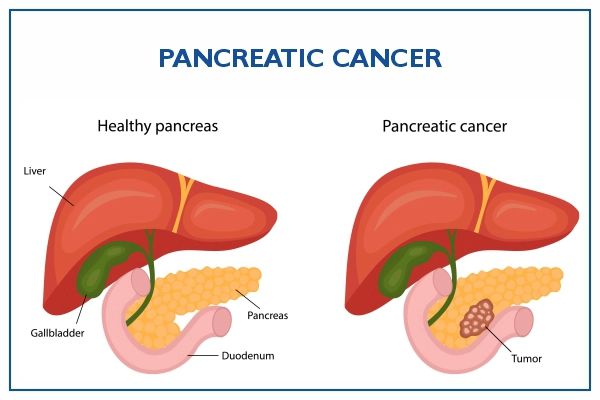
Imaging Tests
Imaging tests help doctors locate the tumor, assess its relationship with nearby blood vessels and organs, and determine whether the cancer has spread. The choice of imaging depends on the patient's symptoms and clinical findings.
- CT (computed tomography) scans
- MRI (magnetic resonance imaging)
- PET (positron emission tomography)
- Ultrasound test
- Tissue sampling tests
- Laparoscopy in selected cases
- Endoscopy when clinically indicated
How Is Pancreatic Cancer Treated?
Pancreatic cancer treatment depends on the type, stage, location, and overall health of the patient. Treatment may involve surgery, chemotherapy, radiation therapy, targeted treatment, or supportive care, often using more than one approach.
A multidisciplinary cancer team evaluates whether the tumor can be removed surgically and develops an individualized treatment plan based on the extent of disease.
Surgery: Pancreatic cancer surgery involves removing all or part of the pancreas and, when necessary, nearby tissues. The type of surgery depends on the location and extent of the pancreatic tumor.
Different Surgical Procedures
- Laparoscopy: Laparoscopy may be used in selected patients to assess whether cancer has spread within the abdomen and whether surgical removal of the primary tumor is appropriate.
- Surgical procedures to remove the pancreatic malignant tumor:
- Whipple procedure: Also known as pancreaticoduodenectomy, this surgery is commonly performed for tumors located in the head of the pancreas. It involves removing the pancreatic head along with nearby structures and reconnecting the digestive tract.
- Distal pancreatectomy: In this operation, the surgeon removes the body and tail of the pancreas. The spleen may also be removed depending on the location and extent of the tumor.
- Total pancreatectomy: This procedure involves removing the entire pancreas and may be considered when cancer affects multiple areas of the pancreas or when complete removal requires total pancreatectomy.
- Chemotherapy: It is a drug therapy used to destroy or slow the growth of cancer cells. In pancreatic cancer, chemotherapy may be given before or after surgery or for advanced disease to control tumor progression, reduce symptoms, and prolong survival.
- Radiation therapy (radiotherapy): Radiation therapy uses high-energy radiation to target cancer cells. It may be used before or after surgery or together with chemotherapy in selected cases.
- Supportive (palliative) care: Palliative care focuses on relieving pain and other symptoms, managing treatment-related effects, and supporting quality of life for patients and their families.
Your health is everything - prioritize your well-being today.
 Consult Pancreatic Cancer Doctors Today
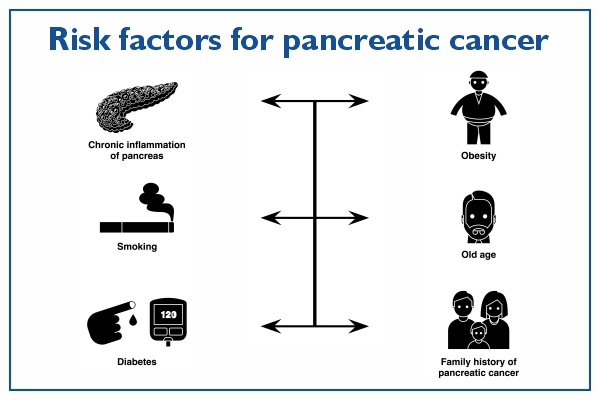
What are the Risk Factors of Pancreatic Cancer?
Several factors can increase the risk of pancreatic cancer. Having one or more risk factors does not mean that a person will develop pancreatic cancer, but understanding them can support risk assessment and appropriate medical follow-up.
The risk factors for pancreatic cancer include:
- Smoking
- Consuming tobacco products
- Excessive consumption of alcohol
- Obesity
- Older age
- Diabetes
- Chronic pancreatitis
- Cirrhosis of the liver
- Male sex, as pancreatic cancer is slightly more common in males
- Family history of pancreatic cancer
- Helicobacter pylori infection may be associated with an increased risk
Other possible risk factors include:
- Physical inactivity
- High intake of processed or red meat
- Dietary patterns associated with obesity and metabolic disease
Pancreatic Cancer Care at Medicover Hospitals
At Medicover Hospitals, we have a multidisciplinary team of oncologists, surgeons, gastroenterologists, and other specialists working together to provide comprehensive care for patients with pancreatic cancer.
With diagnostic imaging, laboratory investigations, and other appropriate diagnostic procedures, our specialists evaluate the patient's condition and develop a treatment plan based on the type and stage of cancer.
Our team adopts a multidisciplinary approach to treating pancreatic cancer and its related complications, with active participation from medical experts across different specialties.
We provide healthcare services across multiple departments with a focus on individualized treatment, symptom management, and supportive care throughout the cancer journey.
Frequently Asked Questions
1. How does pancreatic cancer affect digestion?
Pancreatic cancer can disrupt digestion by affecting the pancreas's ability to produce digestive enzymes. This can lead to problems with breaking down food and absorbing nutrients properly.
2. What are the symptoms of pancreatic cancer?
Symptoms of pancreatic cancer may include abdominal pain, jaundice (yellowing of the skin and eyes), unexplained weight loss, loss of appetite, nausea, and changes in stool color.
3. Is pancreatic cancer curable?
Pancreatic cancer can be challenging to cure, especially if it's detected at a later stage. However, treatment options such as surgery, chemotherapy, and radiation therapy can help manage the disease and improve quality of life.
4. How does pancreatic cancer affect waste removal?
Pancreatic cancer can obstruct the bile duct, which is responsible for carrying bile produced by the liver to the small intestine for digestion. This obstruction can lead to jaundice and affect the body's ability to remove waste properly.
5. Are there risk factors for developing pancreatic cancer?
Yes, several risk factors can increase the likelihood of developing pancreatic cancer, including smoking, obesity, family history of pancreatic cancer, chronic pancreatitis, and certain genetic syndromes.


