 Call
Call Patient Reports
The Echocardiogram (Echo) test is a non-invasive imaging test used to evaluate the heart's structure and function. It is quick, safe, and commonly performed to detect heart conditions. Costs may vary depending on the city and lab. The test has minimal risks and helps doctors assess the heart's health using normal range values.
What is the Echo Test?
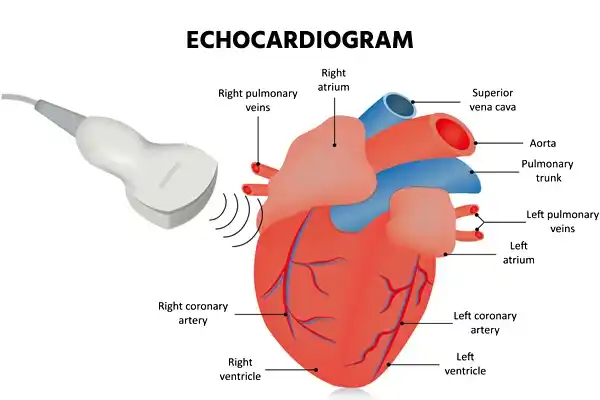
An Echo Test is medical imaging or ultrasound of the heart. It helps the doctor monitor the heart's functioning and diagnose heart disease.
Other names - Echo Testcardiography, Echo Testcardiogram, cardiac Echo Test, Echo Test test
No special preparation is required for a standard transthoracic Echocardiogram. However, in the case of a transesophageal Echocardiogram, the doctor may advise the patient not to eat for several hours before the procedure.
Echo Test Price or Cost in India
| Location | Echo Test Cost |
| Echo test cost in Bengaluru | Rs. 1000 to Rs.3000 |
| Echo test cost in Warangal | Rs. 1000 to Rs.3000 |
| Echo test cost in Hyderabad | Rs. 1000 to Rs.3000 |
| Echo test cost in Pune | Rs. 1000 to Rs.3000 |
| Echo test cost in Vizag | Rs. 1000 to Rs.3000 |
| Echo test cost in Nashik | Rs. 1000 to Rs.3000 |
| Echo test cost in Chhatrapati Sambhaji Nagar | Rs. 1000 to Rs.3000 |
| Echo test cost in Nellore | Rs. 1000 to Rs.3000 |
| Echo test cost in Chandanagar | Rs. 1000 to Rs.3000 |
| Echo test cost in Srikakulam | Rs. 1000 to Rs.3000 |
| Echo test cost in Sangamner | Rs. 1000 to Rs.3000 |
| Echo test cost in Kurnool | Rs. 1000 to Rs.3000 |
| Echo test cost in Kakinada | Rs. 1200 to Rs.3200 |
| Echo test cost in Karimnagar | Rs. 1200 to Rs.3200 |
| Echo test cost in Vizianagram | Rs. 1000 to Rs.3000 |
| Echo test cost in Nizamabad | Rs. 1000 to Rs.3000 |
| Echo test cost in Navi Mumbai | Rs. 1500 to Rs.3500 |
How to Prepare for an Echo Test?
General Preparation
Follow Specific Instructions: Your doctor will give you specific instructions based on your medical condition and the type of echo heart test you are undergoing. It is important to follow these instructions carefully.
For Transthoracic Echocardiogram (TTE)
The TEE heart echo test uses a probe inserted down the esophagus to get images of the heart as clearly as possible. Best for detecting clots, valve problems or other heart conditions when traditional tests lack precision.
- No Special Prep: Usually, there is no need for special preparation such as fasting.
- Medication: Keep taking your medications as directed unless advised otherwise by your doctor.
- Attire: Put on comfortable, loose clothing. You may need to change into a hospital gown.
For Transesophageal Echocardiogram (TEE)
In this type of heart test, called a Transthoracic Echocardiogram (TTE), a gel is spread on the chest, and then a probe is moved across the skin to record images. Key ways in which to detect heart conditions like valve issues, cardiac disease, and excess fluid collection around the heart
- Fasting: Avoid eating or drinking for at least 6 hours before the test. This ensures an empty stomach, which is crucial for passing a probe through your esophagus.
- Medications: Your doctor may recommend avoiding for certain medications. Follow the doctor guidance on which to take and skip on the test day.
- Transportation: Arrange for someone to drive you home after the test. Sedatives are used during a TEE, affecting your ability to drive or operate machinery.
For Stress Echocardiogram
An echo stress test is a variation of the standard echo test performed after exercise or medication to evaluate heart function under stress. It's helpful for diagnosing coronary artery disease and assessing overall heart performance.
- Fasting: As your healthcare provider advises, refrain from eating or drinking for a few hours before the test.
- Clothing and Footwear: Dress in comfortable attire and suitable shoes for physical activity.
- Medications: Your doctor may provide specific instructions regarding your medications. Some medicines must be discontinued a day or two before the test.
- Avoid Stimulants: Refrain from consuming caffeine or using tobacco on the test day, as they can impact heart function and potentially interfere with the test results.
Additional Tips
- Bring a Medication List: Make a list of all the medicines you're currently taking, including how much of each medicine you take and how often you take them.
- Arrive Early: Plan to arrive at the testing site early to complete any necessary paperwork and unwind before the test.
- Ask Away: Feel free to ask if you have any queries about the procedure.
Findings of an Echo Test
An echo cardiology test or echocardiogram, which visualises the heart's structure and functioning, gives information on several conditions regarding the heart. Some of the essential findings frequently picked up on an Echo Test Report are as follows:
- Heart Murmur: Evaluation of heart sounds may reveal any underlying problems
- Valve Issues: Noninvasive signs to detect conditions affecting the heart valves, including narrowing or leaking.
- Atrial Fibrillation: Takes notice of abnormal heart rhythms coming from the upper chambers.
- Fluid Around the Heart: Indicates whether fluid has formed in the pericardial sac, possibly an indicator of infection or inflammation.
- Heart Valve Clotting: Shows blood clots around heart valves, which may affect the flow of blood.
- Heart Muscle Thickening: Sees thickened heart muscle walls, often because of high blood pressure or other conditions.
Echo Test Risks And Side Effects
Echo tests are safe and noninvasive, with few risks. The side effects are the least common, including mild chest pain or discomfort caused by acoustic pressure and gel on the skin.
The gel/adhesive used during the test may also cause some minor skin rashes. Since no radiation is used, people of all ages can take the test, including pregnant women. There are usually no serious risks or problems with the test.
Why is the Echo Test Done?
The Echo Test is typically done to:
- Monitor heart health: It shows how is well your heart is pumping blood to the rest of your body.
- Detect heart disease: The test can help doctors identify the heart conditions, such as coronary artery disease.
- Check for valve problems: If your heart valves are not working properly (e.g., leaking or narrowing), the Echo Test can detect it.
- Identify fluid around the heart: Excess fluid may build up around the heart due to infections or other conditions.
- Evaluate heart function during treatment: Doctors may use the Echo Test to check how your heart is responding to medications or other treatments.
Get a second opinion from trusted experts and makeconfident, informed decisions.
 Get Second Opinion
When is the Echo Test Needed?
An Echo Test may be needed if:
- You have symptoms like chest pain, shortness of breath, or dizziness
- You have a heart condition like heart disease or high blood pressure.
- Your doctor needs to check how your heart is responding to treatment.
- There is suspicion of valve problems or abnormal heart rhythms.
Who Should Take the USG or Ultrasound Test?
Anyone with symptoms or a history of heart problems should consider an Echo Test. This includes:
- People with chest pain or discomfort
- Individuals experiencing difficulty breathing, dizziness, or fainting
- Those with a family history of heart disease
- People diagnosed with high blood pressure or other cardiovascular issues.
The test is also important for people being monitored for ongoing heart conditions or after heart surgeries to track their recovery.
How is the Echo Test Performed?
During an Echo Test, you will lie down on an table, and a gel will be applied to your chest to help the ultrasound waves travel better. The doctor or technician will move a device called a transducer (probe) over your chest to capture images of your heart. The images will be displayed on a screen and recorded for further analysis. For the Transesophageal Echo (TEE), a thin tube will be passed through your mouth into your esophagus to get clearer images of your heart.
Your health is everything - prioritize your well-being today.
Schedule Appointment
What Type of Sample is Collected for the Echo Test and How?
An Echo Test does not require a physical sample to be collected. The test uses usg or ultrasound waves to create images of your heart. A special gel is applied to your chest, and a probe is moved over your skin to capture clear images of your heart's structure and movement. This allows doctors to check your heart's size, shape, and how well it's functioning.
Are There Other Ways to Collect the Sample for the Echo Test?
The Echo Test itself doesn't involve collecting a sample. However, in some cases, doctors may use other tests like an Electrocardiogram (ECG) or blood tests to gain additional information about your heart health. These tests can help diagnose heart conditions that may not be visible on the Echo images.
How Long Does the Echo Test Take?
Typically, an Echo Test takes around 30 to 60 minutes. However, if you're undergoing a more detailed procedure like the Transesophageal Echo (TEE), it may take longer. Stress Echo tests, which require exercise or medication, may also take more time.
When Will I Get My Echo Test Results?
You'll get your Vitamin B12 test results in about 12 to 24 hours. We’ll send them on WhatsApp or hand you a printed copy. After that, our doctor will go over the results with you and let you know if any further steps are needed.
How Do I Understand My Echo Test Results?
Echo Test results can reveal several things, including:
- Heart function: Whether your heart is pumping blood effectively.
- Valve issues: Problems like leaking or narrowing of the heart valves.
- Heart disease: Signs of blocked arteries or weak heart muscles.
- Fluid around the heart: A possible indicator of infection or inflammation.
- If anything unusual is found, your doctor will explain the results in detail and recommend the next steps for treatment.
What Should I Do After Getting My Echo Test Results?
- Discuss the results with your doctor and understand the meaning of the findings and what they imply for your health.
- Follow your doctor's advice and might include changes to your medication, lifestyle, or further tests if necessary.
- Ask questions for your doctor if anything is unclear,to explain in simple terms.
Is the Echo Test Painful?
No, an Echo Test is completely pain-free. The procedure may feel a bit uncomfortable due to the pressure from the probe or the gel applied to your chest, but it doesn't cause pain. For Transesophageal Echo (TEE), you may experience some mild discomfort from the tube passed through your esophagus, but it is generally well-tolerated with sedation.
What are the Factors Affecting Echo Test Cost?
The cost of an Echo Test (Echocardiogram) in India can vary significantly based on several key factors.
One major factor is the type of healthcare facility-private hospitals and diagnostic centers usually charge more compared to government or charitable institutions.
The city or location also plays a role; metro cities like Mumbai, Bangalore, and Delhi often have higher rates than smaller towns.
Another important factor is the type of echo test being performed. A basic 2D Echo is generally more affordable, while advanced tests like Stress Echo or Transesophageal Echocardiogram (TEE) involve specialized equipment and expertise, raising the cost.
Additionally, doctor consultation charges, report urgency, and whether additional imaging or lab tests are required can also increase the final bill.
Other Tests
Frequently Asked Questions
The echo test is done to assess heart structure, function, and blood flow, helping diagnose conditions like valve issues, heart failure, or congenital defects.
It can detect valve abnormalities, heart chamber size, wall motion issues, fluid around the heart, clots, congenital defects, and pumping efficiency.
Fetal echocardiography is an ultrasound to assess a baby's heart while in the womb, used to detect congenital heart defects before birth.
No, an echo test is painless and non-invasive. It uses sound waves to create images of the heart without causing discomfort.
The test typically takes 30 to 60 minutes, depending on the type and complexity of the assessment required.
It's best to avoid smoking, as it can affect heart rate and blood pressure, potentially interfering with test accuracy.
An echo test doesn't directly detect blockages but can identify effects like reduced heart function or blood flow issues caused by blockages.
A trained cardiac sonographer or cardiologist performs the test, ensuring accurate imaging and interpretation of heart function.


