 Call
Call Patient Reports
Best Vertebroplasty Procedure Hospital with Advanced Care
At Medicover Hospitals, our neurosurgeons, with qualifications like MS, MCh, and DNB, perform vertebroplasty using minimally invasive techniques. This procedure stabilises spinal fractures, often resulting in shorter hospital stays and quicker recovery for patients across India.
Expert Surgeons
Yearly Surgeries
Patient Satisfaction
What is Vertebroplasty?
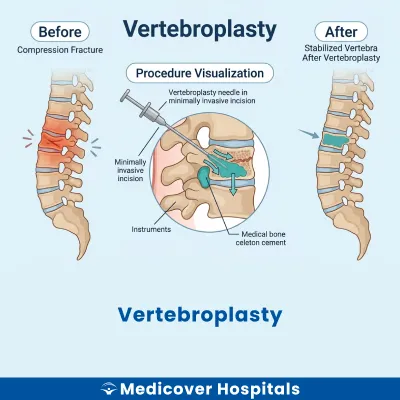
Vertebroplasty is a minimally invasive surgical procedure. It involves the spine, specifically the vertebrae (the small bones forming the backbone). During the procedure, a special bone cement is injected into a fractured vertebra. This helps stabilise the bone and relieve pain. It is often used for vertebral compression fractures.
This surgery is needed when vertebrae are weakened or fractured, often due to osteoporosis. Other causes include cancerous lesions or traumatic injuries. If left untreated, these fractures can lead to severe pain and reduced mobility. Modern surgical approaches for vertebroplasty include fluoroscopy-guided techniques. These ensure precise placement of the cement. This helps in achieving optimal results. Always consult a healthcare provider for personalised advice.
Vertebroplasty Doctors Near You
Discover skilled neurosurgeons for vertebroplasty at Medicover Hospitals across India. Choose your city and book a consultation to explore effective treatment options tailored to your needs.
Why Choose Medicover Hospitals for Vertebroplasty?
Get a second opinion from trusted experts and makeconfident, informed decisions.
 Get Second Opinion
Complete Guide To Vertebroplasty
Everything you need to know about the procedure, preparation, and recovery
Vertebroplasty Procedure Indications
Doctors recommend vertebroplasty when patients experience severe pain due to vertebral compression fractures. This procedure is considered when conservative treatments fail to provide relief.
Osteoporotic Vertebral Fractures
Patients with osteoporosis may suffer from sudden, severe back pain. Imaging tests like X-rays or MRIs reveal compression fractures in the vertebrae. When pain persists despite medication and physical therapy, vertebroplasty may be advised.
Vertebral Fractures from Trauma
Trauma can lead to intense back pain and limited mobility. CT scans or MRIs show fractured vertebrae. If pain management and bracing do not improve symptoms, vertebroplasty might be recommended.
Metastatic Spinal Tumours
Patients with cancer may experience back pain due to spinal tumours. Imaging reveals vertebral involvement. When radiation or chemotherapy fails to alleviate pain, vertebroplasty can be an option.
Multiple Myeloma
Individuals with multiple myeloma may have persistent back pain. Diagnostic imaging shows vertebral damage. If medical treatments do not relieve pain, vertebroplasty could be considered.
Vertebral Hemangiomas
Some patients experience pain from benign vascular tumours in the spine. MRI scans confirm the presence of hemangiomas. When symptoms are severe and unresponsive to other treatments, vertebroplasty may be suggested.
How to Prepare for Vertebroplasty?
Proper preparation for vertebroplasty is crucial to ensure a smooth procedure and recovery. It helps minimise risks and enhances the effectiveness of the treatment.
- Medication Review: Stop NSAIDs, anticoagulants, and herbal supplements as advised by your doctor.
- Fasting: Fast for at least 6 hours before the procedure if general anaesthesia is used.
- Medical History: Provide a complete list of medications with dosages to your healthcare team.
- Clothing: Wear loose, comfortable clothing on the day of the procedure.
- Transportation: Arrange for someone to drive you home post-procedure.
- Pre-Procedure Tests: Complete any blood tests or imaging studies as instructed by your doctor.
- Consent Form: Read and sign the consent form after discussing risks and benefits with your doctor.
- Allergy Check: Inform your doctor about any known allergies, especially to anaesthesia or contrast materials.
Vertebroplasty Procedure (Step-by-Step)
Vertebroplasty is performed by neurological surgeons. The procedure typically lasts 1 to 2 hours. It is usually done under local anaesthesia, sometimes with sedation.
- Preparation: The patient lies face down on the operating table. The area of the back where the procedure will be performed is cleaned and sterilised.
- Local Anaesthesia: Local anaesthesia is administered to numb the area. The patient remains awake but should feel minimal discomfort.
- Needle Insertion: A small incision, about 1-2 cm, is made. A trocar needle is carefully inserted through the incision into the fractured vertebra using imaging guidance.
- Cement Preparation: Medical-grade bone cement is prepared. It is mixed to a specific consistency for injection.
- Cement Injection: The cement is slowly injected through the needle into the vertebra. The patient may feel slight pressure but no pain.
- Needle Removal: Once the cement is in place, the needle is removed. The cement hardens quickly, stabilising the fracture.
- Post-Procedure Care: The incision is covered with a small bandage. The patient is monitored for a short period before being allowed to rest.
Who Performs Vertebroplasty Procedure?
Vertebroplasty is performed by neurosurgeons or interventional radiologists. These specialists have expertise in minimally invasive spinal procedures. They use imaging techniques to guide the instruments accurately during the procedure.
Recovery After Vertebroplasty Procedure
Recovery from a vertebroplasty procedure is generally quick. Most patients experience immediate pain relief. However, it's important to follow specific guidelines to ensure a smooth recovery.
Day 1-2:
- Rest is crucial. Avoid any strenuous activities.
- Start with a soft diet. Include curd, dal-rice, and soups.
- Drink plenty of water to stay hydrated.
Day 3-7:
- Gradually increase light activities like walking.
- Continue with a balanced diet. Add moong dal and khichdi for easy digestion.
- Avoid lifting heavy objects or bending forward.
Day 8-14:
- You can resume work or school if your job is not physically demanding.
- Incorporate gentle stretching exercises as advised by your doctor.
- Maintain a nutritious diet to aid in bone healing.
Phase 3 (Week 3-4):
- Gradually return to normal activities.
- Continue to avoid high-impact sports or heavy lifting.
- Regular follow-up with your doctor is recommended.
When to Seek Urgent Help
If you experience severe back pain, fever, numbness, or weakness in your legs, contact your healthcare provider immediately. These could be signs of complications.
Benefits of Vertebroplasty Procedure
Vertebroplasty is a minimally invasive procedure aimed at relieving pain and stabilising spinal fractures.
- Pain Relief: Provides significant reduction in back pain caused by vertebral compression fractures.
- Improved Mobility: Helps patients regain mobility and perform daily activities with ease.
- Quick Recovery: Typically allows for a faster recovery compared to traditional surgery.
- Outpatient Procedure: Often performed on an outpatient basis, reducing hospital stay.
Risks and Complications of Vertebroplasty Procedure
While vertebroplasty is generally safe, it carries certain risks and complications that patients should be aware of.
- Common: Temporary increase in pain immediately after the procedure.
- Common: Bleeding or infection at the injection site.
- Rare: Leakage of bone cement into surrounding areas, potentially causing nerve damage.
- Rare: Allergic reaction to the materials used in the procedure.
- Rare: Fracture of adjacent vertebrae due to altered spinal mechanics.
Cost of Vertebroplasty Procedure
The cost of a vertebroplasty procedure can vary Rs.150000 to Rs.300000 based on several factors such as the surgical approach, duration of hospital stay, room category, required diagnostics, and post-operative care.
At Medicover Hospitals, we ensure transparent pricing for all procedures. We offer support for insurance and third-party administrators (TPAs), including CGHS, ESI, and major TPAs. Cashless facility is available for added convenience. Please contact the hospital for the latest insurance panel details as these may change periodically.
Frequently Asked Questions
1. How much does Vertebroplasty procedure cost at Medicover Hospitals?
The cost of a Vertebroplasty procedure varies Rs.150000 to Rs.300000 based on individual needs. Please contact Medicover Hospitals for detailed pricing information.
2. Is Vertebroplasty procedure covered under health insurance at Medicover?
Vertebroplasty may be covered by CGHS, ESI, or major TPAs. Please contact the hospital for current panel details.
3. Can Vertebroplasty relieve my back pain?
Vertebroplasty aims to reduce pain from vertebral compression fractures. Most patients experience significant pain relief shortly after the procedure.
4. Will I need bed rest after Vertebroplasty?
Bed rest is usually minimal after Vertebroplasty. Most patients can resume light activities within a day.
5. Can I lift heavy objects post-Vertebroplasty?
Avoid lifting heavy objects for at least six weeks after Vertebroplasty. Gradual return to normal activities is advised under medical guidance.
6. What food should I eat after Vertebroplasty?
Consume a balanced diet with foods like curd, dal-rice, and fruits. Adequate calcium and vitamin D intake supports bone health.
7. Is there a risk of spinal cord injury in Vertebroplasty?
Spinal cord injury is a rare complication of Vertebroplasty. The procedure is generally safe when performed by experienced specialists.
8. What is the most common complication after vertebroplasty?
The most common complication of Vertebroplasty is leakage of the bone cement outside the vertebra, though it is usually minor and often causes no symptoms. Rarely, it can lead to nerve irritation or other complications.
9. When is it too late for vertebroplasty?
Vertebroplasty is most effective when done within a few weeks of a painful vertebral compression fracture. It may be less beneficial in chronic, healed fractures where pain is no longer due to active bone injury.
10. How long does it take to recover from a vertebroplasty?
Recovery from Vertebroplasty is usually quick, with many patients experiencing pain relief within 24–48 hours. Most people can return to normal activities within a few days, depending on their overall condition.


