 Call
Call Patient Reports
Peripherally Inserted Central Catheter Insertion Procedure at Medicover Hospitals
Peripherally Inserted Central Catheter (PICC) Insertion at Medicover Hospitals is performed using advanced interventional radiology techniques. Our team, with qualifications like MD, DNB, and DM, ensures precision in the procedure. This approach often results in shorter hospital stays for patients.
Expert Specialists
Yearly Procedures
Patient Satisfaction
What is Peripherally Inserted Central Catheter Insertion?
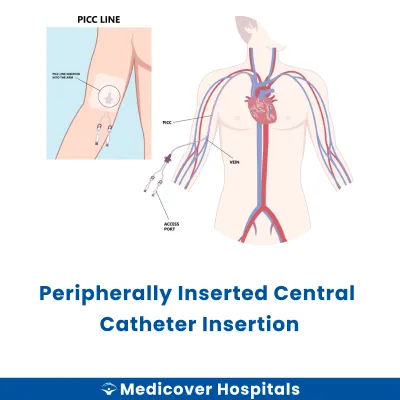
Peripherally Inserted Central Catheter Insertion is a medical procedure where a long, thin tube called a catheter is inserted into a peripheral vein, usually in the arm. The catheter is then advanced until it reaches a large vein near the heart, known as the superior vena cava. This procedure allows for long-term intravenous (IV) access for administering medications, nutrients, or for drawing blood.
This procedure is often needed for patients requiring prolonged IV therapy, such as chemotherapy, antibiotics, or total parenteral nutrition. Conditions like cancer, infections, or gastrointestinal disorders may necessitate this insertion. If untreated, patients might face complications from frequent needle sticks or inadequate treatment. Modern approaches include ultrasound-guided insertion, which enhances accuracy and reduces complications.
Peripherally Inserted Central Catheter Insertion Doctors Near You
Discover skilled interventional-radiology specialists for peripherally inserted central catheter insertion at Medicover Hospitals across India. Choose your city and book a consultation today for expert care.
Why Choose Medicover Hospitals for Peripherally Inserted Central Catheter Insertion?
Get a second opinion from trusted experts and makeconfident, informed decisions.
 Get Second Opinion
Complete Guide To Peripherally Inserted Central Catheter Insertion
Everything you need to know about the procedure, preparation, and recovery
Peripherally Inserted Central Catheter Insertion Procedure Indications
Doctors recommend a Peripherally Inserted Central Catheter (PICC) insertion when long-term intravenous access is needed. This procedure is often chosen when traditional IV lines are insufficient or unsuitable for the patient's treatment plan.
Long-term Medication Administration
Patients requiring prolonged medication, such as antibiotics or chemotherapy treatment, may experience frequent vein irritation or damage from regular IV lines. Doctors observe vein inflammation or difficulty in maintaining IV access. When short-term solutions fail, a PICC line is recommended for stable and reliable access.
Frequent Blood Sampling
Patients needing regular blood tests may experience discomfort and bruising from repeated needle sticks. Doctors note poor venous access or collapsing veins during examinations. A PICC line is advised when traditional methods become challenging and painful for the patient.
Total Parenteral Nutrition (TPN)
Patients unable to eat or absorb nutrients orally may experience weight loss and malnutrition. Lab tests show nutritional deficiencies. When oral or enteral feeding is not possible, a PICC line is used to deliver nutrients directly into the bloodstream.
Chronic Illness Management
Patients with chronic conditions like cancer tumor or renal disease often require ongoing treatments. Symptoms include fatigue and frequent hospital visits. When peripheral veins are exhausted, a PICC line offers a more sustainable solution for continuous care.
Inadequate Peripheral Venous Access
Some patients have small or damaged veins, making IV access difficult. Doctors find limited vein options during physical exams. When peripheral access is not feasible, a PICC line provides an alternative for necessary treatments.
How to Prepare for Peripherally Inserted Central Catheter Insertion?
Proper preparation is crucial for a smooth and successful Peripherally Inserted Central Catheter (PICC) insertion. It helps minimise risks and ensures the procedure goes as planned.
- Medication Review: Stop NSAIDs, anticoagulants, and herbal supplements a few days prior, as advised by your doctor.
- Fasting Guidelines: If sedation is planned, fast for at least 6 hours before the procedure.
- Hydration: Drink clear fluids up to 2 hours before the procedure unless instructed otherwise.
- Clothing: Wear loose, comfortable clothing to allow easy access to the arm.
- Transportation: Arrange for someone to drive you home post-procedure, especially if sedation is used.
- Medication List: Bring a list of all medications with dosages for the healthcare team.
- Skin Preparation: Follow any specific instructions given for skin cleaning or shaving the insertion area.
- Allergy Check: Inform the medical team about any known allergies, especially to latex or medications.
Peripherally Inserted Central Catheter Insertion Procedure (Step-by-Step)
PICC line insertion is performed by experienced specialists from the Interventional Radiology department. The procedure usually takes 30-60 minutes and is carried out under local anaesthesia.
- Preparation: The patient lies on a procedure table. The arm is cleaned with antiseptic solution. Sterile drapes are placed around the area.
- Local Anaesthesia: A small injection is given to numb the insertion site. The patient may feel a slight prick and some pressure.
- Vein Access: Using ultrasound guidance, the specialist identifies a suitable vein in the arm. A small needle is inserted to gain access.
- Guidewire Insertion: A guidewire is gently passed through the needle into the vein. The patient may feel a slight pressure but should remain still.
- Catheter Placement: A small incision (about 1-2 cm) is made. A catheter is threaded over the guidewire and advanced into the vein. The guidewire is then removed.
- Position Confirmation: The catheter's position is confirmed using X-ray or fluoroscopy. Adjustments are made if necessary.
- Securing and Dressing: The catheter is secured with sutures or adhesive. A sterile dressing is applied to protect the site.
Who Performs Peripherally Inserted Central Catheter Insertion procedure?
The procedure is performed by interventional radiologists. These specialists have expertise in minimally invasive techniques using imaging guidance. They ensure precise catheter placement and patient safety throughout the procedure.
Recovery After Peripherally Inserted Central Catheter Insertion Procedure
After a Peripherally Inserted Central Catheter (PICC) insertion, recovery is generally smooth. You might experience some discomfort or swelling at the insertion site. It's important to follow your healthcare provider's instructions for a safe recovery.
Day 1-2:
- Rest is crucial. Avoid strenuous activities.
- Keep the insertion site dry and clean.
- Consume light meals like curd rice or moong dal soup to avoid digestive discomfort.
Day 3-5:
- Swelling and discomfort should reduce. Continue to monitor the site.
- Gradually resume light activities, but avoid lifting heavy objects.
- Include soft foods like khichdi and dal-rice in your diet.
Day 6-7:
- Most people can return to work or school, depending on their comfort level.
- Maintain good hygiene around the catheter site.
- Stay hydrated and continue with nutritious meals, including soups and dals.
When to Seek Urgent Help:
- Fever or chills, which may indicate an infection.
- Redness, swelling, or pus at the insertion site.
- Difficulty breathing or chest pain.
- Unusual pain or discomfort in the arm where the catheter is placed.
Always follow your healthcare provider's advice and attend all scheduled follow-up appointments. If you have any concerns, contact your healthcare provider immediately.
Benefits of the Peripherally Inserted Central Catheter Insertion Procedure
The Peripherally Inserted Central Catheter (PICC) insertion offers several advantages for patients requiring long-term intravenous access.
- Long-term Access: Provides reliable access for medications, nutrition, or blood draws over an extended period.
- Reduced Needle Sticks: Minimises the need for repeated needle sticks, enhancing patient comfort.
- Lower Infection Risk: Compared to other central lines, PICCs have a lower risk of infection when properly maintained.
- Versatility: Suitable for various treatments, including chemotherapy and antibiotic therapy.
- Outpatient Management: Allows for home-based care, reducing hospital stays.
Risks and Complications of the Peripherally Inserted Central Catheter Insertion procedure
While generally safe, PICC insertion carries some risks and potential complications.
- Common - Infection: Risk of infection at the insertion site or within the bloodstream.
- Common - Thrombosis: Blood clots may form in the vein where the catheter is placed.
- Rare - Catheter Migration: The catheter may move from its original position.
- Rare - Nerve Injury: Possible nerve damage during insertion.
- Rare - Phlebitis: Inflammation of the vein can occur.
- Rare - Air Embolism: Air may enter the bloodstream during insertion.
Cost of the Peripherally Inserted Central Catheter Insertion procedure
The cost of a Peripherally Inserted Central Catheter (PICC) Insertion procedure at Medicover Hospitals varies depending on the ward category. Prices range from Rs. 10,500 to Rs. 31,000 across different ward types. This ensures transparent pricing for all patients.
We offer support for insurance and TPA, including CGHS, ESI, and major TPAs, with a cashless facility available. Please contact the hospital for the latest insurance panel details as these may change periodically.
Frequently Asked Questions
1. How much does Peripherally Inserted Central Catheter Insertion procedure cost at Medicover Hospitals?
The cost of a Peripherally Inserted Central Catheter Insertion procedure at Medicover Hospitals ranges from Rs. 10,500 to Rs. 31,000, depending on the facility.
2. Is Peripherally Inserted Central Catheter Insertion procedure covered under health insurance at Medicover?
Yes, it is often covered by CGHS, ESI, and major TPAs. Please contact the hospital for current panel details.
3. Can I shower with a PICC line?
Yes, but you should cover the PICC line with a waterproof dressing. Avoid submerging it in water to prevent infection.
4. Will I feel pain after PICC line insertion?
Mild discomfort or bruising is common after insertion. Pain should subside within a few days; consult your doctor if it persists.
5. How do I care for my PICC line at home?
Clean the area with antiseptic wipes and change the dressing weekly. Avoid strenuous activities that could dislodge the catheter.
6. Can I exercise with a PICC line?
Light activities are generally safe, but avoid heavy lifting or vigorous exercises. Consult your doctor for specific guidelines.
7. What should I do if my PICC line gets blocked?
If your PICC line is blocked, contact your healthcare provider immediately. Do not attempt to clear the blockage yourself.
8. Where is a peripherally inserted central catheter placed?
A peripherally inserted central catheter (PICC) is placed in a vein of the upper arm (usually the basilic, cephalic, or brachial vein) and advanced until the tip reaches a large central vein near the heart.
9. What is the insertion site of a peripherally inserted central catheter?
The insertion site is typically in the upper arm above the elbow, where a suitable vein is accessed under sterile conditions, often with ultrasound guidance.
10. What is the best site for CVP insertion?
The most common and preferred sites for central venous pressure (CVP) line insertion are the internal jugular vein (neck) and subclavian vein (below the collarbone), as they provide reliable access and stable placement.
11. Is central line insertion painful?
The procedure is usually not very painful, as it is done under local anesthesia. Patients may feel slight pressure or discomfort during insertion, but pain is generally minimal.


