What is Fat Transfer?
Fat transfer, also known as fat grafting or lipofilling, is a cosmetic surgery technique that uses your own body fat to restore or enhance volume in specific areas. The process involves gently removing fat from one part of the body, commonly the abdomen, thighs, or flanks, through liposuction. This fat is then purified and carefully injected into areas that need more fullness or improved contour.
Unlike synthetic fillers or implants, fat transfer provides a natural, long-lasting solution because it uses your own tissues, reducing the risk of allergic reactions or rejection. The unique benefit of fat transfer is that it reshapes two areas at once, removing unwanted fat where it's not needed and adding natural volume where it's desired.
Types of Fat Transfer
Fat transfer can be tailored depending on the area of the body and the patient's goals. Here are the main types:
Facial Fat Transfer
One of the most common uses of fat grafting, ideal for restoring youthful facial volume.
- Helps smoothen deep wrinkles, folds, and fine lines.
- Adds fullness to hollow cheeks, temples, and under-eye areas.
- Provides a longer-lasting alternative to dermal fillers, with a natural look.
Breast Fat Transfer
A minimally invasive alternative to implants for women seeking subtle breast enhancement.
- Used to increase cup size moderately or correct asymmetry.
- Commonly performed after breast reconstruction to improve shape.
- Results feel soft and natural since the tissue is from your own body.
Buttock Fat Transfer (Brazilian Butt Lift)
A highly popular procedure for achieving fuller, rounder buttocks.
- Fat is harvested from areas like the abdomen or thighs and injected into the buttocks.
- Enhances curves while slimming donor sites, creating an overall balanced figure.
- Provides more natural results compared to butt implants.
Hand Fat Transfer
A rejuvenation method that restores a youthful look to aging hands.
- Adds volume to the back of the hands, reducing the appearance of veins and tendons.
- Improves skin quality and texture over time.
- Provides longer-lasting results compared to synthetic fillers.
30 Mins-1 Hour
Surgery Duration
Local, Regional, or General Anesthesia
Anesthesia Used
When is Fat Transfer Recommended?
Fat transfer is considered when patients want to enhance or restore volume using their own natural fat instead of synthetic fillers or implants. Here are the most common situations:
- Facial Volume Loss Due to Aging: As we age, the face loses fat, leading to sagging skin, hollow cheeks, and deep wrinkles. Fat transfer helps restore youthful contours, smooth folds, and bring back a refreshed appearance without the need for artificial fillers.
- Breast Augmentation Without Implants: For women seeking a modest increase in breast size or correction of asymmetry, fat transfer offers a natural solution. It avoids the risks of implants and is especially helpful after mastectomy or lumpectomy for reconstruction purposes.
- Body Contouring After Weight Loss: Patients who have lost a lot of weight often face uneven body proportions. By removing fat from areas like the abdomen or thighs and placing it into areas like the buttocks or breasts, fat transfer sculpts a more balanced, proportional body shape.
- Buttock Enhancement (Brazilian Butt Lift): For patients desiring rounder, fuller buttocks, fat transfer is a safe, natural way to achieve enhancement. It not only improves buttock projection but also slims donor areas, such as the waistline, for an hourglass figure.
- Hand Rejuvenation: Aging hands often look bony, with visible tendons and veins. Fat transfer restores lost volume, creating a smoother and more youthful hand appearance, while also improving skin quality over time.
Preparing for Fat Transfer Surgery Procedure
Preparing well before a fat transfer ensures better safety, smoother surgery, and faster recovery.
Medical Evaluation & Pre-Op Visit
- Your surgeon will review your complete medical history, current medications, and any previous cosmetic surgeries.
- Blood tests and other routine investigations (like ECG or imaging if required) are performed to confirm fitness for anesthesia and the procedure.
- Discussion of expectations, your doctor will explain realistic outcomes, donor site options, and possible risks.
Lifestyle & Health Adjustments
- Stop smoking at least 4-6 weeks before surgery, as nicotine slows healing and reduces fat survival.
- Avoid alcohol and discontinue medications that increase bleeding risk (aspirin, NSAIDs, vitamin E, herbal supplements) at least 2 weeks before.
- Maintain a balanced diet rich in protein, vitamins, and minerals, which helps improve tissue healing and fat cell survival.
Preparing Your Body for Surgery
- Keep your weight stable, sudden weight fluctuations can affect fat harvest and long-term results.
- Stay well-hydrated and engage in light physical activity to boost circulation and overall fitness.
- Identify suitable donor areas (abdomen, thighs, flanks), which will be confirmed during your consultation.
Home & Support System Setup
- Arrange for a friend or family member to drive you home and stay with you for the first 24-48 hours.
- Prepare a recovery zone at home with water, light meals, pillows, loose clothing, and prescribed medications within reach.
- Compression garments for both donor and recipient sites should be ready in advance, as they are often required immediately after surgery.
The Day Before & Day of Surgery
- Follow fasting instructions, usually no food or drink after midnight before your procedure.
- Take a shower with antibacterial soap as advised, but avoid lotions, oils, perfumes, and nail polish.
- Wear comfortable, front-opening clothes and avoid jewellery or makeup when coming to the hospital.
Steps Involved in Fat Transfer Procedure
The fat transfer procedure involves several steps, from harvesting the donor fat to injecting it into the recipient area:
- Preparation & Anesthesia: On the day of surgery, you'll meet your surgical team for a final review. The procedure is usually performed under local anesthesia with sedation or general anesthesia, depending on the extent of fat transfer and the areas being treated. This ensures you remain comfortable and pain-free throughout.
- Fat Harvesting (Liposuction): The surgeon begins by removing fat from donor sites such as the abdomen, thighs, flanks, or hips using liposuction. Small, hidden incisions are made, and a cannula (thin tube) is inserted to gently suction out the fat. This step is carefully done to preserve fat cell viability and minimize trauma to surrounding tissues.
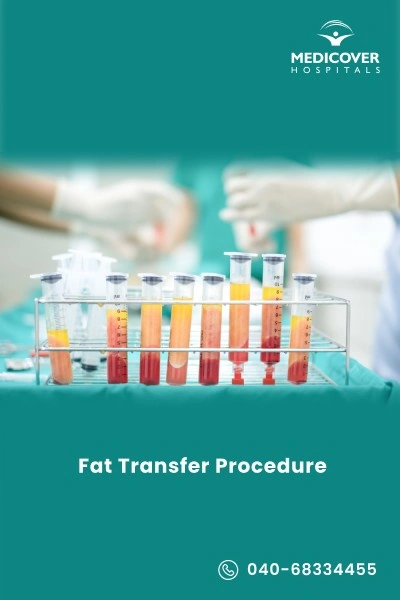
- Purification of Fat: Once the fat is collected, it undergoes a purification process. This involves separating healthy fat cells from unwanted fluids, oils, and blood using techniques like centrifugation or filtration. Only the highest-quality fat cells are prepared for reinjection, ensuring better survival and long-lasting results.
- Fat Injection (Transfer): The purified fat is then strategically injected into the target area, such as the face, breasts, buttocks, or hands, using fine cannulas. The surgeon places tiny amounts of fat at different depths and layers to create smooth, natural-looking contours and enhance volume where it is needed.
- Shaping & Contouring; As the fat is injected, the surgeon sculpts and reshapes the area to achieve a balanced and symmetrical result. This artistic step ensures that the transferred fat blends seamlessly with your natural tissues.
- Closing & Dressings: The small incisions from liposuction are closed with sutures or left to heal naturally, depending on their size. Compression garments may be applied to the donor sites to reduce swelling, aid healing, and help the skin contract smoothly over the new contour.
- Recovery Room Care: After the surgery, you'll be monitored in the recovery room. Most patients are able to go home the same day, but this depends on the extent of the procedure. Swelling and mild bruising are expected, but they gradually improve over the coming weeks. Your surgeon will give you detailed aftercare instructions to ensure the best healing and long-lasting results.
Who Will Conduct the Fat Transfer Procedures?
This procedure is often used for cosmetic purposes. Several medical professionals may be involved:
- Plastic Surgeon
- Cosmetic Surgeon
- Board-Certified Surgeon
- Facial Plastic Surgeon
- Body Contouring Specialist
- Dermatologic Surgeon
- Aesthetic Physician
Recovery After Fat Transfer Surgery Procedure
Recovering from a Fat Transfer surgery is a step-by-step process, and real care makes all the difference.
First Few Days After Surgery
- Expect swelling, bruising, and mild soreness in both the donor (liposuction) and recipient (injected) areas. This is completely normal and part of the healing process.
- Light walking is encouraged within 24 hours to promote circulation and reduce the risk of blood clots.
- Sleep with your body slightly elevated and avoid putting pressure on the treated area (e.g., avoid sitting directly on your buttocks after a Brazilian Butt Lift).
Doctor's Tip: "Do not massage or press on the injected area. The newly transferred fat cells are fragile and need time to settle in their new home."
Weeks 2 to 4
- Swelling and bruising begin to subside. You'll notice gradual improvements in contour, but the final results are not yet visible.
- Compression garments should be worn on the donor sites (like abdomen or thighs) to help reduce swelling and support skin retraction.
- Most patients can return to desk jobs and light activities, but avoid strenuous exercise or pressure on the treated zones.
Doctor's Tip: "At this stage, hydration and a nutrient-rich diet help fat cells survive better. Think of it as nourishing your results from the inside."
Weeks 5 to 6
- You'll start seeing more defined improvements as swelling continues to reduce and fat cells stabilize.
- Many patients feel comfortable returning to normal routines, including light workouts. However, avoid high-intensity or fat-burning exercises that may compromise fat survival.
- Any minor irregularities usually smooth out as tissues soften and settle.
Doctor's Tip: "Remember, not all transferred fat survives. Typically, 60-80% of the injected fat remains long-term, so your doctor may slightly overfill' during the procedure to ensure the best final result."
3 to 6 Months Post-Surgery
- By this stage, the fat cells that have successfully integrated with your blood supply become permanent. The final shape, contour, and volume are usually stable.
- Scars from donor sites fade significantly and are often barely noticeable.
- Patients enjoy natural, long-lasting enhancement, whether it's in the face, breasts, or buttocks.
Doctor's Tip: "Maintain a stable weight. Major weight fluctuations can impact your fat transfer results since the new fat cells respond to weight gain and loss just like any other fat in your body."
Benefits of Fat Transfer Surgery
- Natural-Looking Results: Since the procedure uses your own fat instead of implants or synthetic fillers, the results look and feel more natural.
- Dual Benefit-Contouring & Enhancement: Liposuction removes unwanted fat from areas like the abdomen, thighs, or flanks, and this fat is then used to enhance other areas like the face, breasts, or buttocks.
- Long-Lasting Outcome: Unlike dermal fillers, the fat cells that survive become a permanent part of your body, offering longer-lasting results.
- Minimally Invasive Compared to Implants: With tiny incisions for liposuction and injections, the procedure leaves minimal scarring compared to traditional implant surgeries.
- Low Risk of Rejection or Allergic Reaction: Since your own fat is used, the body accepts it naturally without the risks associated with synthetic materials.
- Improved Skin Quality: Fat is rich in stem cells and growth factors, which can enhance skin texture and elasticity in treated areas.
Risks of Fat Transfer Surgery
- Fat Absorption: Not all transferred fat survives; usually 20-40% may be reabsorbed by the body. This could require touch-up sessions.
- Asymmetry: Uneven fat survival may cause slight irregularities in contour or shape, especially in larger volume transfers.
- Fat Necrosis & Lumps: There is the possibility of some fat cells dying, resulting in firm nodules or oil cysts beneath the skin. They usually are non-dangerous yet can require fixing.
- Infection & Bruising: Similar to any surgery, it may also result in the risk of infection, swelling, and long-term bruising of the donor and recipient sites.
Fat Transfer Surgery Cost in India
The cost of fat transfer surgery in India can vary depending on the treatment area, the amount of fat harvested and transferred, the surgeon's expertise, and the hospital facilities. On average, fat transfer surgery costs between 80,000 to 2,50,000 in India.
 040 68334455
 WhatsApp
 Patient Portal
 Home Care