 Call
Call Patient Reports
Best Cystocele Repair Surgery Hospital with Advanced Care
At Medicover Hospitals, our gynecologists, with qualifications like MS, DNB, and FMAS, perform laparoscopic cystocele repair. This minimally invasive approach ensures smaller incisions and reduced blood loss, promoting a quicker recovery for patients across India.
Expert Surgeons
Yearly Surgeries
Patient Satisfaction
What is Cystocele Repair?
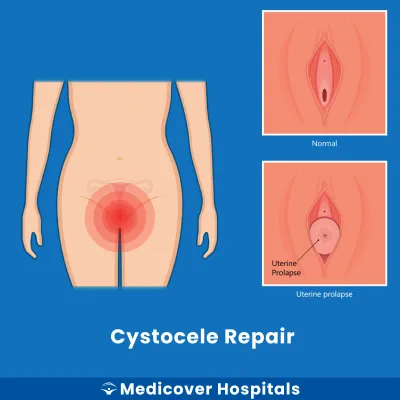
Cystocele repair is a surgical procedure to correct a prolapsed bladder. This condition occurs when the bladder (a muscular sac in the pelvis that stores urine) drops from its normal position and bulges into the vaginal wall. The surgery involves repositioning the bladder and reinforcing the vaginal wall to provide support.
This surgery is needed when the prolapse causes discomfort, urinary problems, or affects daily life. Factors like childbirth, heavy lifting, or menopause can lead to a cystocele. If untreated, it may worsen over time, leading to urinary incontinence or infections. Modern surgical approaches include anterior colporrhaphy and minimally invasive techniques. These methods aim to restore normal function and relieve symptoms.
Cystocele Repair Doctors Near You
Discover experienced gynecologists for cystocele repair at Medicover Hospitals across India. Choose your city and book a consultation to discuss your treatment options with our specialists.
Why Choose Medicover Hospitals for Cystocele Repair?
Get a second opinion from trusted experts and makeconfident, informed decisions.
 Get Second Opinion
Complete Guide To Cystocele Repair
Everything you need to know about the procedure, preparation, and recovery
Cystocele repair Surgery Indications
Cystocele repair surgery is recommended when the bladder drops from its normal position and bulges into the vaginal wall. This condition can cause discomfort and affect daily activities. Doctors suggest this procedure when symptoms are severe or conservative treatments do not provide relief.
Pelvic Pressure or Fullness
Patients may feel a heavy sensation or pressure in the pelvic area. This can worsen with prolonged standing or physical activity. On examination, a bulge in the vaginal wall is often observed. Surgery is considered when these symptoms interfere with daily life and non-surgical methods fail.
Urinary Incontinence
Frequent urine leakage, especially during coughing or sneezing, is a common symptom. Tests may show bladder descent on imaging. If pelvic floor exercises and other treatments do not improve control, surgery may be necessary.
Recurrent Urinary Tract Infections (UTIs)
Patients might experience frequent UTIs due to incomplete bladder emptying. Urinalysis and imaging can confirm the diagnosis. When antibiotics and lifestyle changes do not prevent infections, surgical repair is advised.
Difficulty Emptying Bladder
Some patients have trouble starting urination or feel incomplete emptying. A post-void residual urine test may show retention. If catheterization or other measures are ineffective, surgery is considered.
Visible Vaginal Bulge
A noticeable bulge in the vaginal area can cause discomfort or embarrassment. Physical examination confirms the cystocele. When the bulge affects quality of life and conservative treatments are inadequate, surgery is recommended.
How to Prepare for Cystocele Repair?
Proper preparation for cystocele repair is crucial to ensure a smooth surgery and recovery. It helps minimise risks and enhances the effectiveness of the procedure.
- Medication Review: Discuss all medications with your doctor. Stop NSAIDs, anticoagulants, and herbal supplements as advised.
- Fasting Guidelines: Do not eat or drink anything for at least 8 hours before the surgery to prepare for anaesthesia.
- Bowel Preparation: Follow any bowel prep instructions provided by your healthcare team to clear the intestines.
- Pelvic Floor Exercises: Practice pelvic floor exercises if recommended, to strengthen muscles before surgery.
- Comfortable Clothing: Wear loose, comfortable clothing on the day of the surgery for ease of movement post-procedure.
- Transportation Arrangements: Arrange for someone to drive you home after the surgery, as you may feel groggy.
- Medication List: Bring a list of your current medications with dosages to the hospital for reference.
- Pre-Surgery Consultation: Attend all pre-surgery appointments to discuss any concerns and finalise preparations.
Cystocele repair Surgery (Step-by-Step)
Cystocele repair is performed by obstetrician & gynecologists. The surgery typically lasts 1-2 hours. It is usually done under general or regional anaesthesia.
- Preparation: The patient is positioned comfortably. Anaesthesia is administered to ensure no pain is felt during the procedure.
- Incision: A small incision, about 1-2 cm, is made in the vaginal wall to access the prolapsed bladder.
- Tissue Dissection: The surgeon uses instruments like a curette or scissors to carefully separate the bladder from the vaginal wall.
- Repair: The surgeon uses sutures to tighten and reinforce the supportive tissues around the bladder. This helps in repositioning the bladder to its normal position.
- Closure: The incision is closed with absorbable sutures. The patient will not feel this as anaesthesia is still in effect.
- Recovery: The patient is moved to a recovery area. Monitoring continues as the anaesthesia wears off. Mild discomfort may be felt.
- Post-Operative Care: Instructions are given for care at home. Pain relief medication may be prescribed.
Who Performs Cystocele repair Surgery?
Cystocele repair is performed by gynecologists. They are specialists in female reproductive health. They have the expertise to handle pelvic organ prolapse surgeries.
Recovery After Cystocele Repair Surgery
Recovery from cystocele repair surgery involves gradual healing. Most patients can expect to resume normal activities in a few weeks. It's important to follow your doctor's advice and attend follow-up appointments for a smooth recovery.
Day 1-3:
- Rest is crucial. Avoid strenuous activities.
- Expect some discomfort and swelling. Pain relief medication may be prescribed.
- Start with a liquid diet. Include soups and clear fluids.
Day 4-7:
- Gradually introduce soft foods like khichdi, dal-rice, and moong dal.
- Continue to avoid heavy lifting and intense physical activities.
- Short walks are encouraged to improve circulation.
Day 8-14:
- Most patients can return to light work or school activities.
- Maintain a balanced diet with curd and fibre-rich foods to prevent constipation.
- Continue to avoid heavy lifting and sexual activity.
Phase 3-6 Weeks:
- Gradually resume normal activities as comfort allows.
- Follow up with your doctor to assess healing progress.
- Continue to avoid activities that strain the pelvic area.
When to Seek Urgent Help
Contact your doctor if you experience:
- Severe pain or swelling
- Fever or chills
- Heavy bleeding or unusual discharge
- Difficulty urinating
Benefits of Cystocele repair Surgery
Cystocele repair surgery can significantly improve the quality of life for those experiencing pelvic organ prolapse.
- Improved Bladder Function: Helps restore normal bladder function and reduces urinary incontinence.
- Enhanced Comfort: Alleviates discomfort and pressure in the pelvic region.
- Better Sexual Health: May improve sexual function and reduce pain during intercourse.
- Increased Mobility: Reduces physical limitations, allowing for more active participation in daily activities.
Risks and Complications of Cystocele repair Surgery
While cystocele repair surgery is generally safe, it carries certain risks and potential complications.
- Common: Infection at the surgical site, which may require antibiotics.
- Common: Bleeding during or after the procedure, sometimes necessitating further intervention.
- Rare: Injury to surrounding organs such as the bladder or urethra.
- Rare: Recurrence of the prolapse, requiring additional treatment.
- Rare: Pain during intercourse, which may persist post-surgery.
- Rare: Urinary retention, which might need temporary catheterisation.
Cost of Cystocele repair Surgery
The cost of Cystocele repair surgery at Medicover Hospitals ranges from Rs. 98,000 to Rs. 207,000, depending on the ward category chosen. Prices vary based on the type of accommodation, such as day care, general, twin sharing, private, and more.
We offer transparent pricing and support for insurance and TPA, including CGHS, ESI, and major TPAs. A cashless facility is also available. Please contact the hospital for the latest insurance panel details as these may change periodically.
Frequently Asked Questions
1. How much does Cystocele repair surgery cost?
Cystocele repair surgery at Medicover Hospitals ranges from Rs. 98,000 to Rs. 207,000, depending on the type of room and care required.
2. Is Cystocele repair surgery covered by insurance?
Cystocele repair surgery may be covered by CGHS, ESI, and major TPAs. Please contact the hospital for current panel details.
3. Will I need a catheter after Cystocele repair?
Yes, a catheter may be required temporarily after Cystocele repair to ensure proper bladder drainage during initial recovery.
4. Can I lift heavy objects after Cystocele repair?
Avoid lifting heavy objects for at least 6 weeks after Cystocele repair to prevent strain on the pelvic floor and ensure proper healing.
5. Will Cystocele repair affect my urinary function?
Cystocele repair aims to improve urinary function, but temporary changes like urgency or frequency may occur during recovery.
6. Can I resume exercise after Cystocele repair?
Light exercises such as walking can be resumed after 4 weeks, but avoid strenuous activities until cleared by your doctor.
7. What diet should I follow post-Cystocele repair?
Consume a fibre-rich diet including dal-rice, khichdi, and curd to prevent constipation and support healing after Cystocele repair.
8. How serious is cystocele surgery?
Cystocele surgery is generally safe but, like any surgery, it carries some risks such as infection or recurrence. It is considered moderately serious and is usually recommended when symptoms significantly affect daily life.
9. What is the best surgery for cystocele?
The most common and effective procedure is anterior vaginal wall repair (anterior colporrhaphy). In some cases, surgeons may use mesh or other techniques depending on the severity.
10. What is the recovery time for a cystocele surgery?
Most patients recover in about 4–6 weeks, though full healing may take a bit longer. Heavy activities and lifting should be avoided during the recovery period.


