What is Circumcision Surgery?
Circumcision is a surgical procedure that removes the foreskin - the protective skin covering the head of the penis from the male genitalia. This practice has been a subject of debate and cultural significance for centuries, with various religious, medical, and cultural reasons influencing the decision to circumcise male infants.
Types of Circumcision Surgery Explained
Here are the main types of circumcision surgery:
- Traditional Circumcision: The foreskin is removed with a scalpel, usually under local or general anesthesia.
- Plastibell Circumcision: A plastic ring is placed around the foreskin, and the excess is removed. Common for infants.
- Mogul Circumcision: Foreskin removal exposing the glans, often used in cultural practices.
- Laser Circumcision: This is used for precise removal with less bleeding and quicker healing.
- Dorsal Slit Circumcision: Used for tight foreskin, where the foreskin is slit and excess skin removed.
20-30 Minutes
Surgery Duration
Local Anesthesia
Anesthesia Used
Same Day Discharge
Hospital Stay
4-6 Weeks
Full Recovery Timeline

When is Circumcision Recommended?
Circumcision may be advised for medical, cultural, or religious reasons. In children, doctors usually suggest the procedure when there are specific health concerns. Indications for Circumcision Surgery in Children include:
- Religious and Cultural Reasons: Circumcision is a common practice in some religious and cultural groups, such as Judaism and Islam. Families may choose circumcision to adhere to their faith or cultural traditions.
- Medical Conditions: In some cases, circumcision may be recommended or required due to specific medical conditions that affect the child's health. These conditions might include:
- Phimosis: This is a condition in which the foreskin is too tight and cannot be retracted over the head of the penis.
- Paraphimosis: This occurs when the retracted foreskin becomes trapped behind the head of the penis, leading to swelling and potential circulation issues.
- Recurrent Balanitis: Balanitis is an inflammation of the head of the penis. If a child experiences frequent episodes of balanitis that do not respond to other treatments, circumcision might be considered as a way to prevent further occurrences.
- Urinary Tract Infections (UTIs): Some studies suggest that circumcision might reduce the risk of UTIs in male infants, although the evidence is not definitive.
- Sexually Transmitted Infections (STIs): Circumcision has been associated with a reduced risk of acquiring certain STIs, such as HIV and human papillomavirus (HPV), later in life. However, safe sexual practices and education about STIs are still essential.
- Personal Preferences: Some parents may choose circumcision based on personal beliefs, aesthetics, or social factors. It's important for parents to carefully consider their reasons and discuss them with healthcare professionals.
How to Prepare Your Child for Circumcision Surgery
Preparing for circumcision for male children involves a combination of practical circumcision steps, emotional support, and ensuring your child's comfort before, during, and after the procedure. Here's a guide to help you prepare:
- Consultation: Schedule a meeting with the pediatric urologist to discuss the procedure, your child's health history, and expected outcomes.
- Medical Review: Talk about allergies, medications, and medical conditions. Receive specific preoperative instructions.
- Preoperative Instructions: Follow guidelines on fasting, bathing, and any medications your child needs to take before surgery.
- Clothing and Comfort: Dress your child in loose, comfortable clothing for the procedure day.
- Emotional Support: Explain the procedure to your child gently and reassure them that you'll support them.
- Confirm Details: Double-check the surgery date, time, location, and have all necessary paperwork ready.
Circumcision Surgery Procedure in Children
During circumcision surgery in children, the surgical procedure involves the removal of the foreskin, which is the retractable fold of skin that covers the head of the penis. The surgery is typically performed by a pediatric urologist or a medical professional specializing in pediatric care.
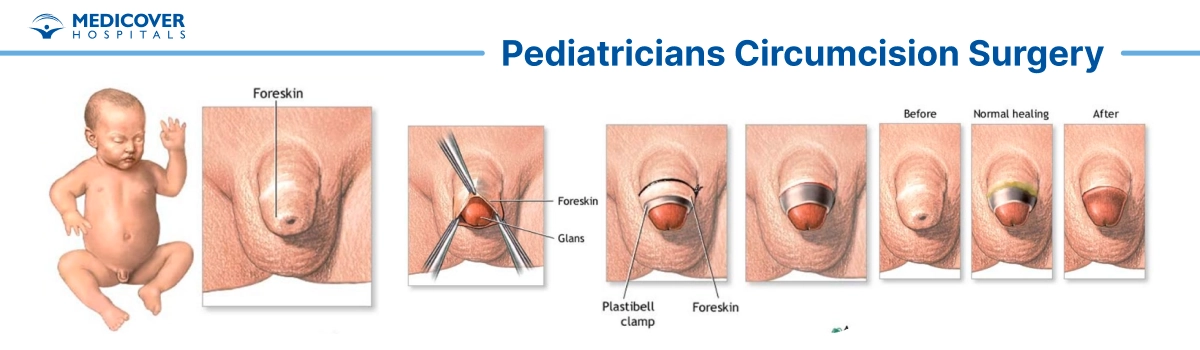
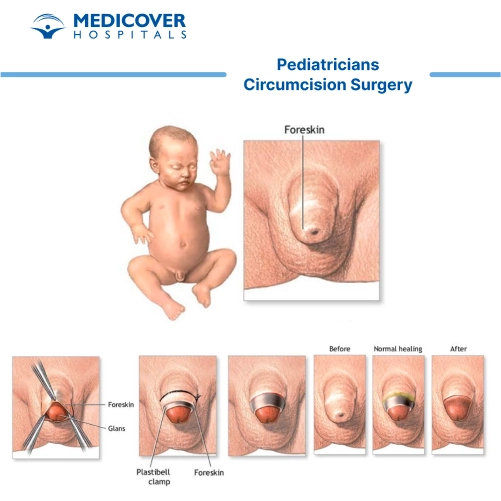
Here's what happens during the circumcision surgery:
- Anesthesia: Local Anesthesia, numbing medication is applied to the surgical area, keeping the child awake but pain-free. General Anesthesia, for certain cases, the child is put to sleep for the surgery.
- Sterilization: The child is positioned correctly, and the genital area is cleaned and sterilized to reduce infection risk.
- Foreskin Separation: The surgeon gently separates the foreskin from the penis using specialized tools.
- Foreskin Removal: The surgeon carefully removes the foreskin, aiming to minimize bleeding and trauma.
- Hemostasis (Bleeding Control): The surgeon controls any bleeding through pressure, instruments, or cauterization.
- Wound Closure: The wound edges are stitched together with absorbable sutures to aid healing and prevent infection.
- Dressing Application: A sterile dressing is applied to protect the site during initial healing.
Who Performs the Circumcision Surgery in Children?
Circumcision in children is typically performed by a pediatric surgeon or a pediatric urologist. In some cases, general surgeons with experience in pediatric procedures may also perform it. Always consult a qualified specialist for proper evaluation and care.
Post-Procedure Care for Circumcision
After the circumcision procedure, the child is carefully monitored for any signs of complications or adverse reactions to anesthesia. Once the child for circumcision wakes up (if general anesthesia was used), they are allowed to rest and recover before being discharged.
Parents receive detailed care instructions after surgery. These typically include:
- Keeping the area clean and dry.
- Apply ointment or petroleum jelly as recommended.
- Use pain relief medication if necessary.
- Monitor for redness, swelling, discharge, or fever.
- Attending all follow-up appointments to ensure healing.
Recovery Timeline After Circumcision in Children
Here's a general recovery guide:
- Day 1-2: Mild pain, swelling, and redness. Pain can be managed with prescribed medications.
- Day 3-5: The surgical site begins to heal; keep the area dry and avoid tight diapers/clothing.
- Day 7-10: Most children experience significant healing. Stitches (if used) start dissolving.
- 2 Weeks: Most swelling subsides, and children can return to normal activities.
- Full Recovery: Complete healing usually occurs within 3-4 weeks.
Lifestyle Changes After Circumcision Surgery in Children
Here's a shorter version of the circumcision care guidelines:
- Hygiene: Clean the area gently with warm water during baths, avoid harsh soaps, and pat dry with a clean towel.
- Clothing: Dress your child in loose-fitting, comfortable clothing to avoid irritation.
- Activity Restrictions: Limit physical activities and rough play to prevent pressure on the surgical site.
- Pain Management: Follow the medical team's instructions for pain relief, using prescribed or over-the-counter medications as needed.
- Avoid Irritation: Encourage your child not to touch or pick at the healing area.
- Monitor Healing: Watch for signs of infection, like redness, swelling, or discharge, and contact the doctor if needed.
- Bathing: Bathe as usual, but avoid soaking the area in soapy water, and gently pat dry afterwards.
- Comfort and Communication: Offer emotional support and encourage your child to communicate any discomfort.
Benefits of Circumcision
- Relief from medical conditions (phimosis, infections).
- Improved hygiene and reduced risk of infections and STIs.
- Quick procedure with short recovery time.
- Performed safely by pediatric experts.
- Long-term health benefits in some cases.
Risks and Complications of Circumcision in Children
- Mild bleeding or infection at the surgical site
- Pain or discomfort during urination (temporary)
- Swelling or redness beyond the normal healing period
- Improper or excessive removal of foreskin (rare)
- Formation of scar tissue or adhesions
- Delayed healing in some cases
- Need for revision surgery (very rare)
How Much Should a Cost of Circumcision in Chidren?
The cost of circumcision surgery in India can vary based on factors such as the city, hospital, type of anesthesia, doctor's expertise, and whether it is done for a child or adult.
Average Circumcision Surgery Cost in India
- Minimum Cost: Rs. 15,000
- Average Cost: Rs. 25,000 - Rs. 40,000
- Maximum Cost: Rs. 60,000 or more (in premium hospitals with advanced facilities)
 040 68334455
 WhatsApp
 Patient Portal
 Home Care