What is an AV Fistula?
An arteriovenous (AV) fistula is a surgically created connection between an artery and a vein, most often in the arm. This connection provides a reliable access point for hemodialysis, the life-saving treatment for individuals with kidney failure. During hemodialysis, blood is filtered through a machine called a dialyzer to remove waste products and excess fluids.
An AV fistula for dialysis is preferred because it is durable, has a lower risk of infection compared with other access methods, and allows for efficient and repeated needle insertions over time.
Types of AV Fistula
An AV fistula for hemodialysis is created surgically to provide long-term vascular access. The choice of fistula depends on the patient's vein quality, anatomy, and dialysis needs. Common types include:
Radiocephalic Fistula (Wrist Fistula)
- Location: Wrist, connecting the radial artery to the cephalic vein
- Features: Popular first choice, strong, and associated with fewer complications
Brachiocephalic Fistula (Upper Arm Fistula)
- Location: Upper arm, connecting the brachial artery to the cephalic vein
- Features: Provides higher blood flow, improving dialysis efficiency
Basilic Vein Transposition Fistula
- Location: Upper arm, connecting the brachial artery to the basilic vein, which is moved closer to the surface
- Features: Ideal for patients with weaker wrist or arm veins
Forearm Loop Fistula
- Location: Forearm using a loop-shaped configuration of veins and arteries
- Features: Suitable when vein access is limited or other options are not viable
Artificial AV Fistula (Graft)
- Location: Synthetic graft connecting an artery and a vein
- Features: Used for patients with weak or damaged veins who cannot have a natural fistula
1 to 2 Hours
Surgery Duration
Local Anesthesia
Anesthesia Used
Outpatient or 1 day
Hospital Stay
2-6 Weeks
Full Recovery Timeline

Indications for AV Fistula Surgery (Arteriovenous Fistula Procedure)
An AV fistula creation surgery is primarily performed to provide long-term vascular access for hemodialysis, the treatment used to filter waste and excess fluids from the blood in patients with kidney failure.
The main indications include:
- Chronic Kidney Disease (CKD) / End-Stage Renal Disease (ESRD): Patients with severe kidney failure who need regular dialysis benefit from an AV fistula surgery to ensure effective blood flow during treatment.
- Reliable Hemodialysis Access: An AV fistula surgery creates durable access for long-term dialysis, reducing complications and improving dialysis efficiency.
- Failed or Complicated Previous Access: If other dialysis access methods, such as central venous catheters or AV grafts, fail or become infected, an AV fistula surgery may be indicated.
- Preemptive Dialysis Access: Some patients with progressive kidney disease may undergo AV fistula surgery before starting dialysis, ensuring access is ready when needed.
- Better Long-Term Patency: Compared with other dialysis access options, AV fistula surgery provides a lower risk of infection, clotting, and thrombosis.
What conditions does AV fistula surgery treat?
AV fistula surgery addresses complications caused by kidney failure, including:
- End-stage renal disease (ESRD)
- Chronic kidney disease requiring hemodialysis
- Problems with previous dialysis access, such as infection, clotting, or graft failure
When would a doctor recommend AV fistula surgery?
Doctors recommend AV fistula surgery when:
- A patient's kidney function has declined, and hemodialysis is required.
- Existing dialysis access methods are failing or unsuitable.
- Preemptive access is needed to ensure readiness for dialysis.
How should I prepare before AV fistula surgery?
Proper preparation for AV fistula surgery helps ensure the procedure is safe and effective. Your healthcare team will guide you through each step.
- Attend a consultation with your vascular surgeon or nephrologist to discuss your health, kidney function, and suitability for the procedure.
- Stop smoking and limit alcohol, as these can interfere with healing.
- Prepare the selected arm by keeping it clean and following any instructions from your doctor about activities or exercises.
- Arrange transportation home, since you may receive anesthesia or sedation during the procedure.
- Plan for post-surgery rest and support, as the arm will need time to heal.
What tests are done before AV fistula surgery?
Your doctor may order the following tests to ensure you are ready for AV fistula surgery:
- Physical Examination: Evaluates your veins and arteries, usually in the arm, to determine the best location for the fistula.
- Imaging Tests: Non-invasive tests like ultrasound assess the size and health of your veins and arteries to help plan the surgery.
- Blood Tests: Check kidney function, overall health, and screen for infections or conditions that could affect surgery.
Should I stop eating, drinking, or taking medicines before AV fistula surgery?
You may be asked to fast for a certain period before surgery. Your healthcare provider will give specific instructions regarding:
- Medications: Some medicines, especially blood thinners, may need to be adjusted or temporarily stopped.
- Food and Drink: Follow the fasting instructions to prevent complications during anesthesia.
Always follow the personalized guidelines given by your surgical team.
What happens before AV fistula surgery?
Before the procedure, your surgical team will:
- Review your medical history and test results.
- Clean and mark the arm selected for fistula creation.
- Administer anesthesia or sedation as planned.
- Explain the surgical process and answer any remaining questions.
These steps ensure that your AV fistula surgery is performed safely and that your arm is properly prepared for the procedure
AV Fistula Creation Surgery Procedure Steps
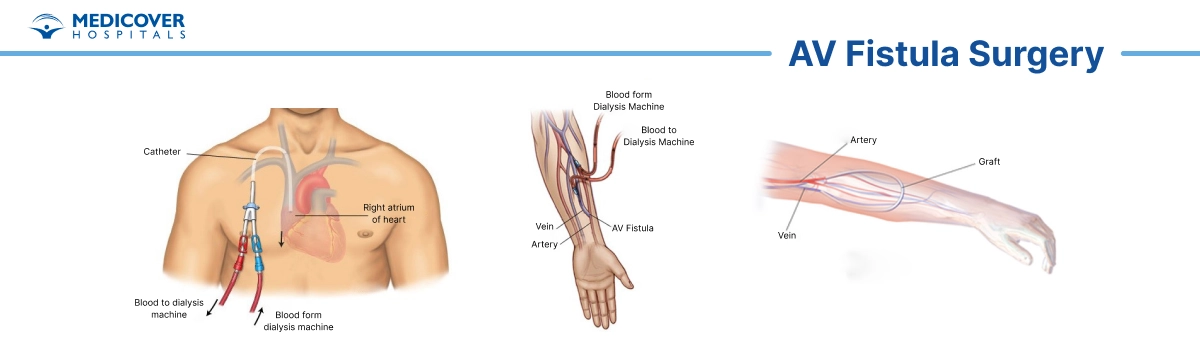
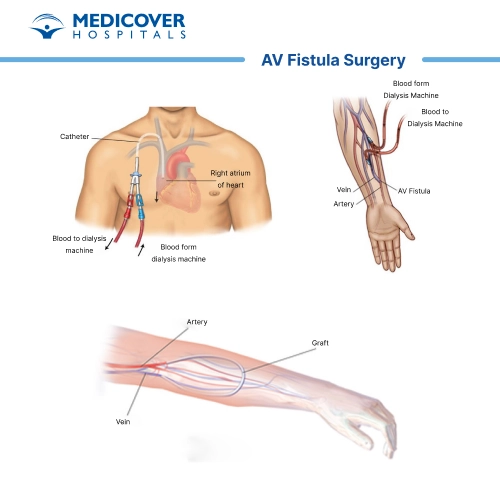
- Preoperative Assessment: The surgeon assesses the patient's veins and arteries using physical examination or imaging (e.g., Doppler ultrasound) to identify the best location for the fistula.
- Anesthesia: The area is numbed with local or regional anesthesia to prevent the patient from feeling discomfort during the procedure.
- Prepare the Surgical Site: To minimize the risk of infection, the arm or forearm is cleaned and sterilized. The surgeon identifies the vein and artery to connect.
- Incision: The chosen site is accessed through a small incision where the vein and artery are harvested.
- Connecting the Vein and Artery: The surgeon forms a bridge (anastomosis) between the vein and the artery, permitting high-pressure coronary blood to reach the vein, causing it to plump up and harden with time.
- Closing the Incision: Sutures are used to close the incision, and a sterile dressing is placed over the site.
- Post-Surgery Monitoring: Proper blood flow through the fistula will be monitored (a vibration [thrill] will be felt, and a sound [bruit] can be heard with a stethoscope).
- Recovery and Maturation: It can take around 4- 6 weeks for a fistula to mature and be strong enough to be used for dialysis. During this time, patients should also protect the fistula from injury and refrain from heavy lifting.
Who Performs AV Fistula Surgery?
Typically, blood vessels, arteries and veins are handled by a vascular surgeon, the type of specialist trained to perform AV fistula surgery. These are the surgeons who specialise in vascular access for the dialysis patient.
AV fistula surgery may be done by general surgeons trained in vascular surgery. Always seek specialised care for optimal results.
Recovery After AV Fistula Surgery
Recovery after an AV fistula surgery usually takes a few weeks. Here's what to expect:
- Healing Time: The fistula takes 4-6 weeks to mature and become ready for dialysis. In some cases, it may take longer.
- Pain and Swelling: Mild pain or swelling is common after surgery and should subside in a few days. Use prescribed pain relievers if needed.
- Avoid Heavy Lifting: Avoid heavy lifting and placing pressure on the arm where the fistula is located to ensure optimal healing.
- Exercise for Maturation: Gentle movements such as squeezing a soft ball will enhance blood flow and help the fistula grow more quickly.
- Monitor for Complications: Check for signs of infection, such as redness, swelling, or fever, and report them to your doctor right away.
- Follow-up Appointments: Regular follow-ups with your healthcare physician will ensure that the fistula heals and functions properly.
- Daily care: Daily care includes keeping the region clean and avoiding scratching or hurting the fistula site.
Are lifestyle changes required after AV fistula surgery?
Yes, certain lifestyle adjustments help ensure long-term success of the fistula:
- Protect the arm: Avoid wearing tight clothing or jewelry over the fistula.
- Daily care: Keep the area clean and avoid scratching or injuring the site.
- Monitor for complications: Watch for signs of infection, clotting, or unusual swelling, and report them promptly.
- Follow-up appointments: Regular check-ups are crucial for monitoring fistula maturation and function.
With proper care, your AV fistula surgery recovery can be smooth, and the fistula will provide reliable access for long-term dialysis.
What are the Benefits of AV Fistula surgery?
AV fistula surgery provides several important advantages for patients requiring long-term dialysis:
- Reliable dialysis access: Offers a durable, long-lasting route for blood flow during hemodialysis.
- Lower risk of infection: Compared to central venous catheters or synthetic grafts, AV fistulas have fewer infection-related complications.
- Improved dialysis efficiency: High blood flow through the fistula allows dialysis machines to clean blood more effectively.
- Long-term patency: Fistulas generally last longer than other dialysis access types, reducing the need for repeated procedures.
- Reduced clotting risk: Natural vessels used in AV fistula surgery have a lower likelihood of thrombosis compared with synthetic options.
What are the Risks of AV Fistula surgery?
Although AV fistula surgery is generally safe, potential risks include:
- Infection: Bacteria may get into the fistula site and cause redness, swelling or fever. Good hygiene and care help minimize this risk.
- Clotting (Thrombosis): A fistula can become obstructed by thrombosis or blood clots. Routine monitoring enables early diagnosis and treatment.
- Steal Syndrome: Poor blood flow to the hand may also lead to pain or numbness, even cold fingers. Severe cases require immediate medical attention.
- Aneurysm Formation: Over the weeks or months, the artery can weaken and bulge, forming an aneurysm. Regular check-ups can prevent this from becoming severe.
- Poor Maturation: The fistula may not grow correctly, making it unviable for dialysis. A surgeon might need to make a new fistula.
- Swelling or Bruising: Mild swelling or bruising is normal following surgery and typically clears without intervention.
- Narrowing (Stenosis): The fistula can narrow, limiting blood flow and making dialysis a challenge. The problem may need to be repaired with angioplasty or surgery.
Your surgeon will discuss these risks in detail and take steps to minimize them.
What are the side effects of AV fistula surgery?
Common side effects after AV fistula surgery are usually temporary and mild:
- Pain or tenderness around the incision site
- Swelling or bruising in the arm where the fistula was created
- Redness or mild warmth during the initial healing phase
Most side effects improve within a few days to weeks as the fistula matures and the surgical site heals.
How much does an AV Fistula cost?
The cost of an AV (Arteriovenous) fistula in India typically ranges from Rs. 30,000 to Rs. 50,000 for a standard procedure.
For advanced procedures, such as an AV flow graft surgery with PTFE implant, the cost can range from Rs. 1,25,000 to Rs. 1,80,000.
The final cost depends on the type of procedure, hospital facilities, surgeon's expertise, and the city. Insurance may also help cover part of the expenses.
 040 68334455
 WhatsApp
 Patient Portal
 Home Care