 Call
Call Patient Reports
First in India & Telugu States - Advanced Cardiac & Whole-Body Diagnostic Imaging
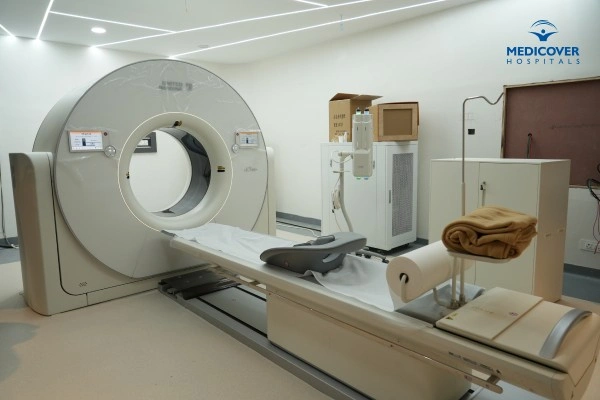
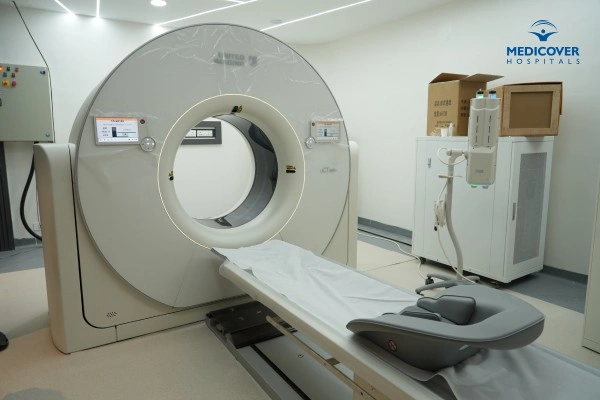
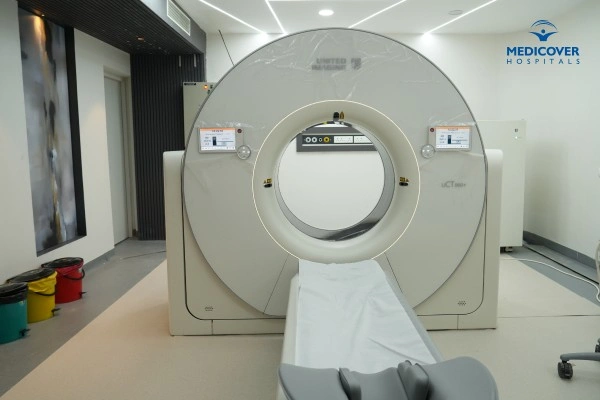
Medicover Hospital has introduced the United Imaging 640-slice CT scanner. It is one of the most advanced CT imaging systems currently available worldwide. This technology represents a significant upgrade over traditional 64, 128, or 256 slice CT systems.
We are the first hospital in India & Telugu states to offer this level of cardiac imaging accuracy. For patients who require accurate cardiac evaluation without undergoing invasive angiography, this technology offers a powerful diagnostic alternative.
This system delivers extremely fast, high-resolution images of the heart, brain, lungs, and other vital organs within seconds. This technology is particularly useful for detecting heart blockages, assessing coronary arteries, assessing muscle function, and quickly and accurately diagnosing complex internal conditions.
What Is a 640 Slice CT Scanner?
The 640-slice CT scanner is an advanced multi-detector computed tomography system that captures 640 ultra-thin image slices in a single gantry rotation.
Each "slice" represents a thin cross-section of the organ being scanned. By capturing 640 slices in a single rotation, the scanner can image a large anatomical region, including the entire heart, without requiring multiple overlapping acquisitions.
In simpler terms:
- More slices = more anatomical detail
- Wider detector coverage = full organ capture
- Faster rotation = less motion distortion
The heart is constantly moving. Traditional CT systems often require multiple heartbeats of imaging, which can introduce stitching artifacts or motion blur. The 640-slice CT scanner can capture the entire heart in a single heartbeat in most patients, significantly improving diagnostic clarity.
Get a second opinion from trusted experts and makeconfident, informed decisions.
 Get Second Opinion
How Fast Is the 640 Slice CT Scanner?
The 640 Slice CT Scanner gantry rotates at high speed, capturing 640 slices in about 5-6 seconds.
Traditional 64, 128, or 256 slice CT machines require multiple rotations to capture the heart. A 640-slice system can capture the entire heart in a single rotation in 5-6 seconds. That speed reduces motion blur. And the less the heart moves during imaging, the clearer and more reliable the images become.
Older CT systems may require long imaging windows and repeated breath holding. In comparison, this system significantly reduces the actual scan time.
The total procedure time, including preparation, contrast injection, and positioning, is typically 20-30 minutes. Image acquisition is also much faster.
This is especially beneficial for:
- Elderly patients
- Patients with breath-holding difficulty
- Patients with irregular heart rhythm
Is "640 Slices Per Second" Accurate?
This scanner does not continuously produce 640 slices per second. Instead, it acquires 640 slices per rotation, and modern high-speed rotation technology allows imaging of the entire heart in seconds. This makes it ideal for cardiac CT coronary angiography.
640 Slice CT Scanner vs Traditional CT Scanners
| Feature | 64 Slice CT | 128 Slice CT | 256 Slice CT | 640 Slice CT Scanner (Our System) |
|---|---|---|---|---|
| Maximum Slices per Rotation | 64 | 128 | 256 | 640 |
| Heart Coverage per Rotation | Partial heart coverage | More extensive coverage, but may require multiple rotations | Improved coverage | Full heart coverage in a single rotation (in many cases) |
| Cardiac Imaging Accuracy | Moderate | Good | Very Good | Excellent - High spatial and temporal resolution |
| Scan Time for Cardiac Study | Longer, may require multiple heartbeats | Faster than 64-slice | Faster | Approximately 5-6 seconds of acquisition |
| Motion Artefacts | More common | Reduced | Further reduced | Significantly reduced due to rapid acquisition |
| 3D Coronary Artery Imaging | Available | Improved | Advanced | Highly detailed 3D reconstruction with ultra-thin slices |
| Radiation Dose Optimization | Standard | Improved modulation | Advanced dose control | Advanced dose optimisation with modern reconstruction algorithms |
| Plaque Characterisation | Basic evaluation | Better detail | Improved | Clear differentiation of calcified, non-calcified, and mixed plaques |
| Suitability for CT Coronary Angiography | Possible but limited in complex cases | Good | Very Good | Ideal for high-resolution CT coronary angiography |
| Need for Repeat Scans | Higher chance in cardiac imaging | Reduced | Lower | Minimal in most cases due to full coverage |
| Comfort for Elderly Patients | Moderate | Improved | Better | High - Short breath-hold and rapid acquisition |
| Diagnostic Confidence | Moderate | Good | Very Good | High diagnostic confidence for cardiologists |
Clinical Applications of 640 Slice CT Scanner
CT Coronary Angiography (Primary Application)
This is the most important use of the 640-slice CT scanner. It allows detailed visualisation of:
- Coronary arteries
- Plaque buildup
- Degree of narrowing
- Arterial wall characteristics
Doctors can measure the percentage of blockage and determine whether medical management, angioplasty, or bypass surgery is required.
It helps detect:
- Calcified plaque
- Non-calcified plaque
- Mixed plaque
- Early atherosclerosis
Because of the high spatial and temporal resolution, even small coronary branches can be evaluated.
Assessment of Heart Muscle and Function
The 640-slice CT scanner can evaluate:
- Myocardial wall motion
- Chamber size
- Ejection fraction (in selected protocols)
This helps cardiologists assess heart muscle strength and functional abnormalities.
Brain Imaging
The 640 slice CT system can be used for:
Fast acquisition is critical in stroke cases where treatment decisions are time-sensitive.
Whole-Body and Organ Imaging
Beyond cardiac imaging, the scanner supports:
- Lung evaluation
- Abdominal organ imaging
- Tumour detection
- Trauma assessment
- Vascular studies
High resolution improves diagnostic confidence across specialties.
Why Heart Problems Are Increasing Today?
Heart disease is no longer limited to older adults.
Common contributing factors include:
- Chronic psychological stress
- Sedentary lifestyle
- High-calorie processed diets
- Smoking
- Diabetes
- High blood pressure
- Family history of coronary artery disease
Many individuals may not have symptoms until a major cardiac event occurs.
A 640-slice CT coronary angiogram helps detect disease at an earlier stage. Early detection enables preventive treatment and lifestyle modification.
Who Should Consider a 640 Slice CT Scan?
This test is typically recommended for:
- Individuals aged 40 years and above
- Patients with chest discomfort
- Diabetics
- Individuals with high cholesterol
- Patients with abnormal ECG or TMT results
- People with a strong family history of heart disease
- Patients are being evaluated before major surgery
It is not a general screening test for everyone. Clinical evaluation is necessary before recommending the scan.
640-slice CT System Radiation Exposure and Safety
Modern 640-slice CT systems use advanced dose optimisation techniques.
These include:
- Automated tube current modulation
- Iterative reconstruction algorithms
- ECG-gated dose control
Radiation exposure is kept within clinically accepted safety limits when appropriately managed. Contrast dye is used during coronary angiography. Therefore, renal function should be assessed in advance using a serum creatinine test. Patients with known contrast allergies should inform their physician.
What Makes the 640-Slice CT Scanner Clinically Superior?
Full Heart Coverage in One Rotation
The scanner has wide detector coverage, enabling full cardiac imaging without stitching multiple segments together. This reduces motion artefacts and improves diagnostic reliability.
Ultra-High Resolution 3D Imaging
It generates advanced 3D reconstructions of:
- Coronary arteries
- Heart chambers
- Major blood vessels
- Brain vasculature
These images help cardiologists detect even minor arterial narrowing.
Reduced Radiation Exposure
Modern dose modulation and advanced reconstruction algorithms optimise radiation levels compared to older generation CT systems.
Faster Workflow
Traditional CT angiography procedures could take significantly longer due to repeated acquisitions and adjustments. With this system, actual image capture is completed in seconds, reducing patient discomfort and improving department efficiency.
Pre-Test Preparation for 640 Slice CT Coronary Angiography
Preparing correctly helps ensure accurate results and patient safety. The doctor or radiology team will guide you, but the general steps are explained below in simple terms.
Step 1: Clinical Evaluation Before Booking
Before scheduling a 640-slice CT scan, a doctor evaluates:
- Patient symptoms
- Medical history
- Previous heart reports
- Blood pressure and sugar levels
- Kidney function
- Allergy history
This ensures the test is appropriate and safe for you. Not everyone requires this scan. It is recommended only when clinically necessary.
Step 2: Serum Creatinine Test (Kidney Function Check)
A Serum Creatinine test is mandatory before a CT coronary angiogram.
Why is this important?
The scan uses a contrast dye (iodinated contrast) to clearly visualise the coronary arteries. This dye is filtered by the kidneys.
If kidney function is reduced, contrast dye may pose a risk. The Serum Creatinine test helps doctors assess whether:
- The kidneys can safely handle the contrast
- Dose adjustments are required
- Alternative imaging should be considered
If the kidney function is normal, the scan can proceed safely.
Step 3: Fasting Before the Scan
Patients are usually advised to fast for 4-6 hours before the procedure.
You may be instructed to:
- Avoid solid food
- Drink only small amounts of water
- Avoid heavy meals
Why fasting?
Fasting reduces the risk of nausea after contrast injection. It also ensures better image clarity in some cases. The doctor will provide specific instructions based on the patient's condition.
Step 4: Avoid Caffeine and Stimulants
You should avoid:
- Coffee
- Tea
- Energy drinks
- Cola beverages
- Smoking
Caffeine increases heart rate. Since cardiac CT imaging requires a controlled heart rhythm for optimal image quality, avoiding stimulants improves scan accuracy.
Step 5: Medication Review
Inform the medical team about:
- Blood pressure medications
- Diabetes medicines
- Thyroid medications
- Blood thinners
- Any recent steroid use
- Previous contrast allergies
Some medications may need temporary adjustment.
For example:
- Certain diabetic medicines (like metformin) may require brief discontinuation around the time of contrast administration.
- Beta-blockers may be administered before the scan if heart rate control is needed for better imaging.
Never stop medication without medical advice.
What Happens During the 640-slice CT Scan Procedure?
Understanding the process reduces anxiety. The procedure is simple and painless.
Step 1: Arrival and Preparation
At the radiology department:
- Your identity and reports are verified
- Blood pressure and pulse are checked
- ECG leads may be attached to monitor the heart rhythm
- An intravenous (IV) line is placed in your arm
The IV line allows safe administration of contrast dye during the scan.
Step 2: Positioning on the CT Table
You will lie comfortably on a flat motorised CT table.
The technician will:
- Position your arms above your head
- Align your chest properly
- Give breathing instructions
You will be asked to remain still. Even small movements can affect image quality.
Step 3: Contrast Injection
An iodinated contrast dye is injected through the IV line.
You may feel:
- A warm sensation in the body
- Mild metallic taste in the mouth
- A brief flushing feeling
These sensations are normal and usually last only a few seconds. The contrast dye highlights the coronary arteries, making blockages clearly visible on imaging.
Step 4: The Actual Scan
The CT table moves gently through the circular gantry. You may hear mild humming sounds.
You will be asked to:
- Hold your breath for a few seconds
The 640-slice CT scanner captures the entire heart in approximately 5-6 seconds.
With wide detector coverage, the entire cardiac anatomy is imaged rapidly, reducing motion artefacts. The scan itself is very quick.
Step 5: Completion and Observation
After the scan:
- The IV line is removed
- You may be observed briefly for 15-30 minutes
- You can usually resume normal activities the same day
Drinking extra water is advised to help flush the contrast dye from your body.
Is the 640-slice CT Scan Procedure Painful?
No. The 640-slice CT scan is completely non-invasive.
There is:
- No catheter insertion
- No surgical procedure
- No hospital admission required in most cases
Only a small IV needle is used for contrast injection. Throughout the procedure:
- Heart rate is monitored
- Blood pressure is checked
- Emergency support is available if required
Serious contrast reactions are rare, but medical supervision ensures immediate response if needed.
Your health is everything - prioritize your well-being today.
Schedule Your Appointment
How Doctors Interpret the 640 Slice CT Scan Report?
Once the scan is complete on the 640-slice CT scanner, the real diagnostic work begins. Within seconds, the captured images are converted into thousands of high-resolution data points. These are processed using advanced reconstruction software to create detailed 2D and 3D visualizations of the heart and blood vessels. But how do doctors read these images? Let's break it down step by step.
Step 1: Image Reconstruction and Processing
Immediately after image acquisition:
- Raw data is transferred to advanced cardiac imaging software.
- The system reconstructs ultra-thin slices into multiplanar images.
- 3D coronary artery maps are generated.
- Curved planar reformations are created for each artery.
This allows radiologists to digitally "travel" along the length of each coronary artery. They are not just looking at static pictures. They are analysing the artery layer by layer.
Step 2: Evaluation of Coronary Artery Segments
The coronary arteries are divided into standard anatomical segments.
Radiologists carefully examine:
- Left Main Coronary Artery (LMCA)
- Left Anterior Descending (LAD)
- Left Circumflex (LCX)
- Right Coronary Artery (RCA)
- Branch vessels
Each segment is analysed separately. This systematic approach ensures that no portion of the artery is overlooked.
Step 3: Measuring the Degree of Luminal Narrowing
One of the most critical aspects of the report is measuring blockage.
Doctors calculate:
- The percentage of luminal narrowing
- Whether narrowing is mild, moderate, or severe
For example:
- Less than 25% narrowing - minimal disease
- 25-49% - mild disease
- 50-69% - moderate disease
- 70% or more - significant obstruction
Why is this important?
This is because treatment decisions are largely based on the degree of shrinkage.
Severe shrinkage may require invasive intervention. Mild shrinkage can be managed with medication and lifestyle changes. The accuracy of the 640-slice CT scanner improves the reliability of these measurements.
Step 4: Assessment of Plaque Characteristics
Not all blockages are the same. Radiologists classify plaque into:
- Calcified plaque
- Non-calcified (soft) plaque
- Mixed plaque
Softer plaques are sometimes more dangerous because they are more likely to rupture. The 640-slice CT system provides high-resolution imaging that helps clearly differentiate between plaque types. Understanding the composition of plaques can help doctors predict the risk of future heart attacks.
Step 5: Evaluation of Vessel Calcification
The scan may also provide information about:
- Coronary calcium burden
- Distribution of calcification
- Severity of arterial hardening
Calcium scoring, when performed, helps estimate long-term cardiovascular risk. Higher calcium scores are associated with a higher risk of coronary artery disease. This helps doctors recommend preventive strategies even if a severe blockage is not yet present.
Step 6: Assessment of Cardiac Function and Blood Flow (When Protocol Allows)
In selected protocols, doctors may evaluate:
- Wall motion abnormalities
- Chamber size
- Myocardial thickness
- Ejection fraction estimation
Although CT is primarily anatomical imaging, modern systems provide functional insights in specific situations. This gives a more comprehensive picture of heart health.
Step 7: Identifying Additional Findings
Beyond coronary arteries, the scan may detect:
- Aortic abnormalities
- Pulmonary findings
- Incidental lung nodules
- Structural heart abnormalities
These findings are documented in the structured report. Nothing is ignored.
Generation of a Structured Cardiac CT Report
After detailed analysis, the radiologist prepares a structured report.
This typically includes:
- Clinical indication for the scan
- Scan technique and protocol
- Heart rate during acquisition
- Coronary artery findings by segment
- Percentage of narrowing
- Plaque description
- Calcium scoring (if performed)
- Incidental findings
- Final impression and risk assessment
The report is clear, organised, and clinically actionable.
How Cardiologists Use This 640-slice CT Scan Report?
The imaging findings alone do not determine treatment.
Cardiologists correlate the CT findings with:
- Patient symptoms (chest pain, breathlessness)
- ECG results
- TMT or stress test findings
- Blood test results (lipid profile, sugar levels)
- Blood pressure
- Family history
This combined evaluation determines:
- Whether medication is sufficient
- Whether lifestyle modification is enough
- Whether angiography is needed
- Whether angioplasty or bypass surgery is required
This integrated approach reduces unnecessary invasive procedures while ensuring timely treatment when needed.
What Happens After the Report?
Once the report is ready:
- It is reviewed with the cardiologist
- Findings are explained to the patient
- Treatment options are discussed
- Preventive advice is provided
In many cases, early detection allows patients to avoid emergency situations later. That is the true value of advanced cardiac imaging.
640 Slice CT Scanner in India
The availability of 640-slice CT scanners in India remains limited to select advanced centres. Medicover Hospital is among the few institutions offering this technology in India, making it accessible to patients who previously had to travel to metro cities.
640 Slice CT Scanner in Hyderabad
Hyderabad has become a major hub for advanced medical diagnostics. However, access to a true 640-slice CT scanner in Hyderabad remains limited. Our Medicover hospital in the Financial District brings advanced cardiac imaging to patients in the Telugu States for the first time.
640 Slice CT Scan Price
At Medicover Hospital, a 640-slice CT coronary angiogram costs ₹25,000 (indicative pricing; final cost may vary based on clinical requirements).
The price of a 640-slice CT scan varies across hospitals based on the technology used, the reporting team's expertise, and the diagnostic protocol.
A true 640 detector system is significantly more advanced than standard 64 or 128 slice scanners. It involves higher installation cost, specialised cardiac software, and trained cardiac imaging specialists. These factors influence the overall cost of the 640-slice CT scan.
Cost Comparison: 640 Slice CT vs Traditional CT Scans
Disclaimer: These are the Indicative pricing ranges in India. Actual cost may vary depending on hospital, protocol, and city.
| Scan Type | Typical Use | Approximate Cost Range in India | Diagnostic Detail |
|---|---|---|---|
| 64 Slice CT Coronary Angiography | Basic cardiac artery evaluation | ₹8,000 - ₹15,000 | Moderate |
| 128 Slice CT Coronary Angiography | Improved cardiac imaging | ₹12,000 - ₹20,000 | Good |
| 256 Slice CT Coronary Angiography | Advanced cardiac imaging | ₹18,000 - ₹28,000 | Very Good |
| 640 Slice CT Coronary Angiography | High-resolution, full heart coverage | ₹20,000 - ₹35,000 | Excellent |
| Conventional Invasive Angiography | Diagnostic + therapeutic | ₹25,000 - ₹60,000+ | Gold standard for intervention planning |
640 Slice CT Scanner Price in India
The 640 slice CT scanner price in India generally ranges higher than conventional CT scans because:
- It uses advanced wide-detector technology
- It provides full heart coverage in a single rotation
- It offers high-resolution 3D coronary imaging
- It reduces the need for repeat scans
Compared to invasive coronary angiography, this non-invasive test is often more cost-effective for diagnostic evaluation.
640 Slice CT Scan Price in Hyderabad
The 640-slice CT scan price in Hyderabad depends on:
- Type of contrast study performed
- Whether calcium scoring is included
- Cardiac gating protocols used
- Specialist cardiac reporting
Hospitals with true 640 detector systems typically maintain pricing aligned with advanced cardiac diagnostic standards.
What Is Included in the 640 Slice CT Scanner Cost?
The total 640 slice CT scanner cost for the patient typically covers:
- Pre-scan clinical evaluation
- Contrast administration
- High-resolution cardiac imaging
- Advanced 3D reconstruction
- Structured cardiac CT report
- Specialist radiologist interpretation
There are no hidden procedural components, such as catheter insertion or hospital admission, in routine cases. When evaluating the price of a 640-slice CT scan, it is important to consider image quality, safety standards, and the expertise required for interpretation.
640 Slice CT Scanner Advantages
Reduced Waiting Time
One of the practical benefits of a 640-slice CT scanner is a significant reduction in overall waiting time. Since the scanner captures a larger anatomical area in a single rotation, there is less need for repeat imaging or multiple acquisitions. The workflow within the radiology department becomes more efficient. Patients spend less time inside the scanning room and appointments move faster without compromising quality.
High Image Quality
The defining strength of a 640-slice CT scanner is its ability to produce extremely detailed images. Each slice represents a very thin section of tissue. When 640 ultra-thin slices are acquired in a single rotation, the resulting spatial resolution is significantly higher than conventional lower-slice systems.
Scan Time Up to 6 Seconds
The actual scan acquisition time in many cardiac protocols is typically 5-6 seconds. This rapid imaging is enabled by wide detector coverage, which captures the entire heart in a single rotation.
Why is this important?
The heart is constantly moving. The longer the imaging takes, the greater the risk of motion blur. Faster acquisition reduces motion artifacts and produces clearer images.
Shorter scan times also improve patient comfort. Many patients worry about holding their breath or not moving. With this technique, breath holding is brief, and the entire procedure feels faster and less stressful.
Non-Invasive Alternative
The 640-slice CT coronary angiogram provides a non-invasive method for evaluating the coronary arteries. Unlike traditional catheter-based angiography, there is no catheter insertion through the groin or wrist. The procedure involves only the injection of intravenous contrast through a small needle in the arm. There is no surgical incision, and usually no hospitalization is required.
Early Detection Capability
One of the most important clinical advantages of a 640-slice CT scanner is its ability to detect coronary artery disease early. Atherosclerosis often develops silently over the years before symptoms appear.
How 640-slice CT scanner Benefits All Age Groups?
The 640-slice CT scanner is not limited to a single age group. Its value depends on clinical need, risk factors, and symptoms. When used appropriately, it provides meaningful diagnostic advantages across different age groups.
For Middle-Aged Adults
Many people between the ages of 40 and 60 appear healthy but may already be silently developing early coronary artery disease. High work stress, irregular sleep, diabetes, high cholesterol, smoking, and a sedentary lifestyle contribute to plaque buildup long before symptoms begin.
At this age, chest discomfort is sometimes ignored or attributed to acidity or fatigue. However, underlying coronary narrowing may already be present.
For Elderly Patients
Older adults often have multiple medical conditions, such as high blood pressure, diabetes, or previous heart disease. Invasive procedures pose a higher risk in this group.
The 640-slice CT scanner provides rapid, non-invasive cardiac evaluation. Since scan acquisition time is approximately 5-6 seconds, it reduces the need for prolonged breath holding and repeated imaging attempts.
For High-Risk Younger Individuals
Although coronary artery disease is more common in older adults, younger individuals are increasingly affected due to:
- Strong family history of heart disease
- Obesity
- Poor dietary habits
- Smoking
- Metabolic syndrome
- Uncontrolled diabetes
Some young patients may present with nonspecific symptoms such as unexplained fatigue, shortness of breath, or chest discomfort during exertion.
In selected high-risk young individuals, a 640-slice CT scan can help assess whether coronary artery abnormalities are present. It provides objective anatomical information that supports risk stratification.
This is not a routine screening test for all young people. However, in medically indicated cases, it provides clarity and reassurance.
Frequently Asked Questions
The installation cost of a 640-slice CT scanner is very high for hospitals. For patients, the cost of a 640-slice CT coronary angiogram at our hospital is Rs. 25,000 (indicative), depending on clinical requirements.
Yes. A 640-slice CT scanner is an advanced multi-detector CT system that captures up to 640 image slices per rotation, primarily used for high-precision cardiac imaging.
It is a high-resolution CT scan that captures detailed images of the heart and blood vessels within seconds. It is commonly used for CT coronary angiography to detect artery blockages.
Modern CT systems can achieve up to 640 slices per rotation. Higher slice counts allow wider coverage and faster imaging.
For cardiac imaging, a 640-slice CT provides wider coverage and faster acquisition, which can improve image clarity and reduce motion artefacts compared to 128-slice systems.
In many diagnostic cases, yes. It can evaluate coronary arteries non-invasively. However, if a severe blockage is detected and treatment is required, conventional angiography may still be necessary.
No. It is non-invasive. Only a small IV injection is used to administer contrast dye.
The actual scan takes about 5-6 seconds. The complete procedure, including preparation, usually takes around 20-30 minutes.
It is not recommended as a routine test for everyone. A doctor must evaluate symptoms and risk factors before advising the scan.
You may be asked to remove upper-body clothing and wear a hospital gown. This helps ensure proper positioning and accurate imaging.


