 Call
Call Patient Reports
- Cardiology 84
- Dermatology 45
- Endocrinology 33
- ENT 16
- Fertility 190
- Gastroenterology 78
- General-Medicine 81
- Gynecology 80
- Hematology 19
- Infectious-Diseases 33
- Neurology 52
- Oncology 34
- Ophthalmology 23
- Orthopedics 69
- Pediatrics 31
- Procedure 23
- Public-Health 144
- Pulmonology 59
- Radiology 8
- Urology 68
- Wellness 161
- Woman-and-child 77
- 3759
- 3.5 Minute
Written by Medicover Team and Medically Reviewed by Dr. S. Niharika, Consultant Physician
National Immunization Day 2026: Theme, Importance and Vaccination List
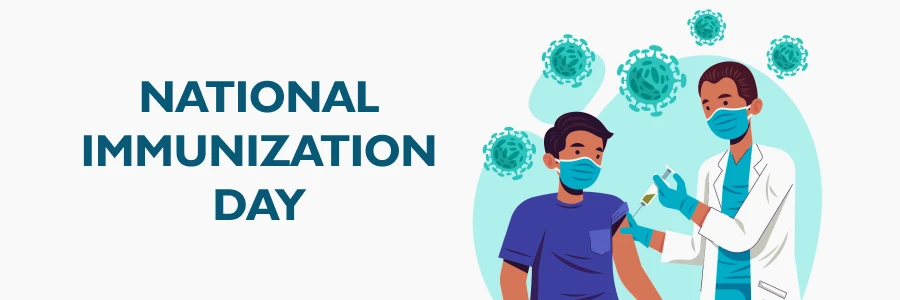
National Immunization Day (NID), also known as National Vaccination Day, is marked on March 16 every year. It is observed annually to highlight the importance of vaccines and how immunization protects children and adults from life-threatening diseases.
Vaccination plays a crucial role in strengthening public health and preventing disease outbreaks. Where immunization helps build strong immunity and reduces the spread of infectious diseases.
Governments and healthcare organizations run campaigns to boost vaccine coverage across communities. The observance also recognizes healthcare workers involved in vaccination efforts, while raising public awareness about the importance of vaccines and improving access to them.
Get a second opinion from trusted experts and makeconfident, informed decisions.
Get Second OpinionNot sure where to start?
Talk to a patient care advisor — free, confidential, 24/7. We'll match you to the right specialist and book your appointment in minutes.
Theme for National Immunization Day 2026
The theme of National Immunization Day 2026 is "Immunization for All is Humanly Possible"
The theme highlights the importance of ensuring equal access to vaccines for every individual. It emphasizes that preventable diseases can be controlled through strong immunization coverage.
On National Immunization Day, healthcare systems and governments play a vital role in strengthening vaccination programs. The campaign encourages communities to support timely vaccinations and public health initiatives. The message emphasizes that collective action can help achieve universal vaccine coverage.
Through ongoing efforts, National Vaccination Day promotes healthier populations and prevents disease worldwide.
Who Launched the National Immunization Programme?
The Government of India launched the National Immunization Programme in 1978 to protect children from vaccine-preventable diseases. The initiative was later expanded as the Universal Immunization Programme (UIP) in 1985.
The programme aims to increase vaccination coverage, reduce child mortality, and control the spread of infectious diseases across the country. It plays a vital role in strengthening public health and supporting nationwide immunization efforts.
Historical Milestones: Fighting Polio and Beyond
On this day in 1995, the first dose of the oral polio vaccine was administered in India, marking a key milestone in the fight against polio. Vaccination remains the most effective method of prevention against highly contagious diseases.
The World Health Organization (WHO) designates multiple NIDs throughout the year to combat deadly diseases like polio, measles, and tetanus and ultimately eradicate them.
Why is Immunization Day Important?
National Vaccination Day highlights the vital role of vaccines in protecting public health. Immunization helps prevent life-threatening diseases such as Polio, measles, and diphtheria. It reduces child mortality and supports healthier communities.
The day raises awareness about timely vaccination and the need for complete immunization coverage. Public health campaigns organized on this occasion encourage people to understand the long-term benefits of vaccines.
Which Diseases are Prevented Through Immunization?
Immunization protects people from many serious and potentially life-threatening infectious diseases. Vaccines help the body build immunity and reduce the spread of infections in communities.
Common diseases prevented through vaccination include Polio, which can cause permanent paralysis, and Measles, a highly contagious viral infection. Vaccines also protect against Tuberculosis, especially severe forms in children.
Immunization helps prevent Hepatitis B, a viral infection that affects the liver, and Diphtheria, which can lead to breathing difficulties. Protection is also available against Tetanus, a serious condition affecting the nervous system.
In recent years, vaccines have played a major role in controlling COVID-19 and reducing severe complications. Through awareness efforts like National Immunization Day, immunization continues to support disease prevention and public health worldwide.
Which Vaccines are Considered Essential in 2026?
Essential vaccines help protect individuals and communities from serious infectious diseases. Under national immunization guidelines and global recommendations, several vaccines are widely considered important in 2026.
- BCG Vaccine: Protects against severe forms of Tuberculosis, especially in children.
- Polio Vaccine: Prevents Polio, a disease that can cause lifelong paralysis.
- Measles-Rubella (MR) Vaccine: Helps prevent measles infection and congenital rubella syndrome.
- DPT Vaccine: Protects against diphtheria, pertussis (whooping cough), and tetanus.
- Hepatitis B Vaccine: Prevents hepatitis B infection.
- COVID-19 Vaccine: Helps reduce severe illness and complications related to COVID-19.
- HPV Vaccine: Protects against infections that may lead to cervical cancer and other HPV-related diseases.
These vaccines are promoted through national programs and awareness initiatives such as National Immunization Day to improve overall public health.
Who Should Receive Vaccines on National Immunization Day?
Vaccination is important for people of all age groups, based on national immunization schedules.
- Infants and young children should receive routine vaccines to protect against diseases like Polio, measles, and tuberculosis.
- Pregnant women may require certain vaccines to protect both mother and baby.
- Adolescents and adults should take booster doses or recommended vaccines such as hepatitis B and HPV.
- Elderly individuals and people with weak immunity also benefit from timely vaccination to reduce the risk of infections.
National Immunization Day encourages eligible individuals to check their vaccination status and follow medical guidance for complete protection.
Your health is everything - prioritize your well-being today.
Schedule Your AppointmentNewer Vaccinations from India
India has introduced several newer vaccines in recent years to strengthen disease prevention and expand immunization coverage. These vaccines are included in national programs or recommended for wider public health protection.
| Vaccine | Prevents / Protects Against | Key Benefit |
|---|---|---|
| Rotavirus Vaccine | Rotavirus infection causes severe diarrhoea | Reduces infant hospitalizations and child mortality |
| Pneumococcal Conjugate Vaccine (PCV) | Pneumococcal Disease, like pneumonia and meningitis | Prevents serious bacterial infections in children |
| Japanese Encephalitis Vaccine | Japanese Encephalitis | Expanded coverage in high-risk regions to reduce brain infections |
| Measles-Rubella (MR) Vaccine | Rubella and measles | Helps prevent congenital rubella syndrome and outbreaks |
| COVID-19 Vaccines | COVID-19 | Reduces severe illness, hospitalization, and pandemic impact |
| HPV Vaccine | Cervical Cancer risk from HPV infection | Supports long-term cancer prevention in adolescents |
These advancements reflect India’s efforts to enhance immunization coverage and public health outcomes, especially highlighted during National Immunization Day.
National Immunization Schedule (NIS) for Infants, Children, and Pregnant Women
| Vaccine | When to give | Dose | Route | Site |
|---|---|---|---|---|
| TT-1 | Early in pregnancy | 0.5 ml | Intra-muscular | Upper Arm |
| TT-2 | 4 weeks after TT-1* | 0.5 ml | Intra-muscular | Upper Arm |
| TT-Booster | If received 2 TT doses in a pregnancy within the last 3 yrs* | 0.5 ml | Intra-muscular | Upper Arm |
| BCG | At birth or as early as possible till one year of age | 0.1 ml (0.05 ml until 1 month age) | Intra-dermal | Left Upper Arm |
| Hepatitis B - Birth dose | At birth or as early as possible within 24 hours | 0.5 ml | Intra-muscular | Antero-lateral side of mid-thigh |
| OPV-0 | At birth or as early as possible within the first 15 days | 2 drops | Oral | Oral |
| OPV 1, 2 & 3 | At 6 weeks, 10 weeks & 14 weeks (OPV can be given till 5 years of age) | 2 drops | Oral | Oral |
| Pentavalent | At 6 weeks, 10 weeks & 14 weeks (can be given till one year of age) | 0.5 ml | Intra-muscular | Antero-lateral side of mid-thigh |
| Rotavirus# | At 6 weeks, 10 weeks & 14 weeks (can be given till one year of age) | 5 drops | Oral | Oral |
| IPV | Two fractional doses at 6 and 14 weeks of age | 0.1 ml | Intradermal two fractional doses | Right upper arm |
| Measles / MR 1st Dose$ | 9 completed months – 12 months (can be given till 5 years of age) | 0.5 ml | Sub-cutaneous | Right upper Arm |
| JE - 1** | 9 completed months – 12 months | 0.5 ml | Sub-cutaneous | Left upper Arm |
| Vitamin A (1st dose) | At 9 completed months with measles-Rubella | 1 ml (1 lakh IU) | Oral | Oral |
| DPT booster-1 | 16–24 months | 0.5 ml | Intra-muscular | Antero-lateral side of mid-thigh |
| Measles / MR 2nd dose$ | 16–24 months | 0.5 ml | Sub-cutaneous | Right upper Arm |
| OPV Booster | 16–24 months | 2 drops | Oral | Oral |
| JE-2 | 16–24 months | 0.5 ml | Sub-cutaneous | Left Upper Arm |
| Vitamin A (2nd to 9th dose) | 16–18 months, then every 6 months up to 5 years | 2 ml (2 lakh IU) | Oral | Oral |
| DPT Booster-2 | 5–6 years | 0.5 ml | Intra-muscular | Upper Arm |
| TT | 10 years & 16 years | 0.5 ml | Intra-muscular | Upper Arm |
Conclusion
National Immunization Day is a cornerstone in global health efforts, highlighting the transformative impact of vaccination in saving lives and safeguarding communities against infectious diseases. Sustained vaccination efforts are imperative to build on the achievements of NID campaigns and ensure a healthier future for generations to come.
Get a Vaccine Shot, Be Safe!
Frequently Asked Questions
National Immunization Day began as part of polio eradication efforts in India. It promotes mass vaccination drives to protect children from vaccine-preventable diseases.
Vaccines given on National Immunization Day are tested and approved. They are considered safe and help protect children from serious infections.
Vaccines like oral polio drops, measles-rubella, and routine childhood vaccines are commonly provided to prevent diseases such as Polio.
Mild fever, swelling, or pain at the injection site may occur. These effects are usually temporary and show the body is building immunity.
Protection duration varies by vaccine. Some provide long-term immunity, while others require booster doses for continued protection.
National Immunization Day in India is generally observed on the Monday of March 16th through nationwide polio vaccination campaigns.
The day is linked to India’s fight against Polio, aiming to vaccinate every child and achieve disease elimination.
Parents ensure children receive vaccines on time, maintain vaccination records, and follow medical advice for complete protection.
Yes, vaccines are usually provided free through government programs to improve coverage and protect public health.
- Cardiology
- Case Studies
- Dermatology
- Endocrinology
- ENT
- Fertility
- Gastroenterology
- General
- General-Medicine
- Gynecology
- Hematology
- Infectious-Diseases
- Medical News
- Neurology
- Oncology
- Ophthalmology
- Orthopedics
- Pediatrics
- Procedure
- Public-Health
- Pulmonology
- Radiology
- Second Opinion
- Urology
- Wellness
- Woman-and-child
Related Blogs
Still have questions? Speak with our experts now!
040-68334455


