 Call
Call Patient Reports
- Cardiology 84
- Dermatology 45
- Endocrinology 33
- ENT 16
- Fertility 190
- Gastroenterology 78
- General-Medicine 81
- Gynecology 80
- Hematology 19
- Infectious-Diseases 33
- Neurology 52
- Oncology 34
- Ophthalmology 23
- Orthopedics 69
- Pediatrics 31
- Procedure 23
- Public-Health 144
- Pulmonology 59
- Radiology 8
- Urology 68
- Wellness 161
- Woman-and-child 77
- 1758
- 3.7 Minute
Written by Medicover Team and Medically Reviewed by Dr Shaik Javed Hussain,Consultant Laparoscopic and Laser and General surgeon
Busting the Gall Bladder Stones Myths by General Surgeons in Bangalore
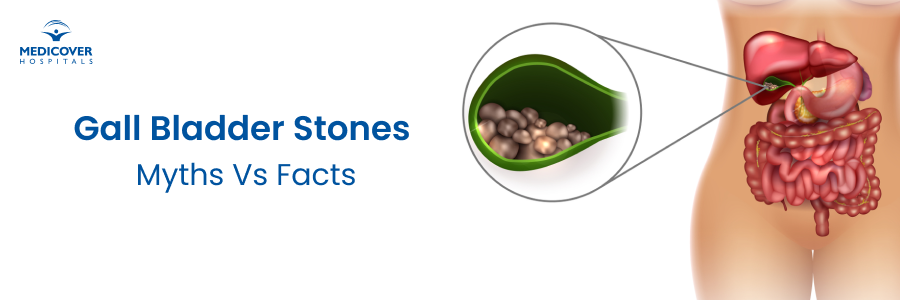
Gall Bladder Stones or Gallstones are common, yet they can be very confusing, as some people hear different opinions from friends, family, or online sources. Have you ever wondered if what you’ve heard about gallstones is true?
These misconceptions about gallstones make it difficult for people to understand what their condition really means and when treatment is needed. Many people delay seeking medical attention due to fear or misinformation. This delay often leads to recurring episodes of pain, infection, or other complications.
When myths replace facts, people opt for the wrong remedies, unsafe home treatments, or unnecessary restrictions on their daily routine. A clear explanation can help you make confident and safe decisions.
This guide debunks the most common gallbladder stones myths and provides straightforward, medically verified answers. Each myth is clearly explained so you understand what’s true, what’s not, and when to seek medical attention. If the symptoms are affecting your daily life, contacting the best hospital in Bangalore to get the right care and understand the facts can help you take that step without fear.
Myth 1: "Gallstones always cause pain"
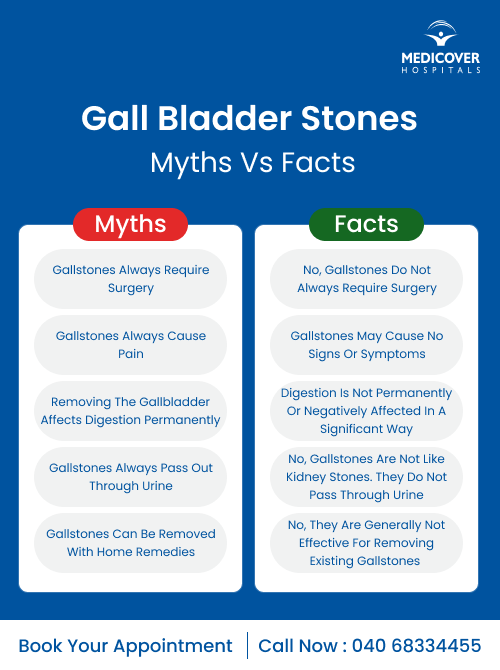
Fact: Gallstones do not always cause pain. This is one of the most common misconceptions about gallstones, as many people assume that pain is inevitable. Silent stones are actually quite common and may never cause any discomfort. Pain occurs when a stone temporarily blocks a duct, leading to a sharp cramping sensation known as biliary colic. If there is no obstruction, a person may never know they have a stone unless it is seen during an ultrasound for another reason.
Some people believe that even small stones cause pain every day, but that is not accurate. Gallstones can be harmless for years without causing inflammation or infection. A regular ultrasound and medical consultation will provide clarity. Consulting the best doctor for gallstones in Bangalore can guide you through evaluation, dietary adjustments, and treatment options depending on the severity.
Myth 2: "Gallstones can be dissolved permanently with home remedies"
Fact: No. There is no proven home remedy that can dissolve gallstones safely or completely. This myth spreads because people try juice cleanses, herbal mixtures, or oil-based drinks believing they force the stones out. Such methods do not dissolve real cholesterol or pigment stones. Most gallstones are solid, hardened deposits that do not melt with food or liquids.
Some people also believe that drinking large amounts of olive oil or lemon juice will flush out stones. This is unsafe because it can trigger severe pain or push a stone into the bile duct, leading to infection or pancreatitis.
Myth 3: "Removing the gallbladder affects digestion permanently"
Fact: Many people worry that digestion will never return to normal after their gallbladder is removed. This is one of the most common gallstone myths that can cause fear. The gallbladder stores bile, but your liver is constantly producing bile with or without a gallbladder. After surgery, bile flows directly into the intestines, allowing normal digestion to continue.
Get a second opinion from trusted experts and makeconfident, informed decisions.
Get Second OpinionNot sure where to start?
Talk to a patient care advisor — free, confidential, 24/7. We'll match you to the right specialist and book your appointment in minutes.
Myth 4: "Gallstones form only because of fatty food"
Fact: Fatty foods alone are not the only cause of gallstones. There are multiple causes of gallstones, including genetics, hormonal changes, rapid weight loss, obesity, pregnancy, diabetes, and certain blood disorders. Many people who eat a healthy diet still get stones, but some people who eat fatty foods frequently never get them.
This myth can lead people to unnecessarily blame themselves and restrict their diet more than necessary. High-fat meals can trigger pain in people who already have stones, but they are not the main cause.
Myth 5: "Women are the only ones who get gallstones."
Fact: Women are at higher risk of developing gallstones, but gallstones can affect men too. Hormonal changes, pregnancy, oral contraceptive use, and genetics increase the risk in women. In men, habits, metabolic problems, obesity, and lifestyle factors can also cause gallstones. Both men and women should pay attention to symptoms such as bloating, nausea, shoulder pain, or abdominal discomfort. Ignoring these signs can lead to complications such as bile duct infections or blockages.
Myth 6: "Gallstones always require surgery"
Fact: Not all gallstones need to be removed. Treatment depends on whether the stones are causing symptoms or complications. Silent stones can be monitored safely. Surgery ( Cholecystectomy) becomes necessary when stones cause repeated pain, infection, jaundice, or pancreatitis.
Myth 7: "Gallstones come back even after removing the gallbladder"
Fact: Once the gallbladder is removed, gallstones cannot form inside it again. This myth comes from confusion between gallbladder stones and stones in the bile ducts. Rarely, stones may form in the bile ducts after surgery due to ongoing metabolic factors, but this is uncommon.
Myth 8: "Gallstones can be broken by sound waves like kidney stones"
Fact: Kidney stones and gallstones are different. Kidney stones respond to shockwave treatment ( lithotripsy), but gallstones do not. Gallstones are often softer and stuck within the gallbladder, making shockwave therapy ineffective and unsafe for them.
This misconception leads some people to search for "stone-breaking treatments," which are not medically supported for gallstones. Using the wrong techniques can worsen the condition by shifting stones into the ducts.
Myth 9: "Gallstones can pass on their own like kidney stones"
Fact: Gallstones do not pass naturally through the bile ducts. If a stone attempts to move, it may block the duct and cause severe pain, infection, or pancreatitis. Kidney stones behave differently because they form in the kidneys and travel through the urinary tract, which naturally allows passage.
Myth 10: "Gallstones always show clear symptoms"
Fact: Silent gallstones are very common. Many people have stones without pain or digestive problems. Gallbladder stones symptoms appear only when the gallstones block the bile duct or cause inflammation.
Myth 11: "Stones Always Pass Out Through Urine"
Fact: People confuse gallstones with kidney stones, which can pass in urine. Gall bladder stones form in the gallbladder, not the kidneys, and do not come out in urine. Trying to "flush" them won’t work and might put your health at risk.
Your health is everything - prioritize your well-being today.
Schedule Your Appointment
Frequently Asked Questions
Gallstones are small, hard deposits (usually cholesterol or bilirubin) that form inside the gallbladder. Most people with gallstones never develop symptoms, but some experience pain or complications.
No. Many gallstones are silent and need only monitoring; surgery (cholecystectomy) is recommended when stones cause recurring pain, inflammation, or complications.
Diet changes can reduce symptoms and risk factors, but there is no reliable, quick diet that dissolves established gallstones for most people.
No. Home flushes and similar remedies lack medical evidence and can be unsafe. Speak to a specialist about proven tests and treatments.
No. Diet is one factor, but age, genetics, rapid weight loss, pregnancy, obesity and certain medical conditions also play important roles.
No. Gallstones form in the gallbladder and, if they move, travel into the bile ducts. They do not pass in urine. Symptoms of biliary obstruction require prompt medical care.
Most people digest food normally after a cholecystectomy. A small number may have temporary changes (looser stools), but long-term severe problems are uncommon.
Surgery is the most common definitive treatment for symptomatic gallstones. In selected cases, medical therapy or observation may be offered, but surgery is usually recommended when symptoms are frequent or complications arise.
Classic gallstone pain is in the right upper abdomen and may radiate to the right shoulder or back, but symptoms can vary; severe pain with fever or jaundice needs urgent medical evaluation.
There is no reliable medical evidence that herbal cleanses consistently dissolve gallstones. Unverified remedies can delay proper care or cause harm.
Look for hospitals with experienced laparoscopic surgeons and gastroenterology teams, transparent outcomes, and good perioperative support.
There is no single best medicine that works for every type of gallstone. Treatment depends on the stone type, size, symptoms, and your overall health. A general surgeon or a gastrosurgeon will suggest the safest and most effective option after reviewing an ultrasound and your symptoms.
- Cardiology
- Case Studies
- Dermatology
- Endocrinology
- ENT
- Fertility
- Gastroenterology
- General
- General-Medicine
- Gynecology
- Hematology
- Infectious-Diseases
- Medical News
- Neurology
- Oncology
- Ophthalmology
- Orthopedics
- Pediatrics
- Procedure
- Public-Health
- Pulmonology
- Radiology
- Second Opinion
- Urology
- Wellness
- Woman-and-child
Related Blogs
Still have questions? Speak with our experts now!
040-68334455


