 Call
Call Patient Reports
- Cardiology 84
- Dermatology 45
- Endocrinology 33
- ENT 16
- Fertility 190
- Gastroenterology 78
- General-Medicine 81
- Gynecology 80
- Hematology 19
- Infectious-Diseases 33
- Neurology 52
- Oncology 34
- Ophthalmology 23
- Orthopedics 69
- Pediatrics 31
- Procedure 23
- Public-Health 144
- Pulmonology 59
- Radiology 8
- Urology 68
- Wellness 161
- Woman-and-child 77
- 2748
- 3.7 Minute
Written by Medicover Team and Medically Reviewed by Dr Sudhir Suryakant Shetkar, Senior Consultant Interventional Cardiologist
Wrist-Based Angioplasty: Modern Care for Blocked Heart Arteries
Heart diseases are becoming more common, but the way they are treated has improved a lot. One such advancement is radial angioplasty, a modern technique in which doctors access the heart through the wrist rather than the groin. This approach is changing how patients experience heart procedures making them safer, quicker, and more comfortable.
Let's understand how this method works and why it is becoming a preferred choice in heart care.
What Is Radial Angiography and Angioplasty?
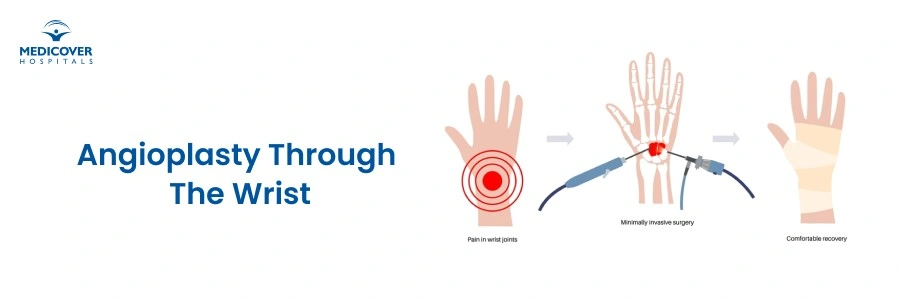
Radial angiography is a diagnostic procedure used to check for blockages in the coronary arteries. When a blockage is found, angioplasty is performed to open the artery and restore blood flow.
In radial access, the doctor inserts af thin tube (catheter) through the radial artery in the wrist instead of the femoral artery in the groin. The catheter is then guided to the heart to perform the procedure.
This technique is now widely used because it offers several advantages over traditional methods.
Why Radial Access Is Gaining Popularity
Radial angioplasty is becoming more common due to its patient-friendly approach. Here's why:
1. Less Pain and Discomfort
Since the wrist area is easier to manage, patients usually feel less discomfort compared to groin-based procedures.
2. Faster Recovery Time
Patients can sit up and walk soon after the procedure. In many cases, they can go home the same day.
3. Lower Risk of Bleeding
The radial artery is smaller and easier to compress, which reduces the chances of heavy bleeding or complications.
4. Improved Patient Comfort
There is no need for prolonged bed rest, making the experience more comfortable, especially for elderly patients.
Get a second opinion from trusted experts and makeconfident, informed decisions.
Get Second OpinionNot sure where to start?
Talk to a patient care advisor — free, confidential, 24/7. We'll match you to the right specialist and book your appointment in minutes.
How the Procedure Is Performed
Radial angioplasty is a safe and well-controlled procedure performed by experienced cardiologists. Here's a simple overview:
- The wrist area is cleaned and numbed with local anesthesia
- A small catheter is inserted into the radial artery
- A contrast dye is injected to identify blockages
- If needed, a stent is placed to open the artery
- The catheter is removed, and pressure is applied to stop bleeding
The entire procedure usually takes about 30 minutes to an hour.
Who Can Benefit from Radial Angioplasty?
Most patients with coronary artery disease can undergo this procedure. It is especially beneficial for:
- Patients at higher risk of bleeding
- Elderly individuals
- People who need faster recovery
- Patients with obesity or mobility issues
However, the final decision depends on the patient's condition and the doctor's assessment.
Importance of Early Diagnosis
Early detection of heart problems plays a key role in successful treatment. Symptoms like chest pain, shortness of breath, or fatigue should not be ignored.
Early diagnosis helps in:
- Preventing severe complications like heart attacks
- Reducing the need for complex procedures
- Improving long-term heart health
- Ensuring better treatment outcomes
Regular heart check-ups and timely medical advice can make a significant difference.
Your health is everything - prioritize your well-being today.
Schedule Your AppointmentChoosing the Right Hospital and Specialist
Getting treatment from experienced cardiologists is essential for safe and effective care. If you are considering treatment, you can visit the
Best Cardiology Hospital in Nashik Maharashtra
for advanced diagnostic and interventional procedures.
For specialized procedures, consulting an expert like the
Angiography and Angioplasty Procedure Specialist in Nashik can ensure accurate diagnosis and personalized care.
You can also
Meet the Best Cardiologists in Nashik Maharashtra for Advanced Heart Care & Interventional Procedures
to receive expert guidance and treatment plans suited to your condition.
Why Radial Angioplasty Is the Future of Heart Care
Medical technology continues to improve, and radial access is a great example of patient-centered innovation. It not only improves safety but also enhances the overall treatment experience.
With reduced complications, quicker recovery, and better comfort, more hospitals are adopting this approach as a standard practice.
Conclusion
Radial angioplasty has transformed how heart procedures are performed. By using the wrist instead of the groin, it offers a safer, faster, and more comfortable option for patients.
If you or your loved ones experience symptoms related to heart disease, do not delay medical consultation. Early diagnosis and the right treatment can prevent serious complications and improve quality of life.
Consult a qualified cardiologist to understand whether radial angioplasty is the right option for you and take a step toward better heart health.
Frequently Asked Questions
Yes, in many cases it is considered safer. It has a lower risk of bleeding and complications compared to the traditional groin-based approach.
The procedure usually takes about 30 minutes to 1 hour, depending on the complexity of the blockage and the patient’s condition.
Recovery is faster compared to traditional methods. Most patients can sit up, walk within a few hours, and may go home the same day or the next day.
In radial angioplasty, the catheter is inserted through the wrist, while in femoral angioplasty it is inserted through the groin. Radial access offers faster recovery and better comfort.
The procedure is performed under local anesthesia, so you may feel mild pressure but not significant pain.
- Cardiology
- Case Studies
- Dermatology
- Endocrinology
- ENT
- Fertility
- Gastroenterology
- General
- General-Medicine
- Gynecology
- Hematology
- Infectious-Diseases
- Medical News
- Neurology
- Oncology
- Ophthalmology
- Orthopedics
- Pediatrics
- Procedure
- Public-Health
- Pulmonology
- Radiology
- Second Opinion
- Urology
- Wellness
- Woman-and-child
Related Blogs
Still have questions? Speak with our experts now!
040-68334455


