 Call
Call Patient Reports
Find Doctors
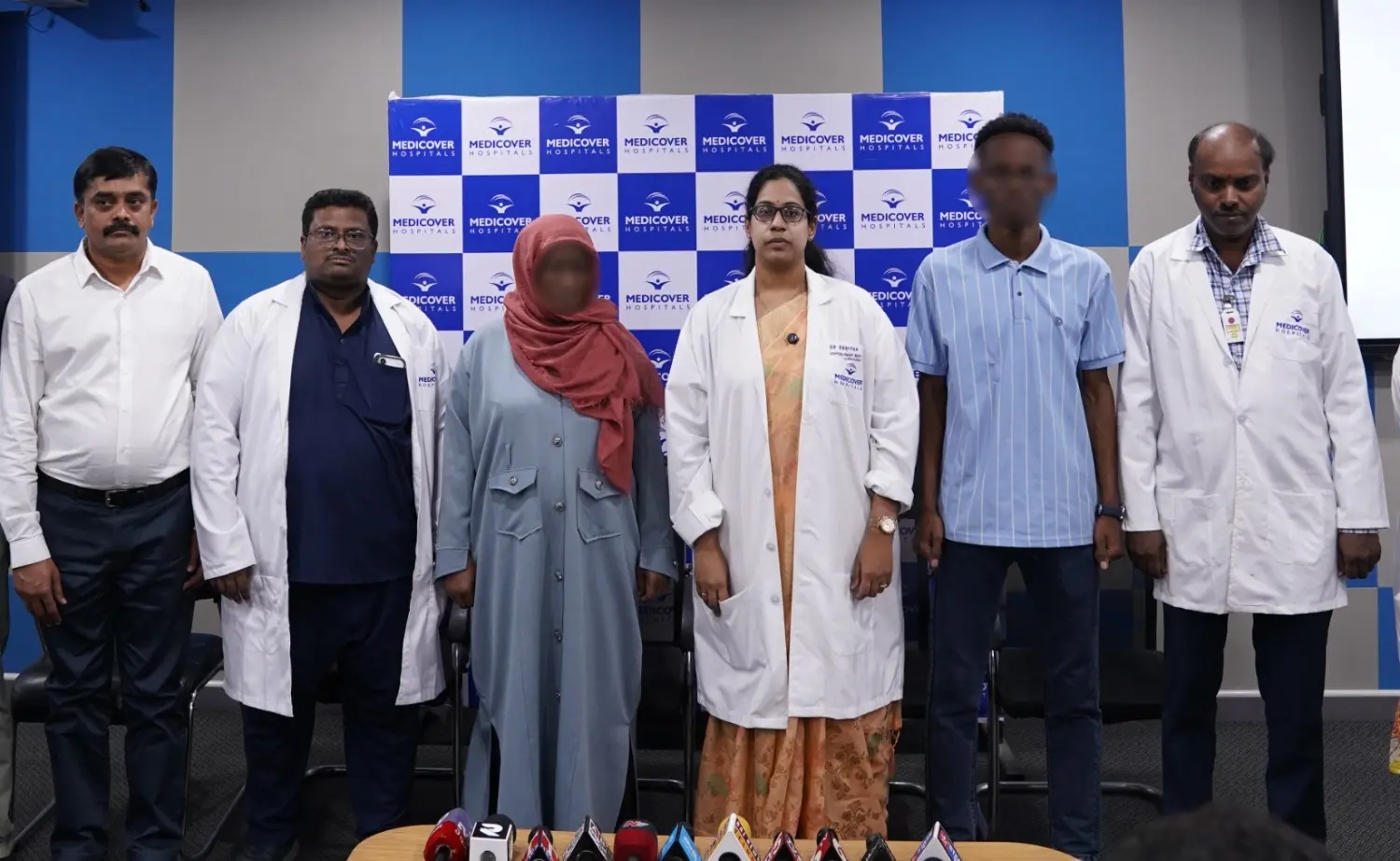
First successful use of advanced IGRT for high-grade glioma during pregnancy in India. Can a pregnant woman safely undergo radiation therapy for a brain tumor? Yes. In a landmark medical achievement, Medicover Cancer Institute in Hyderabad has successfully treated a pregnant patient suffering from high-grade glioma using advanced image-guided radiation therapy (IGRT).
- The Challenge: Brain tumors during pregnancy are extremely rare (1 in 13,000 to 17,000 pregnancies). Balancing maternal cancer treatment with fetal safety is highly complex.
- The Solution: A multidisciplinary tumor board utilized highly targeted IGRT with specialized fetal shielding, successfully treating the mother's brain tumor while keeping radiation exposure well within internationally accepted safety limits for the baby.
Clinical Case Overview
| Factor | Clinical Details |
|---|---|
| Patient Profile | 48-year-old female, conceived via IVF (20 weeks of gestation) |
| Diagnosis | Left Thalamic High-Grade Glioma |
| Previous Treatment | Neurosurgery (November 2025) with subsequent tumor progression |
| Chosen Intervention | Image-Guided Radiation Therapy (IGRT) |
| Treatment Deferred | Chemotherapy (deferred specifically to protect fetal safety) |
The Challenge: High-Grade Glioma in the Second Trimester
A 48-year-old expectant mother, who had successfully conceived after several IVF attempts, was faced with a devastating diagnosis at 20 weeks of gestation. It was a left thalamic high-grade glioma.
After initial neurosurgery in late 2025, follow-up scans revealed that the tumor was rapidly growing. Immediate intervention was needed, but traditional treatments carry significant risks. Chemotherapy was ruled out to ensure the safety of the developing fetus. The medical team needed a solution that would be aggressive enough to stop the brain tumor but precise enough to leave the baby completely unharmed.
The Multidisciplinary Approach & IGRT (Image-Guided Radiation Therapy) Technology
To manage this 1-in-15,000 medical rarity, Medicover Cancer Institute has set up a dedicated multidisciplinary tumor board. Our team integrates expertise from neurosurgery, radiation and medical oncology, obstetrics & gynecology, neonatology, and anesthesiology.
The board chose image-guided radiation therapy (IGRT).
Why IGRT?
Unlike traditional radiation, IGRT uses continuous, real-time imaging to deliver beams of radiation specifically to the exact coordinates of the tumor. By combining advanced treatment planning software with a special physical fetal shield, the oncology team ensured that scattered radiation never reached the fetus.
Expert Insight
"Treating cancer during pregnancy demands exceptional precision and coordination. Our priority was to safeguard both mother and child. With IGRT, we were able to focus radiation accurately on the tumor while ensuring fetal protection through strict dose monitoring and shielding protocols." - Dr. Kavitha Uppala, Consultant Radiation Oncology, Medicover Cancer Institute.
Current Status: The mother is currently stable under joint supervision by the oncology and obstetric teams. Hospital authorities confirm that fetal growth and developmental milestones remain completely normal and reassuring.
Frequently Asked Questions
A high-grade glioma is an aggressive type of brain tumor that originates from the glial cells (the supportive tissue of the brain). It requires prompt, specialized oncological treatment to prevent rapid progression.
Standard radiation can be dangerous to a fetus, but advanced, highly targeted therapies like IGRT (Image-Guided Radiation Therapy) can be administered safely for certain upper-body or brain tumors when strict fetal shielding and dose monitoring protocols are applied.
They are exceedingly rare. Statistics estimate that brain tumors occur in approximately 1 in 13,000 to 17,000 pregnancies.
While some chemotherapy drugs can be used safely in later trimesters, they carry a systemic risk as they travel through the bloodstream. To maximize fetal safety in this specific high-grade glioma case, the Medicover tumor board deferred chemotherapy in favor of localized, targeted radiation.
Read this page in:


