 Call
Call Patient Reports
Table of Contents

Best Nuclear Medicine Hospital Near Me | Advanced Nuclear Imaging & Therapy
Nuclear Medicine is a medical specialty that uses small amounts of radioactive tracers and advanced imaging techniques to diagnose and evaluate various diseases. At Medicover Hospitals, nuclear medicine specialists perform tests such as PET scans, SPECT scans, and other functional imaging procedures to assess organ function and detect conditions at an early stage. These tests are commonly used in the evaluation of cancer, heart diseases, thyroid disorders, and bone conditions, helping doctors make accurate diagnoses and plan appropriate treatment.
20,000+
Diagnostic Scans
95%
Diagnostic Accuracy
Advanced
PET-CT Technology
Why Choose Medicover Hospitals for Nuclear Medicine?
Medicover Hospitals offers advanced nuclear medicine services to support the diagnosis, evaluation, and monitoring of various medical conditions. Our experienced specialists, modern imaging technology, and patient-focused approach help deliver accurate results for effective treatment planning.
Experienced Nuclear Medicine Specialists
Our experts are highly trained in performing and interpreting nuclear medicine procedures for a wide range of health conditions.
Advanced Imaging Technology
We use modern nuclear imaging systems to provide detailed information about organ function and disease activity.
Accurate and Early Disease Detection
Advanced diagnostic techniques help identify certain conditions at an early stage, supporting timely treatment.
Comprehensive Diagnostic Services
We offer nuclear medicine evaluations for heart conditions, cancer, thyroid disorders, bone diseases, and other medical concerns.
Personalised Patient Care
Each patient receives individual attention and guidance throughout the diagnostic process to ensure comfort and safety.
Support for Multiple Medical Specialties
Our nuclear medicine services assist doctors across various specialties in making informed treatment decisions.
Focus on Safety and Quality
We follow strict safety protocols and quality standards to provide reliable diagnostic services and patient care.
Integrated Diagnostic Approach
Our specialists work closely with radiologists, oncologists, cardiologists, and other healthcare professionals to support comprehensive treatment planning.
Our Nuclear Medicine Specialists
Our Nuclear Medicine specialists use advanced imaging techniques and small amounts of radioactive tracers to detect and evaluate various medical conditions. They work closely with other specialists to support early diagnosis and accurate treatment planning.

Dr Peethamber Lokanandi

Dr Jyothsna Mandarapu

Dr S Muneendra Kumar
Our Nuclear Medicine Hospitals Near You
Medicover Hospitals provides Nuclear Medicine services across major cities, helping patients access advanced imaging and diagnostic procedures. Our hospitals are supported by experienced specialists and modern nuclear imaging facilities for accurate disease detection and evaluation.
















Nuclear Medicine Tests & Procedures Available
Nuclear Medicine helps doctors diagnose diseases by examining how organs function inside the body. These tests use small amounts of radioactive tracers and special imaging cameras to detect abnormal tissue activity. Nuclear medicine scans are commonly recommended when doctors need to evaluate cancer, thyroid disorders, bone problems, kidney function or heart blood flow.
PET-CT Scan
Comprehensive imaging used to detect cancer, assess tumor spread, and monitor treatment response.
Bone Scan
Specialized imaging that helps identify bone disorders, infections, fractures, and metastatic disease.
Thyroid Nuclear Scan
Diagnostic study used to evaluate thyroid function and conditions such as hyperthyroidism and thyroid nodules.
Renal Nuclear Scan
Functional imaging test that assesses kidney performance and identifies urinary tract abnormalities.
Cardiac Nuclear Stress Test
Advanced cardiac imaging used to evaluate blood flow to the heart and detect coronary artery disease.
Conditions Evaluated Using Nuclear Medicine
Nuclear Medicine scans help doctors detect diseases that may not be clearly visible through routine imaging tests. These scans provide information about organ function and abnormal tissue activity.
- Cancer detection and monitoring
- Thyroid gland disorders
- Unexplained bone pain and bone infections
- Kidney function problems
- Reduced blood flow to the heart
- Detection of cancer spread to bones or organs
Advanced Technology in Nuclear Medicine
Medicover Hospitals uses advanced nuclear imaging technologies to support early disease detection, functional organ assessment, and accurate treatment planning across a range of medical conditions.
- PET-CT Scan
- Bone Scan
- Thyroid Scan
- Renal Function Scan
- Cardiac Perfusion Scan
Patient Reviews & Success Stories
Hear from our patients about their treatment experiences
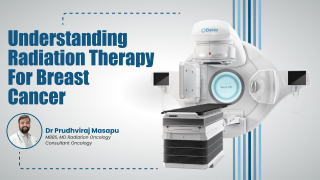
Understanding Radiation Therapy For Breast Cancer
Dr. Prithviraj Masapu, Consultant Oncology, Medicover Hospitals, Kakinada, in this video, explains about radiation therapy in breast cancer.
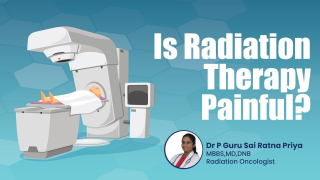
Is Radiation Therapy Painful?
In this video, Dr. Guru Sai Ratna Priya, Radiation Oncologist, Medicover Hospitals, explained about Radiation Therapy and the procedures involved in performing radiation therapy.

What Are The Advancements In Radiation Therapy?
In this video, Dr. Abhilash Gavarraju, Consultant Radiation Oncologist, Medicover Hospitals, Vizag, shares valuable information on radiation therapy.
Complete details about radiation therapy used in cancer treatment
Complete details about radiation therapy used in cancer treatment

TrueBeam RapidArc Radiotherapy
My father has undergone chemotherapy and radiation therapy after the surgery of a brain tumor. After coming to Medicover Cancer Institute, we were given good treatment by Dr. Saadvik Raghuram Y

Role Of Radiation Therapy In Cancer Treatment
In this video, Dr. K Pradeep Bhaskar, Consultant Radiation Oncology, Medicover Hospitals, Kakinada, shares valuable information on radiation therapy.
Your Health is Our Priority
At Medicover, our goal is to provide complete nuclear medicine care with precision and empathy. From prevention to post-surgery recovery, our experts guide you at every step to provide safe treatments, a faster recovery and long-term wellness.




Available 24/7 for Emergency Cases

Frequently Asked Questions
1. What is nuclear medicine and how is it used in healthcare?
Nuclear medicine uses small amounts of radioactive tracers and imaging technology to diagnose diseases and evaluate organ function accurately and safely.
2. What conditions are commonly diagnosed using nuclear medicine scans?
Nuclear medicine helps detect cancer, thyroid disorders, heart disease, bone infections and kidney problems through advanced functional imaging techniques.
3. How are PET scans different from regular imaging tests?
PET scans show organ function and metabolic activity, helping detect cancer and disease changes earlier than many traditional imaging methods.
4. Is nuclear medicine imaging safe for patients?
Nuclear medicine procedures are generally safe because they use carefully controlled radioactive tracers with strict safety and radiation monitoring protocols.
5. What happens during a nuclear medicine scan procedure?
Patients receive a radioactive tracer before imaging scans that track organ function, blood flow or abnormal tissue activity inside the body accurately.
6. Can nuclear medicine help detect cancer at an early stage?
Nuclear medicine imaging such as PET scans helps identify cancer spread, tumor activity and treatment response earlier and more precisely in many cases.
7. What are radioactive tracers used for in nuclear medicine?
Radioactive tracers travel through the body and help imaging systems detect abnormal organ activity, blood flow or disease-related tissue changes accurately.
8. How should patients prepare before nuclear medicine testing?
Preparation may include fasting, hydration, medication review and avoiding certain foods depending on the type of nuclear medicine scan being performed.
9. Can nuclear medicine evaluate heart and thyroid function effectively?
Nuclear medicine scans help assess heart blood flow, thyroid activity and organ function using specialized imaging and radioactive tracer techniques safely.
10. How long does a nuclear medicine scan usually take?
Nuclear medicine scans may take from thirty minutes to several hours depending on the imaging procedure and tracer absorption requirements.


