 Call
Call Patient Reports
Ventricular Septal Defect Device Closure Procedure at Medicover Hospitals
At Medicover Hospitals, our expert cardiologists with DM and DNB qualifications perform Ventricular Septal Defect Device Closure using an interventional approach. This minimally invasive technique often results in smaller incisions and shorter hospital stays, enhancing patient recovery across India.
Expert Specialists
Yearly Treatments
Patient Satisfaction
What is Ventricular Septal Defect Device Closure?
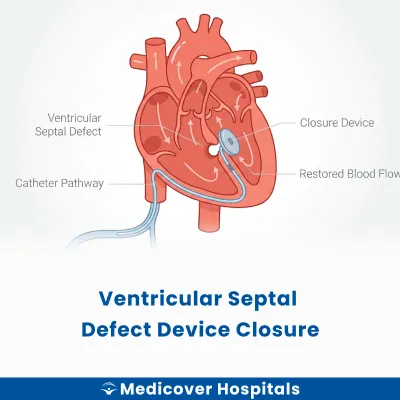
Ventricular Septal Defect Device Closure is a medical procedure used to treat a hole in the heart. Specifically, it addresses a defect in the septum (the wall) that separates the heart's lower chambers, known as ventricles. This procedure involves placing a device to close the hole, allowing normal blood flow and preventing complications.
This surgery is essential for individuals with a significant ventricular septal defect (VSD). If left untreated, it can lead to heart failure, pulmonary hypertension, or other serious complications. The condition may be congenital (present at birth) or develop later. Modern approaches include minimally invasive techniques like cardiac catheterization. These methods reduce recovery time and improve outcomes. Early intervention is crucial to prevent long-term health issues.
Ventricular Septal Defect Device Closure Doctors Near You
Find expert cardiologists for Ventricular Septal Defect Device Closure at Medicover Hospitals across India. Choose your city and book a consultation to explore your treatment options today.
Why Choose Medicover Hospitals for Ventricular Septal Defect Device Closure?
Get a second opinion from trusted experts and makeconfident, informed decisions.
 Get Second Opinion
Complete Guide To Ventricular Septal Defect Device Closure
Everything you need to know about the procedure, preparation, and recovery
Ventricular Septal Defect Device Closure Procedure Indications
Doctors recommend Ventricular Septal Defect (VSD) Device Closure when a patient has a significant defect that affects heart function. This procedure is often suggested when symptoms persist despite medical management.
Heart Failure Symptoms
Patients may experience breathlessness, fatigue, or swelling in the legs. Doctors find signs of heart failure on examination. When medication does not improve these symptoms, device closure is considered.
Growth Retardation in Children
Children with VSD may show poor weight gain or growth. Medical tests reveal inadequate blood flow due to the defect. If nutritional support and medications fail, device closure is advised.
Recurrent Respiratory Infections
Frequent lung infections may occur due to increased blood flow to the lungs. Chest X-rays and other tests confirm this. When infections persist despite treatment, the procedure is recommended.
Significant Left Heart Enlargement
Patients might not have obvious symptoms, but imaging shows enlargement of the left heart chambers. This indicates increased workload on the heart. If this condition progresses, device closure is necessary.
High Pulmonary Pressure
Some patients experience shortness of breath due to high pressure in lung arteries. Tests like echocardiograms show elevated pressures. When pressure remains high despite medication, closure is needed.
How to Prepare for Ventricular Septal Defect Device Closure?
Proper preparation for Ventricular Septal Defect Device Closure ensures a smoother procedure and recovery. It helps in reducing risks and enhances the overall outcome.
- Medication Review: Stop NSAIDs, anticoagulants, and herbal supplements as advised by your doctor.
- Fasting Guidelines: Follow a fasting period of 6-8 hours before the procedure for anaesthesia safety.
- Pre-Procedure Tests: Complete all recommended blood tests and imaging studies as scheduled.
- Clothing: Wear loose, comfortable clothing on the day of the procedure for convenience.
- Transportation: Arrange for someone to drive you home post-procedure, as you may feel drowsy.
- Medication List: Bring a list of all current medications with dosages for hospital records.
- Hygiene: Bathe and follow any specific skin preparation instructions given by the healthcare team.
- Insurance Details: Verify insurance coverage and bring necessary documents. Contact the hospital for current details as insurance panels may change.
Ventricular Septal Defect Device Closure procedure (Step-by-Step)
This procedure is performed by cardiologists. It typically lasts 2 to 4 hours and is done under general anaesthesia.
- Preparation: The patient is placed under general anaesthesia. Vital signs are monitored closely.
- Accessing the Heart: A small incision (1-2 cm) is made in the groin area. A catheter is inserted through the femoral vein.
- Guiding the Catheter: Using imaging techniques like fluoroscopy, the catheter is guided to the heart. A guidewire helps in precise navigation.
- Deploying the Device: A device is attached to the catheter. It is positioned across the ventricular septal defect. The device is then deployed to cover the defect.
- Securing the Device: The device is checked for proper placement. It is secured to ensure it stays in place, closing the defect.
- Removing the Catheter: The catheter is carefully withdrawn. The incision site is closed and bandaged.
- Recovery: The patient is moved to a recovery area. Monitoring continues as the patient wakes from anaesthesia.
Who Performs Ventricular Septal Defect Device Closure procedure?
This procedure is performed by interventional cardiologists. They specialise in minimally invasive techniques for heart defects. Their expertise ensures precision in device placement.
Recovery After Ventricular Septal Defect Device Closure procedure
Recovery after a Ventricular Septal Defect (VSD) Device Closure procedure is generally smooth. Patients can expect a gradual return to normal activities with some precautions. Regular follow-ups are crucial to monitor heart health.
Day 1-3:
- Rest is essential. Avoid strenuous activities.
- Hospital stay for monitoring. Discharge usually by Day 3.
- Light meals like curd, dal-rice, and soups are recommended.
Day 4-7:
- Continue with light activities at home. Avoid lifting heavy objects.
- Introduce soft foods like khichdi and moong dal to your diet.
- Regular medication as prescribed by the doctor.
Week 2-4:
- Gradual increase in physical activities. Short walks are encouraged.
- Return to school or work may be possible, depending on individual recovery.
- Maintain a balanced diet with plenty of fluids.
Month 1-3:
- Most daily activities can be resumed. Avoid high-intensity sports.
- Regular follow-up appointments to assess recovery progress.
- Continue with a heart-healthy diet and lifestyle.
When to Seek Urgent Help
- Sudden chest pain or shortness of breath.
- Fever or signs of infection at the catheter site.
- Irregular heartbeats or palpitations.
- Unusual swelling or pain in the legs.
If any of these symptoms occur, contact your healthcare provider immediately.
Benefits of Ventricular Septal Defect Device Closure procedure
This procedure offers a minimally invasive option to correct a ventricular septal defect (VSD), improving heart function.
- Minimally Invasive: The procedure involves a small incision, reducing recovery time.
- Improved Heart Function: Closing the defect can enhance blood circulation and heart efficiency.
- Reduced Symptoms: Patients often experience relief from symptoms like breathlessness and fatigue.
- Shorter Hospital Stay: Most patients can return home sooner compared to open-heart surgery.
Risks and Complications of Ventricular Septal Defect Device Closure procedure
While generally safe, the procedure carries some risks. It's important to be aware of potential complications.
- Common: Minor bleeding or bruising at the catheter insertion site.
- Common: Arrhythmias, which may require additional treatment.
- Rare: Device displacement, necessitating further intervention.
- Rare: Infection at the site of incision or within the heart.
- Rare: Allergic reaction to materials used during the procedure.
Cost of Ventricular Septal Defect Device Closure procedure
The cost of the Ventricular Septal Defect Device Closure procedure at Medicover Hospitals ranges from Rs. 117990 to Rs. 186300, depending on the ward category chosen. Prices vary based on the type of accommodation, such as general, private, or deluxe wards.
We offer transparent pricing and support for insurance and TPA, including CGHS, ESI, and major TPAs. Cashless facilities are available for your convenience. Please contact the hospital for the latest insurance panel details as these may change periodically.
Frequently Asked Questions
1. How much does Ventricular Septal Defect Device Closure procedure cost at Medicover Hospitals?
The cost for Ventricular Septal Defect Device Closure ranges from Rs. 117990 to Rs. 186300 across Medicover Hospitals, depending on the room category.
2. Is Ventricular Septal Defect Device Closure procedure covered under health insurance at Medicover?
This procedure is generally covered by CGHS, ESI, and major TPAs. Please contact the hospital for current panel details.
3. Can I exercise after VSD Device Closure?
Light activities can resume after a few weeks, but avoid strenuous exercise for at least 6 weeks. Consult your doctor for personalised advice.
4. Will my child need lifelong medication after VSD closure?
Most children do not require lifelong medication after successful VSD closure. Regular follow-ups are essential to monitor heart health.
5. Are there dietary restrictions after VSD closure?
A balanced diet including curd, dal-rice, and khichdi is recommended. Avoid high-sodium foods to support heart health.
6. Can VSD closure affect heart function?
VSD closure typically improves heart function by preventing abnormal blood flow. Regular check-ups ensure the heart is functioning well.
7. What are common complications after VSD closure?
Potential complications include arrhythmias or residual leaks. Regular follow-ups help in early detection and management of such issues.


