 Call
Call Patient Reports
Unilateral Orchiopexy Surgery with Expert pediatric surgeons
Unilateral Orchiopexy at Medicover Hospitals is performed using advanced laparoscopic techniques. Our team of surgical pediatric-surgeon with qualifications like MS, DNB, and MCh ensures precise surgical intervention. This approach often results in smaller incisions and a shorter hospital stay for patients.
Expert Surgeons
Yearly Surgeries
Patient Satisfaction
What is Unilateral Orchiopexy?
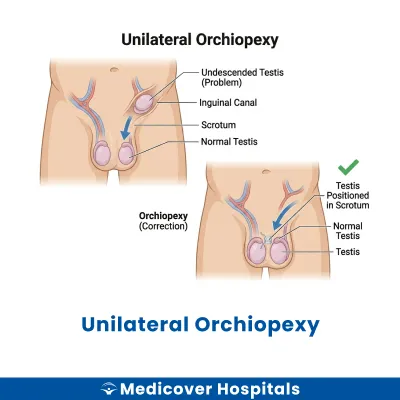
Unilateral Orchiopexy is a surgical procedure to correct an undescended testicle (cryptorchidism) on one side of the body. It involves moving the testicle into the scrotum and securing it in place. The surgery is typically performed on infants or young boys, as the condition is usually identified early in life.
This surgery is necessary when a testicle fails to descend naturally. If left untreated, it can lead to fertility issues or increase the risk of testicular cancer. Modern surgical approaches for Unilateral Orchiopexy include open surgery and laparoscopic techniques. These methods aim to safely reposition the testicle while minimizing recovery time. Early intervention is crucial for optimal outcomes.
Unilateral Orchiopexy Doctors Near You
Find skilled pediatric surgeon for unilateral orchiopexy at Medicover Hospitals across India. Choose your city and book a consultation today for expert guidance and care.
Why Choose Medicover Hospitals for Unilateral Orchiopexy?
Get a second opinion from trusted experts and makeconfident, informed decisions.
 Get Second Opinion
Complete Guide To Unilateral Orchiopexy
Everything you need to know about the procedure, preparation, and recovery
Unilateral Orchiopexy Surgery Indications
Doctors recommend unilateral orchiopexy when a testicle has not descended properly. This procedure is crucial to prevent complications and ensure normal testicular function.
Undescended Testicle
Patients may notice an absence of one testicle in the scrotum. On examination, doctors find the testicle located in the groin or abdomen. If the testicle does not descend naturally by six months, surgery is advised.
Retractile Testicle
Some patients experience a testicle that moves between the groin and scrotum. Doctors confirm this through physical examination. Surgery is recommended if the testicle remains undescended over time.
Testicular Torsion Risk
Patients may report intermittent groin pain. Doctors identify a high-riding testicle during examination. If conservative measures fail to prevent torsion risk, surgery is necessary.
Inguinal Hernia
Patients might experience groin swelling or discomfort. Imaging may reveal a hernia alongside an undescended testicle. Surgery is indicated to correct both issues simultaneously.
Testicular Atrophy
Some patients show signs of a smaller testicle. Ultrasound may confirm reduced size or function. Surgery is considered when atrophy is linked to an undescended testicle.
How to Prepare for Unilateral Orchiopexy?
Proper preparation for unilateral orchiopexy ensures a smoother surgical experience and recovery. It helps minimise complications and supports effective healing.
- Medication Review: Stop NSAIDs, anticoagulants, and herbal supplements 7 days before surgery.
- Fasting Guidelines: Fast for at least 6 hours before the procedure. Follow specific instructions from your healthcare provider.
- Pre-Surgery Bath: Take a thorough bath the night before or the morning of the surgery to reduce infection risk.
- Clothing Choice: Wear loose, comfortable clothing on the day of the surgery for ease of movement post-operation.
- Transportation: Arrange for someone to drive you home after the procedure, as you may feel drowsy from anaesthesia.
- Medication List: Bring a list of all medications you are currently taking, including dosages, to the hospital.
- Pre-Op Instructions: Follow any additional instructions provided by your surgeon, such as avoiding certain foods or drinks.
- Emotional Support: Consider having a family member or friend accompany you for support and assistance.
Unilateral Orchiopexy Surgery (Step-by-Step)
Overview: Unilateral Orchiopexy is performed by paediatric surgeons. The procedure typically lasts 30-60 minutes. It is done under general anaesthesia to ensure the patient is asleep and pain-free.
- Preparation: The patient is positioned on the operating table. Anaesthesia is administered to induce sleep.
- Incision: A small incision, about 1-2 cm, is made in the groin area to access the undescended testicle.
- Mobilisation: Using surgical instruments like a laparoscope and bipolar cautery, the surgeon carefully frees the testicle from surrounding tissues.
- Positioning: The testicle is gently moved into the scrotum. A small incision may be made in the scrotum to secure it in place.
- Fixation: The testicle is stitched to the scrotal wall to prevent retraction. This ensures it remains in the correct position.
- Closure: The incisions are closed with sutures. A dressing is applied to protect the area.
- Recovery: The patient is moved to a recovery room. They wake up as the anaesthesia wears off, experiencing some grogginess.
Who Performs Unilateral Orchiopexy Surgery?
Unilateral Orchiopexy is performed by pediatric surgeons. These specialists have expertise in surgical procedures for children, ensuring the safe and effective treatment of conditions like undescended testicles.
Recovery After Unilateral Orchiopexy Surgery
Recovery after unilateral orchiopexy surgery is generally smooth, but it is important to follow post-operative care instructions. Most children and adults recover within a few weeks, with gradual improvement in comfort and mobility.
Day 1-3:
- Rest is crucial. Avoid any strenuous activities.
- Diet should be light. Include soft foods like curd, dal-rice, and khichdi.
- Keep the surgical area clean and dry. Follow the doctor's instructions for wound care.
Day 4-7:
- Gradually resume light activities. Avoid lifting heavy objects.
- Continue with a balanced diet. Add moong dal and soups for nutrition.
- Monitor for any signs of infection or unusual swelling.
Day 8-14:
- Most can return to school or work, depending on comfort and doctor's advice.
- Engage in gentle exercises as recommended by the healthcare provider.
- Ensure a diet rich in proteins and vitamins to aid healing.
Phase 3 (Week 3-4):
- Resume normal activities gradually. Avoid contact sports until fully healed.
- Continue with a nutritious diet to support recovery.
- Follow up with the doctor to assess healing progress.
When to Seek Urgent Help
- Fever over 100.4°F (38°C) or persistent fever.
- Severe pain or swelling in the surgical area.
- Redness, pus, or unusual discharge from the incision site.
- Difficulty urinating or any signs of infection.
Benefits of Unilateral Orchiopexy Surgery
Unilateral orchiopexy is a surgical procedure to correct an undescended testicle. It offers several advantages for patients.
- Improved Fertility Potential: Helps in normalizing testicular function, which may enhance fertility prospects.
- Reduced Cancer Risk: Lowers the risk of testicular cancer associated with undescended testicles.
- Psychological Well-being: Addresses concerns related to body image and self-esteem.
- Normal Testicular Development: Supports proper growth and development of the testicle.
Risks and Complications of Unilateral Orchiopexy Surgery
While unilateral orchiopexy is generally safe, like any surgery, it carries certain risks and potential complications.
- Common: Pain or discomfort in the groin area post-surgery.
- Common: Swelling or bruising around the surgical site.
- Rare: Infection at the incision site.
- Rare: Damage to surrounding structures, such as blood vessels.
- Rare: Recurrence of the undescended testicle.
- Rare: Reaction to anesthesia.
Cost of Unilateral Orchiopexy Surgery
The cost of unilateral orchiopexy surgery can vary based on several factors ranges from ₹30,000 to ₹70,000. These include the surgical approach, duration of hospital stay, room category, required diagnostics, and post-operative care.
At Medicover Hospitals, we ensure transparent pricing for all procedures. We offer support for insurance and third-party administrators (TPAs), including CGHS, ESI, and major TPAs. A cashless facility is also available for your convenience. Please contact the hospital for the latest insurance panel details as these may change periodically.
Frequently Asked Questions
1. How much does Unilateral Orchiopexy surgery cost at Medicover Hospitals?
The cost of Unilateral Orchiopexy surgery varies ranges from ₹30,000 to ₹70,
2. Please contact Medicover Hospitals for detailed pricing information. 2. Is Unilateral Orchiopexy surgery covered under health insurance at Medicover?
Unilateral Orchiopexy may be covered by CGHS, ESI, and major TPAs. Please contact the hospital for current panel details.
3. What is the recovery time after Unilateral Orchiopexy?
Recovery from Unilateral Orchiopexy usually takes about 1 to 2 weeks. Follow your doctor's advice for a smooth recovery.
4. Can my child play sports after Unilateral Orchiopexy?
Your child should avoid sports for about 4 weeks post-surgery. Consult your doctor for specific activity guidelines.
5. Will my child experience pain after Unilateral Orchiopexy?
Mild discomfort is common after Unilateral Orchiopexy. Pain relief medications prescribed by your doctor can help manage it.
6. What dietary changes are needed post-Unilateral Orchiopexy?
Post-surgery, a soft diet like khichdi or dal-rice is recommended. Gradually reintroduce regular foods as advised by your doctor.
7. Are there complications specific to Unilateral Orchiopexy?
Rare complications include infection or testicular atrophy. Regular follow-ups with your doctor can help monitor and manage these risks.


