 Call
Call Patient Reports
Best Tumor Lysis Syndrome Procedure Hospital with Advanced Care
At Medicover Hospitals, our team of oncologists, with qualifications like MS, DNB, MCh, and DM, manage Tumor Lysis Syndrome using advanced open surgical techniques. This approach aids in effective treatment, resulting in reduced blood loss and shorter hospital stays for patients across India.
Expert Specialists
Yearly Treatments
Patient Satisfaction
What is Tumor Lysis Syndrome?
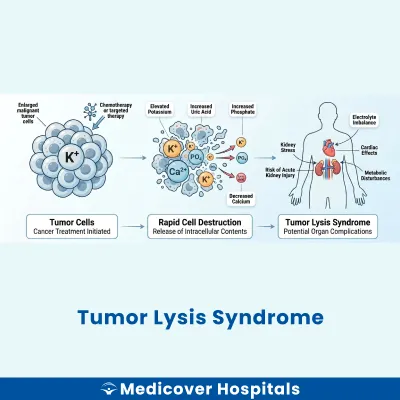
Tumor Lysis Syndrome (TLS) is a serious condition that occurs when cancer cells break down rapidly. This leads to the release of their contents into the bloodstream. It primarily affects the kidneys, which are responsible for filtering waste from the blood. The sudden influx of substances like potassium, phosphate, and uric acid can overwhelm the kidneys, causing an imbalance in the body's chemistry.
Surgery for TLS is rarely needed, as it is typically managed with medications and hydration. Conditions like aggressive cancers or certain treatments can lead to TLS. If untreated, it can result in kidney failure, heart problems, or even death. Modern approaches focus on prevention and management, including medications that help the kidneys manage the increased load. Please consult a healthcare professional for specific treatment options.
Tumor Lysis Syndrome Doctors Near You
Find experienced oncologists for Tumor Lysis Syndrome at Medicover Hospitals across India. Choose your city and book a consultation to receive expert guidance and care tailored to your needs.
Why Choose Medicover Hospitals for Tumor Lysis Syndrome?
Get a second opinion from trusted experts and makeconfident, informed decisions.
 Get Second Opinion
Complete Guide To Tumor Lysis Syndrome
Everything you need to know about the procedure, preparation, and recovery
Tumor Lysis Syndrome procedure Indications
Doctors recommend procedures for Tumor Lysis Syndrome (TLS) when there is a rapid release of intracellular components from cancer cells into the bloodstream. This often occurs after chemotherapy or radiation therapy in patients with high tumor burdens.
Hyperuricemia
Patients may experience joint pain or kidney discomfort. Lab tests reveal elevated uric acid levels. When medications fail to control uric acid, intervention is needed to prevent kidney damage.
Hyperkalemia
Symptoms include muscle weakness or heart palpitations. Blood tests show high potassium levels. If medications and dietary changes do not stabilize potassium, a procedure may be necessary to prevent cardiac complications.
Hyperphosphatemia
Patients might feel fatigued or have muscle cramps. Lab results indicate increased phosphate levels. When phosphate binders are ineffective, further intervention is required to avoid complications like calcium phosphate deposits.
Hypocalcemia
Symptoms can include tingling or muscle spasms. Tests show low calcium levels. If calcium supplements do not resolve symptoms, a procedure may be needed to restore balance and prevent severe neuromuscular issues.
Renal Failure
Patients may have reduced urine output or swelling. Kidney function tests show declining performance. When conservative measures like hydration fail, a procedure is necessary to support kidney function and prevent further damage.
How to Prepare for Tumor Lysis Syndrome?
Preparation for Tumor Lysis Syndrome is crucial to manage potential complications effectively. Proper preparation helps in reducing risks and ensuring a smoother treatment process.
- Medication Review: Stop NSAIDs, anticoagulants, and herbal supplements as directed by your doctor to prevent interactions.
- Fasting Guidelines: Follow the fasting instructions provided by your healthcare team, typically 6-8 hours before anaesthesia.
- Hydration: Increase fluid intake as advised to help flush out toxins and maintain kidney function.
- Medication List: Bring a list of all medications, including dosages, to your appointment for accurate medical assessment.
- Comfortable Clothing: Wear loose, comfortable clothing on the day of treatment for ease and comfort.
- Transportation: Arrange for someone to drive you home post-treatment, as you may feel weak or drowsy.
- Pre-Treatment Tests: Complete any required blood tests or imaging studies as scheduled to monitor your condition.
- Dietary Adjustments: Follow any specific dietary instructions given by your healthcare provider to support treatment.
Tumor Lysis Syndrome procedure (Step-by-Step)
Managed by Oncology specialists, the procedure involves medical management rather than surgical intervention. It typically requires monitoring and medication administration. No anaesthesia is needed as it is not a surgical procedure.
- Diagnosis and Risk Assessment: The oncologist evaluates the patient's risk for Tumor Lysis Syndrome (TLS) based on cancer type and treatment plan. Blood tests are conducted to check uric acid, potassium, and phosphate levels.
- Hydration: Patients receive intravenous fluids to maintain kidney function and help flush out excess substances from the body. This step is crucial for preventing kidney damage.
- Medication Administration: Medications such as allopurinol or rasburicase are given to manage uric acid levels. These medications help prevent the formation of uric acid crystals in the kidneys.
- Electrolyte Monitoring: Regular blood tests are performed to monitor electrolyte levels. Adjustments in medication or fluid intake are made based on these results to maintain balance.
- Symptom Management: Patients are monitored for symptoms like nausea, vomiting, or muscle cramps. Medications are provided to alleviate these symptoms as needed.
- Continuous Monitoring: The medical team continuously monitors the patient's vital signs and lab results to ensure stability and prevent complications.
- Follow-Up Care: After the acute phase, patients continue to be monitored for any delayed effects of TLS. Regular follow-up appointments are scheduled to ensure ongoing health.
Who Performs Tumor Lysis Syndrome procedure?
Oncologists and haematologists manage Tumor Lysis Syndrome. These specialists are trained to handle cancer-related complications. They work closely with a medical team to monitor and treat patients effectively.
Recovery After Tumor Lysis Syndrome procedure
Recovery from Tumor Lysis Syndrome (TLS) involves careful monitoring and supportive care. Patients can expect to stay in the hospital for a few days to ensure stabilization. Gradual improvement in symptoms is typical, but ongoing care is crucial to prevent complications.
Day 1-3:
- Close monitoring of vital signs and blood tests to manage electrolyte imbalances.
- Intravenous fluids may be administered to maintain hydration and kidney function.
- Rest is essential. Avoid strenuous activities.
Day 4-7:
- Gradual introduction of light activities as tolerated.
- Begin a soft diet with easily digestible foods like curd, dal-rice, and khichdi.
- Continue hydration with water and clear soups.
Phase 2 (Week 2-4):
- Resume normal activities gradually. Avoid heavy lifting or intense exercise.
- Incorporate more solid foods like moong dal and vegetables into the diet.
- Regular follow-up appointments to monitor recovery progress.
Phase 3 (Beyond Week 4):
- Most patients can return to work or school, depending on individual recovery.
- Continue a balanced diet with a variety of Indian foods to maintain nutrition.
- Engage in regular, moderate physical activity as advised by the doctor.
When to Seek Urgent Help
- Severe nausea or vomiting that does not improve.
- Signs of dehydration, such as reduced urination or dizziness.
- Sudden swelling or pain in the legs or abdomen.
- Confusion or difficulty breathing.
Benefits of Tumor Lysis Syndrome procedure
Tumor Lysis Syndrome (TLS) management aims to prevent and treat the rapid breakdown of cancer cells. This procedure can offer several benefits.
- Effective Management: Helps in managing the metabolic imbalances caused by TLS.
- Prevention of Complications: Reduces the risk of kidney failure and other serious complications.
- Improved Recovery: Supports quicker recovery by stabilising the patient's condition.
- Enhanced Monitoring: Provides continuous monitoring to address any arising issues promptly.
Risks and Complications of Tumor Lysis Syndrome procedure
While the procedure aims to manage TLS effectively, there are potential risks and complications involved. Being aware of these can help in making informed decisions.
- Common: Electrolyte imbalances such as hyperkalemia, which may require medical intervention.
- Common: Risk of dehydration due to increased fluid loss.
- Rare: Allergic reactions to medications used during the procedure.
- Rare: Cardiac complications due to electrolyte disturbances.
- Rare: Acute kidney injury if not managed promptly.
Cost of Tumor Lysis Syndrome procedure
The cost of the Tumor Lysis Syndrome procedure at Medicover Hospitals varies depending on the ward category. Prices range from Rs. 98,000 to Rs. 446,000. This variation ensures that patients can choose a ward type that best suits their needs and budget.
We offer transparent pricing and support for insurance and TPA, including CGHS, ESI, and major TPAs, with a cashless facility available. Please contact the hospital for the latest insurance panel details as these may change periodically.
Frequently Asked Questions
1. How much does Tumor Lysis Syndrome procedure cost at Medicover Hospitals?
The cost for Tumor Lysis Syndrome procedures at Medicover Hospitals ranges from Rs. 98,000 to Rs. 446,000, depending on the specific treatment and room type.
2. Is Tumor Lysis Syndrome procedure covered under health insurance at Medicover?
Tumor Lysis Syndrome procedures may be covered by CGHS, ESI, and major TPAs. Please contact the hospital for current panel details.
3. What organs are affected by Tumor Lysis Syndrome?
Tumor Lysis Syndrome primarily affects the kidneys and heart. It can lead to complications like acute kidney injury and cardiac arrhythmias.
4. What lifestyle changes are needed after Tumor Lysis Syndrome?
Patients may need to monitor fluid intake and maintain a balanced diet. Regular follow-ups are crucial to manage potential complications.
5. Can Tumor Lysis Syndrome cause electrolyte imbalance?
Yes, Tumor Lysis Syndrome can cause significant electrolyte imbalances. This includes high potassium and phosphate levels, which require careful management.
6. Is dialysis required after Tumor Lysis Syndrome?
In severe cases, dialysis may be needed to manage kidney function. This is determined based on the severity of the syndrome and kidney response.
7. What dietary changes are recommended after Tumor Lysis Syndrome?
A diet low in potassium and phosphate is often recommended. Foods like curd, dal-rice, and khichdi can be included under guidance.
8. What is the treatment for tumor lysis syndrome?
Treatment focuses on aggressive hydration, correcting electrolyte imbalances, and protecting kidney function. Medications like Allopurinol or Rasburicase are commonly used.
9. What is the first line treatment for tumor lysis syndrome?
The first-line treatment is intravenous fluids (hydration) to flush out toxins and support kidney function. Medications such as allopurinol or rasburicase are added based on risk and severity.


