 Call
Call Patient Reports
Transcatheter Tricuspid Valve Replacement Surgery by Expert Ctvs Cardiothoracic And Vascular Surgery
Transcatheter Tricuspid Valve Replacement at Medicover Hospitals employs a minimally invasive approach, performed by skilled surgeons with qualifications like MS, DNB, and MCh. This procedure results in smaller incisions and reduced blood loss, enhancing recovery and shortening hospital stays for patients across India.
Expert Surgeons
Yearly Surgeries
Patient Satisfaction
What is Transcatheter Tricuspid Valve Replacement?
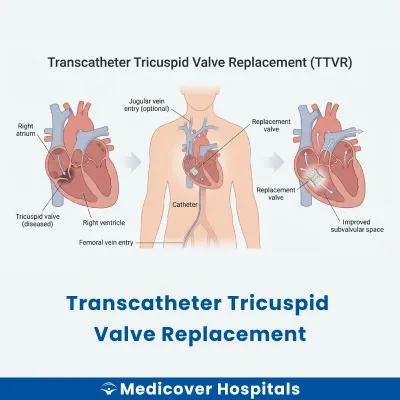
Transcatheter Tricuspid Valve Replacement (TTVR) is a minimally invasive procedure. It involves replacing the tricuspid valve in the heart. The tricuspid valve is located between the right atrium and the right ventricle. This procedure is performed through a catheter, which is a thin, flexible tube. It is an alternative to open-heart surgery.
TTVR is needed when the tricuspid valve is damaged or diseased. Conditions like tricuspid regurgitation or stenosis may require this procedure. If untreated, these conditions can lead to heart failure or other complications. Modern surgical approaches for TTVR include transcatheter techniques. These allow for valve replacement without the need for large incisions. This reduces recovery time and risks associated with traditional surgery.
Transcatheter Tricuspid Valve Replacement Doctors Near You
Discover skilled CTVS specialists for transcatheter tricuspid valve replacement at Medicover Hospitals across India. Choose your city and book a consultation to explore your treatment options today.
Why Choose Medicover Hospitals for Transcatheter Tricuspid Valve Replacement?
Get a second opinion from trusted experts and makeconfident, informed decisions.
 Get Second Opinion
Complete Guide To Transcatheter Tricuspid Valve Replacement
Everything you need to know about the procedure, preparation, and recovery
Transcatheter Tricuspid Valve Replacement Surgery Indications
Doctors recommend Transcatheter Tricuspid Valve Replacement when the tricuspid valve is severely damaged or dysfunctional. This procedure is considered when symptoms significantly affect daily life and conservative treatments are no longer effective.
Severe Tricuspid Regurgitation
Patients may experience fatigue, swelling in the legs, and abdominal discomfort. Doctors find significant backflow of blood through the tricuspid valve on echocardiograms. When medications and lifestyle changes fail to improve symptoms, surgery is advised.
Tricuspid Valve Stenosis
Symptoms include difficulty breathing, especially during exertion, and swelling in the abdomen. Imaging tests reveal a narrowed tricuspid valve. Surgery is considered when balloon valvuloplasty or medications do not alleviate symptoms.
Right Heart Failure
Patients report shortness of breath, fluid retention, and fatigue. Doctors observe elevated pressures in the right heart chambers on cardiac catheterization. When medical management does not control the symptoms, surgical intervention is necessary.
Congenital Valve Defects
Individuals may have irregular heartbeats and poor exercise tolerance. Diagnostic tests show structural abnormalities of the tricuspid valve. Surgery is recommended when these defects lead to significant symptoms and complications.
Endocarditis with Valve Damage
Patients often experience fever, chills, and heart murmurs. Blood tests and imaging confirm infection and damage to the tricuspid valve. When antibiotics fail to resolve the infection or valve function is compromised, surgery is needed.
How to Prepare for Transcatheter Tricuspid Valve Replacement?
Proper preparation is crucial for a successful Transcatheter Tricuspid Valve Replacement. It helps minimise risks and ensures a smooth procedure.
- Medication Review: Discuss all medications with your doctor. Stop NSAIDs, anticoagulants, and herbal supplements as advised.
- Fasting Guidelines: Fast for at least 6-8 hours before the procedure. This is essential for anaesthesia safety.
- Pre-Procedure Tests: Complete all required blood tests, imaging, and other evaluations as scheduled by your healthcare provider.
- Clothing: Wear loose, comfortable clothing on the day of the procedure for ease and comfort.
- Transportation: Arrange for someone to drive you home post-procedure, as you will not be able to drive yourself.
- Medication List: Bring a list of all medications you are currently taking, including dosages, to the hospital.
- Health Status: Inform your doctor of any changes in your health, such as fever or infection, before the procedure.
- Consent Forms: Ensure all consent forms are signed and understood before the procedure day.
Transcatheter Tricuspid Valve Replacement Surgery (Step-by-Step)
Overview: Performed by CTVS (Cardiothoracic and Vascular Surgery) specialists, this procedure typically lasts 2-4 hours. It is done under general anaesthesia.
- Preparation: The patient is given general anaesthesia. They remain asleep and pain-free throughout the procedure.
- Access Site Creation: A small incision, about 1-2 cm, is made in the groin area. A catheter is inserted into a blood vessel using a trocar.
- Catheter Navigation: The catheter is carefully guided through the blood vessels to reach the tricuspid valve. Imaging techniques like fluoroscopy help in precise navigation.
- Valve Deployment: A new valve, mounted on a balloon, is advanced through the catheter. Once in position, the balloon is inflated to deploy the valve, replacing the faulty tricuspid valve.
- Verification: The position and function of the new valve are checked using echocardiography. Adjustments are made if necessary to ensure proper valve function.
- Catheter Removal: The catheter is carefully withdrawn. The incision site is closed and bandaged to prevent infection.
- Recovery: The patient is moved to a recovery room. They are monitored as the anaesthesia wears off. Most patients experience minimal discomfort.
Who Performs Transcatheter Tricuspid Valve Replacement Surgery?
This procedure is performed by cardiothoracic surgeons with expertise in minimally invasive heart surgeries. They use specialised instruments and imaging techniques to ensure precision during the procedure.
Recovery After Transcatheter Tricuspid Valve Replacement Surgery
Recovery from Transcatheter Tricuspid Valve Replacement Surgery involves gradual improvement over weeks. Patients can expect to stay in the hospital for a few days post-surgery. Regular follow-ups are essential to monitor progress and ensure the heart is functioning well.
Day 1-3:
- Hospital stay with monitoring of heart function and vitals.
- Begin with light meals; include easily digestible foods like curd and moong dal soup.
- Rest is crucial; minimal movement is advised.
Day 4-7:
- Gradual increase in activity; short walks around the room.
- Continue with a soft diet; options include dal-rice and khichdi.
- Focus on hydration; drink plenty of water.
Day 8-14:
- Increase walking duration; avoid strenuous activities.
- Return to a normal diet; include nutritious foods like vegetables and fruits.
- Attend follow-up appointments as scheduled.
Phase 3 (Week 3-6):
- Resume light household activities; avoid heavy lifting.
- Gradually return to work or school, depending on recovery.
- Continue with heart-healthy meals; include soups and salads.
When to Seek Urgent Help
- Sudden chest pain or discomfort.
- Shortness of breath or difficulty breathing.
- Severe swelling in legs or abdomen.
- Persistent fever or signs of infection.
If any of these symptoms occur, contact your healthcare provider immediately.
Benefits of Transcatheter Tricuspid Valve Replacement Surgery
Transcatheter Tricuspid Valve Replacement (TTVR) offers several advantages for patients with tricuspid valve issues.
- Minimally Invasive: TTVR is performed without open-heart surgery, leading to quicker recovery.
- Reduced Hospital Stay: Patients often experience shorter hospitalisation compared to traditional surgery.
- Improved Quality of Life: Many patients notice a significant improvement in symptoms and daily activities.
- Suitable for High-Risk Patients: This procedure is an option for those who may not be candidates for open surgery.
Risks and Complications of Transcatheter Tricuspid Valve Replacement Surgery
While TTVR is generally safe, it carries certain risks and potential complications.
Common Risks
- Bleeding at the catheter insertion site.
- Arrhythmias or irregular heartbeats post-procedure.
Rare Risks
- Infection at the site or within the heart.
- Valve malfunction or leakage.
- Stroke or transient ischemic attack.
- Kidney complications due to contrast dye.
Cost of Transcatheter Tricuspid Valve Replacement Surgery
The cost of Transcatheter Tricuspid Valve Replacement Surgery varies from INR 12,00,000 to over INR 30,00,000, based on several factors. These include the surgical approach, duration of hospital stay, room category, required diagnostics, and post-operative care.
At Medicover Hospitals, we ensure transparent pricing for all procedures. We offer support for insurance and third-party administrators (TPAs), including CGHS, ESI, and major TPAs. A cashless facility is also available for your convenience. Please contact the hospital for the latest insurance panel details as these may change periodically.
Frequently Asked Questions
1. How much does Transcatheter Tricuspid Valve Replacement surgery cost at Medicover Hospitals?
The cost for Transcatheter Tricuspid Valve Replacement surgery varies from INR 12,00,000 to over INR 30,00,
2. Please contact Medicover Hospitals for detailed pricing information. 2. Is Transcatheter Tricuspid Valve Replacement surgery covered under health insurance at Medicover?
Many insurance plans, including CGHS and ESI, may cover this procedure. Please contact the hospital for current panel details.
3. Can I feel the tricuspid valve after replacement?
You will not feel the tricuspid valve after replacement. It is placed inside the heart and does not cause any sensation.
4. Will I need lifelong medication after tricuspid valve replacement?
Yes, you may need to take blood thinners after the procedure. Your doctor will provide specific medication guidance based on your condition.
5. Can I exercise after tricuspid valve replacement?
Light exercise can typically resume after a few weeks. Consult your doctor for a personalised exercise plan post-surgery.
6. What is the risk of valve infection after replacement?
Infection risk, known as endocarditis, is present but low. Maintaining good oral hygiene and regular check-ups can help reduce this risk.
7. Will my diet change after tricuspid valve replacement?
A heart-healthy diet is recommended, including foods like curd, dal-rice, and khichdi. Avoid high-sodium and high-fat foods to support recovery.


