 Call
Call Patient Reports
Total Gastrectomy Surgery by Expert Gastroenterologists Surgical
At Medicover Hospitals, our skilled consultant surgical gastroenterologists, with qualifications like MS, DNB, and MCh, perform total gastrectomy using advanced laparoscopic techniques. This approach results in smaller incisions and reduced blood loss, enhancing recovery for patients across India.
Expert Surgeons
Yearly Surgeries
Patient Satisfaction
What is Total Gastrectomy?
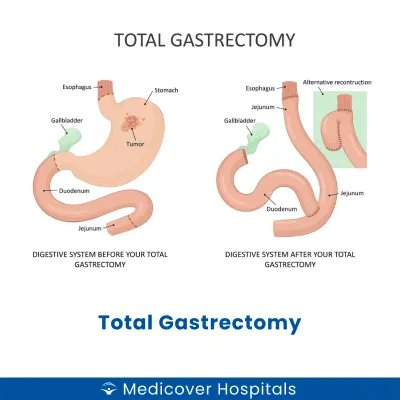
Total gastrectomy is a surgical procedure involving the complete removal of the stomach. This operation is necessary when the stomach (a key organ in digestion) is affected by severe conditions. After the stomach is removed, the esophagus is directly connected to the small intestine to maintain the digestive tract's continuity.
This surgery is often required for conditions like stomach cancer, severe ulcers, or genetic disorders such as familial adenomatous polyposis. If left untreated, these conditions can lead to serious complications, including life-threatening situations. Modern surgical approaches for total gastrectomy include open surgery and minimally invasive techniques like laparoscopic and robotic-assisted surgery. These methods aim to reduce recovery time and improve outcomes.
Total Gastrectomy Doctors Near You
Discover skilled gastroenterologists-surgical at Medicover Hospitals across India. Choose your city and book a consultation to explore total gastrectomy options tailored to your needs.
Why Choose Medicover Hospitals for Total Gastrectomy?
Get a second opinion from trusted experts and makeconfident, informed decisions.
 Get Second Opinion
Complete Guide To Total Gastrectomy
Everything you need to know about the procedure, preparation, and recovery
Total Gastrectomy Surgery Indications
Total gastrectomy is recommended when the stomach needs to be removed due to severe disease or damage. This procedure is considered when other treatments have not been effective.
Stomach Cancer
Patients may experience persistent stomach pain, weight loss, and vomiting. Doctors may find a tumour in imaging tests or biopsies. Surgery is advised when cancer is advanced or not responding to chemotherapy.
Severe Peptic Ulcer Disease
Symptoms include intense abdominal pain and bleeding. Endoscopy may reveal large, non-healing ulcers. When medication and lifestyle changes fail, surgery is considered.
Gastric Polyps
Patients might notice discomfort or bleeding. Polyps are detected during endoscopic exams. If polyps are large or precancerous, and cannot be removed endoscopically, surgery is needed.
Familial Adenomatous Polyposis
This genetic condition leads to numerous polyps in the stomach. Patients often have a family history and genetic testing confirms the diagnosis. Surgery is recommended to prevent cancer development.
Severe Gastric Bleeding
Patients may experience vomiting blood or black stools. Endoscopy and imaging show uncontrolled bleeding sources. When bleeding is life-threatening and not manageable by other means, surgery is necessary.
How to Prepare for Total Gastrectomy?
Proper preparation is crucial for a successful total gastrectomy. It helps minimise risks and ensures a smoother recovery.
- Medication Review: Stop NSAIDs, anticoagulants, and herbal supplements as advised by your doctor.
- Fasting: Fast for at least 8 hours before the surgery. This is essential for anaesthesia safety.
- Bowel Preparation: Follow any specific bowel prep instructions given by your healthcare provider.
- Clothing: Wear loose, comfortable clothing on the day of the surgery.
- Transportation: Arrange for someone to drive you home post-surgery.
- Medication List: Bring a list of your current medications, including dosages, to the hospital.
- Smoking and Alcohol: Avoid smoking and alcohol for a few weeks before the surgery to aid recovery.
- Health Checks: Complete any pre-surgery tests or health checks as advised by your doctor.
Total Gastrectomy Surgery (Step-by-Step)
Overview: Total gastrectomy is performed by gastroenterologists-surgical. The procedure typically lasts 4-6 hours and is done under general anaesthesia.
- Preparation: The patient is given general anaesthesia to ensure they are asleep and pain-free. The surgical area is sterilised.
- Incision: A 1-2 cm incision is made for laparoscopic instruments. Larger incisions may be needed for open surgery.
- Accessing the Stomach: A laparoscope is inserted through the incision to view the stomach. Trocar and other instruments are used to access the area.
- Stomach Removal: The stomach is carefully detached using a harmonic scalpel. Blood vessels are sealed with bipolar cautery to prevent bleeding.
- Reconstruction: The oesophagus is connected to the small intestine. This allows food to bypass the removed stomach.
- Closure: Incisions are closed with sutures or staples. The area is cleaned and dressed.
- Recovery: The patient is moved to a recovery room. They are monitored as anaesthesia wears off.
Who Performs Total Gastrectomy Surgery?
Total gastrectomy is performed by surgical gastroenterologists. These specialists are trained in complex abdominal surgeries, including the removal and reconstruction of digestive organs.
Recovery After Total Gastrectomy Surgery
Recovering from a total gastrectomy involves gradual adjustments to your diet and lifestyle. It's important to follow medical advice closely to ensure a smooth recovery process.
Day 1-3:
- Hospital stay is common. You will receive fluids through an IV.
- Walking short distances is encouraged to prevent blood clots.
Day 4-7:
- Begin with a liquid diet. Include clear soups and broths.
- Gradually introduce soft foods like curd and dal water.
- Continue gentle walking as tolerated.
Week 2:
- Transition to a soft diet. Try khichdi, moong dal, and mashed vegetables.
- Avoid spicy and oily foods to prevent discomfort.
- Limit physical activity. Avoid lifting heavy objects.
Phase 3-6 Weeks:
- Introduce small, frequent meals. Include soft rice, dal, and well-cooked vegetables.
- Gradually increase activity levels. Light exercises like walking are beneficial.
- Most can return to work or school after 4-6 weeks, depending on recovery.
When to Seek Urgent Help:
- Severe abdominal pain or swelling.
- Persistent vomiting or inability to keep food down.
- Signs of infection, such as fever or redness around the incision.
- Unexplained weight loss or weakness.
Always follow your doctor's advice and attend follow-up appointments to monitor your recovery. Please contact the hospital for current details as insurance panels may change.
Benefits of Total Gastrectomy Surgery
Total gastrectomy is a surgical procedure that involves the removal of the stomach. It is primarily performed to treat stomach cancer and other severe gastric conditions.
- Elimination of Cancerous Tissue: This surgery can effectively remove cancerous tissues, helping to prevent the spread of stomach cancer.
- Improved Quality of Life: For patients with severe gastric issues, this surgery can alleviate symptoms and improve overall well-being.
- Prevention of Recurrence: By removing the stomach, the risk of cancer recurrence in the stomach is significantly reduced.
- Enhanced Nutritional Management: Post-surgery, patients can manage their nutrition better with medical guidance.
Risks and Complications of Total Gastrectomy Surgery
Like any major surgery, total gastrectomy carries certain risks and potential complications. It is important to be aware of these before proceeding.
- Common: Nutritional deficiencies due to altered digestion and absorption.
- Common: Dumping syndrome, which can cause nausea and diarrhea after eating.
- Common: Weight loss as the body adjusts to the absence of the stomach.
- Rare: Anastomotic leakage, which can lead to infection.
- Rare: Strictures or narrowing at the surgical site, causing swallowing difficulties.
- Rare: Internal bleeding requiring further medical intervention.
Cost of Total Gastrectomy Surgery
The cost of Total Gastrectomy Surgery can vary ranges from ₹3,00,000 to ₹5,00,000 based on factors like the surgical approach, duration of hospital stay, room category, required diagnostics, and post-operative care.
At Medicover Hospitals, we offer transparent pricing to ensure clarity. We support insurance and TPA services, including CGHS, ESI, and major TPAs, with a cashless facility available for convenience. Please contact the hospital for the latest insurance panel details as these may change periodically.
Frequently Asked Questions
1. How much does Total Gastrectomy surgery cost at Medicover Hospitals?
The cost of Total Gastrectomy surgery varies ranges from ₹3,00,000 to ₹5,00,
2. Please contact Medicover Hospitals for detailed pricing information. 2. Is Total Gastrectomy surgery covered under health insurance at Medicover?
Total Gastrectomy may be covered by CGHS, ESI, and major TPAs. Please contact the hospital for current panel details.
3. Will I need vitamin supplements after gastrectomy?
Yes, vitamin B12 supplements are often necessary after a total gastrectomy. This is due to the stomach's role in nutrient absorption.
4. Can I eat spicy food after a gastrectomy?
Spicy foods should be avoided initially after a gastrectomy. Gradually reintroduce them based on your tolerance and doctor's advice.
5. How will a gastrectomy affect my digestion?
A total gastrectomy will significantly alter digestion, requiring smaller, more frequent meals. You may need to adjust your diet to include soft foods like curd and dal-rice.
6. Will I experience dumping syndrome after gastrectomy?
Dumping syndrome is a possible complication after total gastrectomy. Symptoms include nausea and diarrhea, often triggered by certain foods.
7. How soon can I return to work post-gastrectomy?
Recovery from a total gastrectomy typically takes several weeks. Most patients can return to work within 6-8 weeks, depending on their recovery.


