 Call
Call Patient Reports
Bleeding Peptic Ulcer Surgery at Medicover Hospitals – Advanced GI Care
At Medicover Hospitals, our team of consultant surgical gastroenterologists, equipped with qualifications like MS, DNB, and MCh, employ advanced laparoscopic techniques for the surgical management of bleeding peptic ulcers. This approach ensures smaller incisions and reduced blood loss, enhancing patient recovery.
Expert Surgeons
Yearly Surgeries
Patient Satisfaction
What is Surgical Management of Bleeding Peptic Ulcer?
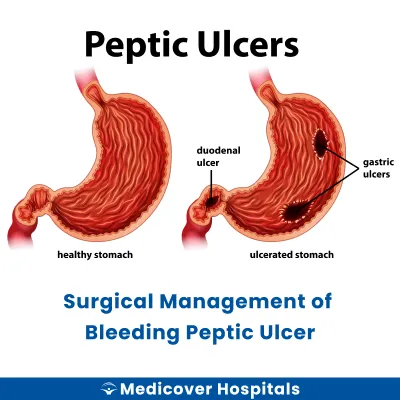
Surgical management of a bleeding peptic ulcer involves procedures to stop bleeding in the stomach or duodenum (the first part of the small intestine). A peptic ulcer is a sore that forms on the stomach lining or duodenum. When these ulcers bleed, surgery may be required to control the bleeding and repair the affected area.
This surgery is needed when bleeding from a peptic ulcer does not stop with medication or endoscopic treatment. Untreated bleeding ulcers can lead to severe blood loss and other complications. Modern surgical approaches include laparoscopic surgery (minimally invasive surgery using small incisions) and open surgery. These methods help manage the bleeding effectively and prevent further complications.
Surgical Management of Bleeding Peptic Ulcer Doctors Near You
Explore surgical gastroenterologists at Medicover Hospitals across India for bleeding peptic ulcer management. Choose your city and book a consultation to receive expert care tailored to your needs.
Why Choose Medicover Hospitals for Surgical Management of Bleeding Peptic Ulcer?
Get a second opinion from trusted experts and makeconfident, informed decisions.
 Get Second Opinion
Complete Guide To Surgical Management Of Bleeding Peptic Ulcer
Everything you need to know about the procedure, preparation, and recovery
Surgical Management of Bleeding Peptic Ulcer Surgery Indications
Doctors recommend surgical management for bleeding peptic ulcers when non-surgical treatments fail to control the bleeding. This procedure is considered in cases where the ulcer poses a significant risk to the patient's health.
Recurrent Bleeding
Patients may experience repeated episodes of vomiting blood or passing black, tarry stools. Despite endoscopic interventions, bleeding persists or recurs, indicating the need for surgery.
Failed Endoscopic Therapy
When a patient continues to bleed despite endoscopic attempts to control it, such as clipping or cauterization, surgery may be necessary. This is often confirmed by ongoing blood loss or unstable vital signs.
Large Ulcer Size
Patients with large ulcers may experience severe abdominal pain and significant bleeding. Imaging or endoscopy reveals an ulcer size that is unlikely to heal with medication alone, prompting surgical intervention.
Perforation
Sudden, severe abdominal pain and signs of infection may indicate a perforated ulcer. Imaging shows air under the diaphragm, and immediate surgery is required to prevent further complications.
Shock or Hemodynamic Instability
Patients may present with low blood pressure, rapid heart rate, and confusion. These signs of shock indicate severe blood loss, and surgery is needed when conservative measures fail to stabilize the patient.
How to Prepare for Surgical Management of Bleeding Peptic Ulcer?
Proper preparation is crucial for the surgical management of a bleeding peptic ulcer. It helps reduce risks and ensures a smoother recovery. Follow these steps to prepare effectively.
- Medication Review: Stop NSAIDs, anticoagulants, and herbal supplements as advised by your doctor.
- Fasting: Do not eat or drink anything for at least 8 hours before the surgery to prepare for anaesthesia.
- Pre-Operative Tests: Complete all required blood tests and imaging studies as scheduled.
- Personal Items: Wear loose clothing and remove any jewellery or accessories before arriving at the hospital.
- Transport Arrangement: Arrange for someone to drive you home post-surgery, as you may feel drowsy from anaesthesia.
- Medication List: Bring a list of all medications you are currently taking, including dosages, to the hospital.
- Smoking and Alcohol: Avoid smoking and alcohol for a few days before the surgery to aid healing.
- Hospital Admission: Arrive at the hospital on time with all necessary documents and identification.
Surgical Management of Bleeding Peptic Ulcer Surgery (Step-by-Step)
Overview: Surgical management of bleeding peptic ulcer is performed by gastroenterologists-surgical. The procedure typically lasts 1-3 hours and is done under general anaesthesia.
- Preparation: The patient is placed under general anaesthesia. Vital signs are monitored. The surgical area is sterilised.
- Incision: A small incision of about 1-2 cm is made in the abdominal area to access the stomach.
- Exploration: A laparoscope is inserted through the incision. The surgeon examines the ulcer site using the camera attached to the laparoscope.
- Control of Bleeding: Instruments like a bipolar cautery or harmonic scalpel are used to cauterise the bleeding vessels and control the bleeding.
- Ulcer Repair: The ulcer may be sutured or patched using a piece of tissue from another part of the stomach or intestine.
- Closure: The incision is closed with sutures or staples. A sterile dressing is applied over the incision site.
- Recovery: The patient is moved to the recovery room. Vital signs are monitored as the patient wakes from anaesthesia.
Who Performs Surgical Management of Bleeding Peptic Ulcer Surgery?
This surgery is performed by gastroenterologists-surgical, who specialise in treating conditions of the gastrointestinal tract. They have expertise in managing complex cases involving the stomach and intestines.
Recovery After Surgical Management of Bleeding Peptic Ulcer Surgery
Recovery from surgical management of a bleeding peptic ulcer involves gradual healing and lifestyle adjustments. Patients can expect a hospital stay followed by home recovery. It's important to follow medical advice for a smooth recovery.
Day 1-3:
- Hospital stay for monitoring and pain management.
- Start with clear liquids, gradually moving to soft foods.
- Rest is crucial. Avoid any physical exertion.
Day 4-7:
- Transition to a soft diet including curd, dal-rice, and soups.
- Begin short walks as advised by the doctor.
- Avoid lifting heavy objects or bending.
Day 8-14:
- Introduce easily digestible foods like khichdi and moong dal.
- Increase activity gradually, but avoid strenuous activities.
- Most patients can resume light work or school activities by the end of this period.
Phase 3 (Week 3-4):
- Continue with a balanced diet, avoiding spicy and oily foods.
- Regular follow-up appointments to monitor healing.
- Gradually resume normal activities as per medical advice.
When to Seek Urgent Help
- Severe abdominal pain or persistent vomiting.
- Signs of infection such as fever or unusual discharge from the incision site.
- Black or bloody stools, indicating possible bleeding.
Benefits of Surgical Management of Bleeding Peptic Ulcer Surgery
Surgical intervention for bleeding peptic ulcers can be crucial in certain cases. It offers several benefits:
- Immediate Bleeding Control: Surgery can quickly stop bleeding, reducing the risk of severe blood loss.
- Prevention of Recurrence: Surgical repair can help prevent future bleeding episodes.
- Addressing Underlying Issues: Surgery may correct structural problems contributing to ulcer formation.
- Improved Quality of Life: Patients often experience relief from symptoms and improved overall health post-surgery.
Risks and Complications of Surgical Management of Bleeding Peptic Ulcer Surgery
While surgery can be beneficial, it's important to be aware of potential risks and complications.
- Common - Infection: Surgical sites can become infected, requiring additional treatment.
- Common - Bleeding: There is a risk of bleeding during or after surgery.
- Rare - Anesthesia Reactions: Some patients may experience adverse reactions to anesthesia.
- Rare - Organ Injury: Nearby organs may be inadvertently injured during the procedure.
- Rare - Bowel Obstruction: Scar tissue formation may lead to bowel obstruction.
- Rare - Delayed Healing: Some patients may experience slower recovery times.
Cost of Surgical Management of Bleeding Peptic Ulcer Surgery
The cost of surgical management for a bleeding peptic ulcer varies starting from ₹1,20,000 - ₹3,50,000. based on factors such as the surgical approach, duration of hospital stay, room category, required diagnostics, and post-operative care.
At Medicover Hospitals, we offer transparent pricing and support for insurance and TPAs, including CGHS, ESI, and major TPAs. A cashless facility is available for added convenience. Please contact the hospital for the latest insurance panel details as these may change periodically.
Frequently Asked Questions
1. How much does Surgical Management of Bleeding Peptic Ulcer surgery cost at Medicover Hospitals?
The cost of Surgical Management of Bleeding Peptic Ulcer surgery varies starting from ₹1,20,000 - ₹3,50,000.. Please contact Medicover Hospitals for detailed pricing information.
2. Is Surgical Management of Bleeding Peptic Ulcer surgery covered under health insurance at Medicover?
Many health insurance plans, including CGHS and ESI, may cover this surgery. Please contact the hospital for current panel details.
3. Will I need a special diet after peptic ulcer surgery?
Yes, a soft diet including curd, dal-rice, and khichdi is recommended. Avoid spicy and acidic foods to aid healing.
4. Can bleeding recur after peptic ulcer surgery?
While surgery reduces recurrence risk, lifestyle changes are crucial. Avoid smoking and alcohol to prevent future bleeding.
5. Is stomach pain normal after peptic ulcer surgery?
Mild stomach pain is common initially post-surgery. Persistent or severe pain should be reported to your healthcare provider.
6. How soon can I return to work after peptic ulcer surgery?
Most patients can return to work within 2-4 weeks. Recovery time may vary based on individual health and job demands.
7. Will I need medication after peptic ulcer surgery?
Yes, medications like proton pump inhibitors may be prescribed. These help reduce stomach acid and promote healing.


