 Call
Call Patient Reports
Surgery for Patent Ductus Arteriosus Surgery Hospital by Expert Ctvs Cardiothoracic And Vascular Surgery
Surgery for Patent Ductus Arteriosus at Medicover Hospitals is performed using open surgical techniques by our team of skilled Cardiothoracic and Vascular Surgeons with qualifications like MS, MCh, and DNB. This approach often results in shorter hospital stays and reduced recovery time.
Expert Surgeons
Yearly Surgeries
Patient Satisfaction
What is Surgery for Patent Ductus Arteriosus?
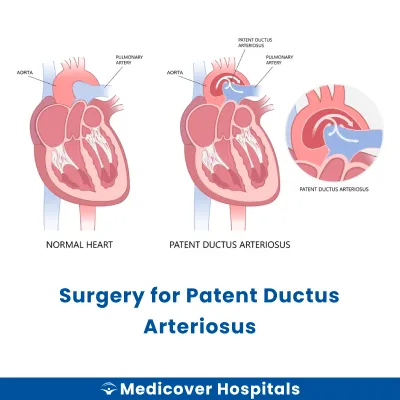
Surgery for Patent Ductus Arteriosus (PDA) involves closing an abnormal blood vessel. This vessel, called the ductus arteriosus, is located between the aorta and the pulmonary artery. In healthy infants, it closes naturally after birth. However, in some cases, it remains open, leading to PDA. The surgery aims to close this vessel to prevent complications.
This surgery is needed when the ductus arteriosus fails to close on its own. If left untreated, PDA can lead to heart failure or other serious health issues. Conditions like premature birth can increase the risk of PDA. Modern surgical approaches include minimally invasive techniques such as catheter-based procedures and video-assisted thoracoscopic surgery (VATS). These methods offer quicker recovery and less discomfort.
Surgery for Patent Ductus Arteriosus Doctors Near You
Find expert CTVS-cardiothoracic-and-vascular-surgery specialists for Patent Ductus Arteriosus at Medicover Hospitals across India. Choose your city and book a consultation today for quality care.
Why Choose Medicover Hospitals for Surgery for Patent Ductus Arteriosus?
Get a second opinion from trusted experts and makeconfident, informed decisions.
 Get Second Opinion
Complete Guide To Surgery For Patent Ductus Arteriosus
Everything you need to know about the procedure, preparation, and recovery
Surgery for Patent Ductus Arteriosus Surgery Indications
Doctors recommend surgery for Patent Ductus Arteriosus (PDA) when the ductus arteriosus fails to close naturally after birth. This procedure is considered when symptoms are significant or when conservative treatments do not provide relief.
Heart Murmur
A persistent heart murmur is often detected during a physical examination. It indicates abnormal blood flow due to an open ductus arteriosus. When this is confirmed by echocardiography, surgery may be recommended if the murmur is associated with other symptoms.
Breathing Difficulties
Infants with PDA may experience rapid or laboured breathing. This occurs due to increased blood flow to the lungs. If medications and other treatments fail to improve breathing, surgical intervention may be necessary.
Poor Growth
Failure to thrive or poor weight gain in infants can be a sign of PDA. This happens because the heart works harder, using more energy. When nutritional support and medical management do not help, surgery might be the next step.
Heart Enlargement
Imaging tests like chest X-rays or echocardiograms may show an enlarged heart. This is due to the extra workload on the heart. If medical treatments do not reduce heart size, surgery is considered.
Recurrent Respiratory Infections
Frequent lung infections can occur in children with PDA. This is due to fluid buildup in the lungs. When antibiotics and other treatments are ineffective, surgery may be advised to prevent further complications.
How to Prepare for Surgery for Patent Ductus Arteriosus?
Proper preparation is crucial for a successful surgery for Patent Ductus Arteriosus (PDA). It helps minimise risks and ensures a smoother recovery process.
- Medication Review: Discuss all medications with your doctor. Stop NSAIDs, anticoagulants, and herbal supplements as advised.
- Fasting Guidelines: Follow the fasting instructions. Typically, avoid food and drink for at least 6-8 hours before the surgery.
- Pre-Surgery Tests: Complete any required blood tests, X-rays, or ECGs as scheduled by your healthcare provider.
- Clothing: Wear loose, comfortable clothing on the day of the surgery for ease of movement post-procedure.
- Transportation: Arrange for someone to drive you home after the surgery, as you may feel drowsy from anaesthesia.
- Medication List: Bring a list of all medications you are currently taking, including dosages, to the hospital.
- Pre-Admission Instructions: Follow any specific instructions given by your healthcare team regarding admission time and location.
- Emotional Preparation: Stay calm and positive. Consider relaxation techniques if you feel anxious about the procedure.
Surgery for Patent Ductus Arteriosus Surgery (Step-by-Step)
Overview: Performed by CTVS (Cardiothoracic and Vascular Surgery) specialists. The procedure typically takes 2-3 hours under general anaesthesia.
- Preparation: The patient is taken to the operating room. General anaesthesia is administered to ensure the patient is asleep and pain-free.
- Incision: A small incision, usually 1-2 cm, is made on the side of the chest to access the heart and surrounding vessels.
- Accessing the Ductus Arteriosus: Surgical instruments like a retractor are used to gently separate the tissues and expose the ductus arteriosus.
- Closure of the Ductus Arteriosus: The surgeon uses a ligature or a clip to close the ductus arteriosus. This stops the abnormal blood flow between the aorta and the pulmonary artery.
- Verification: The closure is checked to ensure no leakage. Instruments like a Doppler probe may be used to confirm proper blood flow.
- Closure of Incision: The incision is closed with sutures or staples. A sterile dressing is applied to protect the area.
- Recovery: The patient is moved to the recovery room. They are monitored as they wake up from anaesthesia.
Who Performs Surgery for Patent Ductus Arteriosus Surgery?
The surgery is performed by cardiothoracic and vascular surgeons. These specialists are trained to handle heart and blood vessel conditions. They use precise techniques to ensure the successful closure of the ductus arteriosus.
Recovery After Surgery for Patent Ductus Arteriosus Surgery
Recovering from surgery for Patent Ductus Arteriosus (PDA) involves gradual healing and returning to normal activities. Patients may experience some discomfort, but this typically improves over time.
Day 1-3:
- Rest is crucial. Patients may feel tired and need assistance with daily activities.
- Diet should be light. Include soft foods like curd, dal-rice, and soups.
- Pain management with prescribed medications is important.
Day 4-7:
- Gradual increase in activity. Short walks around the house are encouraged.
- Continue with a balanced diet. Include khichdi and moong dal for easy digestion.
- Monitor the surgical site for any signs of infection.
Week 2-4:
- Most patients can resume light activities and return to school or work, depending on recovery.
- Avoid strenuous activities and heavy lifting.
- Regular follow-up appointments to monitor recovery progress.
Month 1-3:
- Gradual return to normal activities, including exercise, as advised by the doctor.
- Maintain a healthy diet to support healing.
- Continue monitoring for any unusual symptoms.
When to Seek Urgent Help:
- Fever above 100°F or persistent fever.
- Redness, swelling, or discharge from the surgical site.
- Difficulty breathing or chest pain.
- Unusual fatigue or weakness.
For any concerns, contact your healthcare provider immediately. Please contact the hospital for current details as insurance panels may change.
Benefits of Surgery for Patent Ductus Arteriosus Surgery
Surgery for Patent Ductus Arteriosus (PDA) can significantly improve heart function and overall health.
- Improved Heart Function: Corrects abnormal blood flow, enhancing heart efficiency.
- Reduced Risk of Infections: Decreases the chance of heart infections like endocarditis.
- Enhanced Growth and Development: Helps children grow and develop normally by improving oxygen delivery.
- Symptom Relief: Alleviates symptoms such as breathlessness and fatigue.
Risks and Complications of Surgery for Patent Ductus Arteriosus Surgery
While generally safe, surgery for PDA carries certain risks and potential complications.
- Common: Bleeding during or after the procedure.
- Common: Infection at the site of surgery.
- Rare: Injury to surrounding structures such as nerves or blood vessels.
- Rare: Reaction to anaesthesia.
- Rare: Residual PDA or incomplete closure.
- Rare: Arrhythmias or irregular heartbeats.
Cost of Surgery for Patent Ductus Arteriosus Surgery
The cost of surgery for Patent Ductus Arteriosus can vary starting from ₹2,00,000 - ₹5,50,000 based on the surgical approach, duration of hospital stay, room category, required diagnostics, and post-operative care.
At Medicover Hospitals, we offer transparent pricing to ensure clarity. We support insurance and TPA services, including CGHS, ESI, and major TPAs, with a cashless facility available for your convenience. Please contact the hospital for the latest insurance panel details as these may change periodically.
Frequently Asked Questions
1. How much does Surgery for Patent Ductus Arteriosus surgery cost at Medicover Hospitals?
The cost of Surgery for Patent Ductus Arteriosus variesstarting from ₹2,00,000 - ₹5,50,000 . Please contact Medicover Hospitals for detailed pricing information.
2. Is Surgery for Patent Ductus Arteriosus surgery covered under health insurance at Medicover?
This surgery is often covered by CGHS, ESI, and major TPAs. Please contact the hospital for current panel details.
3. Can a PDA cause heart failure if untreated?
Yes, an untreated Patent Ductus Arteriosus can lead to heart failure. Surgery helps prevent this complication by closing the ductus arteriosus.
4. Will my child need lifelong medication after PDA surgery?
Most children do not require lifelong medication after PDA surgery. Follow-up care ensures the heart functions normally post-surgery.
5. Is there a risk of infection after PDA surgery?
There is a small risk of infection post-surgery. Proper wound care and follow-up visits help minimize this risk.
6. Can my child play sports after PDA surgery?
After recovery, most children can participate in sports. Consult the doctor to determine the appropriate time to resume activities.
7. What foods should my child avoid post-PDA surgery?
Initially, soft foods like curd, dal-rice, and khichdi are recommended. Avoid spicy and oily foods to aid recovery.


