 Call
Call Patient Reports
Posterior Cruciate Ligament Reconstruction Surgery by Expert Orthopedics
At Medicover Hospitals, Posterior Cruciate Ligament Reconstruction is performed using the open surgical approach. Our team of orthopaedic surgeons, with qualifications like MS and DNB, specialise in sports injuries and joint disorders. This procedure often results in shorter hospital stays for patients.
Expert Surgeons
Yearly Surgeries
Patient Satisfaction
What is Posterior Cruciate Ligament Reconstruction?
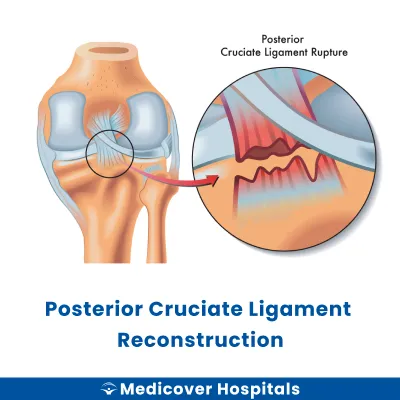
Posterior Cruciate Ligament Reconstruction is a surgical procedure to repair or replace the posterior cruciate ligament (PCL) in the knee. The PCL is a key ligament that connects the thigh bone (femur) to the shin bone (tibia) and helps stabilize the knee joint. This surgery involves using a graft to rebuild the damaged ligament, restoring knee function and stability.
This surgery is needed when the PCL is torn or severely damaged, often due to sports injuries or accidents. If untreated, it can lead to knee instability and further joint damage. Modern surgical approaches include arthroscopic techniques, which involve smaller incisions and faster recovery. These methods help patients regain knee function effectively.
Posterior Cruciate Ligament Reconstruction Doctors Near You
Discover skilled orthopedics for posterior cruciate ligament reconstruction at Medicover Hospitals across India. Choose your city and book a consultation to explore your treatment options today.
Why Choose Medicover Hospitals for Posterior Cruciate Ligament Reconstruction?
Get a second opinion from trusted experts and makeconfident, informed decisions.
 Get Second Opinion
Complete Guide To Posterior Cruciate Ligament Reconstruction
Everything you need to know about the procedure, preparation, and recovery
Posterior Cruciate Ligament Reconstruction Surgery Indications
Doctors recommend Posterior Cruciate Ligament (PCL) Reconstruction when the ligament is severely damaged. This procedure is often suggested when conservative treatments do not relieve symptoms or restore knee stability.
Severe Knee Instability
Patients experience a feeling of the knee giving way, especially during activities like walking or climbing stairs. Doctors find significant laxity in the knee joint during physical examination. When bracing and physical therapy fail to provide stability, surgery is considered.
Chronic Knee Pain
Persistent knee pain that does not improve with rest or medication is a common symptom. Imaging tests, such as MRI, reveal a torn PCL. If pain persists despite non-surgical treatments, reconstruction may be necessary.
Recurrent Knee Swelling
Patients report frequent swelling in the knee, often after physical activity. Examination shows fluid accumulation and imaging confirms PCL damage. When swelling continues despite conservative management, surgery is advised.
Difficulty in Performing Daily Activities
Patients struggle with everyday tasks due to knee instability. Physical examinations show compromised knee function. If rehabilitation and other treatments do not improve functionality, surgical intervention is recommended.
Failure of Conservative Treatments
When rest, physiotherapy, and bracing do not alleviate symptoms or restore knee function, surgery becomes necessary. Imaging confirms the persistent instability or damage to the PCL.
How to Prepare for Posterior Cruciate Ligament Reconstruction?
Proper preparation is crucial for a successful Posterior Cruciate Ligament (PCL) Reconstruction. It helps ensure a smooth procedure and aids in recovery.
- Medication Review: Stop NSAIDs, anticoagulants, and herbal supplements as advised by your doctor.
- Fasting: Fast for at least 8 hours before the surgery if general anaesthesia is used.
- Clothing: Wear loose, comfortable clothing on the day of the surgery.
- Transportation: Arrange for someone to drive you home post-surgery.
- Medication List: Bring a list of your current medications with dosages to the hospital.
- Pre-Surgery Exercises: Perform any recommended exercises to strengthen muscles around the knee.
- Home Preparation: Set up a comfortable recovery area at home with easy access to essentials.
- Pre-Op Instructions: Follow any specific instructions given by your healthcare provider.
Posterior Cruciate Ligament Reconstruction Surgery (Step-by-Step)
Overview: This surgery is performed by orthopaedic surgeons. It typically lasts 2-3 hours. General anaesthesia is commonly used to ensure the patient is asleep and pain-free.
- Preparation: The patient is positioned on the operating table. The surgical area is cleaned and sterilised. Anaesthesia is administered to ensure comfort.
- Incision: Small incisions, about 1-2 cm, are made around the knee. These allow the surgeon to insert surgical instruments and a camera for guidance.
- Graft Harvesting: A graft is taken from the patient's own body, often from the hamstring or patellar tendon. This will replace the damaged ligament.
- Arthroscopic Examination: A laparoscope is inserted through one of the incisions. This provides a clear view of the knee joint on a monitor.
- Ligament Reconstruction: Using instruments like a curette and trocar, the surgeon removes the damaged ligament. The graft is then positioned and secured with screws or other fixation devices.
- Closure: The incisions are closed with sutures or staples. A bandage is applied to protect the area and promote healing.
- Recovery: The patient is moved to a recovery room. They are monitored as they wake from anaesthesia. Pain management and post-operative care instructions are provided.
Who Performs Posterior Cruciate Ligament Reconstruction Surgery?
This surgery is performed by orthopaedic surgeons. They specialise in diagnosing and treating musculoskeletal issues. Their expertise ensures the procedure is done safely and effectively.
Recovery After Posterior Cruciate Ligament Reconstruction Surgery
Recovery from Posterior Cruciate Ligament (PCL) Reconstruction Surgery involves several stages. It requires patience and adherence to your rehabilitation plan for optimal healing and return to daily activities.
Day 1-3:
- Rest and elevate the leg to reduce swelling.
- Use ice packs as advised by your doctor.
- Begin gentle ankle and toe movements.
- Stick to a light diet with foods like curd, dal-rice, and soups.
Day 4-7:
- Continue using crutches to avoid weight-bearing on the affected leg.
- Engage in prescribed physiotherapy exercises.
- Include protein-rich foods like moong dal and khichdi in your meals.
Week 2-4:
- Gradually increase physiotherapy exercises to improve range of motion.
- Introduce more solid foods while maintaining a balanced diet.
- Begin partial weight-bearing as advised by your physiotherapist.
Phase 1 (Month 1-3):
- Focus on strengthening exercises and improving knee flexibility.
- Resume light activities and desk work if comfortable.
- Avoid high-impact activities and sports.
Phase 2 (Month 4-6):
- Gradual return to more vigorous activities under guidance.
- Continue physiotherapy to enhance strength and stability.
- Consult your doctor before resuming sports or strenuous activities.
When to Seek Urgent Help:
- Severe pain or swelling that does not improve with rest.
- Fever or signs of infection at the surgical site.
- Sudden inability to move the knee or bear weight.
Please contact the hospital for current details as insurance panels may change.
Benefits of Posterior Cruciate Ligament Reconstruction Surgery
Posterior Cruciate Ligament (PCL) Reconstruction Surgery helps restore knee stability and function. It can improve quality of life for those with PCL injuries.
- Improved Stability: Helps restore knee stability, reducing the risk of further injury.
- Pain Relief: Alleviates pain associated with PCL injuries.
- Enhanced Mobility: Increases the range of motion, allowing for better movement.
- Return to Activities: Enables patients to resume sports and daily activities.
Risks and Complications of Posterior Cruciate Ligament Reconstruction Surgery
While PCL Reconstruction Surgery is generally safe, it carries some risks and potential complications.
- Common: Swelling and stiffness in the knee post-surgery.
- Common: Pain at the graft site, which may require management.
- Rare: Infection at the surgical site, needing medical attention.
- Rare: Blood clots, which can be serious if not addressed promptly.
- Rare: Graft failure, necessitating further intervention.
- Rare: Nerve damage, potentially affecting sensation in the knee area.
Cost of Posterior Cruciate Ligament Reconstruction Surgery
The cost of Posterior Cruciate Ligament Reconstruction Surgery at Medicover Hospitals ranges from Rs 1,00,000 and Rs 3,50,000. The price varies depending on the ward category chosen, such as general, twin sharing, or private rooms.
We offer transparent pricing and support for insurance and TPA, including CGHS, ESI, and major TPAs. A cashless facility is also available for your convenience. Please contact the hospital for the latest insurance panel details as these may change periodically.
Frequently Asked Questions
1. How much does Posterior Cruciate Ligament Reconstruction surgery cost at Medicover Hospitals?
The cost ranges from Rs 1,00,000 and Rs 3,50,000 across Medicover Hospitals. Prices vary based on room type and care level.
2. Is Posterior Cruciate Ligament Reconstruction surgery covered under health insurance at Medicover?
Yes, it is often covered by CGHS, ESI, and major TPAs with cashless options. Please contact the hospital for current panel details.
3. Will I need crutches after PCL surgery?
Yes, crutches are typically needed for a few weeks post-surgery. They help in reducing weight on the knee during recovery.
4. Can I play sports after PCL reconstruction?
You can usually return to sports within 6-12 months. This depends on your recovery progress and physiotherapist's advice.
5. Will my knee feel stable after PCL surgery?
Most patients experience improved knee stability post-surgery. However, full stability may take several months of rehabilitation.
6. Can I bend my knee immediately after PCL surgery?
Knee bending is usually limited initially to protect the ligament. Gradual increase in movement is advised under physiotherapy guidance.
7. What foods aid recovery after PCL surgery?
Include protein-rich foods like dal-rice, curd, and lean meats. These help in muscle repair and overall recovery.


