 Call
Call Patient Reports
Best Hospital for Phimosis Excised Surgery: Safe & Faster Recovery
At Medicover Hospitals, our urologists, with qualifications like MS, DNB, and MCh, perform open surgical excision for phimosis under local anesthesia. This approach ensures a shorter hospital stay and minimal discomfort, providing effective relief for patients across India.
Expert Surgeons
Yearly Surgeries
Patient Satisfaction
What is Phimosis Excised Under Local Anesthesia?
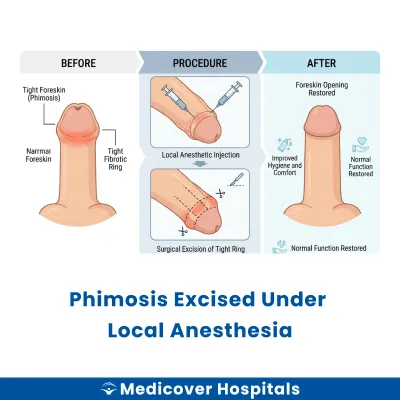
Phimosis excised under local anesthesia is a surgical procedure to treat phimosis. Phimosis is a condition where the foreskin of the penis cannot be retracted over the glans (head of the penis). This procedure involves removing the tight foreskin, allowing normal retraction. Local anesthesia is used to numb the area, making the surgery pain-free and allowing for a quicker recovery.
Surgery is needed when phimosis causes pain, infections, or difficulty in urination. If untreated, it can lead to complications like balanitis (inflammation of the glans) or urinary tract infections. Modern surgical approaches include circumcision and preputioplasty. These methods help in resolving the condition effectively and improving quality of life.
Phimosis Excised Under Local Anesthesia Doctors Near You
Find experienced urologists for phimosis excision under local anaesthesia at Medicover Hospitals across India. Choose your city and book a consultation to discuss your treatment options today.
Why Choose Medicover Hospitals for Phimosis Excised Under Local Anesthesia?
Get a second opinion from trusted experts and makeconfident, informed decisions.
 Get Second Opinion
Complete Guide To Phimosis Excised Under Local Anesthesia
Everything you need to know about the procedure, preparation, and recovery
Phimosis excised under local anesthesia Surgery Indications
Doctors recommend phimosis excision under local anesthesia when the condition causes significant discomfort or complications. This procedure is considered when conservative treatments do not provide relief.
Recurrent Infections
Patients may experience frequent urinary tract infections or balanitis due to trapped bacteria under the foreskin. Examination reveals persistent inflammation and redness. When antibiotics and hygiene measures fail, surgery is advised.
Severe Pain During Erection
Some patients report intense pain during erections due to tight foreskin. Physical examination shows a non-retractable foreskin. If topical treatments do not alleviate the pain, surgical intervention is necessary.
Urinary Obstruction
Difficulty in urination or a weak urine stream can occur when the foreskin obstructs the urethral opening. Doctors may find ballooning of the foreskin during urination. Surgery is recommended if dilation or steroid creams are ineffective.
Paraphimosis
In paraphimosis, the retracted foreskin cannot return to its original position, causing swelling and pain. Examination shows a constricted band of tissue. If manual reduction fails, surgery is required.
Scarring or Fibrosis
Patients may experience a hardened or scarred foreskin due to repeated infections or trauma. Examination reveals fibrotic tissue. When stretching exercises and creams do not improve flexibility, excision is considered.
How to Prepare for Phimosis Excised Under Local Anesthesia?
Proper preparation is crucial for a smooth phimosis excision under local anesthesia. It helps minimize complications and ensures a quicker recovery.
- Medication Review: Stop NSAIDs, anticoagulants, and herbal supplements 7 days before surgery.
- Fasting Guidelines: No fasting required for local anesthesia, but follow any specific instructions from your doctor.
- Hygiene: Clean the genital area thoroughly on the day of the procedure to reduce infection risk.
- Clothing: Wear loose, comfortable clothing to avoid pressure on the surgical site post-procedure.
- Transportation: Arrange for someone to drive you home after the procedure as you may feel discomfort.
- Medication List: Bring a list of all medications with dosages for the medical team to review.
- Rest and Relaxation: Ensure you have a comfortable space at home for recovery post-surgery.
- Follow Instructions: Adhere to any additional pre-surgery instructions provided by your healthcare provider.
Phimosis excised under local anesthesia Surgery (Step-by-Step)
This procedure is performed by urologists. It typically lasts between 30 to 60 minutes. Local anesthesia is used to numb the area, allowing the patient to remain awake but comfortable.
- Preparation: The patient is positioned comfortably. The area around the foreskin is cleaned and sterilized to prevent infection.
- Anesthesia Administration: Local anesthesia is injected around the foreskin. This numbs the area, ensuring the patient does not feel pain during the procedure.
- Incision: A small incision, usually 1-2 cm, is made on the foreskin using a scalpel. This allows access to the constricted area.
- Excision: The constricted foreskin is carefully excised using surgical scissors or a scalpel. The urologist ensures that only the necessary tissue is removed.
- Hemostasis: Bipolar cautery may be used to control bleeding. This ensures a clear surgical field and reduces the risk of post-operative bleeding.
- Closure: The incision is closed with absorbable sutures. These will dissolve over time, eliminating the need for removal.
- Post-Procedure Care: A dressing is applied to protect the area. The patient is given instructions on how to care for the wound at home.
Who Performs Phimosis excised under local anesthesia Surgery?
This surgery is performed by expert urologists. They are specialists trained in conditions affecting the urinary tract and male reproductive organs. Their expertise ensures the procedure is done safely and effectively.
Recovery After Phimosis excised under local anesthesia Surgery
Recovering from phimosis excision under local anesthesia is generally smooth. Most patients experience mild discomfort and can resume normal activities soon. However, following post-operative care instructions is crucial for a quick recovery.
Day 1-2:
- Rest is essential. Avoid strenuous activities.
- Keep the surgical area clean and dry. Follow the doctor's instructions for dressing changes.
- Expect mild swelling and discomfort. Over-the-counter pain relief may be recommended.
Day 3-5:
- Continue maintaining hygiene around the surgical site.
- Light activities can be resumed, but avoid heavy lifting or exercise.
- Include soft, easily digestible foods like curd, dal-rice, and soups in your diet to avoid constipation.
Day 6-10:
- Swelling should reduce significantly. Any stitches may start to dissolve.
- Gradually return to normal activities, but still avoid intense physical exertion.
- Maintain a balanced diet with foods like khichdi and moong dal to support healing.
Day 11-14:
- Most patients can return to work or school, depending on comfort and recovery progress.
- Continue following dietary advice to ensure smooth digestion and recovery.
- Regular follow-up with the doctor is recommended to monitor healing.
When to Seek Urgent Help:
- Severe pain not relieved by medication.
- Excessive swelling or bleeding from the surgical site.
- Signs of infection such as fever, redness, or pus discharge.
Benefits of Phimosis excised under local anesthesia Surgery
Phimosis excision under local anesthesia is a procedure aimed at relieving discomfort and improving hygiene. It offers several advantages for patients.
- Quick Recovery: Patients often experience faster recovery due to the minimally invasive nature of the procedure.
- Reduced Pain: Local anesthesia helps in minimizing pain during and after the surgery.
- Improved Hygiene: Removing the constricted foreskin can lead to better personal hygiene.
- Enhanced Comfort: Alleviates discomfort associated with tight foreskin during daily activities.
Risks and Complications of Phimosis excised under local anesthesia Surgery
While generally safe, phimosis excision under local anesthesia carries some risks, as with any surgical procedure.
- Common: Minor bleeding or swelling at the surgical site.
- Common: Temporary discomfort or soreness post-surgery.
- Rare: Infection at the incision site, requiring medical attention.
- Rare: Adverse reaction to local anesthesia, though uncommon.
- Rare: Scarring or changes in sensation around the surgical area.
Cost of Phimosis excised under local anesthesia Surgery
The cost for Phimosis excised under local anesthesia surgery at Medicover Hospitals ranges from Rs. 30,000 to Rs. 82,000. The price varies depending on the ward category chosen. We offer transparent pricing to ensure clarity for our patients.
Insurance and TPA support is available, with CGHS, ESI, and major TPAs accepted. We also provide a cashless facility for a hassle-free experience. Please contact the hospital for the latest insurance panel details as these may change periodically.
Frequently Asked Questions
1. How much does Phimosis excision cost?
The cost for Phimosis excised under local anesthesia surgery at Medicover Hospitals ranges from Rs. 30,000 to Rs. 82,
2. 2. Is Phimosis excision covered by insurance?
Phimosis excision may be covered by CGHS, ESI, and major TPAs, offering cashless options. Please contact the hospital for current panel details.
3. Will I have difficulty urinating after?
Some patients may experience mild discomfort while urinating after Phimosis excision. This usually resolves within a few days.
4. Can I resume sports after Phimosis excision?
Avoid strenuous activities like sports for at least 2 weeks post-surgery. Consult your doctor for personalized advice on resuming physical activities.
5. Will Phimosis excision affect my sexual life?
Phimosis excision can improve sexual function by relieving discomfort. Full recovery and resumption of sexual activities typically occur within 4-6 weeks.
6. Is there a risk of infection post-surgery?
There is a small risk of infection after Phimosis excision. Keeping the area clean and following post-operative care instructions can minimize this risk.
7. What foods should I eat after Phimosis excision?
Post-surgery, consume light meals like curd, dal-rice, and khichdi. These foods are gentle on the stomach and aid in recovery.


