 Call
Call Patient Reports
Best Hospital for Palliative Triple Bypass Surgery for Pancreatic Cancer
Palliative Triple Bypass Surgery for at Medicover Hospitals is performed using an open surgical approach. Our team of oncologists, with qualifications like MS, DNB, and MCh, focus on managing complex cases. This procedure often results in reduced symptoms and improved quality of life.
Expert Surgeons
Yearly Surgeries
Patient Satisfaction
What is Palliative Triple Bypass Surgery for Pancreatic Cancer?
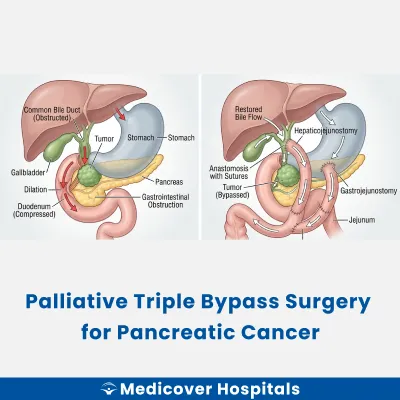
Palliative Triple Bypass Surgery for Pancreatic Cancer is a procedure aimed at relieving symptoms rather than curing the disease. It involves the pancreas, stomach, and small intestine. The surgery creates bypasses around blocked areas. This helps in improving digestion and bile flow. It is often performed when the tumour obstructs the bile duct or duodenum (the first part of the small intestine).
This surgery is needed when pancreatic cancer causes blockages that affect digestion and bile drainage. If left untreated, these blockages can lead to severe symptoms like jaundice, nausea, and vomiting. Palliative Triple Bypass Surgery helps alleviate these symptoms. Modern surgical approaches include laparoscopic techniques. These involve smaller incisions and may reduce recovery time. Always consult a healthcare professional for personalised advice.
Palliative Triple Bypass Surgery for Pancreatic Cancer Doctors Near You
Discover skilled oncologists for palliative triple bypass surgery for pancreatic cancer at Medicover Hospitals. Choose your city and book a consultation to explore your treatment options today.
Why Choose Medicover Hospitals for Palliative Triple Bypass Surgery for Pancreatic Cancer?
Get a second opinion from trusted experts and makeconfident, informed decisions.
 Get Second Opinion
Complete Guide To Palliative Triple Bypass Surgery For Pancreatic Cancer
Everything you need to know about the procedure, preparation, and recovery
Palliative Triple Bypass Surgery for Pancreatic Cancer Surgery Indications
Palliative Triple Bypass Surgery is recommended when obstructs the bile duct, stomach, or intestines. It helps relieve symptoms and improve quality of life when other treatments are not effective.
Obstructive Jaundice
Patients may experience yellowing of the skin and eyes, dark urine, and itching. Imaging tests often reveal bile duct obstruction due to tumour growth. When stenting or other non-surgical methods fail, surgery is considered.
Gastric Outlet Obstruction
Symptoms include nausea, vomiting, and inability to eat. Scans show blockage at the stomach outlet caused by the tumour. Surgery is advised when dietary changes and medications do not alleviate symptoms.
Intestinal Obstruction
Patients report abdominal pain, bloating, and constipation. Imaging may show tumour-induced blockage in the intestines. When conservative measures like bowel rest and medications are ineffective, surgery is needed.
Severe Abdominal Pain
Persistent pain despite medication can indicate tumour pressure on surrounding organs. Imaging confirms tumour size and location. Surgery is an option when pain management fails to provide relief.
Failed Endoscopic Interventions
When endoscopic stenting or drainage procedures do not resolve obstructions, surgery becomes necessary. Imaging and endoscopic findings guide this decision.
How to Prepare for Palliative Triple Bypass Surgery for Pancreatic Cancer?
Proper preparation is crucial for a smooth surgery and recovery. It helps reduce complications and ensures the best possible outcome for the patient.
- Medication Review: Stop NSAIDs, anticoagulants, and herbal supplements at least a week before surgery.
- Fasting: Do not eat or drink anything for at least 8 hours before the surgery to prepare for anaesthesia.
- Bowel Preparation: Follow the doctor's instructions for any bowel prep required before the procedure.
- Clothing: Wear loose, comfortable clothing on the day of surgery for ease and comfort.
- Transportation: Arrange for someone to drive you home post-surgery, as you will not be able to drive yourself.
- Medication List: Bring a list of all medications with dosages to the hospital for reference.
- Pre-surgery Consultation: Attend all pre-surgery consultations to discuss any concerns or questions.
- Health Monitoring: Monitor and report any new symptoms or changes in health to your healthcare provider before the surgery.
Palliative Triple Bypass Surgery for Pancreatic Cancer Surgery (Step-by-Step)
This surgery is performed by surgical oncologists. It typically lasts 3-4 hours and is done under general anaesthesia.
- Preparation: The patient is given general anaesthesia to ensure they are asleep and pain-free. The surgical area is cleaned and sterilised.
- Incision: A midline incision of about 15-20 cm is made on the abdomen to access the pancreas and surrounding organs.
- Exploration: The surgeon uses a laparoscope to examine the abdominal cavity. This helps in assessing the extent of cancer spread.
- Bypass Creation: Using surgical instruments like a harmonic scalpel, the surgeon creates bypasses. This involves connecting the stomach to the small intestine, the bile duct to the small intestine, and the pancreas to the small intestine.
- Bleeding Control: Bipolar cautery is used to control any bleeding during the procedure, ensuring a clear surgical field.
- Closure: The incisions are closed with sutures or staples. The area is then covered with sterile dressings.
- Recovery: The patient is moved to the recovery room. They are monitored as they wake from anaesthesia, experiencing some initial discomfort and drowsiness.
Who Performs Palliative Triple Bypass Surgery for Pancreatic Cancer Surgery?
This surgery is performed by surgical oncologists. They are specialists trained in managing cancers through surgical procedures. Their expertise helps in addressing complications and improving the quality of life for patients with advanced pancreatic cancer.
Recovery After Palliative Triple Bypass Surgery for Pancreatic Cancer Surgery
Recovery from palliative triple bypass surgery for is a gradual process. Patients can expect to stay in the hospital for a few days post-surgery. The focus is on managing pain, preventing complications, and gradually returning to normal activities.
Day 1-3:
- Hospital stay with monitoring of vital signs and pain management.
- Begin with clear liquids and gradually introduce soft foods like soups and broths.
- Encouraged to start moving with assistance to prevent blood clots.
Day 4-7:
- Transition to a soft diet including curd, dal-rice, and khichdi.
- Continue light activities and short walks around the hospital.
- Focus on deep breathing exercises to improve lung function.
Phase 2 (Week 2-4):
- Gradual introduction of more solid foods like moong dal and soft vegetables.
- Increase activity levels as tolerated, but avoid heavy lifting.
- Most patients can resume work or school by the end of this phase, depending on their recovery progress.
Phase 3 (Week 5-8):
- Return to a normal diet, focusing on balanced nutrition to aid recovery.
- Engage in regular, gentle exercise to regain strength.
- Regular follow-up appointments to monitor recovery.
When to Seek Urgent Help:
- Persistent fever or chills.
- Severe abdominal pain or swelling.
- Signs of infection at the incision site, such as redness or discharge.
- Yellowing of the skin or eyes (jaundice).
- Uncontrolled vomiting or inability to keep food down.
Benefits of Palliative Triple Bypass Surgery for Pancreatic Cancer Surgery
Palliative triple bypass surgery can help improve quality of life for patients with .
- Symptom Relief: Alleviates symptoms like and digestive issues.
- Improved Nutrition: Helps maintain better nutrition by bypassing obstructions.
- Enhanced Comfort: Reduces pain and discomfort associated with the disease.
- Extended Life Expectancy: May extend survival by managing complications.
Risks and Complications of Palliative Triple Bypass Surgery for Pancreatic Cancer Surgery
While this surgery can offer relief, it comes with potential risks and complications.
- Common: Infection at the surgical site may occur.
- Common: Bleeding during or after surgery is possible.
- Common: Delayed gastric emptying can lead to digestive issues.
- Rare: Blood clots may form, posing serious health risks.
- Rare: Leakage from the bypassed areas can cause complications.
- Rare: Damage to nearby organs might occur during surgery.
Cost of Palliative Triple Bypass Surgery for Pancreatic Cancer Surgery
The cost of Palliative Triple Bypass Surgery for at Medicover Hospitals ranges from Rs. 53,000 to Rs. 95,500. The price varies depending on the ward category chosen, such as day care, general, private, and suite options. We offer transparent pricing to ensure clarity for our patients.
Insurance and TPA support are available, with CGHS, ESI, and major TPAs accepted. A cashless facility is also offered for added convenience. Please contact the hospital for the latest insurance panel details as these may change periodically.
Frequently Asked Questions
1. How much does Palliative Triple Bypass Surgery for Pancreatic Cancer surgery cost at Medicover Hospitals?
The cost ranges from Rs. 53,000 to Rs. 95,500 across Medicover Hospitals, depending on the type of room and care required.
2. Is Palliative Triple Bypass Surgery for Pancreatic Cancer surgery covered under health insurance at Medicover?
This surgery is often covered by CGHS, ESI, and major TPAs, offering cashless options. Please contact the hospital for current panel details.
3. Will my digestion change after pancreatic surgery?
Yes, digestion may change post-surgery due to altered pancreatic function. A diet including curd, dal-rice, and khichdi is recommended.
4. Can I develop diabetes after pancreatic surgery?
There is a risk of diabetes as the pancreas is involved in insulin production. Regular monitoring of blood sugar levels is important.
5. Will I experience jaundice after the surgery?
Jaundice can occur if bile flow is affected post-surgery. It is crucial to follow up with your doctor for any signs of yellowing skin or eyes.
6. How soon can I return to work after pancreatic surgery?
Most patients may return to work in about 4-6 weeks, depending on recovery. It's essential to follow your doctor's advice for a safe return.
7. What complications should I watch for post-surgery?
Watch for signs of infection, bleeding, or digestive issues. Any unusual symptoms should be reported to your healthcare provider immediately.
8. Does pancreatic cancer return after surgery?
Yes, it can come back because tiny cancer cells may remain. That’s why chemo is usually given after surgery.
9. Can late-stage pancreatic cancer be survived?
Cure is rare, but some people live months to a few years. Treatment helps slow the disease and improve comfort.
10. What is life expectancy after palliative surgery?
It varies from months to over a year. Depends on health and cancer spread.


