 Call
Call Patient Reports
Oncological Resection with Custom Megaprosthesis Reconstruction Surgery Hospital by Expert Orthopedics
At Medicover Hospitals, Oncological Resection with Custom Megaprosthesis Reconstruction is performed using open surgical techniques by our skilled orthopaedic surgeons with qualifications like MS and DNB. This approach helps in precise tumour removal and reconstruction, often resulting in reduced recovery time for patients.
Expert Surgeons
Yearly Surgeries
Patient Satisfaction
What is Oncological Resection With Custom Megaprosthesis Reconstruction?
Oncological Resection with Custom Megaprosthesis Reconstruction is a surgical procedure involving the removal of cancerous bone or soft tissue, often in the limbs. After removing the tumour, a custom-made megaprosthesis (artificial limb segment) is used to reconstruct the affected area. This helps restore function and appearance, allowing patients to regain mobility and strength. This surgery is necessary for conditions like osteosarcoma or other malignant bone tumours. If left untreated, these conditions can lead to severe pain, loss of function, or even metastasis (spread of cancer). Modern surgical approaches include limb-sparing surgery and computer-assisted design for precise prosthesis fitting. These techniques aim to preserve as much of the limb as possible while effectively treating the cancer.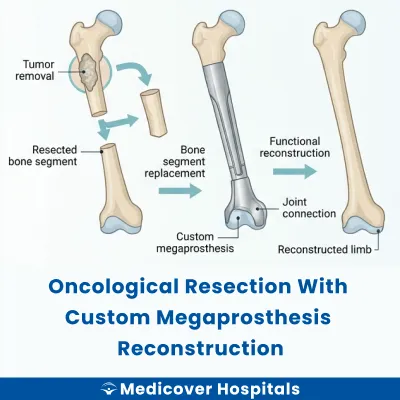
Oncological Resection With Custom Megaprosthesis Reconstruction Doctors Near You
Discover skilled orthopedics for oncological resection with custom megaprosthesis reconstruction at Medicover Hospitals. Choose your city and book a consultation to explore treatment options near you.
Why Choose Medicover Hospitals for Oncological Resection With Custom Megaprosthesis Reconstruction?
Get a second opinion from trusted experts and makeconfident, informed decisions.
 Get Second Opinion
Complete Guide To Oncological Resection With Custom Megaprosthesis Reconstruction
Everything you need to know about the procedure, preparation, and recovery
Oncological Resection with Custom Megaprosthesis Reconstruction Surgery Indications
Doctors recommend oncological resection with custom megaprosthesis reconstruction when a tumour affects the bone, and limb preservation is possible. This procedure is often considered when other treatments are ineffective or when the tumour is aggressive.
Primary Bone Tumours
Patients may experience persistent bone pain and swelling. Imaging tests like X-rays or MRIs reveal a mass in the bone. Surgery is advised when the tumour is large or aggressive, and other treatments like chemotherapy are insufficient.
Metastatic Bone Disease
Symptoms include severe pain and fractures. Scans show cancer spread to the bones from another body part. When fractures or instability occur, and other treatments fail, surgery is needed to restore function.
Recurrent Bone Tumours
Patients with previous tumour removal may notice new pain or swelling. Follow-up imaging shows tumour regrowth. Surgery becomes necessary when recurrence affects bone integrity or function.
Failed Limb Salvage Surgery
Patients may experience ongoing pain or instability after prior surgery. Imaging reveals structural failure or tumour recurrence. Surgery is considered when previous salvage attempts do not maintain limb function.
Pathological Fractures
Sudden severe pain and inability to move the limb may occur. X-rays confirm fractures due to weakened bone from a tumour. Surgery is required when fractures do not heal with conservative methods.
How to Prepare for Oncological Resection with Custom Megaprosthesis Reconstruction?
Proper preparation is crucial for a successful oncological resection with custom megaprosthesis reconstruction. It helps minimise complications and ensures a smoother recovery.
- Medication Review: Stop NSAIDs, anticoagulants, and herbal supplements at least 7 days before surgery.
- Fasting Guidelines: Fast for at least 8 hours before the procedure to prepare for anaesthesia.
- Pre-Surgery Tests: Complete all required blood tests, imaging, and any other investigations as advised.
- Clothing: Wear loose, comfortable clothing on the day of surgery for ease and comfort.
- Transportation: Arrange for someone to drive you home after the procedure, as you will not be able to drive yourself.
- Medication List: Bring a list of your current medications, including dosages, for the medical team.
- Smoking and Alcohol: Avoid smoking and alcohol for at least 48 hours before surgery to aid recovery.
- Hygiene: Follow any specific hygiene instructions, such as using antibacterial soap, as directed by your healthcare provider.
Oncological Resection with Custom Megaprosthesis Reconstruction Surgery (Step-by-Step)
Overview: This procedure is performed by orthopedic surgeons. It typically lasts between 4 to 6 hours and is done under general anaesthesia.
- Preoperative Preparation: The patient is positioned on the operating table. Anaesthesia is administered to ensure the patient is asleep and pain-free.
- Incision and Exposure: A surgical incision, usually 10-15 cm, is made over the affected area. Surgical instruments like scalpels and retractors are used to expose the tumour site.
- Tumour Resection: The surgeon uses tools such as a curette and harmonic scalpel to carefully remove the tumour. Surrounding tissues may also be excised to ensure complete removal.
- Custom Megaprosthesis Preparation: Measurements are taken to fit the custom megaprosthesis. The prosthesis is prepared and sterilised for implantation.
- Prosthesis Implantation: The custom megaprosthesis is inserted into the resected area. It is secured using screws and plates to ensure stability.
- Closure: The incision is closed in layers using sutures or staples. A sterile dressing is applied to protect the wound.
- Postoperative Care: The patient is moved to the recovery room. Vital signs are monitored as the patient wakes up from anaesthesia.
Who Performs Oncological Resection with Custom Megaprosthesis Reconstruction Surgery?
This surgery is performed by orthopaedic surgeons who specialise in musculoskeletal oncology. They are trained to handle complex cases involving bone and soft tissue tumours.
Recovery After Oncological Resection with Custom Megaprosthesis Reconstruction Surgery
Recovery from oncological resection with custom megaprosthesis reconstruction requires patience and adherence to medical advice. Expect gradual improvement over weeks, with specific care instructions to follow.
Day 1-3:
- Hospital stay for monitoring and pain management.
- Begin with a liquid diet, progressing to soft foods like soups and moong dal.
- Minimal movement; assistance needed for basic activities.
Day 4-7:
- Gradual increase in mobility with physiotherapy guidance.
- Introduce light meals such as dal-rice and khichdi.
- Focus on hydration and balanced nutrition.
Day 8-14:
- Continue physiotherapy to enhance mobility.
- Incorporate curd and soft vegetables into the diet.
- Begin light activities at home; avoid strenuous tasks.
Phase 3 (Week 3-6):
- Increase physical activity as tolerated; continue physiotherapy.
- Return to work/school may be possible, depending on progress.
- Maintain a nutritious diet with a variety of Indian foods.
Phase 4 (Week 7 and beyond):
- Full return to daily activities; continue exercises for strength.
- Regular follow-ups with the healthcare team.
- Focus on long-term dietary habits for overall health.
When to Seek Urgent Help:
- Severe pain unrelieved by medication.
- Signs of infection: fever, redness, or discharge from the surgical site.
- Sudden swelling or inability to move the limb.
- Any unusual symptoms or concerns.
Benefits of Oncological Resection with Custom Megaprosthesis Reconstruction Surgery
This procedure aims to remove cancerous tissue while restoring limb function with a custom-fit prosthesis.
- Improved Mobility: Custom megaprosthesis helps in regaining limb function post-tumour removal.
- Enhanced Quality of Life: Patients can resume daily activities with greater ease.
- Tailored Fit: The prosthesis is designed to match the patient's anatomy for better comfort.
- Reduced Recurrence Risk: Effective tumour removal lowers the chance of cancer returning.
Risks and Complications of Oncological Resection with Custom Megaprosthesis Reconstruction Surgery
While the surgery offers significant benefits, it also carries certain risks and potential complications.
- Common - Infection: There's a risk of infection at the surgical site.
- Common - Prosthesis Loosening: The implant may become loose over time.
- Rare - Nerve Damage: Nerve injury can occur, affecting sensation or movement.
- Rare - Blood Clots: Surgery may increase the risk of developing clots.
- Rare - Allergic Reaction: Some patients may react to the materials used in the prosthesis.
Cost of Oncological Resection with Custom Megaprosthesis Reconstruction Surgery
The cost of Oncological Resection with Custom Megaprosthesis Reconstruction Surgery at Medicover Hospitals ranges from Rs.90,000 to Rs.680,800. The price varies depending on the ward category chosen, such as general, private, or deluxe options.
We offer transparent pricing and support for insurance and TPA, including CGHS, ESI, and major TPAs. A cashless facility is also available for your convenience. Please contact the hospital for the latest insurance panel details as these may change periodically.
Frequently Asked Questions
1. How much does Oncological Resection with Custom Megaprosthesis Reconstruction surgery cost at Medicover Hospitals?
The cost for this surgery at Medicover Hospitals ranges from Rs.90,000 to Rs.680,800, depending on the type of room and care required.
2. Is Oncological Resection with Custom Megaprosthesis Reconstruction surgery covered under health insurance at Medicover?
This surgery may be covered by CGHS, ESI, and major TPAs with cashless options. Please contact the hospital for current panel details.
3. Will I need physiotherapy after this surgery?
Yes, physiotherapy is often required to regain strength and mobility. It helps in adapting to the custom megaprosthesis.
4. Can I resume sports after this surgery?
Resuming sports may be possible after full recovery and rehabilitation. Consult your doctor for a personalised timeline based on your condition.
5. Will I experience limb length discrepancy?
Limb length discrepancy can occur but is usually minimized with a custom megaprosthesis. Regular follow-ups help in managing any discrepancies.
6. What diet should I follow post-surgery?
A balanced diet with curd, dal-rice, and khichdi is recommended. It aids in recovery and supports the healing process.
7. Is there a risk of infection with the megaprosthesis?
Infection is a potential risk, but it is managed with antibiotics and proper surgical care. Regular monitoring helps in early detection and treatment.


