What Is LVAD Implantation?
LVAD Implantation (Left Ventricular Assist Device surgery) is a medical procedure in which a mechanical pump is implanted to support a weakened heart, helping it pump blood effectively. According to the LVAD implantation definition, this procedure is primarily performed for patients with advanced heart failure, either as a bridge to heart transplant or as long-term therapy to improve heart function and quality of life.
Types of LVAD Implantation
Depending on the patient's condition, heart failure severity, and treatment goals, LVAD surgery may be performed using different approaches:
- Bridge-to-Transplant LVAD: Used for patients awaiting a heart transplant, this LVAD supports heart function until a donor heart becomes available.
- Destination Therapy LVAD: For patients not eligible for a heart transplant, this type provides long-term mechanical support, improving circulation and life expectancy.
- Perioperative or Temporary LVAD: Sometimes a temporary LVAD is used after heart surgery or during recovery from severe cardiac events to stabilise the patient.
3-4 Hours
Surgery Duration
General Anesthesia
Anesthesia Used
2 to 3 Months
Full Recovery Timeline

When Do You Need an LVAD Implantation?
LVAD Implantation, or Left Ventricular Assist Device surgery, is performed when patients with advanced heart failure require mechanical support to improve blood circulation and heart function. This life-saving procedure is often recommended for patients awaiting heart transplants or those whose hearts are too weak to pump blood effectively.
LVAD Implantation may be recommended if you experience:
- Severe heart failure symptoms such as shortness of breath, fatigue or fluid retention
- Reduced heart function despite optimal medical therapy
- Need for long-term mechanical heart support before or after heart transplant.
- Advanced cardiomyopathy or ventricular dysfunction
- Life-threatening heart conditions requiring improved circulation
Are You a Good Candidate for LVAD Implantation?
You may be a good candidate for LVAD Implantation if you have advanced heart failure that cannot be managed with medications alone and requires mechanical support to improve heart function. Your doctor will evaluate your overall health, heart condition, and surgical risks before recommending the procedure.
You may be a suitable candidate for LVAD Implantation if:
- You have advanced heart failure that cannot be managed with medications alone
- Your heart function needs mechanical support to maintain circulation.
- You do not have conditions that prevent surgery, such as severe bleeding disorders or uncontrolled infection.s
- Your doctor has assessed risks and determined that LVAD surgery offers the best chance for improved quality of life and survival.
LVAD Implantation at Medicover Hospital is performed by highly experienced cardiologists and cardiac surgeons using advanced technology, ensuring safe and effective treatment for patients with severe heart failure.
How Can I Prepare for an LVAD Implantation Procedure?
Proper preparation for an LVAD Implantation procedure is essential to ensure a safe surgery, successful recovery and optimal heart support. Following pre-operative steps helps minimise complications and improve patient outcomes.
- Consultation: Meet with your cardiologist and cardiac surgeon to understand the LVAD surgery process, discuss your medical history, and review indications for mechanical heart pump implantation.
- Medical Evaluation: Your doctor may order blood tests, echocardiography, or imaging scans to assess heart function and confirm you are fit for the procedure.
- Medications: Inform your healthcare team about all medications, including blood thinners and supplements, as some may need to be adjusted before the heart pump surgery.
- Diet and Hydration: You may need to fast for a few hours before the procedure if anesthesia is planned. Staying hydrated beforehand helps maintain circulation and aids recovery.
- Hospital Preparation: Be prepared for pre-surgery assessments and monitoring in the cardiac ICU, which ensures safety during the LVAD implantation surgery.
- Arrange Support: Since this is a major cardiac surgery, arrange for family or friends to accompany you and assist after discharge during initial recovery.
- Physical and Emotional Readiness: Light exercise, relaxation techniques, and mental preparation can help reduce stress and improve post-operative healing after mechanical heart pump implantation.
How is an LVAD Implantation Performed?
After a detailed consultation and comprehensive cardiac evaluations, if your cardiologist recommends LVAD Implantation, here's what you can expect:
- You'll be prepared in a sterile cardiac operating room, with monitoring devices attached to track heart rate, blood pressure and oxygen levels throughout the procedure.
- General anesthesia is administered to ensure you remain completely comfortable during the surgery.
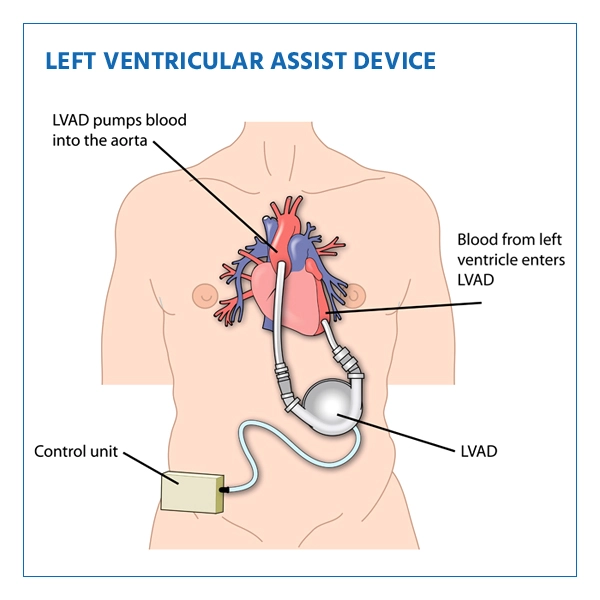
- The cardiac surgeon makes an incision in the chest to access the heart and implants the Left Ventricular Assist Device (LVAD), a mechanical pump that helps the weakened heart pump blood efficiently.
- The inflow and outflow cannulas are carefully connected to the left ventricle and aorta to ensure proper blood flow, and the external controller is positioned to regulate device function.
- Once placement is confirmed, the incision is closed, and the site is dressed with sterile bandages.
- The entire LVAD Implantation procedure usually takes 4-6 hours. Patients are closely monitored in the Intensive Care Unit (ICU) after surgery to manage recovery and prevent complications.
Who Performs The LVAD Implantation Procedure?
The implantation of an LVAD is a highly specialized procedure that requires a team of experts:
- Cardiothoracic Surgeons: These cardiothoracic surgeons perform the implantation surgery.
- Cardiologists assess the patient's heart condition and determine eligibility for LVAD implantation.
- Heart Failure /Transplant Centers: These centers are experienced in managing advanced heart failure and may offer LVAD implantation as a treatment option.
- Referring Physicians: Your primary care doctor or cardiologist can refer you to a specialist if an LVAD is needed.
LVAD Implantation Recovery Tips
Recovering after an LVAD Implantation surgery is a gradual process, but following proper care guidelines can improve healing, minimise complications, and enhance overall heart function. Here are important post-surgery tips:
- Follow Your Cardiologist's Instructions: Every patient's heart condition is unique, so adhere to the recovery plan and medication schedule provided by your cardiac team.
- Rest and Gradually Increase Activity: Initially, rest is crucial. Slowly resume daily activities as advised to support heart recovery and prevent strain on the device.
- Stay Well-Hydrated: Adequate fluid intake is essential for maintaining circulation and supporting overall heart health during recovery.
- Avoid Heavy Lifting or Strenuous Exercise: For several weeks post-surgery, refrain from lifting heavy objects or performing intense physical activity to ensure proper healing of the surgical site.
- Manage Pain Effectively: Take prescribed pain medications to control discomfort, soreness or chest pain during the initial recovery period.
- Monitor the Implant Site: Keep the LVAD driveline area clean, dry, and protected to prevent infection. Regularly check for redness, swelling, or unusual discharge.
- Follow a Heart-Healthy Diet: Include protein-rich foods, fresh fruits, vegetables and whole grains to support tissue healing and overall cardiovascular health.
- Avoid Smoking and Limit Alcohol: Both can negatively affect heart function and delay recovery after LVAD implantation.
- Attend Follow-up Appointments: Routine check-ups allow your cardiologist to monitor heart performance, assess the device function and address any complications promptly.
- Be Patient and Positive: Fatigue, mild discomfort or fluid retention may occur initially, but these usually improve as your body adapts to the LVAD support.
Lifestyle Changes After LVAD Implantation Surgery Procedure
After receiving an LVAD, you will need to make specific lifestyle changes to ensure your well-being and the device's longevity. Here are some considerations:
- Medication Adherence: Regular medications to prevent clotting, infection, and manage heart function.
- Physical Activity: Engage in recommended activities that strengthen the heart and overall health.
- Heart-Healthy Diet: Consume a balanced diet to support heart health and maintain a healthy weight.
- Device Monitoring: Learn how to monitor the alarm's power supply and respond appropriately to any alerts.
- Emotional Support: Ongoing emotional care and support groups are crucial for coping with life after implantation.
- Regular Follow-Ups: Attend all scheduled follow-up appointments with your LVAD team to ensure the device is functioning properly and address any concerns.
Benefits of LVAD Implantation
- Supports patients with advanced heart failure by helping the left ventricle pump blood more effectively.
- Improves circulation to vital organs, enhancing overall health and energy levels.
- Reduces symptoms of severe heart failure such as shortness of breath, fatigue, and fluid retention.
- It can serve as a bridge to a heart transplant or as a long-term therapy for patients ineligible for transplantation.
- Enhances quality of life, allowing patients to perform daily activities with greater ease.
- With expert surgical care and proper follow-up, recovery is smooth, and patients can adapt to life with a mechanical heart pump.
LVAD Implantation Risks and Considerations
Like any major surgery, LVAD implantation comes with risks and potential complications:
- Bleeding during or after surgery is carefully monitored and managed.
- Infection at the implantation site or device-related infections can be minimised by sterile surgical techniques.
- Blood clots may increase the risk of stroke or device malfunction.
- Device-related complications, though modern pumps are designed for long-term reliability.
- Right heart failure or arrhythmias may occur in some cases, requiring close monitoring.
- Rarely, mechanical issues or surgical complications can happen, but experienced cardiac teams significantly reduce these risks.
How much does LVAD Implantation Cost?
Providing the exact LVAD Implantation cost is not possible without a consultation, as the price can vary depending on several factors. However, the average cost of LVAD surgery in India typically ranges from Rs. 15,00,000 to Rs. 35,00,000. For precise charges, including surgeon fees, hospital stay, device costs and post-operative care, please contact Medicover Hospital directly.
What Affects the LVAD Implantation Procedure Cost?
The cost of LVAD Implantation depends on factors like the type of surgery, surgeon expertise, hospital facilities, the device used, and post-operative care requirements.
- Type of Surgery: Whether the LVAD is implanted as a bridge to heart transplant or for long-term heart support can influence pricing.
- Surgeon and Cardiac Team Expertise: Highly experienced cardiologists and cardiac surgeons may charge higher fees due to specialised skills and proven success rates.
- Hospital Facilities and Location: Costs may differ based on hospital infrastructure, ICU availability, advanced surgical suites, and city-specific healthcare expenses.
- Additional Expenses: Charges for mechanical heart pumps, anesthesia, diagnostic tests, medications, and post-surgery rehabilitation can affect the total LVAD implantation expenses.
- Recovery and Aftercare: Extended ICU stay, follow-up monitoring, and patient-specific care plans may contribute to the overall procedure cost.
 040 68334455
 WhatsApp
 Patient Portal
 Home Care