 Call
Call Patient Reports
Best Hospital for Leadless Pacemaker Implantation Procedure by Expert Cardiologists
At Medicover Hospitals, our cardiologists, with qualifications such as DM and DNB, perform leadless pacemaker implantation using a minimally invasive approach. This advanced procedure offers benefits like smaller incisions and reduced blood loss, leading to a shorter hospital stay for patients.
Expert Surgeons
Yearly Surgeries
Patient Satisfaction
What is Leadless Pacemaker Implantation?
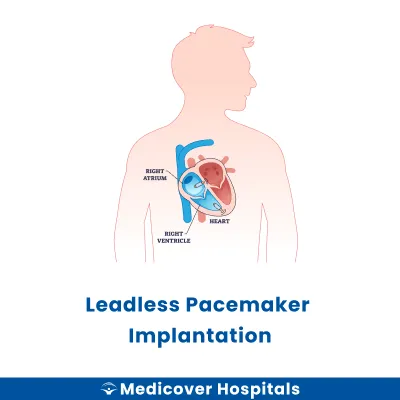
Leadless pacemaker implantation is a medical procedure where a small, wireless device is placed inside the heart. This device, known as a leadless pacemaker, helps regulate the heart's rhythm. Unlike traditional pacemakers, it does not require leads (wires) to connect to the heart. The device is implanted directly into the heart's right ventricle through a catheter inserted via a vein.
This surgery is needed for patients with bradycardia (slow heart rate), a condition where the heart beats too slowly. If untreated, bradycardia can lead to fatigue, dizziness, or even heart failure. Leadless pacemaker implantation offers a minimally invasive option. Modern approaches include transcatheter techniques, which reduce recovery time and lower infection risk.
Leadless Pacemaker Implantation Doctors Near You
Find expert cardiologists for leadless pacemaker implantation across Medicover locations in India. Choose your city and book a consultation to discuss your heart health needs today.
Why Choose Medicover Hospitals for Leadless Pacemaker Implantation?
Get a second opinion from trusted experts and makeconfident, informed decisions.
 Get Second Opinion
Complete Guide To Leadless Pacemaker Implantation
Everything you need to know about the procedure, preparation, and recovery
Leadless pacemaker implantation procedure Indications
Doctors may recommend leadless pacemaker implantation for patients with specific heart rhythm disorders. This procedure is often considered when traditional pacemakers are not suitable or when patients experience complications from conventional devices.
Symptomatic Bradycardia
Patients may experience fatigue, dizziness, or fainting due to a slow heart rate. Doctors find a significantly reduced heart rate on ECG. When medications or lifestyle changes do not improve symptoms, a leadless pacemaker may be advised.
Atrial Fibrillation with Slow Ventricular Response
Patients often report palpitations, shortness of breath, or chest discomfort. ECG shows irregular heartbeats with a slow ventricular rate. If medications fail to control the heart rate effectively, implantation may be necessary.
Sinus Node Dysfunction
Symptoms include fatigue, lightheadedness, or syncope due to irregular heart rhythms. Diagnostic tests reveal sinus node malfunction. When other treatments do not alleviate symptoms, a leadless pacemaker can be a solution.
High Risk of Infection
Patients with previous infections from traditional pacemaker leads may experience redness, swelling, or fever. Blood tests and imaging confirm infection. A leadless pacemaker reduces infection risks and may be recommended.
Venous Access Issues
Patients may have difficulty with traditional pacemaker placement due to blocked veins. Imaging shows limited venous access. In such cases, a leadless pacemaker offers an alternative without the need for leads.
How to Prepare for Leadless pacemaker implantation?
Proper preparation for leadless pacemaker implantation is crucial to ensure a smooth procedure and recovery. Following the guidelines can help minimise risks and enhance the outcome.
- Medication Review: Stop NSAIDs, anticoagulants, and herbal supplements as advised by your doctor.
- Fasting: Do not eat or drink anything for at least 6 hours before the procedure.
- Pre-Procedure Tests: Complete any required blood tests or imaging studies as scheduled.
- Clothing: Wear loose, comfortable clothing on the day of the procedure.
- Transportation: Arrange for someone to drive you home post-procedure.
- Medication List: Bring a list of all medications you take, including dosages.
- Allergy Check: Inform your doctor about any allergies, especially to medications or anaesthesia.
- Health Changes: Report any new symptoms or changes in health before the procedure.
Leadless Pacemaker Implantation Procedure (Step-by-Step)
The procedure is performed by a Cardiac Specialist. It typically takes about 1-2 hours. Local anaesthesia is commonly used.
- Preparation: The patient is positioned comfortably on the procedure table. Local anaesthesia is administered to numb the groin area.
- Accessing the Femoral Vein: A small incision, about 1-2 cm, is made in the groin. A sheath is inserted into the femoral vein to provide access to the heart.
- Inserting the Delivery Catheter: A delivery catheter is guided through the sheath. The patient may feel slight pressure but should not feel pain.
- Positioning the Pacemaker: The leadless pacemaker is advanced through the catheter to the right ventricle of the heart. The cardiologist uses imaging to ensure correct positioning.
- Securing the Pacemaker: Once in place, the pacemaker is secured to the heart wall. The patient may feel a mild sensation as the device is attached.
- Testing the Device: The pacemaker is tested to confirm proper function. Adjustments are made if needed to ensure optimal performance.
- Completing the Procedure: The catheter and sheath are removed. The incision is closed with a small bandage. The patient is monitored for a short period before discharge.
Who performs the leadless pacemaker implantation procedure?
The procedure is performed by interventional cardiologists. These specialists have expertise in minimally invasive heart procedures. They are trained to use advanced imaging and catheter-based techniques.
Recovery After Leadless Pacemaker Implantation Procedure
After a leadless pacemaker implantation, patients can expect a relatively quick recovery. The procedure is minimally invasive, which aids in faster healing. However, it's important to follow medical advice to ensure a smooth recovery.
Day 1-2:
- Rest is crucial. Avoid strenuous activities.
- Monitor the insertion site for any signs of infection.
- Stick to a light diet. Opt for soft foods like curd, dal-rice, and soups.
Day 3-5:
- Gradually increase light activities as tolerated.
- Continue with a balanced diet. Include khichdi and moong dal for easy digestion.
- Keep the insertion site clean and dry.
Day 6-7:
- You may resume normal activities, but avoid heavy lifting or intense exercise.
- Return to work or school if you feel comfortable, but avoid physical strain.
- Maintain a nutritious diet to support healing.
Phase 2: Week 2-4
- Gradually return to regular exercise routines, but listen to your body.
- Continue monitoring the insertion site for any unusual changes.
- Follow up with your doctor as scheduled to ensure the pacemaker is functioning well.
When to Seek Urgent Help:
- Fever or chills indicating possible infection.
- Severe pain or swelling at the insertion site.
- Persistent dizziness, fainting, or shortness of breath.
- Unusual heart rhythms or palpitations.
Benefits of Leadless Pacemaker Implantation Procedure
Leadless pacemakers offer several advantages over traditional pacemakers, enhancing patient comfort and reducing complications.
- Minimally Invasive: The procedure involves a small incision, leading to quicker recovery.
- No Leads Required: Eliminates the risk of lead-related complications.
- Reduced Infection Risk: Lower chance of infection as there are no leads or surgical pockets.
- Improved Aesthetics: No visible bulge under the skin, offering a more discreet option.
Risks and Complications of Leadless Pacemaker Implantation Procedure
While generally safe, leadless pacemaker implantation carries certain risks and complications, as with any medical procedure.
- Common: Bleeding or bruising at the insertion site.
- Common: Temporary pain or discomfort post-procedure.
- Rare: Device dislodgement, requiring repositioning.
- Rare: Perforation of the heart wall during implantation.
- Rare: Allergic reaction to the materials used in the device.
- Rare: Vascular complications during insertion.
Cost of a Leadless Pacemaker Implantation Procedure
The cost of a leadless pacemaker implantation procedure at Medicover Hospitals ranges from Rs. 112,000 to Rs. 2,39,000. Prices vary depending on the ward category chosen.
Our pricing is transparent, and we offer support for insurance and TPA, including CGHS, ESI, and major TPAs. Cashless facilities are available for your convenience. Please contact the hospital for the latest insurance panel details as these may change periodically.
Frequently Asked Questions
1. How much does Leadless pacemaker implantation cost?
The cost of Leadless pacemaker implantation at Medicover Hospitals ranges from Rs.112000 to Rs.239000, depending on the type of room and care required.
2. Is Leadless pacemaker implantation covered by insurance?
Leadless pacemaker implantation may be covered by CGHS, ESI, and major TPAs, offering cashless options. Please contact the hospital for current panel details.
3. Will I feel the pacemaker inside my heart?
The leadless pacemaker is small and placed inside the heart, so patients typically do not feel it during normal activities.
4. Can I undergo MRI after Leadless pacemaker implantation?
Most modern leadless pacemakers are MRI-compatible, allowing patients to undergo MRI scans safely after implantation.
5. Will I need to avoid certain activities post-implant?
After implantation, avoid strenuous activities for a few weeks. Gradually resume normal activities as advised by your doctor.
6. Can I travel by air with a leadless pacemaker?
Yes, you can travel by air with a leadless pacemaker. Inform security personnel about your device during airport screenings.
7. How soon can I return to work after the procedure?
Most patients can return to work within a week, depending on their recovery and the nature of their job.
8. What are the disadvantages of a leadless pacemaker?
Leadless pacemakers have some limitations despite their benefits. They can pace only one chamber of the heart, cannot provide defibrillation, and may carry risks like bleeding, heart perforation, or device-related complications. They are also more expensive and not suitable for all patients.
9. What is the success rate of leadless pacemaker implants?
Leadless pacemakers have a high success rate (around 90-95%), with studies showing over 90% complication-free outcomes and low rates of serious adverse events.
10. Which is better, a leadless pacemaker or a pacemaker?
It depends on the patient. Leadless pacemakers are minimally invasive, have fewer infections, and faster recovery, while traditional pacemakers are more versatile (can treat multiple heart chambers) and suitable for a wider range of conditions. The best choice depends on individual medical needs and doctor recommendation.


