 Call
Call Patient Reports
Laparoscopic Nissen Fundoplication Surgery at Medicover Hospitals
At Medicover Hospitals, our team of Consultant Surgical Gastroenterologists, with qualifications like MS, DNB, and MCh, perform Laparoscopic Nissen Fundoplication. This minimally invasive procedure effectively addresses gastroesophageal reflux disease (GERD), offering benefits like smaller incisions and shorter hospital stays.
Expert Surgeons
Yearly Surgeries
Patient Satisfaction
What is Laparoscopic Nissen Fundoplication?
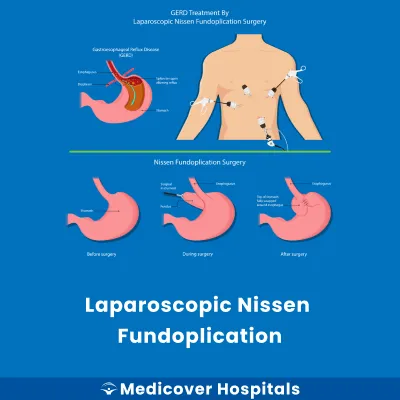
Laparoscopic Nissen Fundoplication is a surgical procedure involving the stomach and oesophagus (food pipe). It is performed to treat gastroesophageal reflux disease (GERD). In this procedure, the upper part of the stomach is wrapped around the lower oesophagus. This helps prevent acid reflux by strengthening the valve between the oesophagus and stomach.
This surgery is needed when GERD symptoms are severe and do not respond to medication. Conditions like hiatal hernia can also lead to the need for this procedure. If left untreated, GERD can cause oesophageal damage or Barrett's oesophagus. Modern surgical approaches include laparoscopic techniques. These involve smaller incisions and faster recovery compared to traditional open surgery.
Laparoscopic Nissen Fundoplication Doctors Near You
Find skilled gastroenterologists-surgical for Laparoscopic Nissen Fundoplication at Medicover Hospitals across India. Choose your city and book a consultation to explore your treatment options today.
Why Choose Medicover Hospitals for Laparoscopic Nissen Fundoplication?
Get a second opinion from trusted experts and makeconfident, informed decisions.
 Get Second Opinion
Complete Guide To Laparoscopic Nissen Fundoplication
Everything you need to know about the procedure, preparation, and recovery
Laparoscopic Nissen Fundoplication Surgery Indications
Laparoscopic Nissen Fundoplication is recommended for patients with severe gastroesophageal reflux disease (GERD) when medications and lifestyle changes do not provide relief. This procedure helps in managing symptoms and preventing complications associated with chronic acid reflux.
Chronic Heartburn
Patients experience persistent heartburn that does not improve with medication. Doctors may find inflammation in the oesophagus during an Endoscopic examination. Surgery is considered when symptoms affect daily life despite conservative treatments.
Regurgitation
Frequent regurgitation of stomach contents into the mouth can occur. This is often confirmed by a pH monitoring study showing acid reflux. Surgery is advised when lifestyle changes and medications fail to control this symptom.
Hiatal Hernia
Patients may have difficulty swallowing or chest pain due to a hiatal hernia. Imaging tests like an X-ray or endoscopy reveal the hernia. Surgery is suggested when the hernia contributes to severe reflux symptoms.
Barrett's Oesophagus
Some patients develop Barrett's oesophagus, a condition where the oesophageal lining changes. This is diagnosed through biopsy during endoscopy. Surgery is considered to prevent further damage when medical management is insufficient.
Asthma and Respiratory Symptoms
Chronic cough or asthma-like symptoms can be caused by acid reflux. Pulmonary function tests and pH monitoring may link these symptoms to GERD. Surgery is an option when respiratory issues persist despite treatment.
How to Prepare for Laparoscopic Nissen Fundoplication?
Proper preparation for Laparoscopic Nissen Fundoplication is crucial to ensure a smooth procedure and recovery. It helps in minimizing complications and aids in a quicker recovery.
- Medication Review: Stop NSAIDs, anticoagulants, and herbal supplements as advised by your doctor.
- Fasting: Do not eat or drink anything for at least 8 hours before the surgery to prepare for anaesthesia.
- Medical History: Bring a list of all medications you take, including dosages, to the hospital.
- Clothing: Wear loose, comfortable clothing on the day of the surgery for ease and comfort.
- Transportation: Arrange for someone to drive you home after the procedure, as you may feel drowsy.
- Pre-surgery Tests: Complete any required blood tests or imaging studies as instructed by your healthcare provider.
- Smoking: Avoid smoking for at least a few weeks before the surgery to promote better healing.
- Hygiene: Take a shower with antibacterial soap the night before or morning of the surgery.
Laparoscopic Nissen Fundoplication Surgery (Step-by-Step)
Overview: This surgery is performed by gastroenterologists-surgical. It typically lasts 2-3 hours and is done under general anaesthesia.
- Preparation: The patient is positioned on the operating table. General anaesthesia is administered to ensure the patient is asleep and pain-free.
- Incision and Access: Small incisions (1-2 cm) are made in the abdomen. A trocar is inserted to allow access for the laparoscope and other instruments.
- Insertion of Laparoscope: A laparoscope, equipped with a camera, is inserted through one of the incisions. It provides a clear view of the internal organs on a monitor.
- Dissection: Using instruments like a harmonic scalpel, the surgeon carefully dissects around the oesophagus and stomach to prepare for the wrap.
- Fundoplication: The top part of the stomach (fundus) is wrapped around the lower oesophagus. This is secured with sutures to prevent acid reflux.
- Closure: The instruments are removed, and the incisions are closed with sutures or surgical glue. Dressings are applied to the incision sites.
- Recovery: The patient is moved to a recovery area. They are monitored as they wake up from anaesthesia, experiencing some soreness and discomfort.
Who Performs Laparoscopic Nissen Fundoplication Surgery?
This procedure is performed by surgical gastroenterologists. They are specialists trained in minimally invasive techniques for treating gastrointestinal conditions. Their expertise ensures precise execution of the surgery.
Recovery After Laparoscopic Nissen Fundoplication Surgery
Recovery from Laparoscopic Nissen Fundoplication Surgery involves gradual healing and adjustment to dietary changes. Patients can expect some discomfort initially, but this typically improves over time.
Day 1-3:
- Rest is crucial. Avoid strenuous activities.
- Start with clear liquids like water, clear soups, and coconut water.
- Pain and nausea may be present; medications will be provided.
Day 4-7:
- Gradually introduce soft foods like curd, dal-rice, and khichdi.
- Continue to avoid heavy lifting and vigorous activities.
- Short walks are encouraged to improve circulation.
Day 8-14:
- Incorporate semi-solid foods such as moong dal and mashed vegetables.
- Monitor for any swallowing difficulties or discomfort.
- Most patients can resume light work or school activities.
Phase 3 (Week 3-4):
- Gradual return to normal diet, avoiding spicy and acidic foods.
- Resume normal activities but continue to avoid heavy lifting.
- Regular follow-up appointments to monitor recovery.
When to Seek Urgent Help:
- Severe chest pain or difficulty breathing.
- Persistent vomiting or inability to swallow.
- Signs of infection such as fever or redness around the incision.
Remember, each patient's recovery is unique. Follow your doctor's advice and contact Medicover Hospitals for any concerns. Please contact the hospital for current details as insurance panels may change.
Benefits of Laparoscopic Nissen Fundoplication Surgery
Laparoscopic Nissen Fundoplication is a minimally invasive procedure to treat gastroesophageal reflux disease (GERD). It offers several benefits:
- Minimally Invasive: Smaller incisions lead to quicker recovery and less scarring.
- Reduced Acid Reflux: Effectively decreases acid reflux symptoms, improving quality of life.
- Shorter Hospital Stay: Patients often experience a shorter hospital stay compared to open surgery.
- Improved Esophageal Function: Enhances the function of the lower esophageal sphincter, reducing reflux.
Risks and Complications of Laparoscopic Nissen Fundoplication Surgery
While generally safe, Laparoscopic Nissen Fundoplication carries certain risks and complications:
Common Risks
- Difficulty swallowing (dysphagia) may occur initially but often improves over time.
- Bloating or gas-bloat syndrome can be experienced post-surgery.
Rare Risks
- Injury to surrounding organs such as the stomach or esophagus.
- Infection at the incision sites.
- Recurrence of reflux symptoms requiring further treatment.
- Anaesthesia-related complications.
Cost of Laparoscopic Nissen Fundoplication Surgery
The cost of Laparoscopic Nissen Fundoplication Surgery can vary from₹1,00,000 to ₹2,50,000, based on factors like the surgical approach, duration of hospital stay, room category, required diagnostics, and post-operative care.
At Medicover Hospitals, we ensure transparent pricing for all procedures. We offer support for insurance and TPA, including CGHS, ESI, and major TPAs. A cashless facility is also available for your convenience. Please contact the hospital for the latest insurance panel details as these may change periodically.
Frequently Asked Questions
1. How much does Laparoscopic Nissen Fundoplication surgery cost at Medicover Hospitals?
The cost varies from ₹1,00,000 to ₹2,50,000, based on several factors. Please contact Medicover Hospitals for detailed pricing information.
2. Is Laparoscopic Nissen Fundoplication surgery covered under health insurance at Medicover?
Many insurance plans, including CGHS and ESI, may cover this surgery. Please contact the hospital for current panel details.
3. Will I have difficulty swallowing after the surgery?
Some patients experience temporary difficulty swallowing. This usually improves within a few weeks post-surgery.
4. Can I eat spicy food after the surgery?
It's advised to avoid spicy foods like curries initially. Gradually reintroduce them after consulting with your doctor.
5. Will I need to take antacids after the surgery?
Most patients can stop taking antacids post-surgery. However, follow-up with your doctor to confirm your specific needs.
6. How soon can I return to work after the surgery?
Most patients can return to work within 2-3 weeks. It depends on your recovery and the nature of your job.
7. Can the surgery cause bloating or gas issues?
Some patients may experience bloating or gas initially. These symptoms usually decrease over time with dietary adjustments.


