 Call
Call Patient Reports
Best Hospital for IVC Filter Placement Procedure with Advanced Vascular Care
At Medicover Hospitals, our experienced interventional radiologists, holding qualifications such as DM and DNB, perform IVC filter placement using minimally invasive endoscopic techniques. This approach often results in smaller incisions and a shorter hospital stay, enhancing patient recovery and comfort across India.
Expert Experts
Yearly Procedures
Patient Satisfaction
What is IVC Filter Placement?
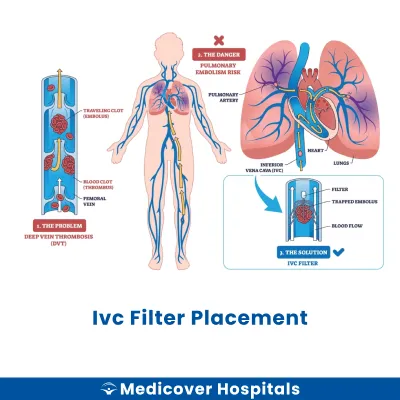
IVC filter placement is a medical procedure where a small device called an inferior vena cava (IVC) filter is inserted into the inferior vena cava. The inferior vena cava is a large vein that carries blood from the lower body to the heart. The filter is designed to catch blood clots and prevent them from reaching the lungs, where they could cause a pulmonary embolism (a blockage in the lung's blood vessels).
This procedure is often needed for patients at risk of developing blood clots, especially those who cannot take blood-thinning medications. Conditions like deep vein thrombosis (DVT) can lead to IVC filter placement. If left untreated, these clots can travel to the lungs, causing life-threatening complications. Modern surgical approaches include minimally invasive techniques using catheters to place the filter precisely.
IVC Filter Placement Doctors Near You
Find skilled cardiologists for IVC filter placement at Medicover Hospitals across India. Choose your city and book a consultation to discuss your treatment options and ensure your heart health.
Why Choose Medicover Hospitals for IVC Filter Placement?
Get a second opinion from trusted experts and makeconfident, informed decisions.
 Get Second Opinion
Complete Guide To Ivc Filter Placement
Everything you need to know about the procedure, preparation, and recovery
IVC filter placement procedure Indications
Doctors recommend IVC filter placement when there is a risk of blood clots traveling to the lungs. This procedure is considered when patients cannot take blood-thinning medications or when these medications are ineffective.
Recurrent Deep Vein Thrombosis (DVT)
Patients may experience leg pain, swelling, and redness. Despite anticoagulant therapy, imaging may show persistent or new clots in the deep veins. When blood thinners fail to prevent clot formation, an IVC filter may be necessary.
Pulmonary Embolism (PE)
Symptoms include sudden shortness of breath, chest pain, and rapid heart rate. Diagnostic tests like CT scans reveal clots in the lungs. If anticoagulants are contraindicated or unsuccessful, an IVC filter can prevent further emboli.
Contraindication to Anticoagulation
Patients with bleeding disorders or recent surgery may experience bleeding risks. Blood tests and medical history indicate that anticoagulants are unsafe. In such cases, an IVC filter is an alternative to prevent clot migration.
High Risk of Thromboembolism
Patients with cancer or immobility may face increased clot risk. Symptoms like swelling or pain may appear, and imaging might show potential clot formation. When preventive measures are insufficient, an IVC filter is considered.
Failed Anticoagulation Therapy
Despite medication, patients may have recurrent clot symptoms. Lab tests and imaging confirm persistent clot presence. When treatment fails to control clotting, an IVC filter is an option to reduce embolism risk.
How to Prepare for IVC filter placement?
Proper preparation for IVC filter placement ensures a smooth procedure and reduces risks. Follow these steps to be ready for your surgery.
- Medication Review: Inform your doctor about all medications you take, including over-the-counter and herbal supplements.
- Stop Certain Medications: Discontinue NSAIDs, anticoagulants, and herbal supplements as advised by your doctor to reduce bleeding risk.
- Fasting: Do not eat or drink anything for at least 6-8 hours before the procedure, as anaesthesia may be used.
- Clothing: Wear loose, comfortable clothing to the hospital for easy changing and comfort post-procedure.
- Transport Arrangement: Arrange for someone to drive you home after the procedure due to the effects of anaesthesia.
- Medication List: Bring a list of your current medications, including dosages, for the medical team.
- Pre-Procedure Tests: Complete any blood tests or imaging studies as instructed by your healthcare provider.
- Hydration: Stay well-hydrated the day before the procedure unless advised otherwise by your doctor.
IVC filter placement procedure (Step-by-Step)
IVC filter placement is performed by experienced specialists from the Interventional Radiology department. The procedure usually takes 1-2 hours and is commonly carried out under local anaesthesia with sedation.
- Preparation: The patient lies on the procedure table. The skin is cleaned and sterilised. Local anaesthesia is applied to numb the area.
- Access Site: A small incision, about 1-2 cm, is made in the groin or neck. A catheter is inserted through a vein using a guide wire.
- Catheter Insertion: The catheter, guided by imaging, is carefully advanced to the inferior vena cava (IVC). The patient may feel slight pressure but should not feel pain.
- Filter Deployment: The IVC filter is placed through the catheter. It is expanded to attach to the walls of the IVC. The patient remains still during this stage.
- Verification: Imaging confirms the filter's position. Adjustments are made if necessary. The patient is informed about the progress.
- Catheter Removal: The catheter and guide wire are withdrawn. The incision is closed with a small bandage. The patient is monitored for a short period.
- Post-Procedure Care: The patient is advised to rest and avoid strenuous activities for a few days. Follow-up appointments are scheduled.
Who Performs IVC filter placement procedure?
IVC filter placement is performed by interventional radiologists. These specialists are trained in minimally invasive procedures using imaging guidance. They ensure the filter is accurately placed to prevent blood clots from reaching the lungs.
Recovery After IVC Filter Placement Procedure
After an IVC filter placement, patients can expect a relatively quick recovery. It's important to follow medical advice to ensure proper healing and avoid complications.
Day 1-2:
- Rest is crucial. Avoid strenuous activities.
- Keep the insertion site clean and dry.
- Light meals like curd, dal-rice, and soups are recommended.
Day 3-5:
- Gradually resume light activities. Avoid heavy lifting.
- Continue with a balanced diet. Include moong dal and khichdi for easy digestion.
- Monitor the insertion site for any signs of infection.
Day 6-7:
- Most patients can return to work or school if they feel comfortable.
- Maintain hydration and a nutritious diet to support recovery.
- Gentle walking is encouraged to promote circulation.
Phase 2 (Week 2-4):
- Gradually return to normal activities, but avoid intense exercise until cleared by a doctor.
- Continue monitoring for any unusual symptoms.
- Follow up with your healthcare provider as scheduled.
When to Seek Urgent Help
- Sudden chest pain or difficulty breathing.
- Severe pain or swelling in the legs.
- Signs of infection at the insertion site, such as redness, warmth, or discharge.
Benefits of the IVC filter placement procedure
IVC filter placement is a medical procedure designed to prevent life-threatening pulmonary embolisms by trapping blood clots.
- Prevention of Pulmonary Embolism: It effectively reduces the risk of clots reaching the lungs.
- Alternative for Non-Candidates of Anticoagulants: Suitable for patients who cannot take blood thinners.
- Temporary or Permanent Solution: Can be used as a short-term or long-term measure based on patient needs.
- Minimally Invasive: The procedure is less invasive compared to surgical alternatives.
Risks and Complications of the IVC filter placement procedure
While IVC filter placement is generally safe, it carries certain risks and potential complications.
- Common: Filter migration, where the filter moves from its original position.
- Common: Access site complications, such as bleeding or infection.
- Rare: Filter fracture, leading to parts breaking off.
- Rare: Perforation of the IVC, causing damage to the vein.
- Rare: Blockage of the IVC, which may lead to swelling in the legs.
Cost of the IVC filter placement procedure
The cost of the IVC filter placement procedure at Medicover Hospitals ranges from Rs. 20,000 to Rs. 64,000. The price varies based on the ward category chosen, such as outpatient, day care, general, private, and suite options.
We offer transparent pricing with support for insurance and TPA, including CGHS, ESI, and major TPAs. A cashless facility is also available for your convenience. Please contact the hospital for the latest insurance panel details as these may change periodically.
Frequently Asked Questions
1. How much does IVC filter placement cost?
The IVC filter placement procedure costs between Rs. 20,000 and Rs. 64,000 across Medicover Hospitals, depending on the type of room and care required.
2. Is IVC filter placement covered under insurance?
IVC filter placement may be covered under CGHS, ESI, and major TPAs with cashless options. Please contact the hospital for current panel details.
3. Will my blood flow be affected after IVC filter?
The IVC filter is designed to allow normal blood flow while preventing clots. It should not significantly affect your blood circulation.
4. Can I exercise after IVC filter placement?
Light activities are usually recommended after IVC filter placement. Avoid strenuous exercise for a few weeks as advised by your doctor.
5. Will I feel the IVC filter inside my body?
Most patients do not feel the IVC filter once it is placed. It is designed to be minimally intrusive and comfortable.
6. Can I travel after having an IVC filter?
Travel is generally safe after IVC filter placement, but consult your doctor. Avoid long periods of immobility to reduce clot risks.
7. What diet should I follow after IVC filter?
A balanced diet with foods like curd, dal-rice, and khichdi is recommended. Stay hydrated and avoid foods high in salt and fat.
8. Is IVC filter placement major surgery?
No, IVC filter placement is a minimally invasive procedure, not a major surgery. It is done through a small puncture in a vein (usually in the neck or groin) using imaging guidance.
9. What is the purpose of an IVC filter?
An inferior vena cava (IVC) filter is used to prevent blood clots from traveling from the legs to the lungs, reducing the risk of pulmonary embolism, especially in patients who cannot take blood thinners.
10. Where should an IVC filter be placed?
The filter is placed in the inferior vena cava, the large vein that carries blood from the lower body to the heart, typically below the kidneys to effectively trap clots.


