 Call
Call Patient Reports
Best Hospital for Intra Cardiac Repair Procedure with Advanced Cardiac Care
Intra Cardiac Repair at Medicover Hospitals is performed using open surgical techniques by skilled cardiothoracic and vascular surgeons with qualifications such as MS, DNB, and MCh. This approach results in reduced blood loss and contributes to a shorter hospital stay for patients.
Expert Surgeons
Yearly Surgeries
Patient Satisfaction
What is Intra Cardiac Repair?
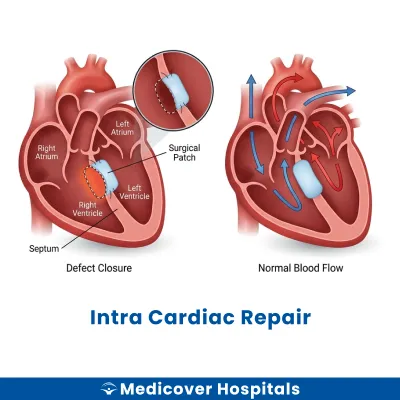
Intra Cardiac Repair is a surgical procedure aimed at correcting defects within the heart. It involves repairing structural abnormalities such as holes in the heart walls (septal defects) or malformed heart valves. This surgery addresses issues within the heart chambers and valves to restore normal blood flow and function.
This surgery is essential for treating congenital heart defects. Conditions like Tetralogy of Fallot or ventricular septal defects often require Intra Cardiac Repair. If left untreated, these defects can lead to serious complications, including heart failure or poor oxygenation. Modern surgical approaches include open-heart surgery and minimally invasive techniques. These methods help improve recovery times and outcomes for patients.
Intra Cardiac Repair Doctors Near You
Find expert CTVS-cardiothoracic-and-vascular-surgery specialists across Medicover locations in India. Choose your city and book a consultation to discuss your intra-cardiac repair needs today.
Why Choose Medicover Hospitals for Intra Cardiac Repair?
Get a second opinion from trusted experts and makeconfident, informed decisions.
 Get Second Opinion
Complete Guide To Intra Cardiac Repair
Everything you need to know about the procedure, preparation, and recovery
Intra Cardiac Repair Procedure Indications
Doctors recommend Intra Cardiac Repair when congenital heart defects cause significant symptoms or complications. This procedure is often necessary when non-surgical treatments do not improve the patient's condition.
Ventricular Septal Defect (VSD)
Patients may experience breathlessness, fatigue, or poor growth. Doctors find a hole between the heart's ventricles on imaging tests. Surgery is advised when medication fails to control symptoms or if the defect leads to heart failure.
Atrial Septal Defect (ASD)
Symptoms include shortness of breath and frequent respiratory infections. Echocardiograms reveal a hole between the heart's atria. Surgery is recommended when the defect causes significant blood flow issues or right heart enlargement.
Tetralogy of Fallot
Patients often have cyanosis, difficulty breathing, and fainting spells. Diagnostic imaging shows a combination of four heart defects. Surgery becomes necessary when these symptoms are severe and affect daily life.
Transposition of the Great Arteries (TGA)
Newborns may present with severe cyanosis and difficulty breathing. Imaging confirms the reversal of the main arteries. Immediate surgical intervention is required as medication alone cannot correct the defect.
Complete Atrioventricular Canal Defect
Symptoms include difficulty breathing, poor weight gain, and frequent lung infections. Echocardiography shows a large defect involving both atria and ventricles. Surgery is needed when these symptoms persist despite medical treatment.
How to Prepare for Intra Cardiac Repair?
Preparation is crucial for intra cardiac repair to ensure a smooth surgery and recovery. Proper steps help minimise risks and complications.
- Medication Review: Stop NSAIDs, anticoagulants, and herbal supplements as advised by your doctor.
- Fasting: Do not eat or drink for at least 8 hours before the procedure to prepare for anaesthesia.
- Pre-Surgery Tests: Complete all required blood tests, ECG, and imaging studies as scheduled.
- Hygiene: Bathe with antiseptic soap the night before and morning of the surgery.
- Clothing: Wear loose, comfortable clothing on the day of the surgery.
- Transportation: Arrange for someone to drive you home post-surgery.
- Medication List: Bring a list of all medications with dosages for hospital records.
- Smoking and Alcohol: Avoid smoking and alcohol for at least 24 hours before the surgery.
Intra Cardiac Repair Procedure (Step-by-Step)
Performed by CTVS (Cardiothoracic and Vascular Surgery) specialists, this procedure typically lasts 4-6 hours and is done under general anaesthesia.
- Preparation: The patient is given general anaesthesia to ensure they are asleep and pain-free. Vital signs are monitored closely.
- Incision: A midline incision, around 10-15 cm, is made in the chest to access the heart. The sternum is carefully divided using a sternal saw.
- Heart Exposure: The rib cage is gently spread using a rib spreader. The heart is exposed for the procedure.
- Cardiopulmonary Bypass: The patient is connected to a heart-lung machine. This machine takes over the function of the heart and lungs during surgery.
- Repair: The surgeon uses instruments like a curette and bipolar cautery to repair defects inside the heart. This may involve closing holes or reconstructing heart valves.
- Completion: After the repair, the heart is restarted. The heart-lung machine is gradually removed. The chest is closed with sutures and the incision is bandaged.
- Recovery: The patient is moved to the ICU for monitoring. They may feel groggy and experience some discomfort as they wake up.
Who Performs Intra Cardiac Repair Procedure?
Intra Cardiac Repair is performed by cardiothoracic surgeons. These specialists are trained in surgical procedures involving the heart and major blood vessels. They work with a team of anaesthetists and nurses to ensure a safe and effective surgery.
Recovery After Intra Cardiac Repair Procedure
Recovery after an Intra Cardiac Repair procedure involves gradual healing and monitoring. Patients can expect a hospital stay followed by a period of rest at home. Adhering to medical advice is crucial for a smooth recovery.
Day 1-3:
- Hospital stay for close monitoring.
- Pain management and vital signs are checked regularly.
- Begin with a liquid diet, gradually moving to soft foods.
Day 4-7:
- Discharge from the hospital is possible if stable.
- Continue with a soft diet including curd, dal-rice, and soups.
- Light activities like walking around the house are encouraged.
Week 2-4:
- Gradual increase in physical activities as advised by the doctor.
- Include easily digestible foods like khichdi and moong dal in meals.
- Avoid lifting heavy objects and strenuous activities.
- Children may return to school with limited activities.
Week 5-8:
- Most patients can resume work or school with some restrictions.
- Regular follow-up appointments to monitor heart function.
- Continue a balanced diet to support recovery.
When to Seek Urgent Help
- Persistent fever or chills.
- Increased pain or swelling at the incision site.
- Difficulty breathing or chest pain.
- Irregular heartbeats or palpitations.
Contact your healthcare provider immediately if any of these symptoms occur.
Benefits of Intra Cardiac Repair Procedure
Intra Cardiac Repair is a surgical procedure aimed at correcting heart defects. It offers several benefits for patients with congenital heart conditions.
- Improved Heart Function: Helps restore normal blood flow and heart function.
- Symptom Relief: Reduces symptoms like breathlessness and fatigue.
- Enhanced Quality of Life: Enables a more active lifestyle post-recovery.
- Reduced Risk of Complications: Lowers the risk of heart failure and other complications associated with untreated defects.
- Long-term Health Benefits: Provides potential for a healthier and longer life.
Risks and Complications of Intra Cardiac Repair Procedure
While Intra Cardiac Repair is generally safe, it carries certain risks and potential complications.
- Bleeding during or after surgery.
- Infection at the site of incision.
- Arrhythmias or irregular heartbeats post-surgery.
- Blood clots leading to stroke or other complications.
- Damage to heart tissues or surrounding structures.
- Adverse reactions to anaesthesia.
Cost of Intra Cardiac Repair Procedure
The cost of an Intra Cardiac Repair procedure typically ranges from Rs. 1,73,000 to Rs. 3,04,000, depending on several factors. These include the surgical approach chosen, the duration of the hospital stay, the category of room selected, the diagnostics required, and the post-operative care needed.
At Medicover Hospitals, we offer transparent pricing for all procedures. We support insurance and TPA services, including CGHS, ESI, and major TPAs, with a cashless facility available for your convenience. Please contact the hospital for the latest insurance panel details as these may change periodically.
Frequently Asked Questions
1. How much does Intra Cardiac Repair cost?
The cost of Intra Cardiac Repair typically ranges from Rs. 1,73,000 to Rs. 3,04,
2. Please contact Medicover Hospitals for detailed pricing information. 2. Is Intra Cardiac Repair covered by insurance?
Intra Cardiac Repair may be covered under CGHS, ESI, and major TPAs. Please contact the hospital for current panel details.
3. Will my child need lifelong medication after repair?
Some children may require medication for a period after Intra Cardiac Repair. Your doctor will provide specific guidance based on the individual case.
4. Can my child play sports after heart repair?
Post-recovery, many children can engage in sports. It is essential to follow the cardiologist's advice regarding activity levels.
5. What is the risk of arrhythmia post-surgery?
Arrhythmia is a potential complication after Intra Cardiac Repair. Regular follow-ups help monitor and manage such conditions effectively.
6. How soon can my child return to school?
Most children can return to school within a few weeks. The exact timeline depends on individual recovery and should be discussed with your doctor.
7. Will my child have a normal life post-repair?
Many children lead normal lives after Intra Cardiac Repair. Regular medical check-ups ensure ongoing health and well-being.


