 Call
Call Patient Reports
Intercostal Chest Drain Insertion and Management Procedure at Medicover Hospitals
At Medicover Hospitals, intercostal chest drain insertion and management is performed using an open surgical approach. Our team of oncologists, with qualifications like MS, DNB, and MCh, ensures precise care. This technique often results in shorter hospital stays for patients across India.
Expert Specialists
Yearly Procedures
Patient Satisfaction
What is Intercostal Chest Drain Insertion and Management?
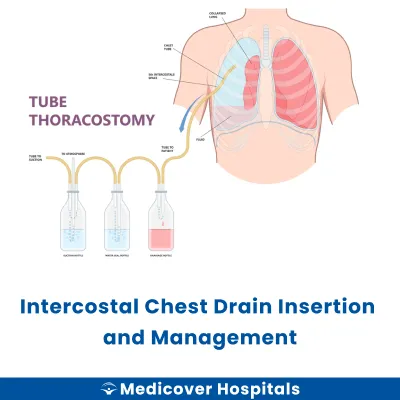
Intercostal Chest Drain Insertion is a medical procedure involving the placement of a tube into the pleural space (the area between the lungs and chest wall). This helps remove air, fluid, or pus. The management part involves monitoring and maintaining the drain to ensure proper function and prevent complications.
This procedure is essential for conditions like pneumothorax (collapsed lung), pleural effusion (fluid accumulation), or empyema (pus in the pleural space). If untreated, these conditions can lead to severe breathing difficulties or infections. Modern surgical approaches include minimally invasive techniques like video-assisted thoracoscopic surgery (VATS). These methods aim to reduce recovery time and improve patient comfort.
Intercostal Chest Drain Insertion and Management Doctors Near You
Find experienced pulmonologists for intercostal chest drain insertion and management at Medicover Hospitals across India. Choose your city and book a consultation to receive expert care.
Why Choose Medicover Hospitals for Intercostal Chest Drain Insertion and Management?
Get a second opinion from trusted experts and makeconfident, informed decisions.
 Get Second Opinion
Complete Guide To Intercostal Chest Drain Insertion And Management
Everything you need to know about the procedure, preparation, and recovery
Intercostal Chest Drain Insertion and Management Procedure Indications
Doctors recommend intercostal chest drain insertion when there is a need to remove air, fluid, or pus from the pleural space. This procedure helps alleviate symptoms and prevent complications associated with chest conditions.
Pneumothorax
Patients may experience sudden chest pain and shortness of breath. On examination, doctors find decreased breath sounds and hyper-resonance on percussion. Chest X-rays confirm the presence of air in the pleural space. When conservative treatments like oxygen therapy fail, this procedure becomes necessary.
Pleural Effusion
Symptoms include chest heaviness, cough, and difficulty breathing. Doctors detect dullness on percussion and reduced breath sounds. Ultrasound or chest X-ray shows fluid accumulation. If diuretics and other treatments do not resolve the issue, drainage is required.
Empyema
Patients often have fever, chest pain, and cough with sputum. Examination reveals decreased breath sounds and dullness. Imaging shows pus in the pleural cavity. Antibiotics alone may not suffice, necessitating drainage.
Haemothorax
Symptoms include chest pain and rapid breathing. Doctors find reduced breath sounds and dullness. Imaging reveals blood in the pleural space. When bleeding persists despite conservative measures, drainage is indicated.
Chylothorax
Patients may experience fatigue and difficulty breathing. Examination shows decreased breath sounds. Imaging confirms chyle in the pleural space. Dietary modifications and medications may fail, requiring drainage.
How to Prepare for Intercostal Chest Drain Insertion and Management?
Proper preparation is essential for a smooth intercostal chest drain insertion and effective management. It helps minimise risks and ensures a quicker recovery.
- Medication Review: Stop NSAIDs, anticoagulants, and herbal supplements as advised by your doctor.
- Fasting: Fast for at least 6 hours before the procedure if general anaesthesia is used.
- Clothing: Wear loose, comfortable clothing to the hospital for easy access and comfort.
- Transportation: Arrange for someone to drive you home after the procedure, as you may feel drowsy.
- Medication List: Bring a list of your current medications, including dosages, for the medical team.
- Allergy Information: Inform the healthcare team about any known allergies to medications or latex.
- Consent Form: Read and sign the consent form after discussing the procedure with your doctor.
- Pre-procedure Tests: Complete any required blood tests or imaging studies as instructed by your healthcare provider.
Intercostal Chest Drain Insertion and Management Procedure (Step-by-Step)
Overview: This procedure is typically performed by thoracic surgeons or pulmonologists. It usually takes about 30 to 60 minutes. Local anaesthesia is commonly used to numb the area.
- Preparation: The patient is positioned comfortably, usually sitting or lying slightly inclined. The skin is cleaned with an antiseptic solution to prevent infection.
- Local Anaesthesia: A local anaesthetic is injected into the skin and tissues around the insertion site to numb the area. The patient may feel a slight sting initially.
- Incision and Insertion: A small incision, about 1-2 cm, is made between the ribs. A trocar or a similar instrument is used to guide the chest tube into the pleural space.
- Tube Placement: The chest tube is carefully inserted through the incision. The patient may feel pressure but should not experience sharp pain.
- Securing the Tube: The tube is secured with sutures and connected to a drainage system. The incision site is covered with a sterile dressing.
- Monitoring: The patient is monitored for vital signs and drainage output. The healthcare team checks for any signs of complications.
- Management and Removal: The tube remains in place until the fluid or air is adequately drained. Once resolved, the tube is removed, and the site is bandaged.
Who Performs Intercostal Chest Drain Insertion and Management procedure?
This procedure is performed by thoracic surgeons or pulmonary specialists. These specialists have expertise in managing conditions affecting the chest and lungs. They ensure the procedure is done safely and effectively.
Recovery After Intercostal Chest Drain Insertion and Management Procedure
Recovery from an intercostal chest drain insertion involves careful monitoring and gradual return to normal activities. Patients may experience some discomfort and need to follow specific guidelines to ensure a smooth recovery.
Day 1-3:
- Expect mild pain or discomfort at the insertion site. Pain relief medication will be provided.
- Rest is crucial. Avoid any strenuous activities.
- Consume light, easily digestible foods like curd, dal-rice, and soups to maintain energy levels.
Day 4-7:
- Pain should gradually decrease. Continue taking prescribed medications.
- Begin gentle movements to prevent stiffness, but avoid heavy lifting or vigorous exercise.
- Include moong dal and khichdi in your diet for balanced nutrition.
Day 8-14:
- Most patients can resume light activities and return to work or school, depending on their comfort level.
- Continue with a balanced diet, incorporating a variety of vegetables and proteins.
- Regular follow-up appointments are essential to monitor healing.
When to Seek Urgent Help:
- Sudden increase in pain or swelling at the insertion site.
- Difficulty breathing or shortness of breath.
- Fever or signs of infection such as redness or pus at the site.
- Persistent cough or chest pain.
Benefits of Intercostal Chest Drain Insertion and Management Procedure
Intercostal chest drain insertion is a crucial procedure to manage conditions involving fluid or air in the pleural space.
- Effective Fluid Removal: Helps in efficiently draining excess fluid from the chest cavity.
- Relief from Symptoms: Provides quick relief from symptoms like breathlessness and chest pain.
- Prevention of Lung Collapse: Prevents lung collapse by removing air or fluid that could compress the lung.
- Facilitates Lung Expansion: Aids in the re-expansion of the lung, improving respiratory function.
Risks and Complications of Intercostal Chest Drain Insertion and Management Procedure
While generally safe, intercostal chest drain insertion carries some risks and potential complications.
- Common: Pain at the insertion site is often experienced.
- Common: Bleeding can occur, though usually minor.
- Rare: Infection at the insertion site or in the pleural space.
- Rare: Injury to surrounding organs such as the lung or diaphragm.
- Rare: Re-expansion pulmonary oedema, a condition where the lung fills with fluid.
- Rare: Misplacement of the drain, requiring repositioning.
Cost of Intercostal Chest Drain Insertion and Management Procedure
The cost for Intercostal Chest Drain Insertion and Management at Medicover Hospitals varies based on the ward category. Prices range from Rs. 54,000 to Rs. 245,000. This variation ensures that patients can choose a ward type that suits their needs and budget.
We offer transparent pricing and support for insurance and TPA, including CGHS, ESI, and major TPAs. A cashless facility is also available for added convenience. Please contact the hospital for the latest insurance panel details as these may change periodically.
Frequently Asked Questions
1. How much does Intercostal Chest Drain Insertion and Management procedure cost at Medicover Hospitals?
The cost for Intercostal Chest Drain Insertion and Management at Medicover Hospitals ranges from Rs. 54,000 to Rs. 245,000, depending on the type of room and care.
2. Is Intercostal Chest Drain Insertion and Management procedure covered under health insurance at Medicover?
Yes, it is often covered by CGHS, ESI, and major TPAs with cashless options. Please contact the hospital for current panel details.
3. Will I have difficulty breathing after the procedure?
Some patients may experience mild discomfort while breathing initially. This usually improves as the chest heals over a few days.
4. Can I resume physical activities after chest drain?
Light activities can be resumed in a week, but avoid strenuous exercises. Full physical activity is generally safe after the drain is removed and healing is complete.
5. What should I eat after chest drain insertion?
Consume light meals like dal-rice, khichdi, and curd. Avoid heavy, spicy foods to prevent discomfort and aid in recovery.
6. Will the chest drain cause infection?
Infections are rare but possible; watch for redness or fever. Regular dressing changes and hygiene help prevent infections.
7. Can I shower with the chest drain in place?
Avoid showering directly on the drain site to keep it dry. Use a sponge bath method until the drain is removed and the site heals.
8. Where do you insert an intercostal drain?
An intercostal drain is usually inserted in the "safe triangle" of the chest, which is located on the side of the chest between the ribs (typically around the 4th or 5th intercostal space in the mid-axillary line). This area minimizes the risk of injury to important structures.
9. What is the 3-way tap on a chest drain?
A 3-way tap is a valve system attached to the chest drain that allows controlled drainage, flushing, or connection to suction. It helps regulate the flow of air or fluid and prevents backflow into the chest.
10. What is another name for intercostal drainage?
Intercostal drainage is also commonly known as a chest tube insertion or tube thoracostomy, which refers to placing a tube into the chest to remove air, fluid, or pus.


