 Call
Call Patient Reports
Best Hospital for Implantable Central Venous Access Device Surgery with Advanced Vascular Care
At Medicover Hospitals, our oncologists, with qualifications like MS, DNB, and DM, perform Implantable Central Venous Access Device procedures using open surgical techniques. This approach facilitates efficient chemotherapy administration. Patients benefit from shorter hospital stays and quicker recovery times.
Expert Surgeons
Yearly Surgeries
Patient Satisfaction
What is Implantable Central Venous Access Device?
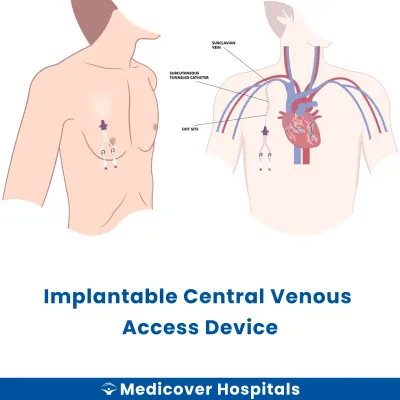
An Implantable Central Venous Access Device is a medical device placed under the skin. It connects to a vein, usually in the chest. This device allows easy access to the bloodstream. It is often used for administering medications, nutrients, or drawing blood. The device consists of a port (small reservoir) and a catheter (thin tube) that enters a central vein.
This surgery is needed for patients requiring long-term intravenous therapy. Conditions like cancer, chronic infections, or nutritional deficiencies may necessitate it. Without it, frequent needle sticks can cause discomfort and vein damage. Modern surgical approaches include minimally invasive techniques. These methods reduce recovery time and complications. They ensure the device is placed accurately and functions effectively.
Implantable Central Venous Access Device Doctors Near You
Find expert oncologists for implantable central venous access devices at Medicover Hospitals across India. Choose your city and book a consultation to discuss your treatment needs today.
Why Choose Medicover Hospitals for Implantable Central Venous Access Device?
Get a second opinion from trusted experts and makeconfident, informed decisions.
 Get Second Opinion
Complete Guide To Implantable Central Venous Access Device
Everything you need to know about the procedure, preparation, and recovery
Implantable Central Venous Access Device Surgery Indications
Doctors recommend implantable central venous access device surgery when patients require long-term intravenous therapy. This device allows for easier and more efficient delivery of medications, nutrients, or blood products.
Chronic Chemotherapy
Patients undergoing prolonged chemotherapy treatment often experience difficulty with repeated needle sticks. Veins may become hard to access. When peripheral veins are exhausted, an implantable device becomes necessary for continuous treatment.
Frequent Blood Transfusions
Individuals needing regular blood transfusions may suffer from vein damage and pain. Blood tests might show anaemia or other blood disorders. When traditional venous access becomes problematic, this device offers a reliable solution.
Long-term Antibiotic Therapy
Persistent infections requiring extended antibiotic courses can cause vein irritation. Patients might experience swelling or redness at injection sites. When oral antibiotics fail, and intravenous treatment is essential, this device is recommended.
Nutritional Support
Patients unable to eat normally may need parenteral nutrition. Weight loss and malnutrition are common symptoms. When dietary interventions are insufficient, a central venous device facilitates necessary nutrient delivery.
Frequent Blood Sampling
Some conditions require regular blood tests, leading to vein scarring and discomfort. Lab results might show fluctuating levels needing close monitoring. When conventional methods are no longer viable, this device eases the process.
How to Prepare for an Implantable Central Venous Access Device?
Proper preparation is crucial for a smooth procedure and recovery when getting an Implantable Central Venous Access Device. It helps minimize risks and ensures the best possible outcome.
- Medication Review: Stop NSAIDs, anticoagulants, and herbal supplements as advised by your doctor.
- Fasting: Fast for at least 6-8 hours before the procedure if general anaesthesia is used.
- Clothing: Wear loose, comfortable clothing on the day of the procedure for ease of movement.
- Transport: Arrange for someone to drive you home after the procedure, as you may feel drowsy.
- Medication List: Bring a list of all medications you take, including dosages, for the medical team.
- Hydration: Drink plenty of water the day before, unless advised otherwise by your doctor.
- Consent Forms: Ensure all necessary consent forms are signed and understood before the procedure.
- Health Conditions: Inform your doctor of any existing health conditions or allergies.
Implantable Central Venous Access Device Surgery (Step-by-Step)
Implantable central venous access device placement is performed by experienced specialists from the Oncology department. The procedure usually takes 30-60 minutes and is commonly carried out under local anaesthesia with or without sedation.
- Preparation: The patient is positioned comfortably. The surgical site is cleaned and sterilised. Local anaesthesia is administered to numb the area.
- Incision: A small incision, about 2-3 cm, is made near the chest or upper arm. The surgeon uses a scalpel to carefully cut through the skin and underlying tissue.
- Device Insertion: A subcutaneous pocket is created to hold the device. A trocar is used to tunnel a catheter from the device to a central vein, usually the subclavian or jugular vein.
- Catheter Placement: The catheter is inserted into the vein using the trocar. The position is confirmed with fluoroscopy or ultrasound to ensure proper placement.
- Device Securing: The device is placed into the pocket. It is secured with sutures to prevent movement. The catheter is connected to the device.
- Closure: The incision is closed with sutures or surgical glue. A sterile dressing is applied to protect the site.
- Recovery: The patient is monitored for a short period. Instructions are given for care and signs of complications to watch for.
Who Performs Implantable Central Venous Access Device Surgery?
This procedure is performed by a cancer specialist or surgeons with expertise in vascular access. They have specialised training to ensure the device is placed correctly and functions as needed. Please contact the hospital for current details as insurance panels may change.
Recovery After Implantable Central Venous Access Device Surgery
Recovery from implantable central venous access device surgery is generally smooth. However, it's important to follow specific guidelines to ensure proper healing and avoid complications.
Day 1-3:
- Rest is crucial. Avoid strenuous activities.
- Keep the surgical site clean and dry.
- Consume soft foods like curd, dal-rice, and soups to avoid strain.
Day 4-7:
- Gradually resume light activities.
- Continue with a balanced diet. Include khichdi and moong dal for easy digestion.
- Monitor the site for any signs of infection.
Week 2:
- Most individuals can return to work or school, depending on comfort.
- Avoid heavy lifting and vigorous exercises.
- Regular check-ups may be scheduled to ensure proper device function.
Phase 3 (Week 3-4):
- Normal activities can be resumed, but with caution.
- Maintain a nutritious diet to support overall health.
- Continue to observe the device site for any unusual changes.
When to Seek Urgent Help
- Fever or chills, which may indicate an infection.
- Redness, swelling, or discharge at the insertion site.
- Difficulty breathing or chest pain.
- Unusual pain or discomfort around the device.
If you experience any of these symptoms, contact your healthcare provider immediately.
Benefits of Implantable Central Venous Access Device Surgery
Implantable central venous access devices offer several advantages for patients requiring long-term intravenous therapy.
- Convenience: Allows easy access for frequent treatments without repeated needle sticks.
- Reduced Discomfort: Minimises pain associated with multiple needle insertions.
- Improved Mobility: Enables patients to maintain a more active lifestyle during treatment.
- Lower Infection Risk: Decreases the chance of infection compared to external catheters.
Risks and Complications of Implantable Central Venous Access Device Surgery
While generally safe, implantable central venous access device surgery carries certain risks and complications.
- Common - Infection: Risk of infection at the insertion site or device.
- Common - Bleeding: Possibility of bleeding during or after the procedure.
- Rare - Device Malfunction: The device may not function as intended, requiring replacement.
- Rare - Blood Clots: Formation of clots in the vein can occur.
- Rare - Pneumothorax: Accidental puncture of the lung during insertion.
Cost of Implantable Central Venous Access Device Surgery
The cost of Implantable Central Venous Access Device Surgery at Medicover Hospitals ranges from Rs. 22,000 to Rs. 68,000. The price varies based on the ward category chosen, such as outpatient, day care, general, and more.
We offer transparent pricing and support for insurance and TPA, including CGHS, ESI, and major TPAs. Cashless facilities are also available. Please contact the hospital for the latest insurance panel details as these may change periodically.
Frequently Asked Questions
1. How much does Implantable Central Venous Access Device surgery cost at Medicover Hospitals?
The cost ranges from Rs. 22,000 to Rs. 68,000 across Medicover Hospitals. Prices vary based on room type and location.
2. Is Implantable Central Venous Access Device surgery covered under health insurance at Medicover?
This surgery may be covered by CGHS, ESI, and major TPAs. Please contact the hospital for current panel details.
3. Can I shower after getting a central venous access device?
You can shower after the incision heals, usually within a week. Keep the area dry and covered until then.
4. Will I feel the device under my skin?
Yes, you may feel the device as a small bump under your skin. This is normal and should not cause discomfort.
5. Can I exercise with a central venous access device?
Light exercise is generally safe after recovery, but avoid heavy lifting. Consult your doctor for specific activity guidelines.
6. What if the device gets infected?
Infection is a possible complication and requires immediate medical attention. Symptoms include redness, swelling, or fever.
7. How often should the device be flushed?
The device typically needs flushing every 4 to 6 weeks. This helps maintain patency and prevent clot formation.
8. What is an implantable venous access device used for?
An implantable venous access device (port) is used to deliver medications directly into a large vein, especially for long-term treatments like chemotherapy, IV antibiotics, fluids, or blood transfusions. It reduces the need for repeated needle pricks.
9. How long can an implanted port stay in?
An implanted port can remain in place for months to several years, as long as it is functioning well and there are no complications such as infection or blockage.
10. What is a central venous access device?
A central venous access device (CVC) is a catheter placed into a large vein (usually in the chest, neck, or arm) to provide long-term or frequent access for medications, fluids, or blood sampling.
11. What's the difference between a PICC and a CVC?
A PICC (Peripherally Inserted Central Catheter) is inserted through a vein in the arm and threaded to a central vein, while a CVC is typically inserted directly into a central vein in the neck, chest, or groin. PICCs are often used for medium-term access, whereas CVCs may be used for more urgent or intensive treatments.


