 Call
Call Patient Reports
Best Hospital for Hysteroscopic Metroplasty Surgery With Expert Gynecologists Care
Hysteroscopic Metroplasty at Medicover Hospitals is performed using an endoscopic approach by experienced gynecologists with qualifications such as MS, DNB, and FMAS. This procedure addresses uterine anomalies, offering benefits like reduced blood loss and shorter hospital stays. Available across India.
Expert Surgeons
Yearly Surgeries
Patient Satisfaction
What is Hysteroscopic Metroplasty?
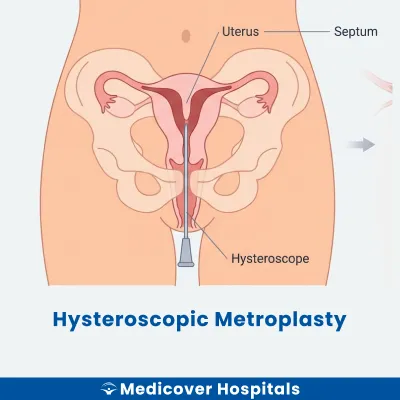
Hysteroscopic Metroplasty is a surgical procedure performed on the uterus. It involves the use of a hysteroscope (a thin, lighted tube) to correct uterine abnormalities. These abnormalities may include a septate uterus, where a fibrous band of tissue divides the uterine cavity. This procedure helps in reshaping the uterine cavity to improve its function.
This surgery is often needed for women experiencing recurrent miscarriages or infertility due to uterine anomalies. If left untreated, these conditions can lead to complications in pregnancy. Hysteroscopic Metroplasty is minimally invasive, offering a quicker recovery. Modern approaches include the use of advanced hysteroscopic instruments and techniques. These ensure precise correction of the uterine structure. Always consult with a healthcare provider for personalized advice.
Hysteroscopic Metroplasty Doctors Near You
Find experienced gynecologists for hysteroscopic metroplasty at Medicover Hospitals across India. Choose your city and book a consultation to discuss your treatment options with our specialists.
Why Choose Medicover Hospitals for Hysteroscopic Metroplasty?
Get a second opinion from trusted experts and makeconfident, informed decisions.
 Get Second Opinion
Complete Guide To Hysteroscopic Metroplasty
Everything you need to know about the procedure, preparation, and recovery
Hysteroscopic Metroplasty Surgery Indications
Doctors recommend hysteroscopic metroplasty to correct uterine abnormalities that affect fertility or cause recurrent pregnancy loss. This minimally invasive procedure helps reshape the uterine cavity for better reproductive outcomes.
Uterine Septum
Patients may experience recurrent miscarriages or difficulty conceiving. Imaging tests like hysterosalpingography or MRI reveal a septum dividing the uterine cavity. Surgery is advised when these issues persist despite other treatments.
Asherman's Syndrome
Symptoms include reduced menstrual flow or amenorrhea. Hysteroscopy shows intrauterine adhesions. When hormonal therapy fails to restore normal cycles, surgical intervention is necessary.
Congenital Uterine Anomalies
Women may face infertility or recurrent pregnancy loss. Ultrasound or MRI detects anomalies like a bicornuate uterus. Surgery is considered when these conditions interfere with pregnancy success.
Recurrent Pregnancy Loss
Patients suffer multiple miscarriages. Diagnostic tests reveal uterine abnormalities. When medical management does not prevent losses, surgery becomes essential.
Abnormal Uterine Bleeding
Patients report heavy or irregular bleeding. Hysteroscopy identifies structural issues like polyps or fibroids. Surgery is recommended when medication fails to control bleeding.
How to Prepare for Hysteroscopic Metroplasty?
Proper preparation is crucial for a smooth hysteroscopic metroplasty. It helps reduce complications and ensures a quicker recovery. Follow these steps to prepare effectively.
- Medication Review: Stop NSAIDs, anticoagulants, and herbal supplements at least a week before surgery.
- Fasting Guidelines: Fast for at least 6-8 hours before the procedure due to anaesthesia requirements.
- Bowel Preparation: Follow the doctor's instructions for any required bowel prep to ensure a clear surgical field.
- Clothing Choice: Wear loose, comfortable clothing on the day of the procedure for ease of movement post-surgery.
- Transportation Arrangement: Arrange for someone to drive you home after the procedure, as you may feel drowsy from anaesthesia.
- Medication List: Bring a list of all medications you take, including dosages, for the healthcare team to review.
- Pre-Surgery Consultation: Attend all pre-surgery appointments to discuss any concerns and finalize preparations.
- Personal Items: Carry essentials like ID, insurance details, and any required documents for hospital admission.
Hysteroscopic Metroplasty Surgery (Step-by-Step)
Overview: Hysteroscopic metroplasty is performed by gynecologists. It typically lasts 30 to 60 minutes. The procedure is usually done under general anaesthesia.
- Preparation: The patient is positioned comfortably. General anaesthesia is administered to ensure the patient is asleep and pain-free.
- Insertion of Hysteroscope: A hysteroscope, a thin tube with a camera, is gently inserted through the vagina and cervix into the uterus. This allows the surgeon to view the uterine cavity.
- Assessment of Uterine Cavity: The surgeon examines the uterus for any abnormalities. Saline solution may be used to expand the uterus for better visibility.
- Resection of Septum: If a uterine septum is present, it is carefully resected using surgical instruments like scissors or a bipolar cautery. This helps to create a normal uterine cavity.
- Removal of Instruments: Once the procedure is complete, the hysteroscope and other instruments are gently removed. The patient is then moved to a recovery area.
- Recovery: The patient wakes up from anaesthesia. Mild cramping or spotting may occur, which is normal. Monitoring continues until the patient is stable.
Who Performs Hysteroscopic Metroplasty Surgery?
This surgery is performed by gynecologists who specialise in minimally invasive procedures. They are trained to handle delicate instruments and ensure the safety and effectiveness of the procedure.
Recovery After Hysteroscopic Metroplasty Surgery
Recovery from hysteroscopic metroplasty surgery is generally smooth and quick. Most patients can return to their daily activities within a week or two. However, it's important to follow your doctor's advice and take necessary precautions to ensure a complete recovery.
Day 1-2:
- Expect some mild cramping and spotting. Rest is crucial during this period.
- Stick to a light diet. Opt for easily digestible foods like curd, dal-rice, and soups.
- Avoid strenuous activities and lifting heavy objects.
Day 3-7:
- Gradually resume light activities. Walking is encouraged to promote circulation.
- Continue with a balanced diet. Include soft foods like khichdi and moong dal for nutrition.
- Most patients can return to work or school by the end of this week, depending on their comfort level.
Week 2:
- Most discomfort should subside. You can slowly increase physical activities.
- Maintain a healthy diet to support healing. Incorporate fruits and vegetables.
- Avoid swimming and sexual intercourse until your doctor gives the go-ahead.
When to Seek Urgent Help:
- Heavy bleeding or passing large clots.
- Severe abdominal pain unrelieved by medication.
- Fever or foul-smelling discharge, which may indicate an infection.
If you experience any of these symptoms, contact your healthcare provider immediately.
Benefits of Hysteroscopic Metroplasty Surgery
Hysteroscopic metroplasty is a minimally invasive procedure aimed at correcting uterine abnormalities. It offers several benefits for women facing reproductive challenges.
- Improved Fertility: This procedure can enhance fertility by correcting uterine anomalies.
- Minimally Invasive: Being a hysteroscopic procedure, it requires no external incisions.
- Quick Recovery: Patients often experience a faster recovery compared to open surgeries.
- Reduced Pain: The minimally invasive nature typically results in less postoperative pain.
Risks and Complications of Hysteroscopic Metroplasty Surgery
While hysteroscopic metroplasty is generally safe, it carries certain risks and complications, as with any surgical procedure.
- Common: Mild bleeding or spotting post-surgery.
- Common: Cramping or discomfort in the pelvic area.
- Rare: Infection at the surgical site.
- Rare: Perforation of the uterine wall.
- Rare: Adverse reaction to anaesthesia.
- Rare: Formation of scar tissue in the uterus.
Cost of Hysteroscopic Metroplasty Surgery
The cost of Hysteroscopic Metroplasty Surgery at Medicover Hospitals ranges from Rs.67,500 to Rs.216,000. The price varies depending on the ward category chosen, such as day care, general, private, or deluxe options. Medicover Hospitals offers transparent pricing and supports insurance and TPA services, including CGHS, ESI, and major TPAs. Cashless facilities are also available for a hassle-free experience. Please contact the hospital for the latest insurance panel details as these may change periodically.
Frequently Asked Questions
1. How much does Hysteroscopic Metroplasty cost?
The cost of Hysteroscopic Metroplasty at Medicover Hospitals ranges from Rs.67,500 to Rs.216,000 depending on the room type and services.
2. Is Hysteroscopic Metroplasty covered under insurance?
Hysteroscopic Metroplasty may be covered under CGHS, ESI, and major TPAs. Please contact the hospital for current panel details.
3. Will I experience changes in menstruation?
Post-surgery, some women may notice changes in their menstrual cycle. These changes are usually temporary and should stabilize over time.
4. Can I conceive naturally after the surgery?
Many women can conceive naturally after Hysteroscopic Metroplasty. It's best to discuss your fertility plans with your doctor for personalized advice.
5. Is there a risk of uterine perforation?
Uterine perforation is a rare but possible complication of Hysteroscopic Metroplasty. Your surgeon will take precautions to minimize this risk.
6. What foods aid recovery post-surgery?
Eating light meals like dal-rice, khichdi, and curd can aid recovery. These foods are easy to digest and provide necessary nutrients.
7. When can I resume normal activities?
Most patients can return to normal activities within a week. However, it's important to follow your doctor's advice for a smooth recovery.


