 Call
Call Patient Reports
Hemiglossectomy for Malignant Conditions Surgery by Expert Oncologists
At Medicover Hospitals, our experienced oncologists, with qualifications like MS, DNB, and MCh, perform open hemiglossectomy for malignant conditions. This surgical approach effectively addresses head and neck cancers. Patients benefit from reduced blood loss, contributing to a smoother recovery process.
Expert Surgeons
Yearly Surgeries
Patient Satisfaction
What is Hemiglossectomy for Malignant Conditions?
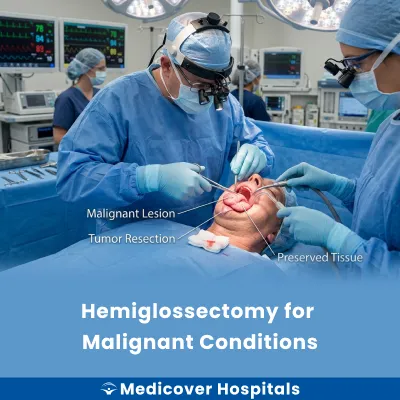
Hemiglossectomy for malignant conditions is a surgical procedure involving the partial removal of one side of the tongue. The tongue (glossus) is a muscular organ in the mouth crucial for speech and swallowing. In this procedure, the affected portion of the tongue is excised to treat cancerous growths.
This surgery is necessary to treat malignant tumors of the tongue. Conditions like squamous cell carcinoma often lead to hemiglossectomy. If left untreated, these cancers can spread to other parts of the body. Modern surgical approaches include laser surgery and robotic-assisted techniques. These methods aim to remove the cancerous tissue while preserving as much function as possible.
Hemiglossectomy for Malignant Conditions Doctors Near You
Discover skilled oncologists for hemiglossectomy at Medicover Hospitals across India. Choose your city to find experts and book a consultation for personalised care and guidance.
Why Choose Medicover Hospitals for Hemiglossectomy for Malignant Conditions?
Get a second opinion from trusted experts and makeconfident, informed decisions.
 Get Second Opinion
Complete Guide To Hemiglossectomy For Malignant Conditions
Everything you need to know about the procedure, preparation, and recovery
Hemiglossectomy for Malignant Conditions Surgery Indications
Doctors recommend hemiglossectomy when malignant conditions affect the tongue, making it necessary to remove part of it. This procedure is often considered when cancerous growths are detected and other treatments have not been effective.
Persistent Tongue Lesions
Patients may notice non-healing ulcers or lesions on the tongue. These lesions might bleed or cause pain. If a biopsy confirms malignancy and lesions persist despite medication, surgery is advised.
Difficulty in Swallowing or Speaking
Some patients experience trouble swallowing or speaking due to tongue masses. Imaging or endoscopy test may reveal tumours obstructing normal function. When these symptoms worsen and conservative treatments fail, surgery is considered.
Unexplained Tongue Pain
Chronic tongue pain without apparent cause can be a sign of malignancy. If imaging or biopsy shows cancerous cells and pain persists despite medication, hemiglossectomy might be necessary.
Visible Tongue Growths
Patients might notice visible growths or lumps on the tongue. These can be confirmed as malignant through biopsy. If growths increase in size or number, surgery becomes crucial.
Failed Radiation or Chemotherapy
In cases where radiation or chemotherapy does not reduce tumour size or alleviate symptoms, surgery may be the next step. This is particularly true if imaging shows persistent or growing tumours.
How to Prepare for Hemiglossectomy for Malignant Conditions?
Proper preparation for a hemiglossectomy is crucial to ensure a smooth surgical process and recovery. It helps in reducing complications and aids in better healing.
- Medication Review: Stop NSAIDs, anticoagulants, and herbal supplements as advised by your doctor to reduce bleeding risks.
- Fasting Guidelines: Follow a fasting period of 8-12 hours before surgery, as general anaesthesia is typically used.
- Pre-Surgery Tests: Complete all required blood tests, imaging, and other evaluations to assess your health status.
- Personal Items: Wear loose clothing on the day of surgery for comfort and ease of changing.
- Transportation: Arrange for someone to drive you home post-surgery, as you may feel drowsy from anaesthesia.
- Medication List: Bring a list of all medications with dosages to inform the medical team of your current treatments.
- Smoking and Alcohol: Avoid smoking and alcohol several weeks before surgery to improve healing and recovery.
- Dietary Adjustments: Follow any specific dietary instructions provided by your healthcare team to prepare your body for surgery.
Hemiglossectomy for Malignant Conditions Surgery (Step-by-Step)
Overview: Hemiglossectomy is performed by oncologists. The procedure typically lasts 2-4 hours. It is done under general anaesthesia.
- Preparation: The patient is positioned comfortably on the operating table. General anaesthesia is administered to ensure they are asleep and pain-free.
- Incision: A surgical incision, usually 1-2 cm, is made in the mouth to access the affected part of the tongue.
- Tumour Removal: The surgeon uses instruments like a harmonic scalpel or bipolar cautery to carefully remove the cancerous portion of the tongue.
- Reconstruction: If needed, tissue from another part of the body may be used to reconstruct the tongue. This helps maintain function and appearance.
- Closure: The incision is closed with sutures. The surgeon ensures there is no bleeding and that the area is secure.
- Recovery: The patient is moved to a recovery room. They are monitored as they wake up from anaesthesia.
- Post-Operative Care: Pain management and antibiotics may be provided. The patient receives instructions for care at home.
Who Performs Hemiglossectomy for Malignant Conditions Surgery?
This surgery is performed by surgical oncologists. They have specialised training in treating cancers of the oral cavity. Their expertise ensures precise removal of malignant tissues while preserving as much function as possible.
Recovery After Hemiglossectomy for Malignant Conditions Surgery
Recovery from a hemiglossectomy involves gradual healing and adaptation. Patients may experience changes in speech and swallowing, requiring adjustments in diet and daily activities. Close monitoring by healthcare professionals is essential during this period.
Day 1-3:
- Hospital stay is common. Medical staff will monitor vital signs and manage pain.
- Speech and swallowing may be challenging. Liquid diets like soups and broths are recommended.
Day 4-7:
- Gradual introduction of soft foods such as curd, dal-rice, and khichdi.
- Begin gentle mouth exercises as advised by the healthcare team.
- Continue to rest and avoid strenuous activities.
Week 2-4:
- Transition to a more varied diet including moong dal and soft-cooked vegetables.
- Speech therapy may begin to aid in communication and swallowing.
- Light activities can be resumed, but avoid heavy lifting or intense exercise.
Phase 1-2 Months:
- Regular follow-up appointments to monitor healing and adjust treatment plans.
- Gradual return to work or school, depending on individual recovery progress.
- Continue with dietary modifications and speech exercises as needed.
When to Seek Urgent Help:
- Persistent or severe pain not relieved by medication.
- Signs of infection such as fever, redness, or swelling at the surgical site.
- Difficulty breathing or swallowing that worsens.
- Uncontrolled bleeding from the mouth.
Benefits of Hemiglossectomy for Malignant Conditions Surgery
Hemiglossectomy is a surgical procedure aimed at removing part of the tongue affected by cancer. It offers several benefits for patients with malignant conditions.
- Effective Cancer Control: Helps in removing cancerous tissues, reducing the risk of cancer spread.
- Improved Survival Rates: Enhances the chances of long-term survival by targeting the affected area.
- Preservation of Function: Aims to maintain as much tongue function as possible, aiding in speech and swallowing.
- Facilitates Further Treatment: Makes it easier to undergo additional treatments like radiotherapy if needed.
Risks and Complications of Hemiglossectomy for Malignant Conditions Surgery
While hemiglossectomy can be beneficial, it carries certain risks and complications. Patients should be aware of these potential issues.
Common Risks
- Speech Difficulties: Temporary or permanent changes in speech may occur.
- Swallowing Challenges: Difficulty in swallowing is possible post-surgery.
- Infection Risk: As with any surgery, there is a risk of infection.
Rare Risks
- Bleeding: Excessive bleeding during or after the procedure is uncommon but possible.
- Nerve Damage: There is a small risk of nerve damage affecting tongue movement.
- Taste Alteration: Changes in taste perception may occur.
Cost of Hemiglossectomy for Malignant Conditions Surgery
The cost of Hemiglossectomy for malignant conditions surgery at Medicover Hospitals ranges from ₹1,50,000 to ₹6,00,000. The price varies based on the ward category chosen, such as general, twin sharing, private, or suite. We offer transparent pricing and support for insurance and TPA, including CGHS, ESI, and major TPAs. A cashless facility is also available. Please contact the hospital for the latest insurance panel details as these may change periodically.
Frequently Asked Questions
1. How much does Hemiglossectomy for Malignant Conditions surgery cost at Medicover Hospitals?
The cost of Hemiglossectomy for Malignant Conditions surgery ranges from ₹1,50,000 to ₹6,00,000 across Medicover Hospitals.
2. Is Hemiglossectomy for Malignant Conditions surgery covered under health insurance at Medicover?
It is often covered under CGHS, ESI, and major TPAs with cashless options. Please contact the hospital for current panel details.
3. Will I have difficulty speaking after a hemiglossectomy?
Yes, speech difficulties are common after a hemiglossectomy. Speech therapy can help improve communication over time.
4. Can I eat spicy food after hemiglossectomy?
It's best to avoid spicy food initially. Start with soft foods like curd, dal-rice, and khichdi for comfort.
5. Will I need a feeding tube after hemiglossectomy?
A feeding tube may be necessary temporarily. It helps ensure nutrition while the tongue heals.
6. How long before I can speak normally again?
Speech may improve over weeks to months. Regular practice and therapy can aid recovery.
7. What are common complications after hemiglossectomy?
Swelling and infection are common complications. Regular follow-ups can help manage these effectively.


