 Call
Call Patient Reports
Best Feeding Jejunostomy Tube Placement Surgery Hospital with Advanced Care
At Medicover Hospitals, our experienced gastroenterologist, including those with MS, DNB, and MCh qualifications, perform laparoscopic feeding jejunostomy tube placements. This minimally invasive approach ensures smaller incisions and reduced blood loss, facilitating a quicker recovery for patients across India.
Expert Surgeons
Yearly Surgeries
Patient Satisfaction
What is Feeding Jejunostomy Tube Placement?
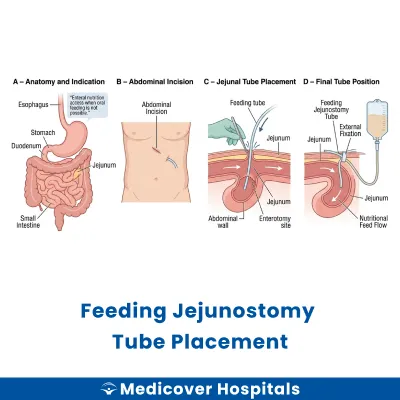
Feeding Jejunostomy Tube Placement is a surgical procedure where a tube is inserted into the jejunum (part of the small intestine). This tube helps deliver nutrition directly to the digestive system. It bypasses the stomach, which is useful for patients who cannot eat by mouth or have issues with stomach absorption.
This surgery is needed for individuals with conditions like severe pancreatitis, esophageal cancer, or gastric surgery complications. Without this intervention, patients may suffer from malnutrition and related health issues. Modern surgical approaches include laparoscopic and open methods. These techniques ensure the tube is placed accurately and safely. Early intervention can prevent serious complications and improve quality of life.
Feeding Jejunostomy Tube Placement Doctors Near You
Find skilled surgical gastroenterologist for feeding jejunostomy tube placement at Medicover Hospitals across India. Choose your city and book a consultation to discuss your treatment options today.
Why Choose Medicover Hospitals for Feeding Jejunostomy Tube Placement?
Get a second opinion from trusted experts and makeconfident, informed decisions.
 Get Second Opinion
Complete Guide To Feeding Jejunostomy Tube Placement
Everything you need to know about the procedure, preparation, and recovery
Feeding Jejunostomy Tube Placement Surgery Indications
Doctors recommend feeding jejunostomy tube placement when patients cannot maintain adequate nutrition through oral intake. This procedure is often considered when other feeding methods are not viable or have failed.
Severe Oropharyngeal Dysphagia
Patients experience difficulty swallowing, leading to choking or aspiration. Imaging may show obstruction or neuromuscular disorders affecting swallowing. When dietary modifications and therapies fail, surgery is considered.
Gastrointestinal Obstruction
Symptoms include severe abdominal pain, vomiting, and inability to pass stool. Imaging reveals blockages in the gastrointestinal tract. When non-surgical interventions do not relieve the obstruction, a feeding tube is placed.
Post-Surgical Recovery
After major surgeries, patients may experience temporary inability to eat. Doctors find that oral intake is not possible due to surgical complications. When recovery is prolonged, a feeding tube ensures nutritional support.
Severe Malnutrition
Patients show signs of weight loss, fatigue, and muscle wasting. Blood tests indicate nutrient deficiencies. When dietary supplements and oral feeding fail to improve nutrition, a jejunostomy tube is recommended.
Head and Neck Cancers
Patients have difficulty eating due to tumour growth or treatment effects. Imaging and biopsies confirm cancer presence. When oral intake is insufficient, a feeding tube is placed to maintain nutrition.
How to Prepare for Feeding Jejunostomy Tube Placement?
Proper preparation is crucial for a successful feeding jejunostomy tube placement. It helps minimise complications and ensures a smoother procedure.
- Medication Review: Stop NSAIDs, anticoagulants, and herbal supplements as advised by your doctor.
- Fasting: Do not eat or drink anything for at least 8 hours before the procedure.
- Bowel Preparation: Follow any specific bowel prep instructions given by your healthcare provider.
- Clothing: Wear loose, comfortable clothing on the day of the procedure.
- Transportation: Arrange for someone to drive you home post-procedure.
- Medication List: Bring a list of your current medications, including dosages, to the hospital.
- Health History: Inform your doctor of any allergies or previous reactions to anaesthesia.
- Pre-Procedure Instructions: Follow any additional instructions provided by your healthcare team.
Feeding Jejunostomy Tube Placement Surgery (Step-by-Step)
This procedure is typically performed by Gastro Surgeon. It usually takes about 1 to 2 hours. General anaesthesia is commonly used to ensure the patient is asleep and pain-free.
- Preparation: The patient is positioned on the operating table. The surgical area is cleaned and sterilised to prevent infection.
- Incision: A small incision, about 1-2 cm, is made in the abdominal wall. This allows access to the jejunum, a part of the small intestine.
- Jejunum Identification: The surgeon carefully identifies the jejunum using a laparoscope. This instrument provides a clear view inside the abdomen.
- Tube Insertion: A feeding tube is gently inserted into the jejunum through the incision. A trocar may be used to guide the tube into place.
- Securing the Tube: The tube is secured to prevent movement. This ensures it stays in the correct position for effective feeding.
- Closure: The incision is closed using sutures or staples. The area is then covered with a sterile dressing.
- Recovery: The patient is moved to a recovery area. They are monitored as they wake up from anaesthesia.
Who Performs Feeding Jejunostomy Tube Placement Surgery?
This surgery is performed by surgeons with expertise in gastrointestinal procedures. They have the skills to safely place the feeding tube and manage any complications. Please contact the hospital for current details as insurance panels may change.
Recovery After Feeding Jejunostomy Tube Placement Surgery
Recovery after a feeding jejunostomy tube placement surgery involves gradual adjustments to your daily routine. It is important to follow medical advice to ensure a smooth recovery and proper functioning of the tube.
Day 1-3:
- Rest is crucial. Avoid any strenuous activities.
- Begin with clear liquids and gradually introduce liquid foods like soups.
- Monitor the tube site for any signs of infection.
Day 4-7:
- Continue with liquid diets, introducing light, blended Indian foods such as dal-rice or moong dal soup.
- Maintain hygiene around the tube site to prevent infections.
- Light activities like walking can be resumed, but avoid heavy lifting.
Week 2:
- Begin incorporating soft foods like khichdi and curd into your diet.
- Gradually increase activity levels, but avoid strenuous exercise.
- Most individuals can resume work or school, depending on comfort and doctor's advice.
Phase 3 (Week 3 and Beyond):
- Continue with a balanced diet, ensuring foods are easy to digest.
- Regularly check the tube site for any signs of irritation or infection.
- Engage in normal activities, but listen to your body and rest as needed.
When to Seek Urgent Help:
- Severe pain or discomfort around the tube site.
- Redness, swelling, or pus discharge from the tube site.
- Fever or chills indicating possible infection.
- Difficulty in feeding or blockage in the tube.
Benefits of Feeding Jejunostomy Tube Placement Surgery
Feeding jejunostomy tube placement is a procedure that helps provide nutrition directly to the small intestine.
- Improved Nutrition: Ensures adequate nutrition for patients unable to eat orally.
- Bypasses Stomach: Beneficial for those with stomach issues or surgeries.
- Long-term Solution: Suitable for patients needing extended nutritional support.
- Reduced Aspiration Risk: Lowers the chance of food entering the lungs compared to oral feeding.
Risks and Complications of Feeding Jejunostomy Tube Placement Surgery
While generally safe, feeding jejunostomy tube placement carries some risks and complications.
- Common: Infection at the insertion site.
- Common: Blockage or dislodgement of the tube.
- Rare: Bleeding from the insertion site.
- Rare: Perforation of the intestine.
- Rare: Leakage of intestinal contents around the tube.
Cost of Feeding Jejunostomy Tube Placement Surgery
The cost of Feeding Jejunostomy Tube Placement Surgery at Medicover Hospitals ranges from Rs. 35,000 to Rs. 95,500. The price varies based on the ward category chosen, such as general, twin sharing, or private rooms. We offer transparent pricing to ensure clarity for our patients.
Insurance and TPA support, including CGHS, ESI, and major TPAs, are accepted. A cashless facility is also available for a hassle-free experience. Please contact the hospital for the latest insurance panel details as these may change periodically.
Frequently Asked Questions
1. How much does Feeding Jejunostomy Tube Placement surgery cost at Medicover Hospitals?
The cost of Feeding Jejunostomy Tube Placement surgery at Medicover Hospitals ranges from Rs. 35,000 to Rs. 95,500, depending on the room type and care level.
2. Is Feeding Jejunostomy Tube Placement surgery covered under health insurance at Medicover?
Feeding Jejunostomy Tube Placement surgery may be covered under CGHS, ESI, and major TPAs. Please contact the hospital for current panel details.
3. Can I eat solid food after Feeding Jejunostomy?
After a Feeding Jejunostomy, solid foods are typically avoided. Soft foods like dal-rice and khichdi are recommended once recovery progresses.
4. Will I experience bloating after the procedure?
Bloating can occur after Feeding Jejunostomy Tube Placement. It usually subsides as your body adjusts to the tube feeding.
5. How often should the tube be cleaned?
The feeding tube should be cleaned daily to prevent infections. Regular cleaning helps maintain hygiene and ensures proper functioning.
6. Can I shower with the Feeding Jejunostomy tube?
You can shower with the tube, but ensure the site is dry afterward. Use a waterproof dressing to protect the area during showers.
7. What if the tube gets dislodged?
If the tube gets dislodged, seek medical attention immediately. Do not attempt to reinsert it yourself, as this may cause complications.


