 Call
Call Patient Reports
Advanced External Beam Radiotherapy Palliative Hospital with Expert Care
External Beam Radiotherapy Palliative at Medicover Hospitals is a non-invasive procedure used to alleviate symptoms in cancer patients. Our team of MBBS, MS, DNB, and DM qualified oncologists employ advanced techniques to ensure effective treatment. This approach often results in reduced hospital stays for patients across India.
Expert Specialists
Yearly Treatments
Patient Satisfaction
What is External Beam Radiotherapy Palliative?
External Beam Radiotherapy Palliative is a treatment that uses high-energy X-rays to relieve symptoms of cancer. It targets specific areas of the body, such as the bones, lungs, or brain, where cancer has spread. This therapy helps in reducing pain and controlling other symptoms by shrinking the tumour (abnormal tissue growth).
This treatment is needed when cancer causes discomfort or affects the quality of life. Conditions like metastatic cancer (cancer that has spread) often require this approach. If left untreated, these conditions can lead to severe pain and complications. Modern techniques like 3D conformal radiotherapy and intensity-modulated radiotherapy (IMRT) are available for precise targeting. These methods help in minimizing damage to healthy tissues.
External Beam Radiotherapy Palliative Doctors Near You
Find experienced oncologists for external beam radiotherapy palliative care at Medicover Hospitals across India. Choose your city and book a consultation to discuss your treatment options.
Why Choose Medicover Hospitals for External Beam Radiotherapy Palliative?
Get a second opinion from trusted experts and makeconfident, informed decisions.
 Get Second Opinion
Complete Guide To External Beam Radiotherapy Palliative
Everything you need to know about the procedure, preparation, and recovery
External Beam Radiotherapy Palliative procedure Indications
Doctors recommend External Beam Radiotherapy (EBRT) Palliative for patients with advanced cancer. It helps manage symptoms and improve quality of life when curative treatment is not possible.
Bone Pain from Metastatic Cancer
Patients often experience severe bone pain due to cancer spread. Imaging tests like X-rays or MRIs show bone lesions. When pain medications and other treatments fail, EBRT can help relieve pain.
Spinal Cord Compression
Symptoms include back pain, weakness, or numbness in the limbs. MRI scans reveal tumour pressing on the spinal cord. If steroids and other interventions do not alleviate symptoms, EBRT is considered.
Brain Metastases
Patients may suffer from headaches, seizures, or neurological deficits. CT or MRI scans confirm the presence of brain metastases. When surgery is not feasible, EBRT helps reduce symptoms.
Bleeding Tumours
Some patients experience bleeding from tumours, especially in the lungs or cervix. Doctors find evidence of bleeding through imaging or endoscopy surgery. EBRT can help control bleeding when other treatments are ineffective.
Obstructive Tumours
Symptoms include difficulty breathing or swallowing due to tumour obstruction. Imaging shows tumours blocking airways or oesophagus. EBRT is used when other treatments do not relieve obstruction.
How to Prepare for External Beam Radiotherapy Palliative?
Proper preparation for External Beam Radiotherapy Palliative is crucial to ensure the procedure's effectiveness and minimise side effects. Following these steps can help you have a smoother experience.
- Medication Review: Stop NSAIDs, anticoagulants, and herbal supplements as advised by your doctor.
- Fasting Guidelines: No fasting is typically required as anaesthesia is not usually involved in this procedure.
- Skin Care: Avoid applying lotions, powders, or deodorants on the treatment area before the session.
- Clothing: Wear loose, comfortable clothing to avoid irritation to the skin in the treatment area.
- Transport Arrangement: Arrange for someone to drive you home post-treatment, especially if you feel fatigued.
- Bring Medication List: Carry a list of your current medications, including dosages, to share with the medical team.
- Hydration: Stay well-hydrated before the procedure unless advised otherwise by your healthcare provider.
- Emotional Support: Consider bringing a friend or family member for emotional support if needed.
External Beam Radiotherapy Palliative procedure (Step-by-Step)
This procedure is performed by a cancer physician. It typically lasts 15-30 minutes per session. No anaesthesia is required as it is non-invasive.
- Consultation and Planning: The oncologist discusses the treatment plan with the patient. Imaging scans are reviewed to determine the target area for radiation.
- Simulation: The patient lies on a treatment table. A CT simulator may be used to map the exact area for radiation. The patient must remain still during this process.
- Marking the Target Area: Small marks or tattoos are placed on the skin to guide the radiation beams accurately. This ensures precision in targeting the tumour.
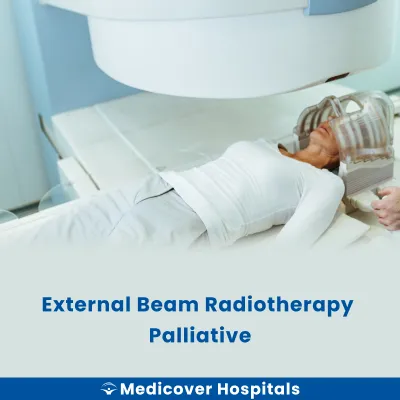
- Positioning: The patient is positioned on the treatment table. Special immobilisation devices may be used to keep the patient still. Comfort is ensured throughout.
- Radiation Delivery: The linear accelerator machine delivers radiation beams to the marked area. The patient hears a buzzing sound but feels no pain. The machine may rotate around the patient.
- Monitoring: The radiotherapy team monitors the patient from a separate room. Communication is maintained through an intercom system.
- Post-Procedure Care: The patient can resume normal activities immediately. Side effects, if any, are discussed and managed by the healthcare team.
Who Performs External Beam Radiotherapy Palliative procedure?
This procedure is performed by radiation oncologists. They specialise in using radiation to treat cancer. The team includes medical physicists and radiation therapists who ensure accurate delivery of treatment.
Recovery After External Beam Radiotherapy Palliative procedure
Recovery from External Beam Radiotherapy Palliative treatment varies for each individual. The focus is on managing side effects and improving quality of life. Patients may experience fatigue, skin changes, or other mild symptoms. It's important to follow medical advice and attend follow-up appointments.
Day 1-3:
- Rest is crucial. Avoid strenuous activities.
- Consume light meals. Include curd, dal-rice, and soups to aid digestion.
- Hydrate well to help flush out toxins.
Day 4-7:
- Gradually resume light activities as tolerated.
- Continue a balanced diet with moong dal and khichdi for easy digestion.
- Monitor for any skin changes or irritation at the treatment site.
Week 2:
- Energy levels may improve. Light exercises like walking can be introduced.
- Maintain a nutritious diet. Include fresh fruits and vegetables.
- Most can return to work or school, depending on individual recovery.
Phase 3-4 Weeks:
- Continue to monitor for any delayed side effects.
- Regular follow-up appointments are essential for ongoing assessment.
- Gradually increase activity levels as comfort allows.
When to Seek Urgent Help
- Severe fatigue or weakness that worsens.
- Uncontrolled nausea or vomiting.
- Persistent or worsening skin reactions.
- Any new or unusual symptoms.
Benefits of External Beam Radiotherapy Palliative procedure
External Beam Radiotherapy (EBRT) is used in palliative care to relieve symptoms and improve quality of life for patients with advanced cancer.
- Pain Relief: EBRT can effectively reduce pain caused by tumours pressing on bones or nerves.
- Symptom Control: It can help manage symptoms like bleeding or obstruction caused by tumour growth.
- Non-Invasive: This procedure does not require surgery, making it suitable for patients unable to undergo invasive treatments.
- Quick Treatment: Sessions are typically short, allowing patients to resume daily activities sooner.
Risks and Complications of External Beam Radiotherapy Palliative procedure
While EBRT is generally safe, it may come with certain risks and complications. Understanding these is important for informed decision-making.
- Common: Skin irritation or redness at the treatment site.
- Common: Fatigue, which may increase as treatment progresses.
- Rare: Nausea or vomiting, depending on the treatment area.
- Rare: Temporary hair loss in the treated area.
- Rare: Changes in appetite or weight loss.
- Rare: Risk of radiation-induced secondary cancers, though very uncommon.
Cost of External Beam Radiotherapy Palliative procedure
The cost of the External Beam Radiotherapy Palliative procedure at Medicover Hospitals ranges from Rs. 77,000 to Rs. 176,000. The price varies depending on the ward category chosen. We offer transparent pricing to ensure clarity for our patients.
Insurance and TPA support are available, with CGHS, ESI, and major TPAs accepted. A cashless facility is also offered for convenience. Please contact the hospital for the latest insurance panel details as these may change periodically.
Frequently Asked Questions
1. How much does External Beam Radiotherapy Palliative procedure cost at Medicover Hospitals?
The cost of External Beam Radiotherapy Palliative procedure ranges from Rs. 77,000 to Rs. 176,000 across Medicover Hospitals.
2. Is External Beam Radiotherapy Palliative procedure covered under health insurance at Medicover?
Yes, it is covered under CGHS, ESI, and major TPAs with cashless options. Please contact the hospital for current panel details.
3. Will I lose my hair after this radiotherapy?
Hair loss may occur only in the treated area of the body. It typically regrows a few months after completing the treatment.
4. Can I eat spicy food during radiotherapy?
It's best to avoid spicy food like chilli and masala during treatment. Opt for bland meals like dal-rice or khichdi to ease digestion.
5. Will I feel tired after each session?
Fatigue is a common side effect of radiotherapy. Rest adequately and maintain a balanced diet to manage energy levels.
6. Can radiotherapy affect my skin?
Yes, skin in the treated area may become red or irritated. Use gentle skincare products and avoid harsh sunlight to protect it.
7. Is it safe to exercise during treatment?
Light exercises like walking are generally safe during treatment. Consult your doctor for a personalised exercise plan.
8. Can I go home after external beam radiotherapy?
Yes, external beam radiotherapy is usually an outpatient treatment, so most patients can go home the same day after each session.
9. What is the life expectancy after palliative radiotherapy?
Life expectancy varies widely depending on the type and stage of cancer. Palliative radiotherapy does not cure cancer but can extend survival and improve comfort, sometimes for months or longer.
10. How long does an EBRT treatment take?
Each EBRT session usually takes about 10 to 30 minutes, with actual radiation delivery lasting only a few minutes. Treatment is typically given over multiple sessions across several weeks.


