 Call
Call Patient Reports
Esophagectomy Surgery by Expert Oncologists
Esophagectomy at Medicover Hospitals is performed using advanced surgical techniques such as laparoscopic and robotic approaches. Our team of oncologists, with qualifications like MS, DNB, and MCh, ensures precise surgical care. These methods often result in smaller incisions and reduced blood loss.
Expert Surgeons
Yearly Surgeries
Patient Satisfaction
What is Esophagectomy?
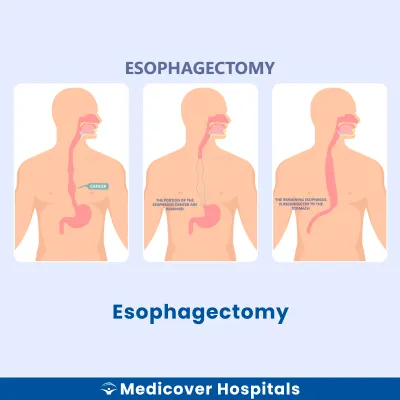
Esophagectomy is a surgical procedure involving the removal of all or part of the oesophagus (the tube connecting the throat to the stomach). This operation may also include the removal of nearby lymph nodes. The oesophagus plays a crucial role in moving food from the mouth to the stomach for digestion.
This surgery is often necessary for treating oesophageal cancer or severe cases of Barrett's oesophagus. It may also be required for non-cancerous conditions like achalasia. If left untreated, these conditions can lead to serious complications, including obstruction or spread of cancer. Modern surgical approaches for esophagectomy include minimally invasive techniques like laparoscopic and robotic-assisted surgery, which may offer quicker recovery and less pain.
Esophagectomy Doctors Near You
Find experienced oncologists for esophagectomy at Medicover Hospitals across India. Choose your city and book a consultation to discuss your treatment options with our specialists.
Why Choose Medicover Hospitals for Esophagectomy?
Get a second opinion from trusted experts and makeconfident, informed decisions.
 Get Second Opinion
Complete Guide To Esophagectomy
Everything you need to know about the procedure, preparation, and recovery
Esophagectomy Surgery Indications
Doctors recommend esophagectomy when the oesophagus is severely affected, often due to cancer or other serious conditions. This surgery is considered when less invasive treatments are ineffective.
Oesophageal Cancer
Patients may experience difficulty swallowing, chest pain, or unintended weight loss. Imaging tests like endoscopy surgery or CT scans reveal tumours in the oesophagus. Surgery is advised when cancer is localized and other treatments like chemotherapy are insufficient.
Barrett's Oesophagus with Dysplasia
Symptoms include heartburn and regurgitation. Endoscopic biopsies show precancerous changes. If dysplasia progresses despite medication and endoscopic treatments, surgery may be necessary to prevent cancer.
Severe Achalasia
Patients often report difficulty swallowing and chest discomfort. Manometry tests show abnormal oesophageal muscle function. When dilation and botulinum toxin injections fail, surgery may be required.
Oesophageal Strictures
Symptoms include swallowing difficulties and food impaction. Barium swallow tests reveal narrowing of the oesophagus. If dilation and medication do not relieve symptoms, surgery is considered.
Oesophageal Perforation
Patients may experience severe chest pain and difficulty breathing. Imaging shows a tear in the oesophagus. When conservative management like stenting is ineffective, surgery is needed to repair the damage.
Please contact the hospital for current details as insurance panels may change.
How to Prepare for Esophagectomy?
Proper preparation for an esophagectomy is crucial to ensure a smooth surgery and recovery. It helps in reducing complications and aids in a quicker recovery process.
- Medication Management: Stop NSAIDs, anticoagulants, and herbal supplements as advised by your doctor.
- Fasting: Do not eat or drink anything for at least 8 hours before the surgery to prepare for anaesthesia.
- Pre-Surgery Tests: Complete all recommended tests like blood work and imaging to assess your health status.
- Dietary Adjustments: Follow any specific dietary instructions given by your healthcare provider.
- Clothing: Wear loose, comfortable clothing on the day of surgery for ease of movement post-operation.
- Transportation: Arrange for someone to drive you home after the procedure, as you will not be able to drive yourself.
- Medication List: Bring a list of all medications you are currently taking, including dosages, for hospital records.
- Smoking Cessation: Stop smoking several weeks before surgery to improve healing and recovery.
Esophagectomy Surgery (Step-by-Step)
Overview: Esophagectomy is performed by surgical oncologists. The procedure typically lasts 4-6 hours under general anaesthesia.
- Preparation: The patient is given general anaesthesia to ensure they are asleep and pain-free. Monitoring devices are attached to track vital signs.
- Incision: Small incisions (1-2 cm) are made in the abdomen and chest. A laparoscope is inserted through these incisions to view the esophagus.
- Mobilisation: The surgeon uses instruments like a harmonic scalpel and bipolar cautery to carefully separate the esophagus from surrounding tissues.
- Resection: The affected portion of the esophagus is removed. A curette may be used to ensure all cancerous tissues are excised.
- Reconstruction: The stomach is reshaped into a tube and connected to the remaining esophagus. This allows food to pass normally.
- Closure: The incisions are closed with sutures or staples. Dressings are applied to protect the wounds.
- Recovery: The patient is moved to a recovery area. They are monitored as they wake up from anaesthesia. Pain management is provided.
Who Performs Esophagectomy Surgery?
Esophagectomy is performed by surgical oncologists. These specialists are trained in surgeries related to cancer treatment. They work with a team of healthcare professionals to ensure the procedure is conducted safely. Please contact the hospital for current details as insurance panels may change.
Recovery After Esophagectomy Surgery
Recovery from esophagectomy surgery can be a gradual process. Patients should expect to spend some time in the hospital and follow specific guidelines to ensure a smooth recovery. It is important to follow dietary recommendations and activity restrictions to aid healing.
Day 1-3:
- Hospital stay is common. Monitoring and pain management are priorities.
- Initial nutrition is through IV fluids. Oral intake is usually not started immediately.
Day 4-7:
- Gradual introduction of liquids like clear soups and diluted juices.
- Start gentle movements as advised by the healthcare team.
Week 2-4:
- Transition to soft foods such as curd, dal-rice, and khichdi.
- Continue with light activities. Avoid heavy lifting.
- Regular follow-up appointments to monitor recovery progress.
Week 5-8:
- Incorporate more variety in diet, including moong dal and soft-cooked vegetables.
- Gradually increase activity levels. Walking is encouraged.
- Discuss with your doctor about returning to work or school.
When to Seek Urgent Help:
- Fever or signs of infection at the incision site.
- Difficulty in swallowing or persistent nausea and vomiting.
- Severe chest pain or shortness of breath.
- Unusual swelling or redness around the surgical area.
Benefits of Esophagectomy Surgery
Esophagectomy is a surgical procedure primarily used to treat esophageal cancer and other severe esophageal conditions. It can offer several benefits for patients.
- Improved Survival Rate: Removing the affected part of the esophagus can enhance the chances of survival for cancer patients.
- Symptom Relief: It can alleviate symptoms such as difficulty swallowing and pain.
- Prevention of Cancer Spread: By removing cancerous tissues, it helps in preventing the spread of cancer to other parts of the body.
- Enhanced Quality of Life: Post-surgery, patients may experience an improved quality of life with reduced symptoms.
Risks and Complications of Esophagectomy Surgery
As with any major surgery, esophagectomy carries certain risks and potential complications. It is important to be aware of these before undergoing the procedure.
Common Complications
- Infection at the surgical site.
- Bleeding during or after the surgery.
- Respiratory complications such as pneumonia.
Rare Complications
- Leakage from the site where the stomach is joined to the remaining esophagus.
- Narrowing of the esophagus (stricture) post-surgery.
- Damage to nearby organs during the procedure.
Cost of Esophagectomy Surgery
The cost of esophagectomy surgery at Medicover Hospitals varies based on the ward category chosen. Prices range from ₹2,00,000 to ₹5,00,000 across different branches. The cost depends on the type of accommodation and facilities selected.
We offer transparent pricing and support for insurance and TPA, including CGHS, ESI, and major TPAs. Cashless facilities are available for ease of payment. Please contact the hospital for the latest insurance panel details as these may change periodically.
Frequently Asked Questions
1. How much does Esophagectomy surgery cost?
The cost of Esophagectomy surgery at Medicover Hospitals ranges from Rs. 2,00,000 to Rs. 5,00,000, depending on the type of room and care required.
2. Is Esophagectomy surgery covered under insurance?
Esophagectomy surgery may be covered by CGHS, ESI, and major TPAs for cashless treatment. Please contact the hospital for current panel details.
3. Will I have difficulty swallowing post-surgery?
You may experience difficulty swallowing after Esophagectomy. This typically improves over time with therapy and diet adjustments.
4. What foods should I eat after Esophagectomy?
Post-Esophagectomy, soft foods like curd, dal-rice, and khichdi are recommended. Gradually introduce solid foods as advised by your doctor.
5. Can I experience acid reflux after Esophagectomy?
Acid reflux is a common concern after Esophagectomy. Medications and dietary changes can help manage this condition effectively.
6. Will I need a feeding tube after surgery?
A feeding tube may be necessary temporarily after Esophagectomy. It helps ensure adequate nutrition during the initial recovery phase.
7. How soon can I return to work post-Esophagectomy?
Returning to work after Esophagectomy typically takes several weeks. Your doctor will guide you based on your recovery progress.


