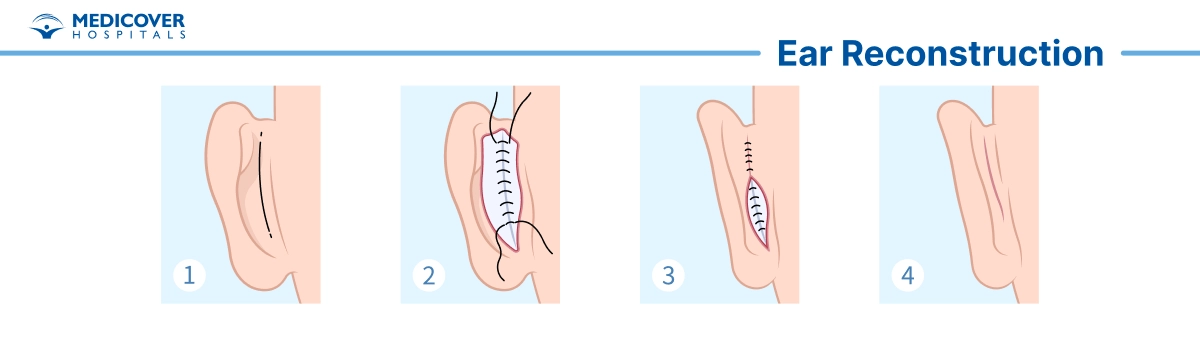
What Is Ear Reconstruction?
Ear reconstruction is a specialized surgical procedure designed to rebuild, reshape, or restore the ear's natural structure and appearance. It is performed to correct congenital deformities such as microtia (underdeveloped ear) or anotia (absence of the ear), repair damage caused by trauma like accidents or burns, or restore the ear after surgical removal due to cancer. In some cases, it is also performed to address cosmetic concerns, such as prominent or asymmetrical ears.
This surgery not only improves the ear's appearance but can also enhance hearing function when structural defects affect sound conduction. Ear reconstruction requires careful planning, artistic precision, and advanced surgical techniques to achieve results that are both functional and aesthetically pleasing. It is often performed in multiple stages, ensuring safe healing and long-term outcomes.
Types of Ear Reconstruction Procedures
Ear reconstruction procedures vary based on the patient's condition, goals, and overall health. The main approaches include:
Autologous Ear Reconstruction
- Uses the patient's own tissue, usually rib cartilage, to build the ear framework.
- Provides a natural appearance, long-lasting results, and minimal risk of rejection.
- Best suited for patients with congenital deformities or traumatic injuries who desire a permanent, natural solution.
Prosthetic Ear Reconstruction
- Involves fitting a custom-made silicone or medical-grade prosthetic ear, attached with adhesives, magnets, or implants.
- Offers a quicker procedure, excellent color/texture matching, and less invasive surgery.
- Requires periodic maintenance and replacement.
- Ideal for patients not suitable for autologous surgery or those preferring a non-surgical alternative.
Microtia Repair
- Specifically designed for children or adults with microtia (underdeveloped or absent ear).
- Typically performed in stages using rib cartilage to create a detailed ear framework, sometimes with skin grafts or tissue expansion.
- Restores ear symmetry, boosts confidence, and may include hearing rehabilitation.
4-6 Hours
Surgery Duration
General Anesthesia
Anesthesia Used
2-3 Weeks
Full Recovery Timeline
Indications for Ear Reconstruction Surgery
Ear reconstruction is performed for both medical and cosmetic reasons where restoring the ear's appearance and function is necessary. It is recommended in the following situations:
- Congenital Ear Defects: To correct conditions like microtia (underdeveloped ear), anotia (absence of the ear), or other birth-related deformities.
- Traumatic Ear Injuries: To repair damage from accidents, burns, animal bites, or other injuries that alter ear structure.
- Cancer-Related Resection: To reconstruct the ear after partial or complete removal due to skin cancers such as squamous cell carcinoma or basal cell carcinoma.
- Chronic Ear Infections: To restore shape and function when severe or recurring infections damage the ear cartilage.
- Ear Canal Atresia: To reconstruct or create an ear canal in patients born without one, often associated with hearing loss.
- Cosmetic Otoplasty: To correct overly large, misshapen, or protruding ears that cause emotional or psychological distress.
- Hearing Restoration: In select cases, to reconstruct the external or middle ear structures that support better hearing.
- Emotional & Social Well-Being: To improve self-confidence, reduce self-consciousness, and enhance overall quality of life.
Preparing for Ear Reconstruction Surgery
Proper preparation helps ensure safe surgery and smooth recovery. Here's what patients and families need to know:
Consultation & Assessment
- Your plastic surgeon will examine the ear structure, discuss expectations, and outline the surgical plan.
- Medical history, existing health conditions, allergies, and previous surgeries will be reviewed.
Medical Evaluation & Pre-Surgery Tests
- Routine tests such as blood work, ECG, or imaging scans may be required.
- In some cases, 3D imaging or digital molds are created to design a personalized reconstruction.
Medication & Lifestyle Adjustments
- Certain medications like blood thinners, herbal supplements, or pain relievers may need to be stopped before surgery.
- Smoking and alcohol consumption should be avoided as they affect healing.
- Follow a healthy diet and lifestyle as recommended to support recovery.
Day Before & Day of Surgery
- Follow fasting instructions (usually no food or drink for several hours before the procedure).
- Shower with antibacterial soap as advised; avoid applying lotions, oils, or powders.
- Remove jewellery, hair accessories, nail polish, or makeup before coming to the hospital.
- Wear loose and comfortable clothing on the day of admission.
Hospital Stay & Recovery Planning
- Depending on the type of reconstruction, hospital stay may last from one to several days.
- Arrange for transportation after discharge, as driving independently is not recommended.
- Keep a caregiver or family member available to assist with daily activities during the initial recovery period.
Ask Questions & Clarify Doubts
- Discuss the expected outcomes, possible risks, and alternative treatment options with your surgeon.
- Ask about scar care, pain management, and follow-up visits to ensure a smooth recovery process.
What Happens During Ear Reconstruction Surgery?
Ear reconstruction surgery is performed to restore the ear's natural shape and function. The process may involve cartilage grafting, prosthetics, or staged techniques depending on the patient's condition.
- Initial Consultation & Planning: The surgeon evaluates the ear, reviews medical history, and may use imaging or molds to plan the reconstruction. A personalized surgical approach is created based on the patient's needs.
- Anesthesia Administration: The procedure is performed under general anesthesia, ensuring the patient remains pain-free and comfortable throughout the surgery.
- Cartilage Harvesting: Cartilage is typically taken from the rib cage to build the ear framework. In some cases, synthetic materials may be used as an alternative.
- Framework Creation: The harvested cartilage is carefully shaped into an ear-like structure, mimicking the natural contours and details of a normal ear.
- Implanting the Framework: The newly sculpted ear framework is positioned under the skin of the affected area and secured for stability.
- Skin Grafting (if required): If there is insufficient skin coverage, skin grafts are taken from other body areas to cover the framework.
- Shaping & Refinement: Additional adjustments are made to ensure symmetry, projection, and a natural appearance. Sometimes, staged procedures are performed for final refinements.
- Recovery & Follow-up: After surgery, patients are monitored closely. Follow-up visits focus on wound healing, shape refinement, and overall recovery progress.
Recovery After Ear Reconstruction Surgery
Recovering from ear reconstruction is a gradual process involving wound healing, swelling reduction, and adjusting to the reshaped ear. Recovery time varies depending on the surgical technique, age, and individual healing response.
First Few Days
- Patients usually wear a protective bandage or dressing around the ear to reduce swelling and safeguard the surgical site.
- Mild discomfort, bruising, or swelling is common and can be managed with prescribed medications and cold compresses.
Doctor's Tip: "Keep the dressing in place and avoid touching the ear unnecessarily. This helps prevent infection and protects healing tissues."
First Week
- Stitches or sutures are monitored closely during follow-up visits. Most patients start feeling more comfortable, though the ear may still appear swollen.
- Light daily activities are usually safe, but avoid pressure or pulling on the ear.
Doctor's Tip: "Do not wear tight headbands, helmets, or put weight on the ear until your surgeon advises."
Weeks 2-4
- Swelling gradually reduces, and the ear shape becomes more defined. Children can usually return to school after 1-2 weeks, while adults may resume office work around the same time. However, contact sports and heavy exercise must still be avoided.
Doctor's Tip: "Sleep on your back or the opposite side to protect your ear. Proper rest helps tissues settle well."
1-2 Months
- Most patients feel fully comfortable performing daily activities. Scars start to heal and fade, especially with proper scar care like massage or silicone gel recommended by the surgeon. Any residual swelling continues to subside.
Doctor's Tip: "Scar care is just as important as wound care. Follow your doctor's guidance to achieve the best cosmetic results."
Long-Term Care (3 Months and Beyond)
- By this stage, the reconstructed ear typically achieves its final shape. Patients can return to sports and high-endurance activities once cleared by their surgeon.
- Maintaining good overall health, avoiding smoking, and protecting the ear from trauma all support long-term results.
Doctor's Tip: "Patience is key. With consistent care, scars fade and the ear's new shape blends naturally."
Benefits of Ear Reconstruction Surgery
Ear reconstruction offers both cosmetic and functional improvements, helping patients achieve a more natural appearance and improved quality of life.
- Improved Facial Symmetry: Surgery restores the natural shape, size, and position of the ear, creating a balanced facial appearance.
- Boosted Confidence and Emotional Well-being: A reconstructed ear enhances self-esteem and helps reduce the psychological impact of ear deformities or trauma.
- Restoration of Hearing (in select cases): When combined with hearing rehabilitation techniques, ear reconstruction can support better sound transmission and auditory function.
- Relief from Pain or Discomfort: Patients with ear deformities or traumatic injuries may experience reduced irritation, sensitivity, or discomfort after surgery.
- Permanent and Natural-looking Results: Autologous ear reconstruction using the patient's own tissue provides long-lasting, realistic outcomes with minimal rejection risks.
- Improved Quality of Life: Children and adults with microtia or ear trauma often experience improved social interactions and comfort in daily activities.
Risks of Ear Reconstruction Surgery
Like any major surgery, ear reconstruction carries potential risks. Understanding these risks ensures better preparation and post-surgical recovery.
- Scarring and Healing Issues: Noticeable scars, delayed healing, or tissue irregularities may occur.
- Infection: Though rare, infections can develop at the surgical site or graft area, requiring antibiotics or further treatment.
- Asymmetry or Uneven Results: Slight differences in ear shape or size compared to the other ear.
- Nerve Injury or Sensation Changes: Temporary or permanent numbness or tingling around the ear or donor site.
- Cartilage or Graft-related Problems: Complications with rib cartilage grafts or tissue expansion in autologous reconstruction.
- Rare Hearing Loss: In complex reconstructions involving middle ear structures, mild hearing loss may occur.
- Need for Revision Surgery: In some cases, additional procedures may be required to refine shape, contour, or positioning.
- Emotional Adjustment: Adapting to the new ear appearance may take time, especially in children or young adults.
How Much Does Ear Reconstruction Surgery Cost?
The cost of ear reconstruction surgery in India varies depending on the type of procedure, complexity, surgeon's experience, and hospital location.
Estimated Cost Range:
- Cosmetic Ear Surgery / Otoplasty: Rs. 70,000 to Rs. 3,00,000 per ear
- Autologous Ear Reconstruction (Microtia Repair using Rib Cartilage): Rs. 2,00,000 to Rs. 6,00,000 per ear
- Prosthetic Ear Reconstruction: Rs. 1,50,000 to Rs. 3,00,000 per ear
Note: These figures are general estimates and may vary for individual cases. For an accurate cost based on specific needs, consultation with a qualified ENT or plastic surgeon is recommended.
 040 68334455
 WhatsApp
 Patient Portal
 Home Care