 Call
Call Patient Reports
Best Hospital for Double Valve Replacement with Advanced Cardiac Surgery Care
Double Valve Replacement at Medicover Hospitals is performed using an open surgical approach. Our team of surgeons, with qualifications like MS, MCh, and DNB, ensures precise care. This procedure often results in reduced blood loss, contributing to a quicker recovery for patients.
Expert Surgeons
Yearly Surgeries
Patient Satisfaction
What is Double Valve Replacement?
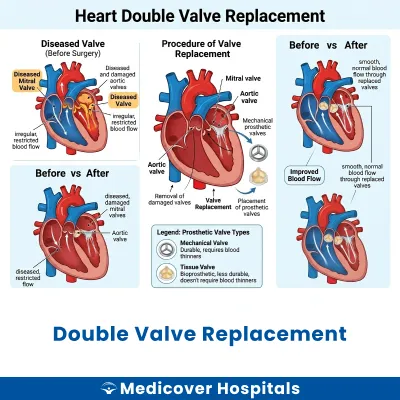
Double Valve Replacement is a surgical procedure involving the heart. It replaces two malfunctioning heart valves. These valves are responsible for regulating blood flow through the heart's chambers. The procedure ensures proper blood circulation and prevents complications. Surgeons replace the damaged valves with artificial or biological ones. This restores normal heart function and improves the patient's quality of life.
This surgery is often necessary for conditions like severe valve stenosis (narrowing) or regurgitation (leakage). These conditions can lead to heart failure if untreated. Modern surgical approaches include open-heart surgery and minimally invasive techniques. These methods reduce recovery time and improve outcomes. Double Valve Replacement is crucial for maintaining heart health in affected individuals.
Double Valve Replacement Doctors Near You
Discover skilled CTVS specialists for double valve replacement at Medicover Hospitals across India. Choose your city and book a consultation to receive expert care for your heart health needs.
Why Choose Medicover Hospitals for Double Valve Replacement?
Get a second opinion from trusted experts and makeconfident, informed decisions.
 Get Second Opinion
Complete Guide To Double Valve Replacement
Everything you need to know about the procedure, preparation, and recovery
Double Valve Replacement Surgery Indications
Doctors recommend double valve replacement surgery when both the aortic and mitral valves are severely damaged. This procedure is considered when symptoms significantly affect daily life and conservative treatments no longer provide relief.
Severe Valve Stenosis
Patients experience chest pain, shortness of breath, and fatigue. Echocardiograms reveal narrowed valve openings. When medications and lifestyle changes fail to improve symptoms, surgery is advised.
Valve Regurgitation
Symptoms include palpitations, breathlessness, and swelling in the legs. Echocardiography procedure shows blood leaking backward through the valves. Surgery is necessary when these issues persist despite medical management.
Rheumatic Heart Disease
Patients may have joint pain, fever, and heart murmurs. Diagnostic tests show valve thickening and dysfunction. When medication does not control symptoms, surgical intervention is required.
Infective Endocarditis
Fever, chills, and heart murmurs are common symptoms. Blood cultures and imaging confirm infection and valve damage. Surgery is needed when antibiotics fail to resolve the infection and valve damage is extensive.
Congenital Valve Defects
Patients may experience fatigue and cyanosis. Imaging tests reveal malformed valves. When symptoms worsen and medical therapy is ineffective, surgery is the recommended course of action.
How to Prepare for Double Valve Replacement?
Preparation is crucial for a successful double valve replacement surgery. It helps minimise risks and ensures a smoother recovery process.
- Medication Review: Stop NSAIDs, anticoagulants, and herbal supplements as advised by your doctor to reduce bleeding risks.
- Fasting Guidelines: Do not eat or drink anything for at least 8 hours before the surgery to prepare for anaesthesia.
- Pre-Surgery Tests: Complete all required blood tests, ECG, and imaging studies as scheduled to assess your health status.
- Personal Items: Bring a list of your current medications with dosages for hospital records.
- Clothing: Wear loose, comfortable clothing on the day of surgery to ease movement post-surgery.
- Transportation: Arrange for someone to drive you home after discharge, as you will not be able to drive yourself.
- Hospital Stay: Pack essentials like toiletries and a change of clothes for your hospital stay.
- Support System: Inform family or friends about your surgery to ensure you have support during recovery.
Double Valve Replacement Surgery (Step-by-Step)
Performed by CTVS (Cardiothoracic and Vascular Surgery) specialists, this surgery typically lasts 4-6 hours. It is done under general anaesthesia.
- Preparation: The patient is given general anaesthesia to ensure they are asleep and pain-free. Monitoring devices are attached to track heart rate, blood pressure, and oxygen levels.
- Incision: A median sternotomy is performed, where a 15-20 cm incision is made along the chest to access the heart.
- Heart-Lung Machine Connection: The patient is connected to a heart-lung machine. This machine takes over the function of the heart and lungs during the surgery.
- Valve Exposure: The surgeon uses retractors to open the chest and expose the heart. Instruments like aortic punches and scissors are used to reach the valves.
- Valve Replacement: The damaged valves are removed using surgical tools like scalpels and forceps. New mechanical or biological valves are sewn into place with sutures.
- Heart Function Restoration: The heart is gradually taken off the heart-lung machine. The surgeon ensures the new valves are functioning properly.
- Closure: The chest is closed with wires and sutures. The incision is stitched, and a sterile dressing is applied.
Who Performs Double Valve Replacement Surgery?
This surgery is performed by cardiothoracic surgeons. These specialists have extensive training in heart and chest surgeries. They work with a team of anaesthetists and surgical nurses to ensure a smooth procedure.
Recovery After Double Valve Replacement Surgery
Recovery from double valve replacement surgery is a gradual process. It involves careful monitoring and adherence to medical advice. Patients can expect to spend a few days in the hospital post-surgery, followed by a phased recovery at home.
Day 1-3:
- Hospital stay for monitoring vital signs and heart function.
- Pain management and initiation of light breathing exercises.
- Start with a liquid diet, gradually moving to soft foods like soups and dal-rice.
Day 4-7:
- Discharge from hospital if stable.
- Continue with light activities and short walks at home.
- Diet can include soft, easy-to-digest foods like khichdi and moong dal.
Week 2-4:
- Increase activity levels gradually, but avoid strenuous activities.
- Incorporate more variety in diet, including curd and steamed vegetables.
- Attend follow-up appointments for progress evaluation.
Month 1-3:
- Resume work or school, depending on recovery and doctor's advice.
- Engage in light exercises as recommended by a physiotherapist.
- Continue heart-healthy diet and monitor weight.
When to Seek Urgent Help:
- Sudden chest pain or shortness of breath.
- Severe swelling in legs or feet.
- Uncontrolled bleeding or signs of infection at the incision site.
- Irregular heartbeats or palpitations.
Benefits of Double Valve Replacement Surgery
Double valve replacement surgery can significantly improve heart function and quality of life for patients with severe valve disease.
- Improved Blood Flow: Enhances circulation by replacing damaged valves.
- Symptom Relief: Reduces symptoms like breathlessness and fatigue.
- Increased Longevity: Potentially extends life expectancy by restoring heart function.
- Enhanced Activity Levels: Allows for greater physical activity and exercise tolerance.
- Prevention of Complications: Helps prevent complications such as heart failure.
Risks and Complications of Double Valve Replacement Surgery
While double valve replacement surgery can be life-saving, it carries certain risks and potential complications.
- Bleeding during or after surgery.
- Infection at the surgical site.
- Blood clots, which may lead to stroke.
- Valve malfunction or failure.
- Irregular heart rhythms (arrhythmias).
- Reaction to anaesthesia.
- Kidney dysfunction or failure.
What is the Cost of Double Valve Replacement Surgery?
The cost of Double Valve Replacement Surgery at Medicover Hospitals ranges from Rs. 2,20,000 to Rs. 7,09,000, based on factors such as the surgical approach, duration of hospital stay, room category, required diagnostics, and post-operative care.
At Medicover Hospitals, we ensure transparent pricing for all procedures. We offer support for insurance and TPA, including CGHS, ESI, and major TPAs. A cashless facility is also available for your convenience. Please contact the hospital for the latest insurance panel details as these may change periodically.
Frequently Asked Questions
1. How much does Double Valve Replacement surgery cost at Medicover Hospitals?
The cost of Double Valve Replacement surgery ranges from Rs. 2,20,000 to Rs. 7,09,
2. Please contact Medicover Hospitals for detailed pricing information. 2. Is Double Valve Replacement surgery covered under health insurance at Medicover?
Many insurance plans, including CGHS and ESI, may cover this surgery. Please contact the hospital for current panel details.
3. Will I need lifelong medication after Double Valve Replacement?
Yes, patients often require lifelong anticoagulant medication. This helps prevent blood clots around the new valves.
4. Can I lead a normal life post Double Valve Replacement?
Most patients can resume normal activities after recovery. Regular follow-ups and a heart-healthy lifestyle are essential.
5. What are the risks of valve malfunction after surgery?
Valve malfunction is a potential risk, though rare. Regular check-ups are crucial to monitor valve function.
6. How soon can I eat solid food after Double Valve Replacement?
You can typically start with soft foods like khichdi or dal-rice within a few days. Consult your doctor for personalized advice.
7. Will I experience shortness of breath after the surgery?
Some patients may experience temporary shortness of breath. It usually improves as you recover and your heart adjusts.


