 Call
Call Patient Reports
Discectomy and Foraminotomy Surgery Hospital With Expert Neurosurgeons
At Medicover Hospitals, our experienced neurosurgeons, with qualifications like MS, MCh, and DNB, perform discectomy and foraminotomy using advanced endoscopic techniques. This approach ensures smaller incisions and reduced blood loss, contributing to a shorter hospital stay for patients across India.
Expert Surgeons
Yearly Surgeries
Patient Satisfaction
What is Discectomy and Foraminotomy?
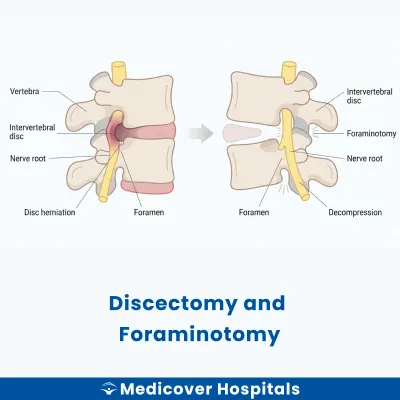
Discectomy is a surgical procedure involving the removal of a herniated disc (cushion-like structure between the vertebrae) in the spine. Foraminotomy is a surgery that enlarges the foramen (the opening where nerve roots exit the spine). Both procedures aim to relieve pressure on spinal nerves, reducing pain and improving mobility.
These surgeries are needed for conditions like herniated discs, spinal stenosis (narrowing of the spinal canal), or nerve compression. If untreated, these conditions can lead to chronic pain, numbness, or even paralysis. Modern surgical approaches include minimally invasive techniques and endoscopic procedures, which often result in quicker recovery and less post-operative discomfort.
Discectomy and Foraminotomy Doctors Near You
Find skilled neurosurgeons for discectomy and foraminotomy procedures at Medicover Hospitals across India. Choose your city and book a consultation to discuss your treatment options today.
Why Choose Medicover Hospitals for Discectomy and Foraminotomy?
Get a second opinion from trusted experts and makeconfident, informed decisions.
 Get Second Opinion
Complete Guide To Discectomy And Foraminotomy
Everything you need to know about the procedure, preparation, and recovery
Discectomy and Foraminotomy Surgery Indications
Doctors recommend discectomy and foraminotomy when patients experience persistent nerve compression symptoms. These procedures help relieve pain and restore function when non-surgical treatments are ineffective.
Herniated Disc
Patients often feel sharp or radiating pain in the back or limbs. MRI or CT scans show a disc pressing on nerves. Surgery is advised when pain persists despite medication and physical therapy.
Spinal Stenosis
Symptoms include numbness, weakness, or cramping in the legs. Imaging reveals narrowing of the spinal canal. If symptoms worsen and conservative treatments fail, surgery is considered.
Radiculopathy
Patients report tingling, weakness, or pain along a nerve path. Diagnostic tests confirm nerve root compression. Surgery is an option when symptoms do not improve with rest and medications.
Bone Spurs
Individuals may experience localized pain and restricted movement. X-rays or MRIs show bony growths compressing nerves. Surgery is suggested when these growths cause significant discomfort and limit daily activities.
Failed Conservative Treatment
When pain management, physiotherapy, and other non-surgical methods do not alleviate symptoms, surgery is the next step. Persistent pain and functional impairment guide this decision.
How to Prepare for Discectomy and Foraminotomy?
Proper preparation for discectomy and foraminotomy can enhance recovery and reduce complications. Following these steps ensures a smoother surgical experience.
- Medication Review: Stop NSAIDs, anticoagulants, and herbal supplements at least a week before surgery, as advised by your doctor.
- Fasting: Do not eat or drink anything for at least 8 hours before the procedure to ensure safety during anaesthesia.
- Pre-Surgery Tests: Complete any required blood tests or imaging studies as instructed by your healthcare provider.
- Clothing: Wear loose, comfortable clothing on the day of the surgery for easy changing and comfort post-operation.
- Transportation: Arrange for someone to drive you home after the surgery, as you will not be able to drive yourself.
- Medication List: Bring a list of all medications you are currently taking, including dosages, to the hospital.
- Smoking and Alcohol: Avoid smoking and alcohol for at least 24 hours before the surgery to aid in recovery.
- Home Preparation: Prepare your home for post-surgery recovery by setting up a comfortable resting area with essential items within reach.
Discectomy and Foraminotomy Surgery (Step-by-Step)
Overview: This procedure is performed by neurosurgeons. It typically lasts 1-3 hours and is done under general anaesthesia.
- Preparation: The patient is positioned on the operating table. General anaesthesia is administered to ensure comfort and unconsciousness.
- Incision: A small incision, usually 1-2 cm, is made over the affected area of the spine.
- Accessing the Spine: Surgical instruments like a trocar are used to gently separate the muscles and access the spine.
- Discectomy: A curette or harmonic scalpel is used to remove the herniated disc material pressing on the nerves.
- Foraminotomy: A coblation wand or bipolar cautery may be used to widen the foramina, relieving nerve compression.
- Closure: The incision is closed with sutures or staples. A sterile dressing is applied to protect the site.
- Recovery: The patient is moved to a recovery room. They are monitored as they wake from anesthesia and begin recovery.
Who Performs Discectomy and Foraminotomy Surgery?
Discectomy and foraminotomy are performed by neurosurgeons. These specialists are trained to handle complex spinal procedures. They use precise techniques to alleviate nerve compression and improve patient mobility.
Recovery After Discectomy and Foraminotomy Surgery
Recovery from discectomy and foraminotomy surgery involves a gradual return to normal activities. It's essential to follow your doctor's advice to ensure a smooth recovery process.
Day 1-3:
- Rest is crucial. Limit movement to essential activities.
- Start with a soft diet. Include foods like curd, dal-rice, and soups to ease digestion.
- Pain and swelling are common. Take prescribed medications as directed.
Day 4-7:
- Slowly increase light activities. Avoid bending or lifting heavy objects.
- Continue with a balanced diet. Incorporate khichdi and moong dal for nutrition.
- Attend follow-up appointments to monitor recovery.
Week 2-4:
- Gradually resume daily activities. Short walks are encouraged.
- Return to work or school may be possible, depending on your job's physical demands.
- Physical therapy might be recommended to aid recovery.
Month 1-3:
- Engage in low-impact exercises like walking or swimming.
- Avoid strenuous activities until cleared by your doctor.
- Continue to follow dietary recommendations for overall health.
When to Seek Urgent Help
- Severe pain not relieved by medication.
- Signs of infection like fever or redness at the incision site.
- Numbness or weakness in the legs.
- Loss of bowel or bladder control.
Benefits of Discectomy and Foraminotomy Surgery
Discectomy and foraminotomy are surgical procedures aimed at relieving nerve pressure in the spine. They can offer significant relief from pain and improve mobility.
- Pain Relief: These procedures can alleviate chronic back and leg pain caused by herniated discs.
- Improved Mobility: Patients often experience better movement and flexibility post-surgery.
- Reduced Nerve Compression: By removing disc material or bone, nerve pressure is decreased, reducing symptoms.
- Quick Recovery: Many patients return to normal activities relatively soon after the procedure.
Risks and Complications of Discectomy and Foraminotomy Surgery
While generally safe, discectomy and foraminotomy carry certain risks. It's important to be aware of these potential complications.
- Infection (Common): As with any surgery, there is a risk of infection at the incision site.
- Nerve Damage (Rare): There is a small risk of injury to the nerves during the procedure.
- Bleeding (Common): Some bleeding is expected, but excessive bleeding is a risk.
- Recurrent Disc Herniation (Rare): There is a possibility of the disc herniating again.
- Spinal Instability (Rare): Removal of bone or disc material may lead to instability in the spine.
- Allergic Reaction (Rare): Patients may experience an allergic reaction to anaesthesia or other medications used.
Cost of Discectomy and Foraminotomy Surgery
The cost of Discectomy and Foraminotomy Surgery varies based on the surgical approach ranges from ₹1,25,000 to ₹2,10,000, duration of hospital stay, room category, required diagnostics, and post-operative care.
At Medicover Hospitals, we ensure transparent pricing for all procedures. We offer support for insurance and TPA services, including CGHS, ESI, and major TPAs. A cashless facility is also available for your convenience. Please contact the hospital for the latest insurance panel details as these may change periodically.
Frequently Asked Questions
1. How much does Discectomy and Foraminotomy surgery cost at Medicover Hospitals?
The cost of Discectomy and Foraminotomy surgery varies. Please contact Medicover Hospitals for detailed pricing information.
2. Is Discectomy and Foraminotomy surgery covered under health insurance at Medicover?
This surgery may be covered under CGHS, ESI, and major TPAs. Please contact the hospital for current panel details.
3. Will I experience numbness after Discectomy?
Some patients may experience temporary numbness after the procedure. It usually resolves as the nerves heal over time.
4. Can I lift heavy objects post-Foraminotomy?
Avoid lifting heavy objects for at least six weeks post-surgery. This helps in preventing strain on the spine during recovery.
5. Will I need physiotherapy after Discectomy?
Physiotherapy is often recommended to aid recovery and improve mobility. Your doctor will guide you on the appropriate exercises.
6. Can I drive immediately after Foraminotomy?
Driving is usually not advised for at least two weeks post-surgery. Ensure you have regained full mobility and comfort before driving.
7. What foods should I eat after Discectomy?
Consume easily digestible foods like curd, dal-rice, and khichdi. These foods help maintain energy and aid digestion during recovery.


